Consider the meeting that exists because someone needs to point at a screen. A designer has changed a checkout flow. A support specialist knows which setting fixes a problem. A developer can reproduce a bug, provided everyone watches the cursor carefully. The explanation is visual. The calendar invitation is administrative. Somehow, the two have become inseparable.
Loom built a business by pulling them apart. Record your screen, narrate what matters, keep your face in a small camera bubble if you like, and send a link. The recipient watches when convenient. An explanation gets delivered without requiring its audience to assemble at the same moment. This is a modest adjustment to office life with unusually large consequences.
- A failed user-testing idea contained a recorder people wanted.
- Screen, voice and face made video useful for ordinary work.
- Free adoption opened the door to paid team subscriptions.
- Under Atlassian, recordings now feed notes, documents and Jira work.
The appointment nobody needed
The attraction is easiest to see in arithmetic. Imagine six people attending a 30-minute walkthrough. That consumes 180 person-minutes. Suppose one person instead spends five minutes recording, and the other five each spend five minutes watching. That consumes 30. The difference is 150 person-minutes before anyone attempts to price the trouble of finding a common slot.
This is an illustration, not a measured Loom result. It assumes the shorter explanation is sufficient and nobody needs a long follow-up. But it exposes the question buried beneath many invitations: does this task need a conversation, or does it need a good explanation? Loom is particularly well suited to the second. The first still has a respectable claim on the calendar.
A recorder escapes its first business
Joe Thomas, Vinay Hiremath and Shahed Khan began working together in late 2015. Their early venture, Opentest, collected video feedback for user testing. The idea struggled. Launches and fundraising attempts failed to produce the response they wanted. In Hiremath’s account to Forbes, credit cards were exhausted and only two weeks of runway remained.
The founders detached the Chrome recorder and offered it as a standalone product. Openvid launched on Product Hunt on June 30, 2016. Its first day brought more signups than the preceding six months, Hiremath recalled. Here was evidence strong enough to revise the business, rather than merely revise the pitch.
The portable lesson is specific: inspect the part customers keep using when the larger proposition fails. Removing a product’s original purpose can reveal another one. That requires working software, observed behavior and a willingness to abandon the grander plan. It is harder to perform with a slide deck.
“Our mission is to empower effective communication via video messages.”
Joe Thomas and Vinay Hiremath, 2023
The little face in the corner
A screen recording answers where to click. A voice supplies emphasis. A face adds a speaker to whom the explanation belongs. Loom packages these together, then hosts the result. Its technical expertise lies in making capture, delivery and playback feel sufficiently immediate that recording becomes an ordinary communication choice.
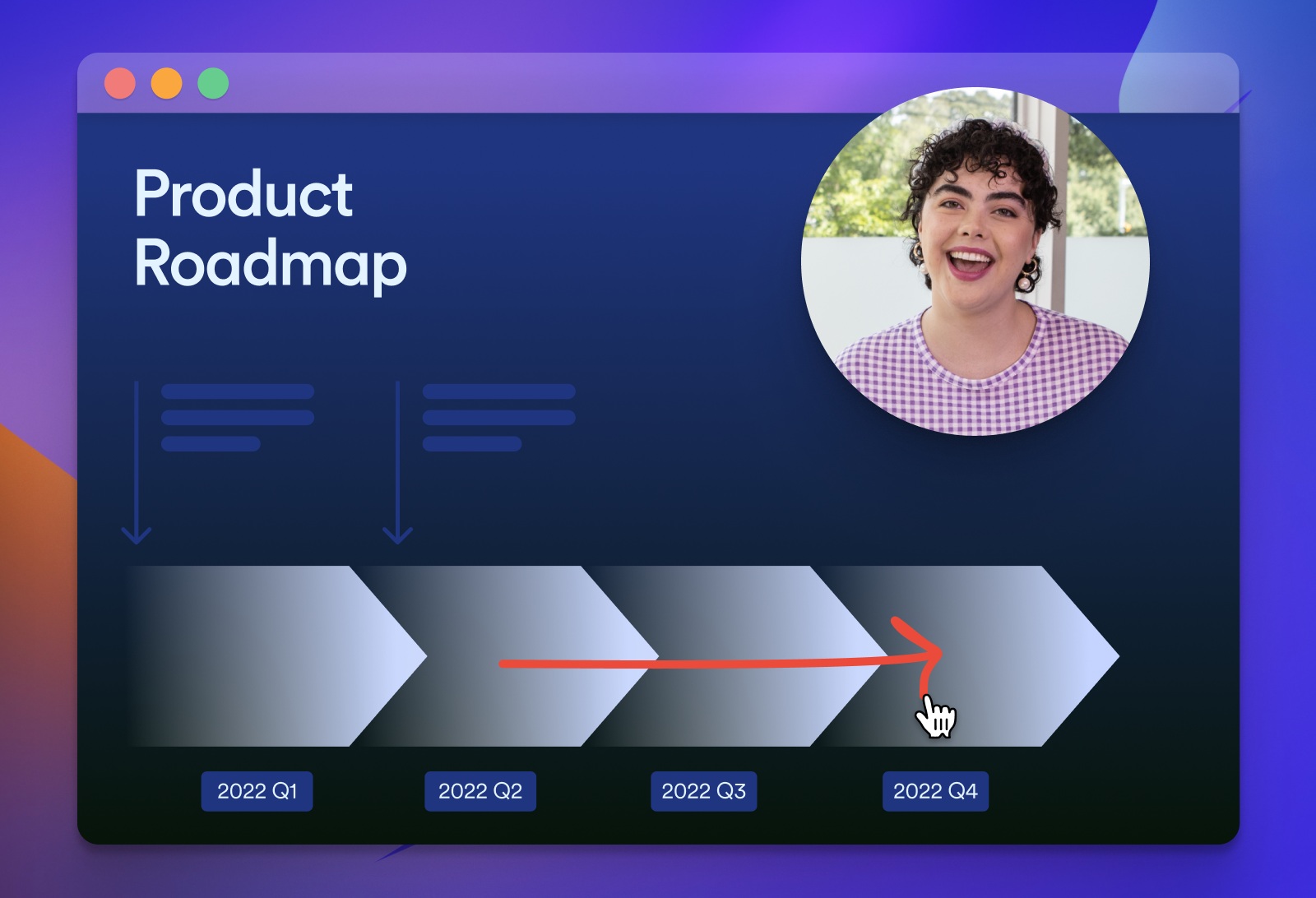
The product continues beyond the record button. People can comment, react, read transcripts and captions, or return to videos in a library. Paid tiers add capabilities such as engagement insights and more control over presentation. A support answer can become a reusable explanation. An onboarding demonstration can survive the employee who first needed it.
There are other ways to achieve parts of this. A local recorder and a shared file can deliver a walkthrough. A live call in Zoom, Teams or Meet supplies immediate questions. Video messaging tools such as Vidyard occupy overlapping territory. Loom’s argument rests on the whole journey: make the explanation, deliver it, collect the response and retain something useful afterward.
Its audience is correspondingly broad. The company advertises more than 25 million people across 400,000 companies, and names customers including HubSpot, Lacoste, LaunchDarkly and Greenhouse. These figures describe reach, not 400,000 paying accounts. The common denominator is work that becomes clearer when somebody can show it.
Free to try, expensive to ignore
In February 2019, Loom announced an $11 million Series A led by Kleiner Perkins alongside Loom Desktop and Loom Pro. The progression made commercial sense: let people discover a communication habit, then offer more capability to those using it professionally. A $30 million Series B followed that October, later expanded by $28.75 million. In May 2021, a $130 million Series C led by Andreessen Horowitz supplied further capital.
The current model remains freemium. Loom.com’s monthly-billing view lists Business at $18 per user per month and Business + AI at $24. Starter is free, with up to 25 recordings per person and a five-minute screen-recording limit. Enterprise buyers negotiate pricing. A team should check its purchase route: Loom.com and Atlassian.com can differ in billing and feature access.
The invoice is only one cost. Someone must prepare the explanation, viewers must spend time with it, and a growing library needs care. A ten-minute monologue sent to twenty colleagues still consumes attention. The useful commercial test is whether the team repeatedly removes confusion or coordination effort, rather than whether it can accumulate videos.
Loom also paid for a shorter name. Co-founder Shahed Khan says the 2018 acquisition of loom.com cost $150,000 altogether: $75,000 to the domain seller and $75,000 to persuade another bidder to rebrand. A remarkably elaborate way to remove three letters from useloom.com.
The customer becomes the owner
Atlassian’s first employee began recording with Loom five days after the June 2016 launch, according to Thomas and Hiremath. The company later bought a license for every employee. By October 2023, a customer relationship had become an acquisition agreement. The transaction closed that November.
The announced package was approximately $975 million. Atlassian’s FY2024 annual report records about $885.6 million in purchase-price consideration. These figures use different definitions; neither should be casually added to venture funding. The 2021 fundraising valuation, reported at $1.53 billion, belongs to another moment and another transaction.
Standalone annual recurring revenue
Excludes Teamwork Collection contribution. ARR is a recurring revenue run-rate, not recognized annual revenue.The later operating figure is revealing. Atlassian reported that Loom had more than doubled since acquisition to exceed $100 million in standalone ARR. It also reported over 100 million videos and meeting recordings created during the preceding year. That establishes substantial use and a growing subscription business. It does not establish that every recording saved time.
The meeting comes back, with a notebook
There is a pleasing complication in Loom’s second act. A tool associated with avoiding meetings now helps record them. Atlassian acquired Rewatch in August 2024 to bring AI meeting capture into Loom. The logic is consistent: some conversations need to happen live, but their explanations and decisions should not disappear when the call ends.
Meeting workflows can create recaps and organized notes in Confluence. Eligible AI accounts must be linked to Atlassian, with the relevant Confluence access and AI enabled. That makes the offering particularly useful to teams already keeping their knowledge there. A video library becomes more valuable when the rest of the organization can retrieve its contents.
- 01 / CaptureRecord a meeting or reproduce a bug.
- 02 / StructureGenerate notes, context or a draft report.
- 03 / ActReview and send the result into the work.
In March 2026, Loom announced enhanced bug reporting that captures browser and device information, network data and console logs, then creates a Jira work item. By June, Atlassian release notes described a rollout connecting recurring Loom meetings to Jira spaces, where people review suggested updates. The human still accepts, amends or dismisses the suggestions.
AI documentation also reaches beyond meetings. Loom’s workflows can draft standard operating procedures, step-by-step guides, pull-request descriptions and QA steps from transcripts, with screenshots added to relevant steps. Someone still needs to check the result. The advantage is getting an explanation into a usable form without beginning again on a blank page.
Send the explanation. Keep the conversation.
The sensible experiment is small. Pick a recurring walkthrough. Record a short version, lead with the point, name the action you need, and give people a place to respond. Compare the total effort, including follow-up, with the old routine. If questions multiply, the recording needs work or the task needs a live discussion.
For negotiations, sensitive feedback or unresolved disagreements, delayed video can create more distance than clarity. For a two-sentence answer, it may simply be excessive. Loom’s premise works when visual context matters and recipients can act without immediate exchange. The office already has enough things to watch. The worthwhile recording lets someone understand the work and get on with it.