In the spring of 2020, Phil Libin and Steve White passed jokes and images back and forth to make video calls less tedious. The joke acquired a name, mmhmm, and then acquired a business. It is a useful origin story because the product did not begin with an argument that the world needed one more meeting room. The world already had those. What it lacked, the pair thought, was a way to be a person inside one.
- Airtime began as mmhmm, a tool for appearing alongside your slides in live or recorded video.
- It now offers Camera, Creator, Recorder, and Stacks for different parts of video work.
- It works with Zoom, Teams, Meet, and Webex; individual pricing starts at $10 a month when billed annually.
- The enduring idea is simple: improve how the message arrives, not merely how the meeting connects.
When mmhmm launched publicly that November, its private beta had drawn tens of thousands of testers. The early trick was instantly legible: place a presenter in the picture with the presentation, instead of exiling them to a small square while the slide takes over. In the hands of a teacher, a salesperson, or an executive, this meant an explanation could keep its face. A gesture could point to a chart. A joke could land with its author still on screen.
The thumbnail problem
Most video software is good at transmission. It is less interested in the social mechanics of attention. Share your screen and your audience sees the deck, while you become a postage stamp. Send a raw recording and the viewer inherits your pauses, digressions, and tiny interface text. Run a review meeting and one person controls the cursor while everyone else asks, "Could you go back?" Airtime built separate tools around those small indignities.
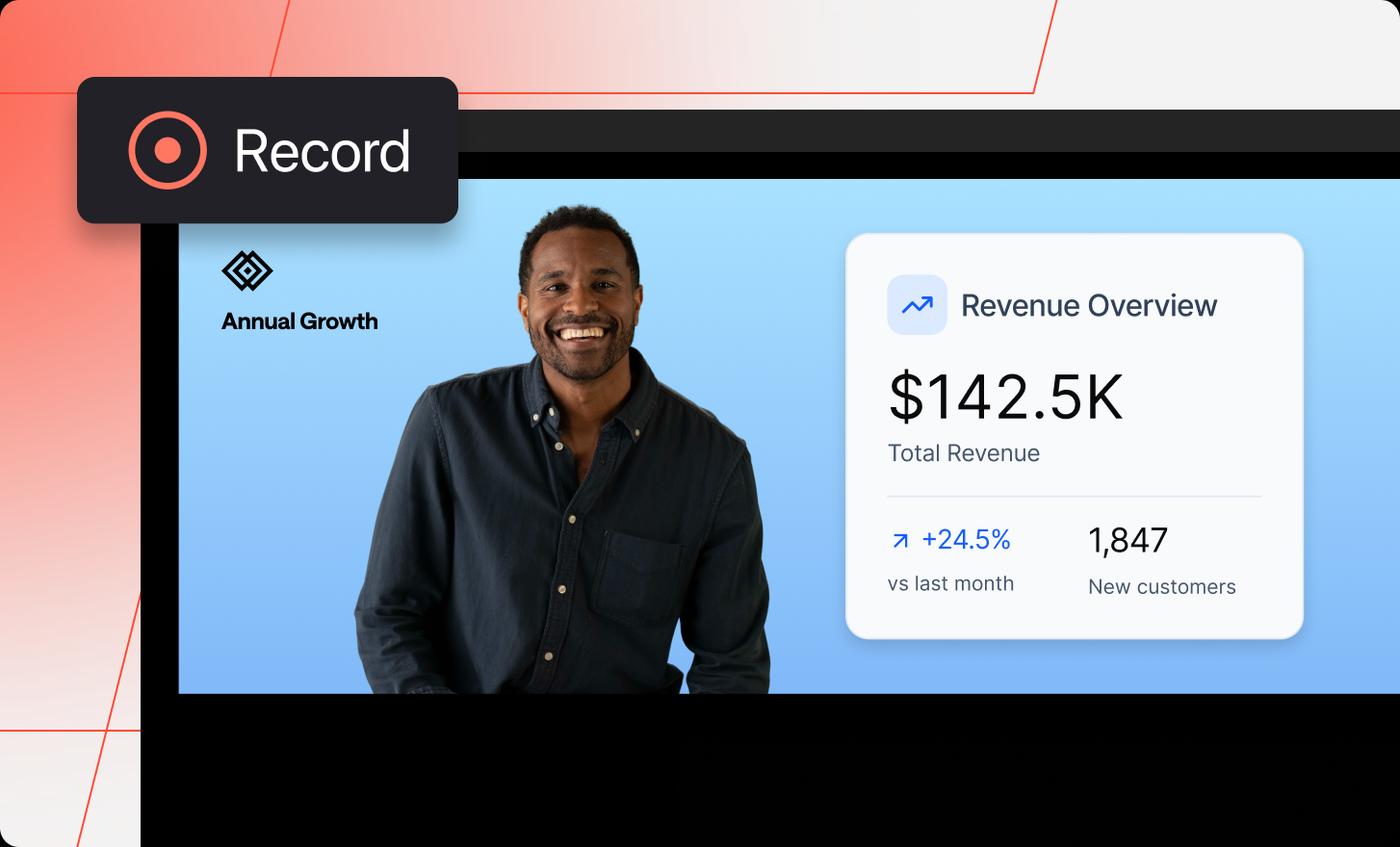
Creator is the direct heir to mmhmm. It combines the presenter and their materials in a designed frame, then lets them record a whole talk or build it chapter by chapter. They can trim, rearrange, add overlays, share a hosted link, or export an MP4. It accepts PDFs, PowerPoints, Keynotes, images, audio, and video. Its AI features suggest follow-up questions and titles, but the company frames them as help for the speaker rather than a substitute for one.
“I use mmhmm for every call. Every call matters.”Gordon Plant, BaseKit vice president of product, in Airtime's customer story
Plant was the company's first paying customer. Airtime says it named its logo Gordon after him, which is a particularly odd tribute to a software subscription. His use case was less odd: he prepared visuals for sales conversations so he could move between a product demo, a roadmap, and a branded background without fumbling through windows. The point was readiness, not spectacle. If a prospect raised a technical question, he had an image ready to answer it.
One name could not hold the whole act
The pandemic supplied the first audience, and money followed quickly. The company announced a $4.6 million seed round and then $31 million of additional financing in 2020, a figure that included money for its parent product studio All Turtles and venture debt. In July 2021, SoftBank Vision Fund 2 led a $100 million Series B. Such a sum is a bet on a future habit, not evidence that the habit exists. Once workers returned to offices, mmhmm had to make sense beyond the peculiar theater of lockdown.
The answer arrived in April 2025 with a new name and a wider stage. Airtime split the old all-purpose product into specialized jobs. Creator remained the presentation studio. Camera became the layer for looking and reacting better in calls, with lighting controls, background treatments, logos, name boxes, GIFs, and saved looks. The meeting still happens in Zoom, Google Meet, Microsoft Teams, Webex, or another app that accepts a virtual camera. Airtime works on the part those services leave to the speaker.

Airtime Recorder addresses the other end of a call: the explanation that should not require a call at all. It captures a screen, window, selected area, or camera, with microphone and system audio. A recording can be shared as a link or downloaded. Its viewer lets recipients zoom into a region, adjust playback speed, and move the presenter's image. That is a modest but thoughtful distinction from the plain video file: the person watching has some control over what deserves attention.
Stacks, the fourth tool, makes a quietly radical change to screen sharing. A host assembles PDFs, images, videos, screens, or Google Drive material into a shared collection. Participants can move ahead, go back, and zoom for themselves, then revisit the material after the call. The premise is that a meeting need not require everyone to follow one person's mouse. It is the least theatrical Airtime product and perhaps the one most willing to admit how meetings actually work.
Who pays for presence?
Airtime sells subscriptions to individuals and teams. Its listed individual plan costs $10 per month with annual billing or $12 month to month, covering the four tools. Team accounts add administration, centralized billing, and sign-on options; enterprise pricing is arranged with sales. New users get a 14-day trial without a credit card. Native screen recorders cost nothing and meeting platforms already have their own effects, so Airtime must earn that fee by making a repeated task meaningfully easier, clearer, or more memorable.
The customer list suggests where that case can be made. BaseKit used mmhmm for sales demos. Consultant Beth Collier used it to keep herself visible during online workshops. An Airtime case study says an Intercom group used mmhmm for internal presentations and recruitment videos, reporting a 3.5-fold rise in job applications after sharing those videos. That is a customer's reported result, not a promise that every polished video will do the same. It does show why the product reaches beyond the usual category of "fun video effects."
The company sits in an awkward, useful place in the market. It competes with the default camera setting, the screen share button, a free capture tool, and more specialized video apps. Its advantage is continuity: the same person can style a live call, deliver a presentation, record a short explanation, and let a group examine the underlying material. Its risk is equally plain. If the audience needs only a quick call or an unadorned recording, the extra controls may feel like wardrobe for an errand.
The original name sounded like someone listening. The new one asks for a little time to speak. That is a neat piece of branding, though branding alone cannot rescue a meeting. Airtime's more durable lesson is in its product choices: notice the precise moment a communicator loses the room, then give that moment a tool. Start with the thumbnail. Give the viewer a zoom control. Let people move through the deck. None of these ideas ends the video meeting. They make it a bit less likely that everyone wishes it had ended sooner.
Continue the conversation