Somewhere in the roster of a roughly 50-person Zoom meeting, there was a hole. Howard Lerman had forgotten to invite a colleague. The person did not know a meeting was happening, could not glimpse it through a glass wall and had no corridor in which to bump into anyone afterward. In the software version of an office, Lerman realized, the uninvited were invisible. That small administrative slip became the founding puzzle of Roam.
- Roam gives distributed teams a live map of colleagues and rooms, so a quick conversation can begin without a calendar event.
- The company sells a nine-product bundle for $19.50 per active member per month at its published 2026 rate.
- Its most interesting claim is behavioral: Roam reported an 8-minute, 34-second average meeting when it launched in 2022.
- The bet works best for teams that want to share a live workplace, rather than merely exchange messages across time zones.
Lerman was an unlikely apostle for the placeless office. At Yext, the company he co-founded and ran until 2022, he liked the New York headquarters enough to move next door whenever the business took larger space. He prized the instant reading of a room: who was around, who was talking, where energy had gathered. When work scattered, the familiar tools preserved calls and messages but lost that peripheral view. Roam’s answer was to make the peripheral view the main screen.

A floor plan with a pulse
Open Roam and you see an office map. Teammates appear in private offices, meeting rooms or shared spaces; presence and activity give the map its weather. A colleague can knock, enter a room or start an audio or video conversation. People in a physical office and people at home can appear in the same view. It is a modest change in interface with a large social implication: asking “have you got a minute?” becomes visible and immediate again.
The map is what distinguishes Roam from the familiar stack. Zoom and Google Meet connect people once a link exists. Slack and Microsoft Teams keep conversations going in text. Roam begins one step earlier, with the question of who is there. Dedicated virtual-office rivals such as Gather and Kumospace also turn remote work into a place. Roam’s present pitch is that the place should contain the rest of the working day as well: chat, meetings, scheduling, notes, recordings, events and an AI assistant.
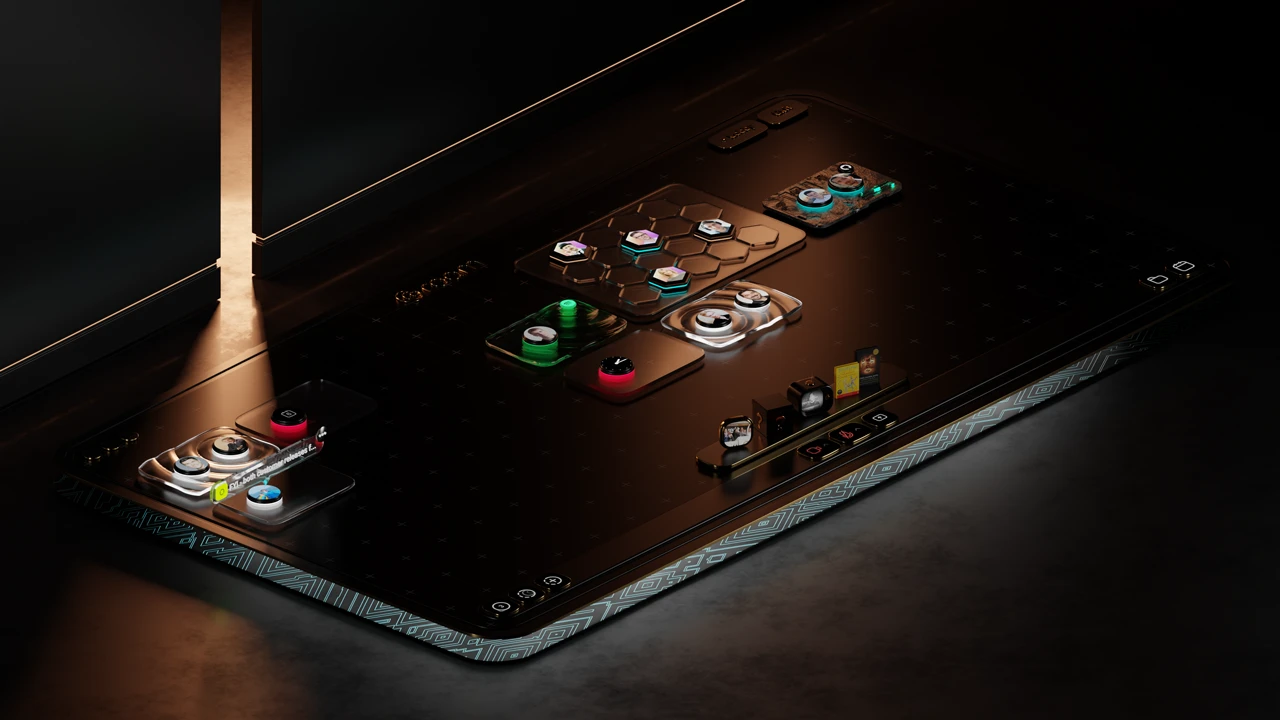
That orientation matters for a hybrid team. A remote employee can see that two colleagues in the building have begun talking, instead of learning about the conversation after its decisions have hardened. A manager can spot an available teammate without firing off a status-check message. A new hire can navigate people and rooms rather than memorizing a directory. None of this guarantees a good culture. It does, however, make the small, ordinary encounters of a workplace technically possible.
“Some people think an HQ is a place for a bunch of text. We think an HQ is a place for a bunch of people.”Howard Lerman, Roam’s 2022 launch post
The price of a quick conversation
At launch, Lerman said meetings on Roam averaged 8 minutes and 34 seconds. He also reported that his own daily meeting time fell from 4.5 hours to less than 2.6 after switching his internal meetings from Zoom. Those are company-reported observations, not a controlled study. Still, they explain the product’s sharpest idea. When a conversation can begin now, with two people, it need not be booked for next Tuesday with six.
The underlying cost is not just minutes spent in a meeting. It is the choreography around them: the scheduling link, the wait, the oversized calendar block, the catch-up message to someone missed. Roam’s way of reducing that overhead is to make availability and conversation location legible. A team could copy the principle without buying the software: keep an obvious place for quick questions, default to the few people needed, and stop granting every small decision a thirty-minute ceremony.
The subscription tries to turn the same principle into a business. Roam’s published 2026 price is $19.50 per active member per month, billed monthly. It says it charges only for people who use the product that month, allows guests free of charge and gives each new member a 14-day trial. The bundle includes its virtual office, drop-in calls, AInbox messaging, Lobby scheduling, Magicast screen recording, Magic Minutes meeting summaries, Theater presentations, On-Air events and On-It, its AI assistant. This is a software subscription sold to teams, with a strong argument for consolidating tools already on an expense sheet.
A very crowded room
The breadth is appealing, but it also sets a high bar. A company replacing Slack will compare search, integrations and habits, not merely the license price. A team using Zoom for every external meeting will care whether guests can join easily. Roam says guests can come through its Lobby without paying for a seat; it also offers meeting links and mobile apps. But the reason to migrate is the office itself. If a company has little appetite for live presence, a cheaper chat-and-call stack may fit its rhythm better.
Roam’s customer references range from startups to larger organizations. Its site quotes people at Deepgram and Cirque du Soleil, among others. The company says teams use the platform in more than 40 countries; its story page claims over 1,000 companies have moved into a Roam virtual office, while a newer demo page says more than 2,000 teams. These are Roam’s own counts, and the pages use different wording. What they show clearly is the market Roam wants: organizations whose colleagues are spread out but whose work still depends on quick, shared attention.
The company has been making that last step more explicit. Magic Minutes transcribes and summarizes a meeting, and allows a participant to ask what happened or what comes next. On-It is designed to act as an office-aware assistant, watching for a person to become available, scheduling a follow-up, or sending a message inside Roam. September 2026 releases added channels, custom app actions and new status bubbles. The ambition has shifted from simulating a room to letting the room remember and act.
Even the demo had to learn brevity
One of Roam’s own product lessons came from trying to explain it. Lerman wrote in May 2026 that an earlier multiplayer demo was too cumbersome: it required audio and video permissions and could take up to ten minutes. Roam replaced it with an instant interactive tour on its website. For a company promising less friction, the sales experience had to embody the promise. The practical lesson is wonderfully portable: let people understand the first useful gesture before asking them to set up an account, grant permissions or sit through a guided show.
Roam has since accumulated the ordinary proofs of a maturing software company: a disclosed $10.6 million founder-funded seed round and a $30 million Series A led by IVP in 2022; a 2023 noise-cancellation partnership with Krisp; and a US patent issued in September 2026 for virtual-office management interactions. Its team page names fellow founders Tom Dixon, Sean MacIsaac, Grace Sutherland and Peter Lerman alongside Howard Lerman. Several came from Yext, which helps explain the company’s fascination with turning a headquarters into a system.

The most useful question Roam poses is not whether a digital office can perfectly mimic a physical one. A real office contains commutes, closed doors and accidental interruptions along with its sociability. The better question is which part of being together deserves to survive the move online. Roam’s answer is awareness: see who is around, have the short conversation, and let the record of it help with what follows. If that works, the hallway need not be a hallway at all.