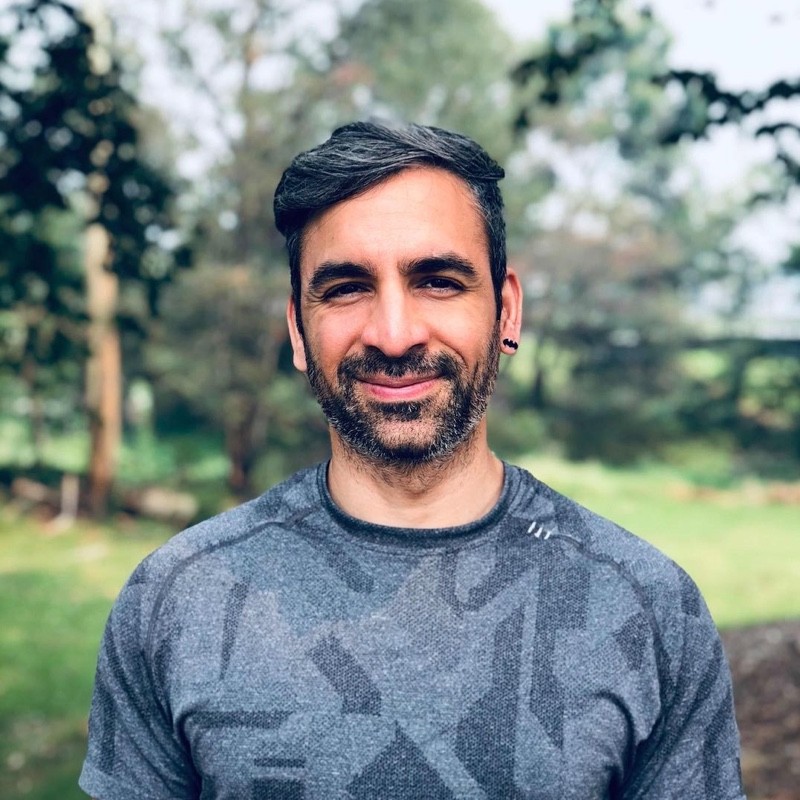
Vishal Punwani runs SoWork, a virtual workplace where distributed teams show up each morning as avatars and work beside each other in a shared, persistent space. People wander over to a colleague's desk. They bump into each other in a break room. They hold an all-hands without a single calendar invite. It is the office, minus the commute and the carbon - and it began as something nobody set out to build.
The origin is almost too neat. Punwani and his two co-founders, Emma Giles and Mark Liu, had met roughly seventeen years earlier playing World of Warcraft. As adults they reunited at Harvard to build a machine-learning education company. To run that company, they needed a better way to talk to each other across distance, so they built an internal communication tool inspired by the virtual worlds they grew up in. The tool grew faster than the product it was meant to support. They listened to the data, killed their darling, and pivoted the whole company. The edtech startup, once called Sophya, became SoWork.
"The gaming world has actually solved many of the problems that the business world is facing as it evolves to remote-first."
// Vishal Punwani, CEO of SoWork
That sentence is the whole thesis. Games figured out presence, spontaneity and belonging decades ago. You can feel who else is online. You can walk up to someone. You earn a place in a guild. Meanwhile the business world, suddenly remote, was trying to manufacture those same feelings out of grids of faces in boxes and an ever-growing pile of meetings. Punwani's wager is that the answer was sitting in a video game the whole time.
From Medicine to Avatars
A doctor who reads culture like a chart
Before any of this, Punwani was a medical doctor. He carries the MD on his name and in his approach. He worked at the World Health Organization in Geneva, and he was one of the highest-rated Teaching Fellows in Health and Medicine at Khan Academy - the rare clinician who could make a hard idea land for a stranger on the other side of a screen. Teaching at scale to people you will never meet turns out to be useful training for designing a workplace where nobody shares a room.
Medicine gave him a habit that shows up everywhere in how he talks about SoWork: he diagnoses before he prescribes. The symptom most remote teams describe is fatigue, so they reach for the obvious treatment - more meetings, more tools, more Slack. Punwani's reading is different. The thing that went missing, he argues, was never the meetings. It was the middle moments - the unscheduled, low-stakes collisions that quietly hold a culture together. You cannot put a hallway chat on a calendar. You have to build a hallway.
"We looked beyond the surface, grasped the essence - the community spirit."
// On what SoWork is actually trying to rebuild
He resists the word balance. To Punwani, "work-life balance" sounds like a scale where one side has to lose. He prefers integration - "knitting work into the rich tapestry" of a life rather than fencing it off. It is a tidy reframe, and it explains why SoWork looks less like a meeting app and more like a place: customizable offices, avatars, proximity-based audio and video, an AI office assistant that takes the meeting notes so humans can stop transcribing each other.
The Bet
From the earth to the cloud
There is a second, quieter argument running underneath the product. Every office that does not get built is concrete that does not get poured and a commute that does not get driven. Punwani frames SoWork as moving workplaces "from the earth to the cloud" - a climate pitch hiding inside a software company. He believes the pressure will become unavoidable: that every employer will eventually invest in a virtual work experience, partly to repair culture and partly to cut carbon.
Investors bought the thesis. In October 2021, SoWork announced a $15 million seed round led by Talis Capital, the UK firm backing what it called the world's first digital co-working space. By then the company had more than a hundred private offices in beta and a waitlist north of 300,000 people. One of the early customers was Tinder, which wanted to extend its own culture into a hybrid physical-and-virtual space - a dating company deciding that a workplace, too, is really about how it feels to walk in the room.
Punwani keeps a foot in the ecosystem that made him. He has served as an Entrepreneur-in-Residence with Harvard Alumni Entrepreneurs, a mentor at the Oxford Foundry, and an alumni advisor at MassChallenge Boston. He turns up on conference stages - a fireside chat at HarvardXR among them - to argue the same case he has been making since the pivot: the office is not a building. It is a feeling, and feelings can be engineered.
"Every employer will eventually feel the pressure to invest in a virtual work experience for employees to repair culture and combat climate change."
// The long bet
What makes him worth watching is the unlikely shape of the resume - a clinician, a teacher to half a million strangers, a former World Health Organization hand, all pointed at a problem most people would file under HR software. He treats company culture the way a doctor treats a body: a system with symptoms, root causes, and an honest diagnosis underneath the easy one. The colleagues who recommend him reach for the same word - humble - and pair it with deep domain range. He still lists video games and hockey among his off-hours pursuits, which is either a charming detail or, given where the company came from, the entire business plan.
The cynical read on virtual offices is that they are a pandemic artifact, a fad that fades the moment leases are signed again. Punwani's counter is that the genie of distributed work is not going back in the bottle, and the only real question is whether remote teams get a place worth showing up to or a calendar worth dreading. He is betting on the place. Three friends who once raided dungeons together are now trying to build the room you walk into without leaving your house - and they would like you to wave to a coworker on the way to your desk.