The first version of Jugnoo had a rather short list of accomplishments. It could match a passenger with an auto-rickshaw. It could not handle payments. It did not calculate fares. Samar Singla and his co-founder, Chinmay Agarwal, had built enough to discover whether anyone wanted the ride. When requests arrived, they built the machinery behind it. The passengers, in effect, had voted for a company before the company was quite ready for them.
Singla later called it an experiment. That is a useful word for someone who studied engineering physics, left a doctoral programme, worked on poultry feed and eventually became the founder and CEO of JungleWorks. His career looks erratic if you arrange it by industry. Arrange it by the practical problems he chose to tackle, and the turns become easier to follow.
An idle auto-rickshaw was one such problem. A driver needed more paid journeys. A passenger needed a ride without a prolonged negotiation. Both were already in the same city. There was no need to invent a vehicle. Someone had to make the meeting happen.
Before the app, there were chickens
Singla graduated from IIT Delhi in 2009 with a degree in engineering physics. His education included research experience at CERN and an internship at IBM, where he worked under physicist Stuart Parkin. The advice from Parkin that stayed with him was compact: “Work hard and market yourself.” A laboratory could teach more than laboratory technique.
He went to the University of Maryland for further study, but returned to India within a year. His father was in the poultry business. Singla saw an opportunity to apply research to feed costs, and started Prodigy Foods. The move from physics to poultry sounds like a punchline until you remember that a farm has costs, processes and customers. It offers an unusually prompt education in whether an idea works.
Prodigy’s work involved distillers’ dried grains with solubles, or DDGS, as an alternative feed ingredient. By 2016, the venture was described as having reached production of 30 metric tonnes a day. Singla moved on after roughly two years. Chickens had supplied an entrepreneurial apprenticeship that a more conventionally glamorous business might have charged considerably more to deliver.
Click Labs followed in 2011. It built mobile applications for clients, giving Singla a view into what different businesses kept asking technology to do. Work on one customer’s problem could reveal a problem shared by others. That possibility mattered: a company selling developers’ time could begin thinking about selling a product repeatedly.
- 2009Engineering physics
IIT Delhi - 2011Click Labs
Apps for businesses - 2014Jugnoo
Matching rides - 2017JungleWorks pivot
Software for operators - 2025Outplay stake
Sales engagement
The driver’s side of the bargain
Jugnoo launched in Chandigarh in November 2014. The temptation is to tell a ride-hailing story entirely from the passenger’s seat: open phone, summon vehicle, escape the pavement. Singla’s explanation started with the driver’s working day. Conversations with auto-rickshaw drivers suggested that long idle periods were part of the fare problem. Too little work made each paying journey carry too much weight.
A steadier flow of rides could change that calculation. But the app needed drivers willing to use it. In the early days, that required persuasion and training. A download alone did not settle the question. Drivers needed to see a difference in their earnings before the technology became convincing. The sales presentation had to survive an actual working day.
Then the same network suggested other jobs. By August 2015, Jugnoo was offering local grocery deliveries through Fatafat and cooked food through Meals. An auto could carry a person on one journey and an order on another. The business was learning to look at the vehicle as available capacity, with several possible customers for the next trip.
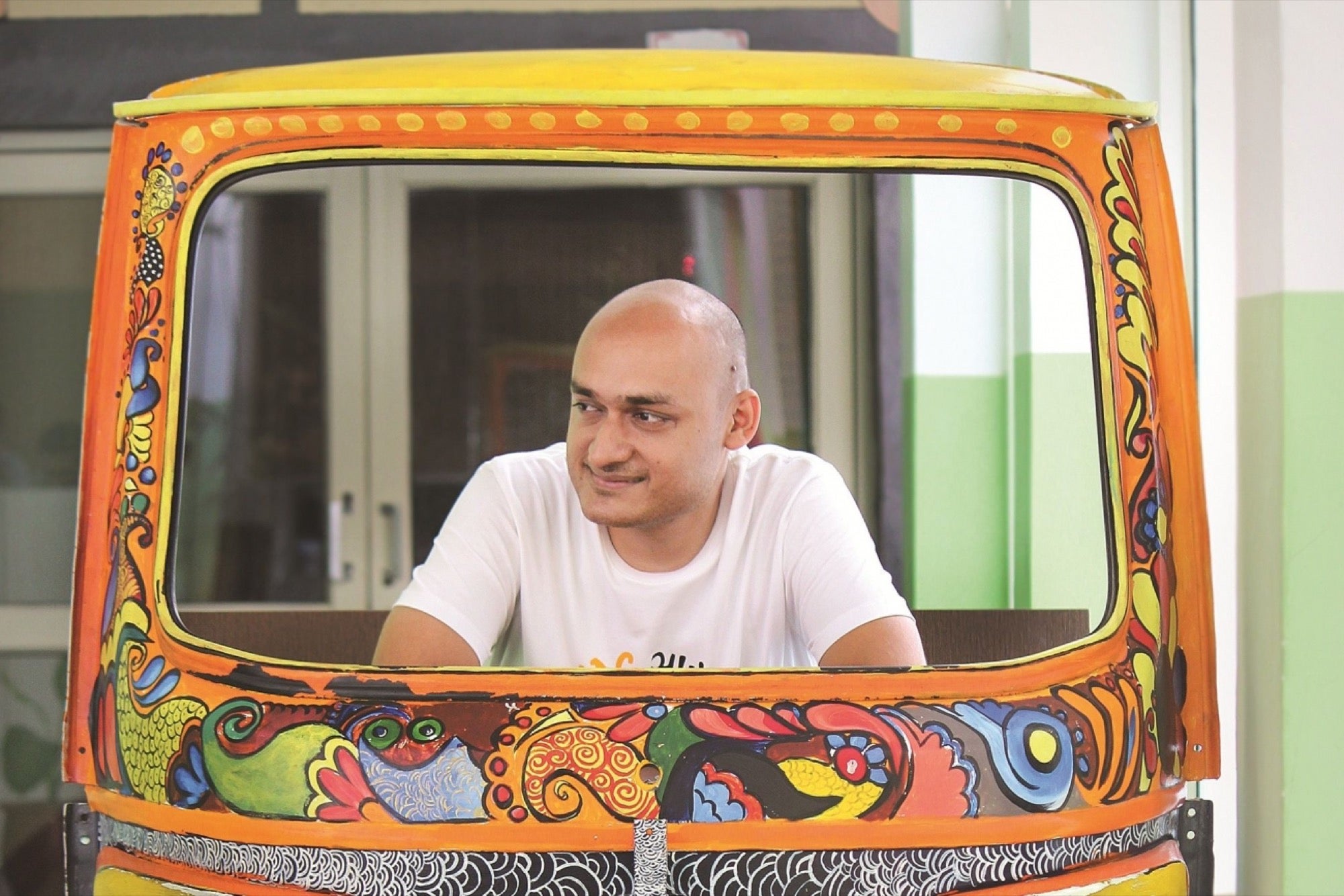
The early growth was uneven. A February 2017 account put Jugnoo’s first thousand daily transactions six months after launch; the next six months brought that figure to 20,000. Those are historical milestones, rather than a present-day scorecard. They describe the awkward rhythm of a new service: a slow stretch convincing people, followed by the rather different difficulty of keeping up with them.
That same year, Singla appeared in Entrepreneur India’s 35 under 35 selection. He identified turning down funding from Flipkart and Naspers as a particularly difficult decision. Recognition made a tidy magazine entry. Deciding which money to accept was a less photogenic part of the job, with consequences a founder would have to live with after the photograph.
Twenty minutes from almost everything
Chandigarh was an operating choice as well as a location. In 2020, Singla described a city where the places he wanted to reach were about twenty minutes away. He preferred its quality of life and lower level of distraction. Recruiting young people who wanted a bigger city could be difficult; training local graduates, he said, helped retain them.
His view of startup events was less affectionate. He described the San Francisco circuit as evenings of beer and pizza that could leave him no wiser. The complaint was funny because his earlier writing showed how much he had loved that city. In a 2014 blog post, he remembered strangers willing to discuss technology, try an unfinished product and offer detailed feedback.
He could admire the enthusiasm and still decide that attendance was taking too much time. The distinction says something about his relationship with the startup world. He enjoyed people who wanted to build things. He was less convinced that being near a busy calendar necessarily helped him build his own.
“someone somewhere in a garage”
Singla’s personal-site tagline
The garage in his website’s self-description is a pleasingly modest address for someone with international ambitions. His public biography also makes room for travel and amateur photography, particularly documenting everyday life. These interests fit comfortably beside the older blog’s occasional detours from company building. Rain, for example, received its own little defence.
Changing who buys the software
Competing in ride-hailing brought Singla up against companies with much larger pools of capital. By 2020, he was openly discussing the decision to stop trying to match their spending. The underlying software offered another route: operators elsewhere could use it to run their own services. The customer no longer had to be the passenger standing outside.
JungleWorks developed through the shift of Click Labs toward business software, a pivot Singla dated to 2017. His ambition was to let entrepreneurs run on-demand businesses under their own identities. A merchant wanting an online channel could buy the tools to operate one, including the coordination between orders, merchants and drivers.
The appeal is easy to understand from a shopkeeper’s position. Joining a large marketplace brings an audience, along with that marketplace’s terms. Running a service directly brings a different set of responsibilities. Software can help with those responsibilities, but the merchant still needs customers and a delivery operation that works. Singla’s experience had put him close to those practical details.
In 2021, he set out an ambition to enable a million entrepreneurs. It was a statement of intent. His work had moved from operating a local service toward supplying other operators, so the scale he wanted depended on how many businesses could use the tools successfully. Helping one company dispatch its orders could become a repeatable business of its own.
A delivery problem meets a sales problem
In March 2025, JungleWorks acquired a majority stake in Outplay, the sales engagement business founded by Laxman and Ram Papineni. The company described plans to bring Outplay’s sales capabilities together with JungleWorks’ local-commerce software. For Singla, this extended the work into another part of running a business: finding customers and managing the effort to win them.
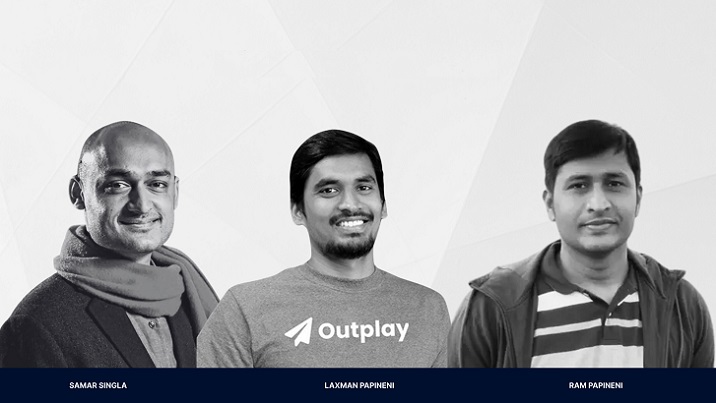
Outplay’s subsequent announcement described a $14 million investment from JungleWorks. Laxman would continue as CEO and Ram as CTO; the existing fifty-person team would remain. The plans included an AI-based customer relationship management system and sales development tools. Those were development plans announced with the deal, and their ambition was broader than simply adding another product name.
April 2025 announcement. The acquisition price was not disclosed.
By September 2026, Singla’s public writing was taking aim at sales teams’ administrative habits: slow responses to incoming leads, manual data entry and forecasts built on stale deal stages. The vocabulary had changed considerably since auto-rickshaw dispatch. The irritation was familiar. People could be busy all day while the work that brought in money remained unattended.
Leave enough time for the rain
Singla has been frank about his manner. In 2017, he described himself as sometimes too blunt to get along with everyone. His approach to keeping employees involved was more patient: communicate openly and make their long-term interests part of the conversation. A preference for experiments does not remove the need to explain them to the people doing the work.
His older writing also resisted treating every decision alike. An uncertain product feature could be tried quickly, then improved if people used it. Hiring called for more care, because a poor choice could influence the choices that followed. This is a more useful glimpse of his method than the usual demand that every founder move faster at everything.
Then there is that blog entry about rain. Running logistics had turned a shower into inconvenience: journeys became harder, clothes got wet, phones needed protection. Singla suggested allowing oneself to get drenched occasionally. It is a small, cheerful interruption to a career spent improving how things move. The person scheduling the journey might still enjoy arriving a little wet.
Follow the next turn
The person & the businesses
- Samar’s personal blog ↗
- LinkedIn ↗
- Twitter / X ↗
- JungleWorks ↗
- Explore the JungleWorks company profile ↗
Reading & watching