Consider a small grocery shop at six in the evening. This is an illustration, not a customer testimonial. An order arrives, then another. One driver is returning, another is waiting, and a customer wants to know whether the milk is on its way. The website has done its job. The shopkeeper’s job has multiplied.
That crowded interval between checkout and doorstep is where JungleWorks earns its place. The company sells the software that lets a merchant run an online business under its own name: take the order, assign the work, watch the delivery and answer the customer. Its proposition is pleasantly unromantic. Commerce requires someone to keep track of things.
- Yelo builds the storefront and handles ordering.
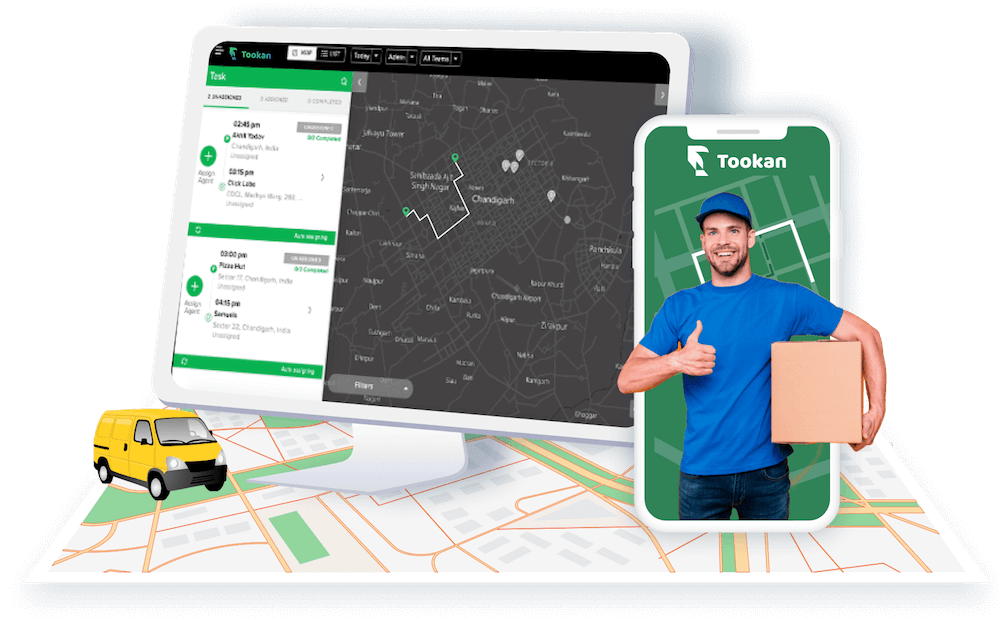
- Tookan manages dispatch, drivers and delivery tasks.
- Hippo handles customer conversations and retention.
- The merchant gains control - and keeps responsibility for demand, staffing and margins.
The customers kept asking for the next thing
JungleWorks traces its beginnings to Click Labs, a services company started in 2011. The JungleWorks SaaS pivot is usually dated to 2017. That distinction matters: selling a custom application and selling a product are different occupations. One produces a solution for a client. The other must find enough common ground among clients to make the same machinery useful repeatedly.
A 2018 company retrospective describes a revealing sequence. Tookan customers were stretching delivery software toward customer ordering. Yelo, officially launched in June 2016, addressed that adjacent need. Then marketplace customers wanted external support integrations. Hippo followed. Eventually, the scattered product identities became confusing, prompting an umbrella brand. The next product was often hiding in the work around the current one.
“It has been an eventual pivot.”Samar Singla, founder and CEO, speaking to YourStory in 2021
Singla’s experience with Jugnoo, the mobility business, also shaped the change. In that interview, he described the limits of competing with deep-pocketed consumer platforms and the opportunity in supplying other operators. The useful lesson is a change of vantage point: a company can compete for each rider or merchant, or sell tools to businesses trying to serve them.
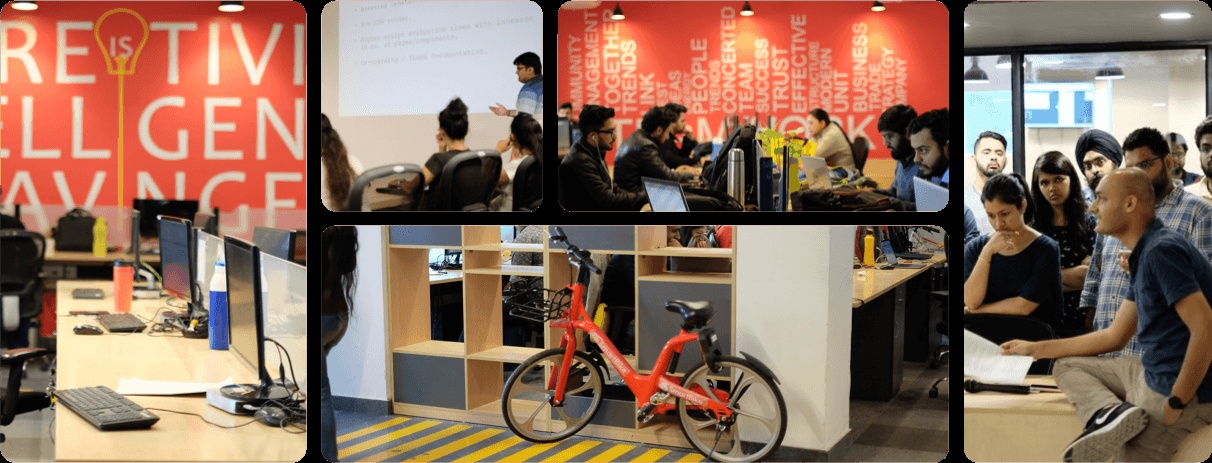
Its careers page stresses continuous learning and questioning conventions, and describes a leadership programme for MBA graduates. Those are the employer’s own descriptions. The more telling detail for this story is the product sequence: an organization willing to turn recurring requests into another part of the business, rather than treating every request as a fresh bespoke project.
A grocery bag is a coordination problem
Yelo offers a single-store storefront, a multi-vendor marketplace or a direct-to-consumer setup spanning branches. Catalogues, inventory, payment integrations and branded apps belong to this layer. Tookan takes on dispatch and delivery: task allocation, driver interfaces, tracking and operational reports. Hippo adds conversations, ticketing and automated engagement. Mappr supplies mapping and route-planning tools. The expertise runs through the handoffs between these jobs.
Catalogue + checkout
Dispatch + tracking
Support + engagement
Illustrative workflow. Configuration and integrations determine the actual journey.
The distinction becomes concrete in JungleWorks’ Chef V case study. The California drinks business needed to know where its delivery agents were and who could take the next job. The described solution combined fleet visibility, bulk order uploads, automatic assignment, route optimization and notifications. A manager could inspect the location of a driver and the status of a box in the same operating view.
The case is useful because its problem is ordinary. A subscription box has a schedule. A driver has a location. An order has a status. Put those facts in separate conversations and the manager becomes the integration layer, forever asking someone else for the missing piece. Software can reduce that clerical burden. It cannot drive the van.
The published customer examples span different scales. JungleWorks’ case-study directory names Tata Qmin, FoodDrop, MyShuppa and Subway UK; its delivery pages also display large enterprise brands. In its MyShuppa account, the company reports growth from 300 to more than 13,000 monthly orders in six months. That is a vendor-reported result, not an experiment proving what the software alone caused.
One older integration makes the market position especially clear. In 2016, GloriaFood connected online restaurant ordering with Tookan’s delivery management. The restaurant could keep its ordering system and connect the next stage. JungleWorks can supply a suite, but the practical opportunity also includes joining an existing operation at the point where it starts to struggle.
Read the small numbers, too
The business model combines subscriptions, volume allowances, overage charges, extensions and custom proposals. Here is one entry point, checked on October 1, 2026: Tookan lists a free tier with 100 monthly tasks and two drivers. Its Startup plan includes 1,000 tasks at $129 on monthly billing, or $99 per month on annual billing. Additional tasks cost $0.15 or $0.12 respectively.
Annual billing: $99/month equivalent. Monthly-plan overage: $0.15/task. Published prices checked October 1, 2026.
The comparison table marks route optimization and branded apps as paid items. Yelo’s Scale and Elite offerings ask buyers for a custom proposal. A sensible budget therefore begins with the actual workflow and the required extensions. The subscription is one line of the calculation; setup work, connected services and the people doing deliveries belong in it too.
A cheap-looking monthly fee can be a poor bargain if the team continues retyping orders. A more expensive arrangement can be worthwhile if it removes a recurring coordination task. That is an inference about buying software, not a promised JungleWorks return. The relevant measure is the cost of completing a successful order, including the time spent fixing it.
The app is yours. So is the homework.
JungleWorks sits between local merchants who want a branded digital operation and enterprises trying to coordinate delivery across an existing network. Its distinctive pitch is the connected ordering-delivery-engagement family. Delivery specialists such as Onfleet and Bringg overlap with Tookan; a merchant can also assemble commerce and communication tools from separate suppliers.
The trade-off is control versus responsibility. A branded storefront lets a business present its own catalogue and customer experience. An aggregator can offer access to an audience; running your own platform means finding reasons for that audience to visit. A white-label app is a useful address. It does not make people knock.
This approach fits an operator with real demand, a delivery or service workflow to coordinate, and enough repetition to benefit from automation. It is less persuasive when orders are sparse, the main problem is attracting customers, or essential systems cannot exchange data reliably. Buying dispatch software before deciding who will deliver is an elaborate way to postpone the decision.
The next customer might be a sales team
In March 2025, JungleWorks acquired a controlling stake in Outplay, a sales engagement platform. Outplay’s April announcement described a $14 million investment commitment and plans for an AI-first CRM and AI sales-development tools. The acquisition price was undisclosed. The distinction is worth preserving: money promised for the next chapter is not necessarily money paid for the shares.
Outplay said its existing CEO, Laxman Papineni, and CTO, Ram Papineni, would remain, along with the 50-person team. The move extends the group’s interests beyond dispatch into selling itself. It also raises a familiar product question: how much should one software family attempt to cover? A wider portfolio gives buyers more options, but each additional connection has to earn its usefulness.
Follow one order before buying another app
The part readers can copy is straightforward. Take one real order and trace it through the business. Write down where someone copies information, waits for a reply, chooses a driver or answers a status call. Then test the tools against that journey. Compare dispatch time, missed deliveries and support workload with a baseline. Let an observed improvement justify the next layer.
JungleWorks’ history suggests why this exercise matters. Customers showed the company where ordering and support belonged around delivery. The same observation can guide a merchant choosing software. Start with the moment that repeatedly causes trouble. The buy button may be the prettiest part of the operation. The business is what happens afterwards.
Take a closer look
PRODUCTS & PRACTICAL READING
WATCH THE WORKFLOW
FOLLOW THE COMPANY