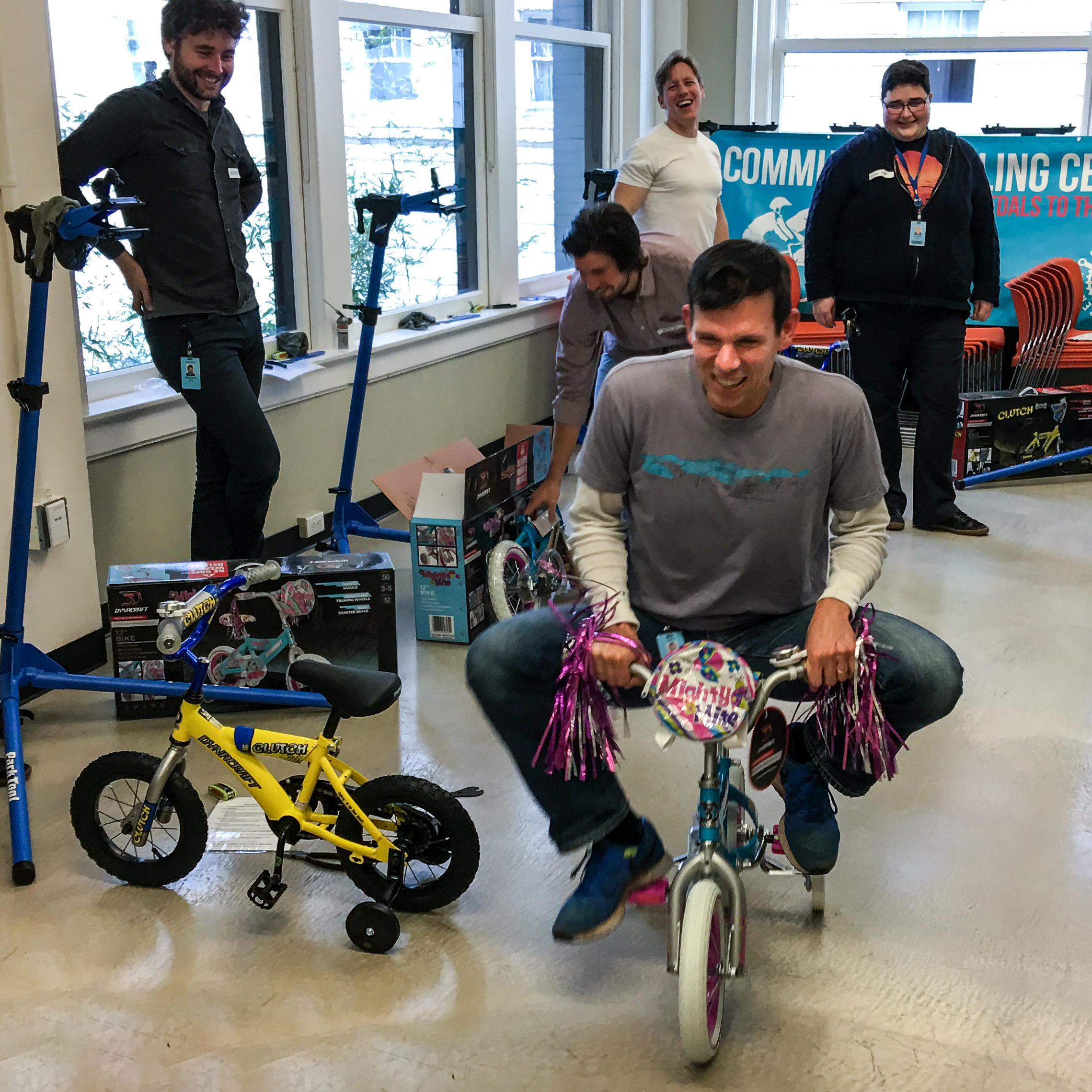
At a volunteer bike build in 2016, Sam Blackman finished with a test ride around a community kitchen. The bicycle was small. Its streamers were pink and glittery. The chief executive of a video technology company had apparently found an adequate vehicle for the occasion. Anyone hoping for a solemn demonstration of corporate responsibility would have had to wait.
The scene belongs beside the more familiar pictures of Blackman accepting awards or explaining streaming software. He could talk about graphics processors, raise money and negotiate with Amazon. He could also make himself useful in a room full of bicycles intended for children. The distance between those activities seems to have been shorter for him than it is in most corporate biographies.
Blackman co-founded Elemental Technologies in Portland in 2006 with Jesse Rosenzweig and Brian Lewis. Amazon acquired it in 2015. He stayed on as CEO of the business that became AWS Elemental, until his death in August 2017. The company helped broadcasters carry video onto phones, tablets and other connected screens. Along the way, he kept asking what a successful technology business could do for the place that produced it.
An Apple III, then a different sort of chip
Born in Portland on July 3, 1976, Samuel Saunders Blackman encountered computers well before anyone needed a pitch deck to explain their appeal. At six, he was learning Logo and Pascal on an Apple III. Electronics classes at the Oregon Museum of Science and Industry fed the interest. He attended Duniway Elementary and later Lakeridge High School after his family moved to Lake Oswego.
His education carried him east to Brown for electrical engineering, then to Berkeley for a master’s in the same subject, completed in 1999. An Oregon MBA followed in 2008, while Elemental was already taking shape. Engineering work at Silicon Graphics and Intel preceded his time at Pixelworks, where he joined in 2000 and worked on image-processing chips.
Pixelworks gave him responsibilities beyond designing circuitry. He helped organize its Shanghai design center and worked on functional blocks across six ImageProcessor integrated circuits. That background matters: video processing was a field he had spent years learning from the inside. When he left to start a business, he took a specific technical problem with him.
The first proposed answer involved a semiconductor startup. Investor Eric Rosenfeld remembered a September 2006 meeting at which the team sought $7 million. The request was enough to make him choke. The early chip plan failed to find its footing; Elemental’s eventual business took a different route. Software running on available graphics processors offered a way forward without having to manufacture a specialized chip.
It was a consequential change of equipment and economics. GPUs could handle many processing tasks in parallel. Software could be updated as devices and video formats changed. Elemental built around that combination, bringing the founders’ knowledge of pictures and processors to customers whose audiences were becoming much harder to keep in one place.
in Portland
Olympic streaming
the company
The demonstration fit in his hand
By 2011, an iPad had become a useful sales prop. Blackman could bring one to an executive demonstration and show video playing through technology his company supplied. The appeal required little translation. A screen on a conference table made a more persuasive introduction than a lengthy excursion through encoding terminology.
Behind the easy act of pressing play sat a difficult distribution problem. A broadcast intended for a television system had to reach devices with different capabilities and connections. Elemental’s software processed the video into forms those devices could receive. It sold the machinery behind an experience viewers were beginning to regard as ordinary.
The business had taken three and a half years to produce its core video-on-demand product. A live-streaming product followed. By spring 2011 it had 39 employees, was recruiting engineers and was opening a London sales office. The growing tablet market gave its work a timely, visible demonstration. Customers could see where viewing habits were heading without commissioning a study.
The Olympics gave the company a much larger stage. Its technology supported streaming for the London Games in 2012, and it returned for the 2014 Winter Olympics. For a Portland engineering company, the audience could now be international while the work remained rooted at home. A local address had become compatible with a very long list of distant screens.
Portland was part of the offer
Blackman’s attachment to Portland had practical dimensions. In a city development agency profile, he described taking his sons to school and then cycling to headquarters in 15 minutes. Walkable blocks, parks and public transit figured in his account of the city. These were things he used, and things he thought other people might want to use too.
Elemental acted on that preference early. Before the founders paid themselves, the company provided employees with TriMet passes and chose workspace with bicycle parking and showers. In 2013, among 90 local employees, only 15 percent drove alone. Transit accounted for 49 percent, cycling another 15 percent and walking 11 percent. The commute was already part of the company’s operating model.
Blackman presented the arrangement as a recruiting advantage and a matter of cost. His parking comparison suggested substantial savings, although it excluded the premium paid for the downtown location and its facilities. The fuller point was easy to recognize: a company recruiting engineers from elsewhere could offer a particular kind of daily life.
At TechFestNW in 2014, he acknowledged that Portland companies could struggle to match the starting salaries offered by Facebook and Google. The city’s livability was something they could offer instead. His argument placed family life, public services and the working day in the same conversation as hiring. The city itself was doing some of the recruiting.
How 90 Portland employees got to Elemental
A bargain hunter with an expensive problem
He was equally particular about what the workplace needed. Elemental went without a game room, foosball table or kegerator. Blackman wanted people interested in the work. He said the business was about more than the office itself. In a business culture that could turn recreational furniture into a philosophy, this was an admirably economical furniture policy.
His thrift also travelled. At a 2018 gathering of Oregon Executive MBA alumni, marketing chief Keith Wymbs remembered Blackman’s determined pursuit of inexpensive travel options. Wymbs wondered whether the hunt itself provided some of the pleasure. Classmate Jocelyn Bourgault recalled humor and compassion; investor Diane Fraiman remembered confidence and foresight. The recollections allow room for a founder who could be ambitious about the business and scrupulous about the fare.
There were quieter tastes too. In 2013, Blackman recommended David James Duncan’s novel The Brothers K. He aimed to read fiction quarterly, though he admitted that the schedule did not always survive contact with life. The novel took him two quarters because he lingered over it. His other recommendation was Reed Hastings’s Netflix culture presentation, a business document sharing reading time with a family story set in nearby Camas.
The pairing suits the questions that occupied him: how people live together, and how people work together. It also supplies a welcome interruption to the image of a chief executive permanently in motion. Some things, apparently, were allowed to take longer than planned.
“For me, the office is not what the business is about.”Sam Blackman
When Amazon bought, the shares travelled further
Amazon acquired Elemental in 2015 for $296 million. The figure describes the company transaction; it says nothing simple about Blackman’s personal wealth. For Portland, it offered evidence that a locally built technology business could attract a buyer of Amazon’s scale. He remained at the company after the deal.
Elemental had also made a decision years earlier that would matter when the acquisition arrived: it had donated equity to the Entrepreneurs Foundation of the Northwest. Once those shares could be turned into money, $150,000 went to the Oregon Entrepreneurs Network. Other proceeds helped establish the Elemental Community Investment Fund at the Oregon Community Foundation. An early promise had acquired a spendable form.
Blackman’s community work had several outlets. He co-founded the 4K 4Charity Fun Run Series in 2014 to support diversity and inclusion initiatives, and Elemental signed the TechTown diversity pledge. Running could bring an industry together outside its meeting rooms. A short course gave people accustomed to discussing video resolution a second use for the phrase 4K.
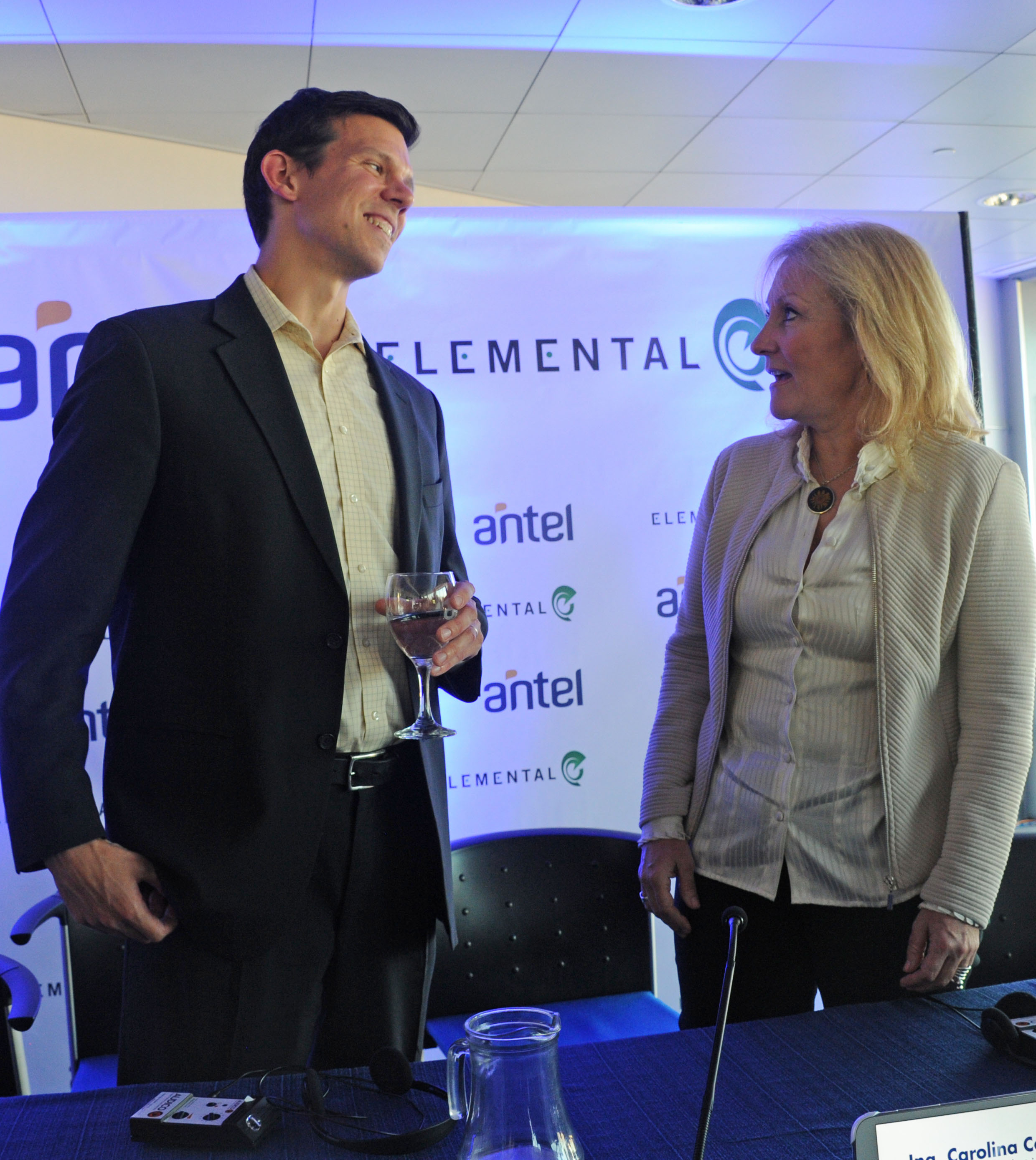
His working map kept widening. At an August 2016 press event in Uruguay, he appeared with industry minister Carolina Cosse as Elemental and Antel discussed their partnership. Antel was using the technology for Vera TV, including its Rio Olympics coverage. In April 2017, NASA scheduled a 4K conversation between Blackman at the NAB Show in Las Vegas and astronaut Peggy Whitson aboard the International Space Station. The work had travelled rather further than his bicycle commute.
What stayed in circulation
After his death, the Oregon Entrepreneurs Network named Blackman its 2017 Lifetime Achievement Award recipient. A later technology leadership award carried his name, recognizing both industry leadership and community impact. Those paired criteria seem a fair description of the demands he had placed on his own career.
The people who had worked with him also continued the less ceremonial parts. At the Community Cycling Center, his example was remembered through volunteering and the small bicycle’s kitchen circuit. At Oregon’s business school, alumni passed along stories about travel bargains, humor and confidence. These are useful memories because they retain the scale of a person.
In September 2025, AWS marked ten years since the acquisition and credited the foundations laid by Blackman, Rosenzweig and Lewis. The products had continued to evolve after him. His co-founder’s anniversary message asked colleagues to keep Sam in their hearts. The company’s history still had room for the person as well as the product names.
Blackman wanted more Oregon companies to give their employees the chance to build businesses of their own. He understood that a successful employer could leave behind money, experience, relationships and confidence. Elemental had benefited from an earlier generation at Pixelworks. He wanted the sequence to continue.
That leaves a more interesting picture than a founder beside a sale price. There is a child programming an Apple III, an engineer changing the proposed business, a father measuring a city in minutes by bicycle. There is also a grown executive testing a tiny bike with glittery streamers. It was quite a lot of company culture to fit onto two small wheels.