Gregg Kantor had an office, of course. But there was another place where he sometimes prepared his remarks as chief executive of NW Natural: the Knowing the Fish Pavilion at Lan Su Chinese Garden. Gloria Lee, remembering him after his death, described finding him there writing his speaking notes. Before business came news of his daughters, Olivia and Sabrina.
It is a pleasingly Portland arrangement: a utility executive borrowing a little tranquility from a garden he had helped bring into being. There are worse settings for considering a speech. A conference room rarely offers the same competition for one’s attention.
Kantor’s public life moved through settings that do not always sit comfortably together: government, a gas company, environmental policy, school initiatives and neighborhood redevelopment. His career offers a way to look at their intersections. The recurring work was getting institutions with different obligations to agree on something practical enough to last.
When selling less could make sense
Take the problem of a gas utility encouraging customers to conserve. In the early 2000s, higher natural gas prices gave NW Natural customers a reason to use less. The company helped them become more efficient. Lower consumption then reduced its revenues. Doing something useful for the customer created an unwelcome consequence for the business.
Kantor was then working in public and regulatory affairs. In a 2004 annual-report interview, he explained the company’s response: a Conservation Tariff, approved by Oregon regulators in 2002, that partially separated utility margins from the volume of gas sold.
The mechanism sounds dry because it is. Tariffs generally lack the social advantages of a garden pavilion. Yet this one addressed a substantial problem: how to encourage conservation when the seller’s income had been tied to consumption. Kantor described a regulatory solution that changed the incentives rather than asking everyone to disregard them.
His account used the language of shared gains. Customers had bills to manage; investors had capital at risk. A workable arrangement needed room for both.
“It made no sense that doing what was right for customers should hurt the company.”Gregg Kantor · 2004
A planner walks into a utility
Kantor studied geography and environmental studies at the University of California, Santa Barbara, then earned a master’s in urban planning at the University of Oregon. That education concerned the relationship between places, people and the systems connecting them. A utility would eventually give him a rather literal version of that assignment.
Before joining NW Natural, he worked in the Oregon governor’s office and at the Bonneville Power Administration. His experience also included community development at Portland General Electric, where he was a manager from 1991 to 1993. From 1994 to 1996, he ran a government affairs consulting firm, Kantor & Associates.
He arrived at NW Natural in 1996 as director of public affairs and communications. The route to operational authority took a decade: vice president, senior vice president, executive vice president. These were jobs close to the company’s conversations with the world outside its walls.
In May 2007 he became president and chief operating officer, taking responsibility for most day-to-day operations. Mark Dodson remained CEO. The promotion put utility services and utility operations under Kantor alongside responsibilities he already understood, including regulatory affairs and corporate communications.
His description of the assignment combined continuity with change. The company had a long history of service, and he intended to carry it forward while dealing with a changing industry. By September 2008, he had joined the board. The succession plan called for him to become chief executive when Dodson retired at year’s end.
He took over in January 2009. Around that transition, his commitments also included the Oregon Global Warming Commission, the Oregon Business Council, United Way and the Portland Schools Foundation. The job at the gas company occupied one part of an already crowded civic calendar.
The unglamorous business of making things work
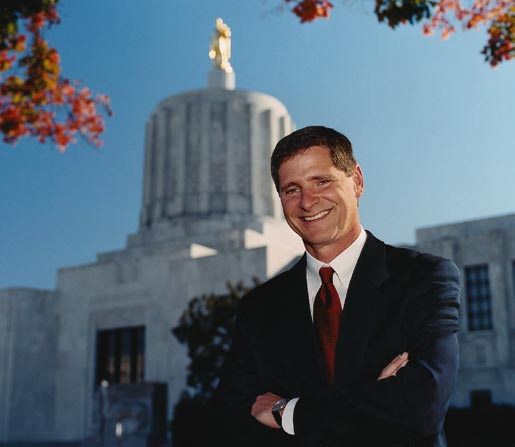
Becoming CEO in 2009 meant leading through the aftermath of a financial crisis. In his account of 2010, Kantor pointed back to an operational restructuring begun several years earlier: centralizing, simplifying and standardizing how the business worked. The workforce had fallen from roughly 1,300 employees to about 1,000.
Those numbers describe a consequential change, and the company presented it as a way to restrain costs. Kantor also emphasized service. NW Natural recorded the highest national score in the 2010 J.D. Power residential gas utility customer satisfaction survey and received the top western-region result for business customers.
The combination mattered to his argument. Cost discipline could be judged alongside what customers actually experienced. Flexible payment arrangements and help finding energy assistance were part of the response to difficult economic circumstances. He linked that attention to both customer satisfaction and lower bad-debt expense.
There was physical construction, too. The Gill Ranch gas storage facility in California was completed and began operating in the fourth quarter of 2010. Storage made the long planning horizon visible: a company serving daily demand also had to prepare for needs well beyond the next bill.
By the 2015 annual meeting, reporting on 2014, Kantor could point to progress on another decidedly unphotogenic task: removing bare-steel pipe. Only three miles remained across the system. The company also reported another year of improving customer growth and work toward a potential expansion of its underground storage at Mist.
The financial figures were less tidy than a victory speech might prefer. Reported net income for 2014 was $59 million, compared with $61 million in 2013. A service business contains several stories at once: investment, earnings, maintenance, customer experience. Kantor’s job was to hold them in the same frame.
of bare-steel pipe remained system-wide in NW Natural’s report on its 2014 results.
A MAINTENANCE MILESTONE · REPORTED MAY 2015The argument followed him to Washington
As chairman of the American Gas Association in 2014, Kantor carried his industry’s case onto a national stage. Speaking to utility regulators in Washington that February, he urged a fresh look at policies designed in an earlier era of perceived gas scarcity. He argued that greater domestic supply had changed the choices available.
This was advocacy from a gas executive. He wanted natural gas to compete on terms he considered fair and believed regulators would help determine the country’s energy direction. The environmental dimension of his career existed alongside that commercial position.
The industry also faced questions about its own infrastructure. In June 2014, discussing methane releases, Kantor acknowledged public concern about aging pipelines and leaks. The issues included both older pipe and the practice of releasing gas when emptying a section for maintenance. He described a problem customers were raising and the industry needed to address.
Later that year, he emphasized preparation for severe weather after the demanding winter of 2013-14. His explanation centered on year-round planning, gas purchasing and storage. Reliability, in this telling, depended on decisions made long before the cold arrived. The infrastructure story had a calendar as well as a balance sheet.
After the corner office, another kind of plan
NW Natural announced its succession plan in December 2015. David Anderson would take over as CEO on August 1, 2016; Kantor would advise the board through the end of that year. Kantor praised Anderson’s operational and financial experience. The handover gave an exact date to a change that had been prepared in advance.
It also returned attention to work beyond the company. By 2018, Kantor was a board member of Albina Vision Trust, involved in a different argument about Portland’s future: what could happen to a site occupied by Portland Public Schools’ administration building.
The Portland Diamond Project had offered to buy the property as it explored locations for a baseball stadium. In November, it withdrew the offer, saying Albina Vision’s long-range plans could serve the wider community. Kantor welcomed the decision and the possibility of creating “a new and diverse neighborhood.”
Albina Vision described an inclusive mix of residents, businesses, artists and visitors, connected through public spaces and to the river. The question was bigger than whether a particular building should change hands. Different uses of the same land imply different futures for the people around it.
Here was the urban planner again, weighing the purpose of a place. A stadium has an obvious public appeal. A neighborhood takes a more patient explanation. Kantor’s statement favored the opportunities he saw in the latter, giving a concrete civic position to a career often expressed in the language of corporate responsibility.
- 1996Joins in public affairs and communications
- 2007Becomes president and COO
- 2009Begins as CEO
- 2016Hands over the role; advises the board through year-end
The river had a place in the calculation
Conservation had a personal geography for Kantor. As a child he moved from Portland to Southern California and saw the effects of urban sprawl. Later, Oregon’s high desert became a place he wanted to protect, and the Deschutes and Metolius became places where he fly-fished.
In a member profile published in spring 2025, Oregon Natural Desert Association described his support for its work and his involvement in establishing a corporate matching-gift program. His own donations could be matched, extending what he gave. The financial mechanism was simpler than a utility tariff, but the interest in making an arrangement work was familiar.
“For me, it’s about ensuring that wild and undeveloped areas are well-managed and preserved,” he said. He valued conservation carried out with rural communities and organizations able to bring different participants into a solution. The concern reached beyond the pleasure of a day on the water to what would remain for others.
Kantor died in Portland on January 31, 2025, aged 67. His family directed memorial donations toward Lan Su Chinese Garden, the Portland Chinatown Museum and Albina Vision Trust. Those choices draw a compact map of his civic interests: places to gather, histories to remember, a neighborhood’s future to consider.
The garden where he sometimes prepared his speeches belongs on that map. So do the rivers. Together they bring the executive back into view as a person with places he cared about, and practical work he was willing to do for them.