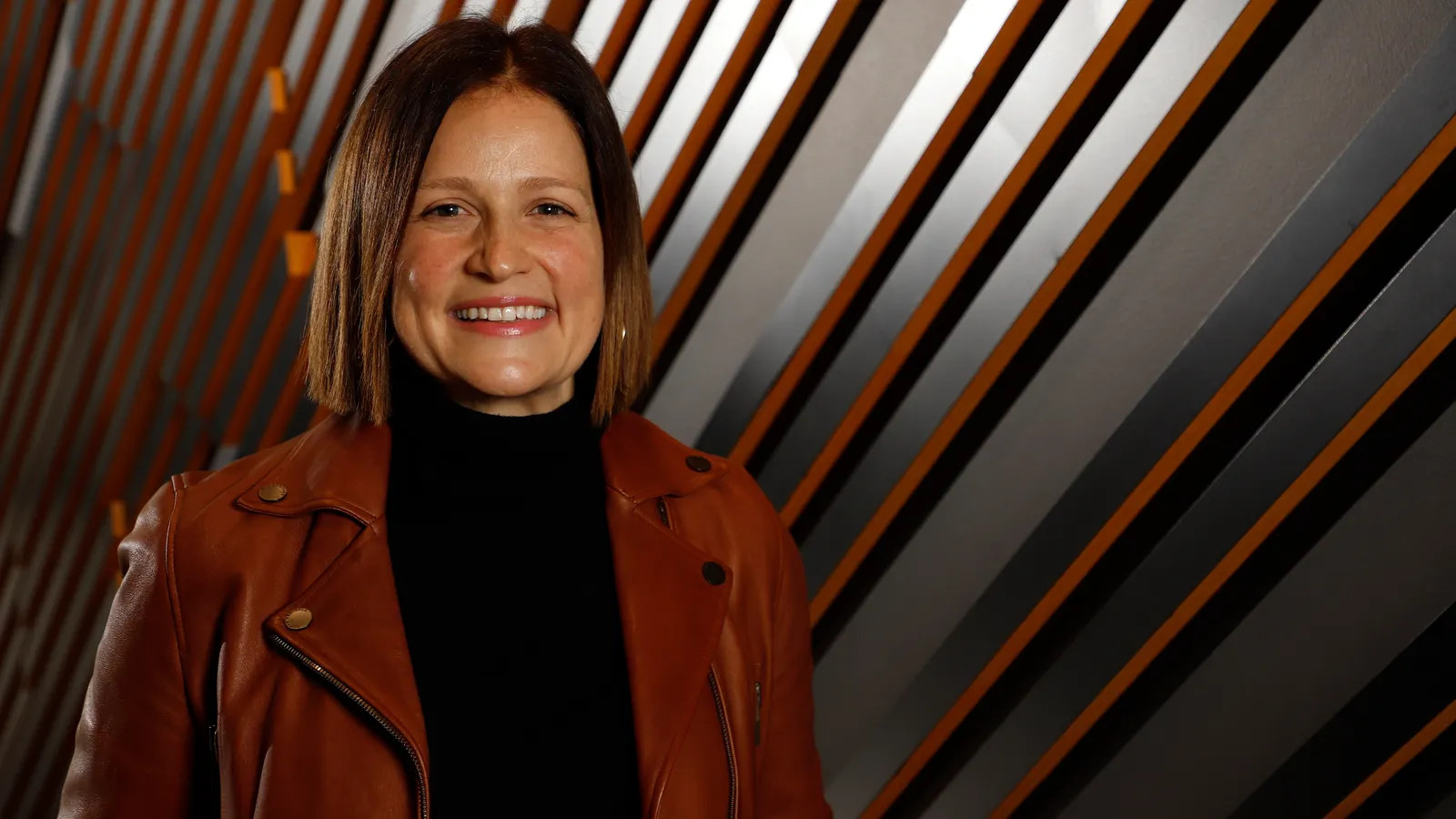
The future arrived at Pendleton Woolen Mills wearing a black turtleneck and carrying a merchant's eye. Jennifer Ingraffea had known the company from the other side of the shop window. When she moved to the Pacific Northwest more than two decades ago, Pendleton was among the first local brands to catch her attention: the history, the craftsmanship, the peculiar confidence of patterns that did not need to shout. In July 2025 she crossed the threshold as its president and chief executive officer. She became the first woman to lead the business and only the third outsider to hold the job.
A new chief executive often arrives with the language of velocity. Ingraffea began by listening. In her second week, she described herself as being in a learning phase, trying to understand six generations of family ownership and care. The restraint was not ceremonial. Her method, developed through Gap, Williams-Sonoma, nearly 20 years at Nike and a turn running product and merchandising at The North Face, starts with a baseline. What is happening in the numbers? Is the product healthy? Do teams understand their roles? Where has the process become foggy?
She gives the investigation a limit - perhaps 30, 45 or 60 days, depending on the scale. Listen forever and listening becomes a handsome form of delay. Eventually a leader must choose the pockets that deserve energy, produce an early win and clear room for longer work. The framework has three plain nouns: business, team, process. Its virtue is that nobody has to embroider it on a pillow to remember it.
An artist on one side, an accountant on the other
Ingraffea explains her instincts by beginning at home. Her father was a CPA. Her mother was an artist. The child between them learned to exercise what she calls both sides of the brain: the image and its arithmetic, desire and the spreadsheet that must pay for it. She first imagined becoming a lawyer. She attended law school, entered financial trading and kept watching the retail sector, convinced that the consumer revealed something essential about the economy's health.
Then she moved west. Continuing to trade meant waking at two or three in the morning, a schedule with all the charm of a fire alarm. In the late 1990s she joined Gap's retail training program. She expected business development or strategy; the people she met steered her closer to product, merchandising and planning. The fit held. Planning gave her the science of why an item performs. Merchandising left room for the more elusive question of why a person wants it.
At Nike, where she rose through a procession of merchandising leadership roles, the former college athlete found a corporate version of the competitor's mind. Athletes improve by repetition, measurement and an allergy to standing still. She carried that logic into teams and assortments. By the time she left, she had served as global vice president of kids footwear product merchandising. The North Face recruited her in 2022 to lead product and merchandising worldwide.
Her corporate philosophy rests on two words that can sound almost decorous until she explains the labor inside them. The first is stewardship: leave every meeting, assortment, team and organization better than you found it. The second is curiosity: ask questions in order to learn, not to catch somebody failing an exam whose answer the boss already knows. Together, she believes, they create rhythm and forward movement.
The bars are illustrative, not performance scores. Her point is the weave: numbers, people and ways of working must be assessed together.
The weekend field trip
There is another instrument in her kit, and it requires no dashboard. Ingraffea likes to be in the market, talking to accounts and watching customers. She may spend a weekend in a store studying traffic patterns: where shoppers slow, what earns a hand on the fabric, what does not. It is a refreshingly nosy habit. The consumer ceases to be a segment in a presentation and resumes being a person with somewhere else to go.
That eye matters at Pendleton because the company is not short of recognition. Its roots run to 1863; its mills in Pendleton, Oregon, and Washougal, Washington, are two of the remaining woolen mills in America. Its products travel far beyond the Pacific Northwest. Recognition, however, is not the same as relevance. A blanket can contain history and still need to win a place in a new apartment.
By early 2026, Ingraffea was describing the assignment as a reset. Product focus needed elevating - not the price, she clarified, but the rigor of deciding what the company sells, whom it serves and how the assortment should answer that customer. Her career, she said, could be summarized as fixing something or starting something. Pendleton had reached an inflection point that required a little of each.
She is especially interested in Gen Z and Gen Alpha, including two members of those generations in her own household. She sees a fascinating return to tactility and analog experience occurring alongside a life shaped by digital media and influencers. Pendleton happens to manufacture tactile evidence. The strategic question is how to let the two worlds meet without making a wool blanket perform embarrassing tricks on the internet.
Private ownership changes the clock. Pendleton's board is half family and half independent directors, a structure Ingraffea says supports objective decisions while allowing a longer horizon than a public company may enjoy. John Bishop, her predecessor and a fifth-generation family member, stayed as chairman. The arrangement gives transformation a guardrail: an outsider's fresh eyes beside a family's institutional memory.
Moves from financial trading into Gap's retail training program and finds merchandising.
Builds a nearly 20-year Nike career across planning and global merchandising leadership.
Leads global product and merchandising at The North Face.
Becomes Pendleton's president and CEO, its first woman in the role.
Publicly sets out a sharper product focus and an invitation to younger customers.
A culture with no loaded questions
Product is only half the work. Ingraffea is unusually specific about the social machinery around it. Feedback, in her view, is not an event staged twice a year under fluorescent light. It belongs in the daily work. Once, after she had been offering comments after meetings - what could improve, what had gone well - a colleague told her at midyear that she never gave feedback. Ingraffea replied that she gave it every day, then took the useful point: if the person needed the exchange named more formally, she should name it.
Her hiring preferences follow the same candor. She looks for high-integrity, solution-oriented people with complementary skills. A room full of identical strengths is not a team; it is an echo. Nor is brilliance a pardon for being impossible to work with. She treats empathy as a hard skill and confidence as the ability to say, without theatre, “I know what I don't know.” Secrets cannot be fixed. Asking for help is therefore evidence of judgment, not its absence.
One image has stayed with her from an article about authentic leadership. Imagine a life as a house: work in one room, friends in another, hobbies somewhere down the hall. If the walls vanished, would every room recognize the same person? Ingraffea decided that at the core they should. Serious Jenn and fun Jenn might take turns, but neither should require an alias.
This matters because heritage businesses are houses with many rooms. Pendleton contains mills, stores, designers, family shareholders, wholesale accounts, longtime devotees and customers who have not yet met it. The chief executive cannot serve one room by pretending the others do not exist. Her job is to make the rooms legible to one another, and then decide which doors to open.
The inheritance she wants to leave
After her appointment was announced, people contacted Ingraffea to tell stories about a favorite Pendleton product, an encounter with the Bishop family, a personal attachment to the brand. This is the enviable burden of a company whose goods outlive campaigns. Customers keep the archive in closets, cabins and photographs. A CEO cannot manufacture that affection on schedule. She can squander it rather quickly.
Ingraffea speaks of legacy at a smaller, more human scale. Who has she helped? Did she give somebody the tools to follow a passion into another function? Did a person from one of her teams go on to build another good team? Assistance compounds, she believes, until it becomes the long-term viability of a brand. The aspiration suits Pendleton. Wool is useful because many individual fibers, properly handled, become something stronger and warmer together.
Her test will not be whether Pendleton looks young for an afternoon. It will be whether sharper products invite new customers without making existing ones wonder who moved the furniture; whether digital storytelling sends people toward the substance of the mills; whether a long horizon produces decisive choices rather than leisurely ones. Ingraffea has come to a company old enough to distrust novelty and alive enough to need it.
The artist's daughter can picture what the brand might become. The accountant's daughter wants to know the numbers behind the picture. The merchant watches from the corner of the store as a hand reaches for the wool. Somewhere between those three points - imagination, discipline, observation - Pendleton's next chapter has begun.