The interesting thing about CoStar’s video overhaul is how little it had to do with television. This was a real estate company with apartment tours, neighborhood footage and almost a million videos to move. Its old provider stopped at 1080p. CoStar wanted 4K, more control and a smaller bill. By February 2025, it had replaced that provider with an AWS system built around AWS Elemental MediaConvert.
- The job: prepare video for the screens people actually use.
- The customers: broadcasters, streamers and businesses with video libraries.
- The trade: buy processing capacity; build the experience around it.
That unglamorous project is a useful introduction to AWS Elemental. A business inside Amazon Web Services, it supplies the machinery between the camera and the audience. The viewer sees a play button. Somewhere upstream, somebody has made a series of surprisingly consequential decisions.
A video is never just one video
Imagine sending the same enormous file to a living-room television and a phone on a patchy connection. One may cope. The other may spend the afternoon buffering. Streaming systems solve this by preparing different versions, then letting the player choose what the connection can sustain.
Elemental specializes in those transformations. MediaConvert processes files for on-demand viewing. MediaLive encodes live pictures. MediaConnect transports feeds; MediaPackage prepares and protects streams; MediaTailor handles personalized advertising and channel assembly. These are distinct jobs, which customers can combine with storage, delivery networks and their own applications.
Elemental handles video processing and transport. Services such as CloudFront carry the finished streams to viewers.
The distinction matters. Elemental gives a broadcaster or developer control over the pipeline, but the customer still needs a player, an application and the operational judgment to connect everything. It sits in the infrastructure layer of the media market, underneath the entertainment brands people recognize.
Portland, before the cloud
Elemental began in Portland in 2006 with three engineers: Sam Blackman, Jesse Rosenzweig and Brian Lewis. Its early specialty was accelerating video processing with GPU-based appliances. Broadcasters needed to reach more screens, and Elemental sold equipment that helped them do it.
By December 2014, the customers’ world was investing back: Telstra led a $14.5 million funding round with Sky participating. Amazon announced its acquisition the following September, without disclosing terms. The useful combination was straightforward: Elemental brought video expertise; AWS brought infrastructure that customers could rent as needed.
“On a personal level, it redefined what ‘Think Big’ truly meant, making our wildest ideas possible.”
Jesse Rosenzweig, co-founder, on the AWS acquisition
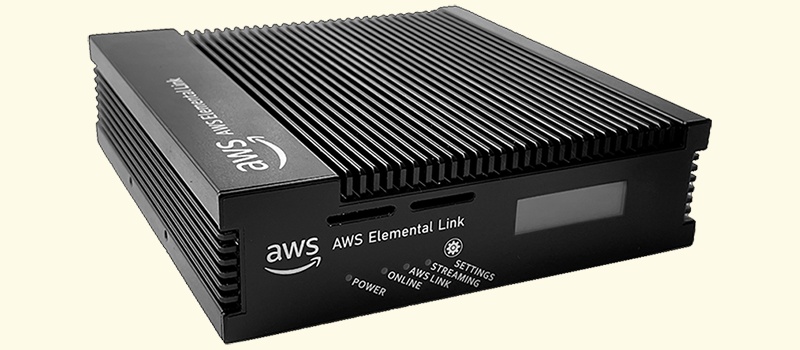
The managed media services arrived in 2017. Yet physical equipment remained part of the story. Elemental Link is a small device that sends live video into MediaLive. A camera feed still has to get into the cloud somehow.
Seven files refuse to play
CoStar’s migration puts some numbers around the proposition. The company retranscoded nearly a million original videos in one week. Seven failed because their source files were corrupt. Twenty percent of the catalog gained 4K outputs by returning to originals that already contained that detail. CoStar deliberately avoided upscaling lower-resolution footage.
Its system joined MediaConvert to S3 storage, event-driven processing and CloudFront delivery. The final traffic switch happened through database updates over two days, allowing monitoring and rollback. The reported result was an 80% cost reduction against the previous provider.
Indexed comparison: previous cost = 100. The result covers the replacement architecture, rather than encoding alone.
The practical lesson: preserve originals, reject corrupt inputs, avoid inventing resolution and make the switch reversible. An encoder can create another format. It cannot recover a picture that was never there.
The audience arrives at once
Live television presents a different puzzle. A library migration can wait in a queue. A football game cannot. For Super Bowl LIX in February 2025, Tubi reached 15.5 million concurrent streaming viewers at its peak. Its setup used MediaLive, other AWS media services, cross-region failover and CloudFront delivery.
But Tubi also strengthened registration, databases and the home page. The video pipeline was one part of a larger machine. Preparing the picture accomplished little if people could not get through the door. Tubi tested beyond anticipated demand and simplified the viewing path - useful habits for anyone running a scheduled event, whatever the audience size.
Count the minutes. Then count the rest.
Elemental’s cloud business replaces some equipment purchases with metered services. MediaConvert’s on-demand bill counts normalized output minutes, with multipliers for settings such as resolution, frame rate and quality. Several outputs mean several things to pay for. S3 storage, CloudFront delivery and supporting services can add separate charges.
For an on-demand library, encoding is the preparation step; delivery continues every time someone watches. A smaller encoded file can therefore affect storage and distribution costs as well as picture quality. MediaConvert offers quality-defined variable bitrate encoding, which adjusts bitrate to the complexity of a scene. A quiet interview and a fast-moving sequence need not consume identical amounts of data to meet the same quality target.
That makes CoStar’s savings an example to investigate, rather than a discount to assume. Model the actual output ladder and delivery traffic. A team seeking a complete hosted video experience may prefer a packaged platform; an engineering team wanting control can evaluate Elemental against encoding specialists such as Bitmovin.
Nor does every broadcaster want all processing off site. MediaLive Anywhere lets customers encode on their own infrastructure while managing it from the cloud. Existing equipment, local destinations and operational constraints can make that hybrid arrangement useful.
The picture gets a new job
In September 2026, AWS added Dynamic Multiview to MediaPackage, contextual metadata to Elemental Inference, and new MediaTailor advertising capabilities. The direction is revealing: the pipeline increasingly decides how pictures are assembled, understood and monetized, alongside how they are compressed.
Dynamic Multiview assembles viewing layouts from encoded sources without re-encoding every combination. Contextual metadata identifies what is happening on screen for downstream uses. For customers, the opportunity is to offer more viewing choices while keeping the machinery manageable. For the audience, success still looks pleasantly uneventful: choose something, press play, watch.