An interview in Alabama needed to reach a television studio in New York. On June 24, 2010, LTN carried it over its IP network. The result was pleasantly uneventful: the pictures arrived. For Yousef Javadi, who had already spent years in telecommunications, that ordinary outcome gave a new business something a presentation could never supply. A customer had put a live broadcast on the line.
Live television is an exacting customer. It expects the audience to tolerate advertisements, cliffhangers and the occasional unwise studio tie. It grants the delivery network rather less artistic freedom. A delayed packet is a small technical event with the potential to become everybody’s problem.
Javadi is LTN’s co-founder, president and CEO. His path to that first transmission ran through engineering school, international sales, corporate operations and internet calling. The television business was another place to apply experience accumulated over decades: connecting people is only useful when the connection does the job they need.
Tehran, Cambridge, and the business of distance
Born in Tehran, Javadi attended Alborz High School before moving to the United States. He earned bachelor’s and master’s degrees in engineering at MIT, then an MBA at Harvard Business School. Engineering and business would remain close companions in his working life. One concerns how a system behaves; the other asks who will pay for it to behave that way.
His early work included product management at Hughes Network Systems. From 1985 to 1991, he served as vice president of sales and marketing at Overseas Telecom Inc., known as OTI. He then moved to MCI as director of global services, working there from 1991 to 1995. The progression took him from equipment toward the organizations buying and operating communications services.
At GE Americom, where he worked from 1995 to 1997, he held a business development role. In March 1997, he joined Primus North America as chief operating officer. His responsibilities included businesses in the United States, Canada and Mexico. Networks crossing borders require more than a tidy diagram: different operations must function together, and commercial promises have to survive the journey.
As president of Sprint International, Javadi worked on a larger international stage. In 2002, he discussed plans to bring Sprint’s IP-based corporate communications services directly into Colombia. The plan formed part of an effort to find business in major Latin American markets. Long before LTN, internet protocol was already a practical commercial proposition in his career.
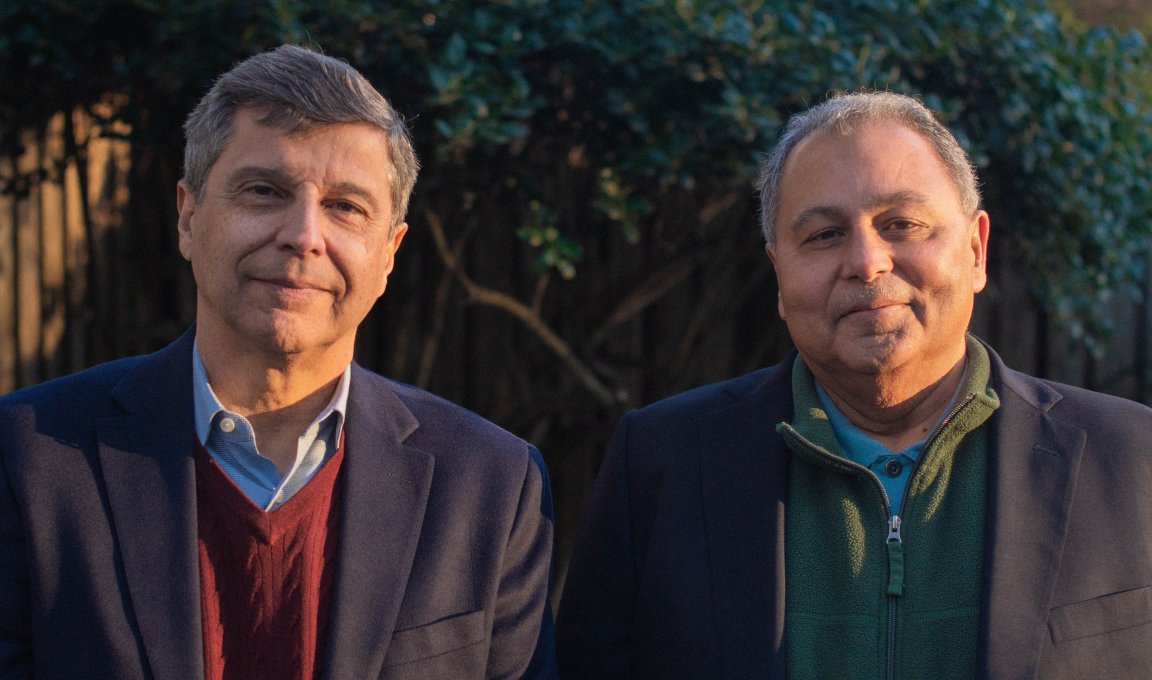
Two executives, a stack of papers
Javadi also founded Potomac Venture Partners, working with telecom ventures on business strategy, financing and getting started. By 2006, he was president and chief operating officer of NexTone Communications. Its chief executive was Malik Khan. Their names appeared together on the management team of a company addressing the complexities of voice and multimedia moving between IP networks.
That earlier partnership matters. LTN grew out of people who had already spent time with the difficulties hidden inside a seemingly simple connection. Khan and Javadi were longtime friends as well as telecom executives. When they began investigating video transport, they went looking for work that might help them solve the timing problem.
Rick Young, LTN’s product executive, later described the pair reading research papers and coming across the work of Yair Amir. Amir’s expertise was in reliable distributed systems. He became LTN’s third co-founder and chief science officer. The founding group joined commercial experience to a field of research concerned with keeping connected systems dependable.
It is an appealingly studious origin. The future business did not emerge solely from a sales forecast. There was reading to do. Javadi and Khan had identified a market they wanted to serve, but professional video required an answer to a technical problem before it could become a dependable service.

An interview makes the trip
LTN traces its initial idea to a conversation at a dining-room table in 2007; its leadership biographies date the co-founding to 2008. The premise was that audiences would consume more video in more places, and a network designed for live content could help supply it. By the time of that Alabama-to-New York transmission in 2010, the team had spent nearly three years developing the idea.
The underlying difficulty is easy to grasp without becoming a network engineer. Information travelling across the internet can encounter congestion, loss or irregular arrival times. A system moving live audio and video has to account for timing as well as delivery. The conversation on screen should still feel like a conversation.
LTN developed an overlay network, using the internet’s underlying connectivity while adding its own transport technology. Its work included routing around network trouble and recovering packets that were lost or arrived out of order. Javadi’s contribution belongs within that collective effort: building a business capable of selling and supporting the result.
A shared event can have several destinations. Timing has to survive the trip.
The customer has more than one screen
Javadi’s public explanations of the business return repeatedly to the customer’s circumstances. Large broadcasters, smaller operators, sports organizations and digital platforms have different requirements. Size alone does not explain those differences. A league’s international audiences and a broadcaster’s existing operations can create quite different assignments for the same underlying network.
“You can’t take a one-size-fits-all approach to media technology today.”
Yousef Javadi · 2023 interview
His argument extends beyond getting a picture from one place to another. Media organizations may need to produce different language versions, add graphics and adapt a feed for separate platforms. A live event becomes several related products. The commercial question is whether the organization can create those versions fast enough, and at a cost that makes sense.
In his September 2024 commentary, Javadi argued for managed services over large investments in infrastructure built and run internally. Fragmented audiences make it harder to justify equipment around a small number of established channels. Flexible operations, in his account, help broadcasters respond when the next audience opportunity arrives somewhere they were not previously serving.
He used LTN’s work with TelevisaUnivision as an example: supporting customized soccer coverage for ViX without requiring the media company to build all the additional operational capacity itself. The appeal is concrete. Content owners want to spend their effort on programming and audiences while obtaining the technical capacity a changing schedule demands.
That emphasis continued in his 2025 writing on sports distribution. More platforms and more tailored viewing experiences create additional work behind each match. For Javadi, the case for IP distribution involves matching that proliferation with operations that can scale. The same event can travel farther while becoming more specific to the people watching.
A network becomes a working relationship
There is another useful glimpse of Javadi’s relationship with research in computer scientist Amy Babay’s doctoral thesis. She thanked him, Khan and Michal Miskin-Amir for supporting the work and opening commercial infrastructure to experimentation. The network could serve as a place to measure and test ideas, as well as carry customers’ video.
That acknowledgment gives the founding research connection a second chapter. Working infrastructure offers researchers conditions that a laboratory cannot fully reproduce. For a company rooted in reliable transport, the relationship between academic investigation and commercial operation can continue long after the first product ships.
The operating commitments became particularly visible in June 2026, when PBS selected LTN to provide a managed IP video network across more than 330 member stations. The agreement included distribution, connectivity and two-way video transport. Rollout was scheduled to continue through the end of the year, a reminder that winning a contract starts another stretch of work.
PBS member stations covered by the announced LTN network agreement.
In July, LTN reported completed satellite-to-IP migrations covering more than 3,000 broadcaster, distributor, head-end and content-owner sites. Those are company-reported site migrations. For Javadi, the milestone places the original idea inside an established operating business: helping organizations change their delivery arrangements while continuing to serve their audiences.
The work also reaches beyond transport. On October 13, 2026, LTN announced an integration between its Schedule Playout service and Sony’s Ci Media Cloud. Channel operators could access media in Ci from the playout interface, with a return path for assets and recordings. The practical aim was fewer manual steps between stored content and programming going to air.
Back to a table, with more to explain
In February 2026, MIT listed Javadi and Amir for an Industry Leaders Series discussion at Mama Ayeshas in Washington. Dinner, a conversation about building LTN, questions and networking filled the program. The subject had grown from an early technical proposition into the decisions involved in running a global technology company.
The listing identified Javadi as an MIT alumnus of the class of 1978. Decades after engineering school, the questions still brought engineering and business together: how a network works, how it grows, and what makes another organization willing to depend on it.
His career gives those questions continuity. Equipment, global services, regional operations, international expansion and internet calling each supplied a different view of communications. At LTN, those experiences meet television’s insistence on being on time. The first customer’s interview offers a fitting measure of the whole undertaking. Somewhere, somebody is ready to speak. The picture has to get there.