A company can put its founders’ names on the door. Salil Talauliker and Julia Terenjuk also helped put their mentor’s name on a scholarship. At the University of Missouri-Kansas City, the Richard Orr Entrepreneurship Scholarship began making awards in the 2022-23 academic year. For two people who started a software business in Kansas City in 2003, it was a particular way of remembering how a business gets started: somebody has to help before there is much to applaud.
The scholarship makes a useful place to enter Talauliker’s story. Software is the occupation. Relationships keep supplying the turning points. A university leads to a startup community. A family connection helps determine where a development office opens. A founder’s problem becomes a conversation about what a business can afford. Years later, another country brings another set of founders asking questions he has encountered before.
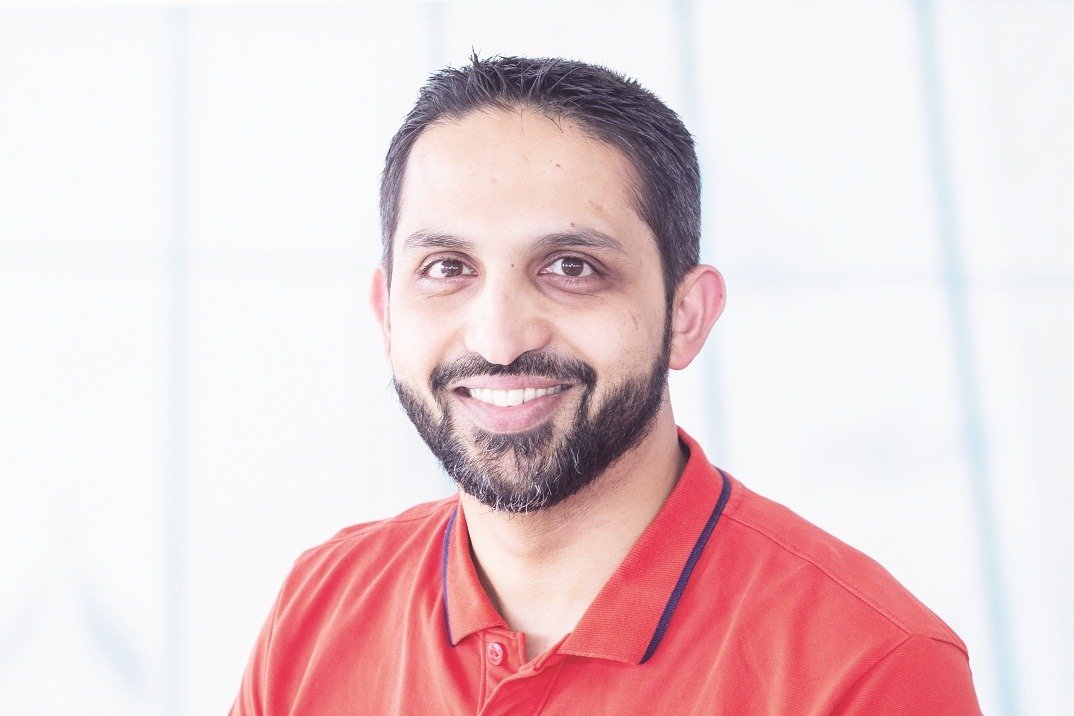
There are several places on this map, and none quite replaces the others. Talauliker is Creative Capsule’s co-founder and CEO in Switzerland. His work covers technical strategy for clients and business development. The company he shares with Terenjuk operates across the United States, India and Switzerland. That geography has a personal history underneath it.
An engineer gets a second education
Talauliker arrived in Kansas City in 1999 to study at UMKC, after completing his bachelor’s degree in Bombay. He earned his master’s in 2001. Alongside the academic work came a job with iStrategy Studios in the university’s 4747 Troost building, and exposure to the local startup community. He met Terenjuk, a Bloch School alumna, and they founded Creative Capsule in 2003.
The distinction between learning engineering and learning to run a company matters here. A technical education offers ways to solve a defined problem. Starting a business adds the less accommodating task of deciding which problem deserves the effort, who will pay for the answer and how to keep everyone working until that happens. The examination has no convenient end date.
Talauliker credits the Kansas City community with helping him acquire that business understanding. He also remembers the professors who helped shape his early career: Deep Medhi, Ken Blundell, Bob Cotter and Appie van de Liefvoort. His account leaves room for the people around the founder, rather than casting the company as one engineer’s solitary invention.
Creative Capsule’s first big break: automated financial-reporting software for Hallmark Cards.
The Hallmark project arrived a year after the firm’s founding. It is a pleasingly ordinary beginning for a technology company: financial reporting. The task carries little theatrical promise, yet it belongs to the category of work businesses actually need done. A customer has a process, the process needs software, and a young firm gets a chance to prove useful.
Goa enters the conversation
When an Indian office became a possibility, Talauliker suggested Goa because of his family connections. He had grown up in Mumbai and acknowledged uncertainty about the choice. Goa offered a way to remain connected to his roots while building an operation. Creative Capsule’s corporate history dates the development office’s opening to 2009.
There is something refreshing about the admitted uncertainty. A location decision can look inevitable once an office exists and people are working inside it. Beforehand, it is a decision made with incomplete knowledge, a set of relationships and a collection of practical questions. Recruiting, infrastructure and training still have to work. Affection for a place cannot do the hiring.
By January 2018, Talauliker was discussing a team of 126 and plans for more room. He described recruiting from local engineering colleges and a 60-90 day training programme for fresh graduates. “We consider our employees as assets and invest in their growth,” he said. The company moved into its new Goa building that year.
His stated ambition included helping engineering graduates find work in Goa. In 2021, the operation was described as having more than 200 software professionals there. The numbers belong to their respective dates. The more enduring point is the employment choice: international software work could be organized around a team based close to those roots.
A developer who leaves money on the table
The client conversation reveals another side of his thinking. In describing Creative Capsule’s work with delivery business Bungii, Talauliker makes a point that sounds rather inconvenient for somebody selling engineering: clients need to preserve money for the other demands of running their business.
His reasoning includes the need to fund sales and marketing, validate a market and avoid building features too early. That is a commercial constraint with technical consequences. A feature can be sensible eventually and still be an expensive distraction today. Software does not become a good investment merely by functioning as specified.
“We actually don’t want clients to spend all their money on engineering.”
Salil Talauliker
Bungii began working with Creative Capsule in March 2016; the first version launched that October. Its consumer delivery concept later expanded toward retail delivery and enterprise integrations. The relationship illustrates the sort of changing business his firm serves: an application goes into the world, customers use it, and the next engineering decision has to absorb what happened.
The temptation is to treat every possible future requirement as urgent. Talauliker’s stated approach gives the future a seat without allowing it to order everything on the menu. A company needs a technical foundation and money left to discover whether people want what sits on top of it. That balance requires continuing judgment.
Two CEOs, a shared company
Creative Capsule’s leadership arrangement gives that continuing work a visible division of responsibility. Terenjuk is co-founder and CEO, United States, with a primary focus on operations, project delivery and customer relationships. Talauliker is co-founder and CEO, Switzerland, overseeing client technical strategy and focusing on business development. The founders remain involved in day-to-day operations.
Two CEO titles can invite an unnecessary contest over who has the larger chair. The published responsibilities offer a more useful way to understand the arrangement. Delivery, relationships, technical direction and new business all need attention. Their work connects those responsibilities across offices rather than placing the entire company inside one founder’s biography.
The wider leadership team also makes the business less abstract. Engineering, software services, product experience, quality assurance, infrastructure and operations have named leaders. For a client, the practical question is who will make the different parts work together. Talauliker’s technical strategy role belongs inside that organization, alongside colleagues responsible for turning the decisions into delivered work.
- 2003Kansas CityCompany founded
- 2009GoaDevelopment office opens
- 2019SwitzerlandEuropean office incorporated
The Swiss chapter has familiar questions
After 22 years in Kansas City, Talauliker moved with his family to Hüttwilen in eastern Switzerland. His work there has brought him into contact with founders and innovation hubs in Zurich, Bern and the east of the country. The setting changed; the interest in helping a young company make its next decision continued.
Switzerland Innovation Park Ost lists him among its experts, identifying enterprise SaaS experience and expertise that includes data science solutions and SaaS minimum viable product development. Its advisory programme offers an initial consultation. This is a specific place where a founder’s question can meet an experienced software operator, before the question has become a large development commitment.
The regional network’s description of Creative Capsule includes product-development advice, scaling teams and investment readiness, with Swiss specialists working alongside development in Goa. Those topics sit close together for a reason. A product plan implies staffing needs. Staffing implies spending. Spending eventually becomes a question somebody considering an investment will ask.
His public conference plans add some welcome texture. Before A3F, Talauliker listed discussions he wanted about agentic AI, productivity in operations and back-office work, SaaS expansion beyond Switzerland and connections between founders and investors. He also expressed excitement about seeing Steve Wozniak. Even an agenda devoted to operational productivity benefits from a little anticipation.
At Startup Nights, he looked forward to reconnecting with founders and business leaders in Winterthur. These posts show the work at a human scale: arranging to be in the room, recognizing familiar people and deciding what to ask. The international business still contains the rather local activity of having a conversation.
A name on a scholarship
The return to UMKC gives the story another kind of continuity. Talauliker and Terenjuk established the Richard Orr Entrepreneurship Scholarship for business students at the Henry W. Bloch School of Management. It is endowed, with awards beginning in 2022-23. A contribution made after building a company becomes part of somebody else’s opportunity to begin.
In 2026, Talauliker received the university’s School of Science and Engineering alumni achievement recognition. The engineer who arrived for graduate study had become a founder recognized by the institution where that chapter began. The award supplies a date for the record. The scholarship supplies something another student can use.
Read together, those choices suggest a way to understand his career without turning it into a collection of titles. He has helped build a company, selected a location with personal meaning, argued for clients to preserve their capital and supported entrepreneurship at his university. Each involves creating conditions in which someone else can do useful work.
A promising idea needs a great deal around it: judgment, colleagues, customers, introductions and time. Talauliker’s route through three countries keeps returning to that surrounding work. The software gets delivered. The relationships help determine what can happen next.
Creative Capsule ↗ · Salil on LinkedIn ↗ · Swiss advisory network ↗
Company milestones ↗ · The Bungii project ↗ · UMKC alumni recognition ↗