A company can have too many meetings, too many passwords and, on certain afternoons, too many people explaining why something cannot be done. Mike Derheim helped run one that deliberately had too many presidents. At Nerdery, the software company he co-founded, every employee could use the title of co-president. It was an invitation to take responsibility for the business before somebody higher up remembered to grant permission.
The idea came from his fellow founder Luke Bucklin. In September 2010, Bucklin sent an email asking colleagues to look beyond the job descriptions printed on their business cards. After Bucklin died in a plane crash that year, Derheim and co-founder Mike Schmidt made co-presidency part of company life. New employees learned what it meant when they arrived. The title carried an expectation: notice what needs improving and help improve it.
This is a peculiarly revealing ambition for a chief executive. A title usually becomes more desirable as fewer people possess it. Here was a company handing one out at the door. The interesting part of Derheim’s career is what he expected people to do once they had it.
“My specialty was solving problems.”
Mike Derheim, recalling his role among Nerdery’s founders
First, find someone who needs something fixed
Derheim grew up in Minot, North Dakota. His entrepreneurial education began early: at fifteen, he started a business selling and installing car speakers with a friend. Later, he left North Dakota State College of Science and joined Minnesota Internet in 1998. Tech support led into systems administration, networking and software. The business supplied both internet service and custom software, an unusually useful place to discover how different parts of a company fit together.
There he worked with Schmidt and Bucklin. When the three started Sierra Bravo in 2003, their responsibilities complemented one another. Bucklin handled the outward-facing leadership; Schmidt brought technical depth; Derheim concentrated on operations. “My specialty was solving problems,” Derheim recalled. Systems, predictability and getting the work done were his territory. A functioning company needed someone to turn enthusiasm into a repeatable process.
Their early market was wonderfully unglamorous. Businesses had older computer systems that still mattered, and wanted them to work with the web. Replacing everything was hardly an inviting answer. Sierra Bravo could connect the old machinery of a business to newer interfaces. There is a lot of useful work hiding behind a phrase as dull as “legacy integration.” It tends to come with actual customers.
The bottleneck was people
The founders ran into a problem success had created. Work was available, but programmers who understood both older systems and modern web technology were difficult to find. By 2005, they were separating those specialties so people could work on the parts they knew. The company also developed middleware that let the two sides connect. Hiring no longer depended entirely on locating a programmer with a rare combination of experience.
That adjustment matters because it shows the practical side of Derheim’s interest in people. An organisation can spend years complaining that the right employees do not exist. It can also change how the work is organised. The second approach asks more of management. Someone has to design the connections, explain the responsibilities and accept that expertise may be distributed across a team.
As the business expanded, interactive work for advertising agencies became an important part of its growth. In 2011, its offices were being enlarged and it had already opened in Chicago. The business that began by joining old systems to new ones was learning another form of connection: how to let more specialists contribute without requiring every one of them to know everything.
systems↔Middleware↔Modern
interfaces
A microphone beats a suggestion box
Nerdery’s surroundings supplied plenty of comic relief. There were Lord of the Rings-themed meeting rooms and life-size Ninja Turtles in the hallways. In a 2014 portrait, Derheim drove an ageing Ford F150 and used an unreserved parking spot. Camaro posters carried an enthusiasm from childhood into his office; by then, he also had the real car. He was comfortable with success without requiring it to dress formally.
The more consequential office accessory was a microphone. Friday gatherings in the “nerdatorium” gave employees an opportunity to speak. An internal forum let them raise ideas and problems, including anonymously. These were ways for the co-president promise to encounter an actual opinion, possibly an inconvenient one. A company that invites initiative needs somewhere for initiative to go.
Derheim took the argument to TEDxMinot in 2013. He challenged the familiar accusation that younger workers lacked commitment. Perhaps the structure around them deserved examination. He described the damage done by unnecessary rules and argued for judging meaningful results. A worker’s engagement with the company should count for more than a manager’s ability to monitor the worker’s afternoon.
His argument put a useful obligation on the person delivering it. If people were capable of caring deeply about a business, leaders had to give them a reason to care and enough freedom to act. Complaining about a generation was easy. Building a workplace that could make use of that generation required a little more imagination.
When the employer helped start a school
The shortage of software talent returned in a different form. On December 15, 2014, Derheim announced Prime Digital Academy, a new school intended to prepare people for entry-level engineering work. Its proposed accelerated courses combined technical learning with the thinking and interpersonal skills needed on a software team. More than twenty-five local businesses had signed on to help through apprenticeships, curriculum input or hiring commitments.
One of the school’s early statements deserves a place above a classroom door: “People who know everything can’t learn anything.” It suited an institution aimed at people who had something to learn and a working industry that needed them to learn it. Prime later taught both software engineering and user experience design, and became part of the White House’s TechHire initiative.
The school’s own description emphasised nontraditional candidates, projects for real clients and relationships with employers. That widened the question beyond recruiting. Who could become a developer if the route into the profession were different? A person changing careers needed evidence of ability, practice with colleagues and a first opportunity to do work someone else would use.
Prime’s story also has an ending. In December 2024, it announced plans to close after a decade and more than 2,100 alumni. By early 2025, CEO Mark Hurlburt said the campus had closed while final part-time cohorts finished their studies. He described a shifting market and a refusal to keep operating through compromises to the school’s principles. The closure belongs alongside the founding in any fair account of the venture.
Reported when its closure was announced in December 2024
A founder learns to hand over the keys
In 2016, Tom O’Neill succeeded Derheim as Nerdery’s CEO, while Derheim retained his board-chair role. There is a particular test in that transition for someone who has spent years advocating distributed leadership. Eventually another person gets the job with ultimate responsibility. The business has to be able to use what its founder taught it without requiring the founder to make every decision.
Derheim’s public work subsequently extended into North Dakota’s entrepreneurial community. He joined the steering committee for Grand Farm, an effort to connect agriculture with emerging technology. In 2020, he was named chair of its newly created board, alongside Microsoft’s Taya Spelhaug and agricultural entrepreneur Jay Schuler. It brought his experience of building organisations into a project involving growers, companies and researchers.
Grand Farm’s premise was collaboration across interests that would otherwise have good reasons to stay busy separately. Technology companies need to understand what happens in fields. Growers need equipment and software that answer practical problems. Researchers need places to test ideas. As with Sierra Bravo’s early work, the connection between different kinds of expertise was part of the job.
The role has since moved on: Grand Farm’s 2025 board was chaired by Greg Tehven. Derheim appeared in the same annual report as Emerging Prairie’s secretary and as a co-founder of Bunnycup Winery, based in Edina. The sequence is worth keeping straight. A founder’s biography can accumulate titles long after the responsibilities have changed hands.
- 2003Sierra Bravo, later Nerdery
- 2014Prime Digital Academy
- 2016Nerdery CEO handover
- 2020Grand Farm board chair
The grapes did not read the résumé
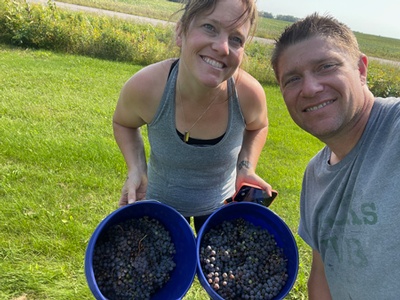
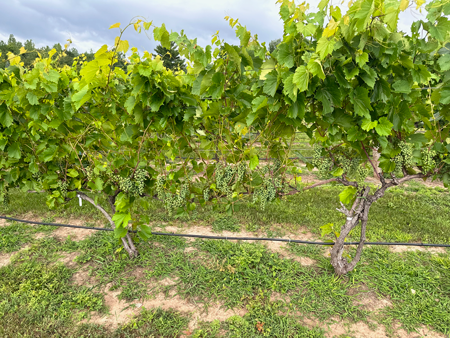
Bunnycup Winery, in Luck, Wisconsin, supplies a pleasingly earthy continuation. Its origin story describes years of visiting wineries and making wine before the owners tried growing grapes themselves. Their first row went into the ground in summer 2020, after months of learning on YouTube. They cheerfully acknowledged a poor record with houseplants. Agricultural credentials were apparently going to have to be acquired on the job.
They started with Frontenac Gris, a cold-weather variety developed at the University of Minnesota. The first small harvest followed in 2023. The vineyard expanded to include Petite Pearl, another Minnesota-developed grape. Here, the beginner’s part of entrepreneurship becomes visible again: choosing something suitable, learning the work and waiting to see what survives a winter.
It is tempting to compress a founder’s life into an upward line. Derheim’s is more interesting with its changes of scale left intact. An operations specialist becomes a CEO. A company helps start a school. Board work brings him into agricultural technology. A winery puts learning back into the hands of someone who has spent years creating places for other people to learn.
Co-president is a handsome title, though grapes are unlikely to be impressed by it. They require someone to do the work. That was always the useful part of the idea: give people room to contribute, then make something together that can stand outside the meeting room.