An empty hotel room can be a surprisingly demanding customer. It wants cold air. It wants it while the paying customer is at breakfast, at the beach, or somewhere across town. It has no appreciation of the electricity bill. Saikrishnan Ranganathan has spent much of his working life trying to make that room a little less extravagant.
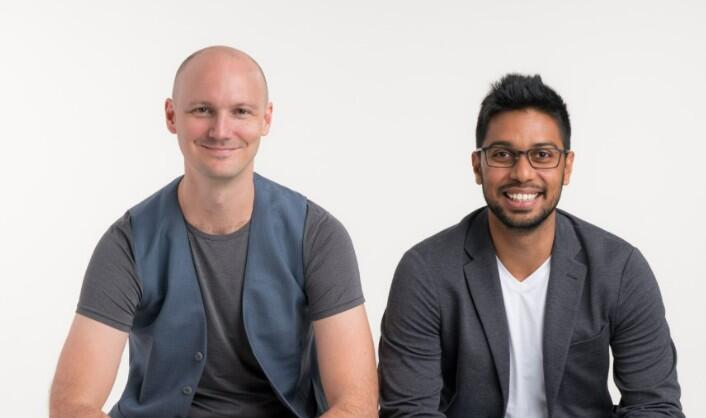
Ranganathan, known as Sai, is the co-founder and CEO of SensorFlow. The Singapore-based company automates hotel energy systems using wireless sensors and software. Its starting question is almost embarrassingly ordinary: if the person has left, why is the machinery still working as though they are there? Answering it has required a partnership, a network built in-house, and considerable attention to how hotels actually spend money.
The behaviour gave him something concrete to work with. SensorFlow’s own studies, described in 2020, found that fewer than one in ten guests switched off the air-conditioning when leaving their rooms. Guests spent roughly half their time elsewhere after checking in. Those are company findings, rather than a universal law of holidaymaking. Still, they describe an appealingly human problem. A person on holiday rarely wishes to become the assistant manager of a thermostat.
A programmer before a chief executive
Before there were hotel rooms to automate, there were smaller problems to solve. Ranganathan studied at the National University of Singapore from 2009 to 2013, supported by an SIA-NOL scholarship. The university lists the SensorFlow founder among its Innovation & Design Programme alumni, class of 2013. His student work included software for getting around Singapore and browser-based games.
One project, SMILE, was an Android travel assistant. His contribution covered the Android client and its cloud backend. The app offered reminders about where to get off public transport and recommendations when journeys were disrupted. Another project required him to build a physics engine for a two-dimensional game. Buses and bouncing objects make an unlikely pair, but both demand that software pay attention to what is happening, then respond at the right moment.
His early record also contains a less solitary detail: he later coached at Rails Girls Singapore events. The engineer who would build automation for hotels had spent time helping people approach programming. These projects and volunteer roles give his career a texture that a CEO title tends to flatten. He was writing, building and explaining before he was selling a system to building owners.
Software, with somewhere to live
Goldman Sachs was part of the apprenticeship. He began with an internship and moved into a permanent role, then left for Intraix. There, he went from software architect to CTO within two years. He described that experience without the usual varnish: there were periods when staff went three months without salaries. The attractive idea of starting a company had acquired some decidedly unattractive arithmetic.
By September 2015, his interest in connected devices was visible in his own writing. In an essay titled Software is the new Software, he considered a debate about whether hardware had become the new software. His answer was that inexpensive, increasingly capable microcontrollers made software even more consequential. He pointed to the layers of code that make a physical device function, from its processor to the server handling its data.
It is a useful glimpse of the engineer before SensorFlow. He was interested in the relationship between an object and the instructions that give it purpose. A sensor can report something. Software decides what that report should mean. For a hotel, the useful result is a room that responds appropriately, with as little additional work for staff as possible. The device alone is only the beginning of that conversation.
“I’m bored with things that are easy.”Saikrishnan Ranganathan, 2017
Two people, one stack
He met Max Pagel through Entrepreneur First in Singapore in 2016. Pagel brought research experience in wireless sensor networks; Ranganathan brought software and experience with connected devices. They founded SensorFlow that year. The pairing put two parts of the problem in the same company: how to gather information from a building, and how to make that information useful.
Wireless communication was a substantial part of the work. A building full of devices needs a dependable way for them to talk. Short range can mean installing more gateways; limited bandwidth can constrain the instructions travelling back to equipment. SensorFlow developed its own network. In 2017, Ranganathan described covering a hotel with one or two gateways, rather than several on each floor.
That engineering choice also opened a larger view. Data from separate rooms could be analysed together, yielding clues about equipment that needed servicing and spaces that were cooling inefficiently. His ambition extended to sensor networks that understood context and made useful decisions. Hotels offered a bounded place to begin: real rooms, existing equipment, and an electricity bill against which the idea could be judged.
The wall is part of the product
A working hotel imposes terms on an engineer. It has guests arriving, rooms being cleaned, and equipment already embedded in the building. An improvement that demands extensive disruption has a cost beyond the purchase order. The room cannot earn money while it is unavailable. Even a persuasive energy-saving calculation must survive that practical objection.
Ranganathan identified two adoption barriers: upfront expense and the difficulty of adding technology to existing buildings. SensorFlow built its technology in-house to reduce costs and used battery-powered wireless sensors to make installation easier. In its early system, an occupancy sensor detected whether someone was present, while a smart thermostat collected temperature and humidity information and controlled air-conditioning.
The purpose was to fit a new decision-making layer around the equipment a hotel already had. That helps explain his focus on installation. For the customer, a technology purchase includes the work of getting it into operation. The engineer’s elegant diagram must eventually encounter a ceiling, a maintenance team and a timetable. Any account of his work that stops at the word “AI” misses these less glamorous negotiations.
- 01DetectIs somebody here?
- 02InterpretRead the room data.
- 03AdjustControl the cooling.
- 04MonitorTrack performance.
A schematic of the approach, not a map of individual hardware components.
A booking is only half the picture
SensorFlow’s work led beyond the individual room. In their 2022 account of the company’s development, Ranganathan and Pagel described hotels facing high energy bills even at low occupancy. They traced a problem to room allocation: the choice of rooms could leave shared air-conditioning compressors operating inefficiently. Counting guests did not fully explain what the building was doing.
Smart Room Allocation, or SmartAlloc, addressed that relationship. The product used compressor mapping to recommend energy-efficient room assignments through the hotel’s system. A front-desk decision could therefore influence the workload of machinery serving multiple rooms. The room number on a booking had become an input to energy management.
It is a revealing progression in Ranganathan’s story. The first question concerns an absent guest and a running air-conditioner. The next concerns several rooms and the equipment they share. Each requires looking past an administrative category to the physical arrangement behind it. A hotel can know that a room is booked while learning relatively little about whether its cooling is being used well.
Reported for hotels using SensorFlow. Cooling savings and whole-building savings measure different things.
The customer has to afford the answer
By April 2021, more than 60 hotels across Singapore, Malaysia, Thailand, Vietnam, Indonesia, Cambodia and Hong Kong had installed SensorFlow’s solutions. The reported reductions were 20 to 30 percent of HVAC energy use, equivalent to about 10 to 20 percent of total energy consumption. The distinction matters. Air-conditioning is a part of the bill; improving it does not erase everything else a building consumes.
The commercial arrangement was another part of the design. SensorFlow offered a model that took an agreed portion of energy savings as its fee, removing the initial payment barrier. In 2023, Ranganathan described both a savings-sharing option and a fixed subscription. His explanation connected the price to the customer’s cautious approach to capital spending.
That creates a demanding bargain for the supplier: the saving has to exist, and both sides need a credible way to calculate it. He described using data to compare consumption with and without the product, with the calculation methodology certified by EarthCheck. The business therefore depends on measurement as well as automation. A cheerful dashboard will not settle an invoice by itself.
External recognition followed along the way. Ranganathan was named to Gen.T’s 2020 Leaders of Tomorrow list in Singapore. SensorFlow raised US$8.3 million in Series A+ financing that year, led by Openspace Ventures and Gaw Capital. These are milestones in the company’s ability to keep building, while the daily test remains the same: whether the installed system does useful work for a customer.
The hands, and the work behind them
He has also told a story about pitching that punctures the solemnity surrounding startup presentations. At Entrepreneur First, founders practised their pitches with advice to use hand gestures. On demo day, he noticed the oddly coordinated effect of people making the same extravagant movements. A room full of independent thinkers had briefly acquired matching choreography.
The anecdote is funny because the presentation is so visible, while much of the actual work disappears from view. The hotel guest sees a comfortable room. The operator wants lower costs and usable information. Ranganathan’s job sits between those expectations, turning an engineering decision into something that other people can adopt.
His early view of leadership made a related argument: give people access to information and room to take ownership. In 2017, he described circulating notes from product, investor and board meetings to invite questions. The approach fits a business in which software, hardware and commercial choices repeatedly affect one another.
Today, SensorFlow describes itself as a remote-first team based in Southeast Asia and focused on hospitality. Its range includes room automation, utility metering, building analytics and whole-room retrofit controls. Ranganathan’s earlier ambition to make more types of buildings sustainable remains a stated ambition; the company’s current emphasis is the detailed work of hotels. There is enough complexity there to occupy a founder who dislikes easy problems. Somewhere, a guest goes out for the afternoon. The room finally has instructions for what to do next.
Follow the rooms, and the conversation
- SensorFlow - company website ↗
- Sai Ranganathan on LinkedIn ↗
- His software essay on Medium ↗
- National University of Singapore alumni record ↗
- The founding years - 2017 interview ↗
- Playfair conversation and demo-day anecdote ↗
- SensorFlow’s wireless network - 2017 feature ↗
- Hotel retrofits - 2020 interview ↗
- Cooling rooms - SGInnovate ↗
- Hotel energy figures - April 2021 RIE Magazine ↗
- Room allocation - 2022 founders’ interview ↗
- Sensors and pricing - 2023 Sunrise interview ↗
- Gen.T profile ↗
- Series A+ financing - April 2020 ↗
- SensorFlow’s current team and focus ↗
- Watch: Entrepreneur First demo-day pitch ↗
- Watch: hotel technology panel ↗
- Listen: Scaling Ambition interview ↗