The school bag had the answer
The children kept forgetting to tap. Overdrive had equipped a school-bus system with NFC stickers, asking young passengers to register when they boarded and left. It was a reasonable piece of engineering, undone by a perfectly reasonable piece of childhood. A child has other things to think about. The data became unreliable.
The team changed the design. Bluetooth beacons went into school bags, letting the system pick up their presence without requiring a small passenger to remember a small administrative duty. Zen Chin, Aston Chia’s co-founder, later described the change when explaining how their young company had learned from customers. The bag could do the remembering.
It is a useful place to begin with Chia, co-founder and CEO of Singapore’s Overdrive IOT. His business connects sensors, vehicles and other assets to software that helps organisations understand what is happening. That description contains enough machinery to fill a trade-show stand. The school-bus story supplies something more revealing: a technical system has to accommodate the people who actually use it.
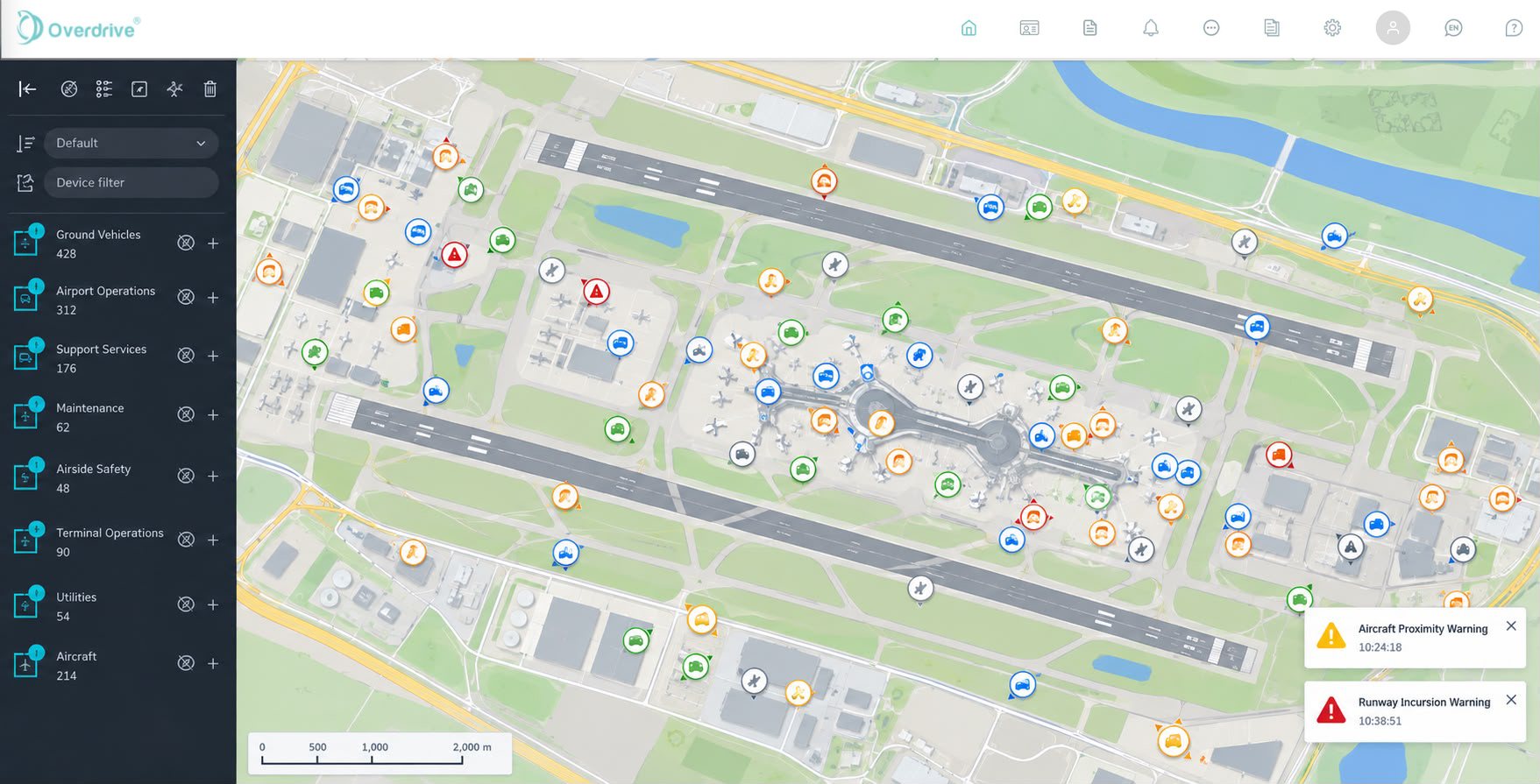
Today his company works on airport operations, where vehicles and aircraft must share space and teams need timely information. The setting has grown considerably. The practical question remains recognisable. How do you get useful information from a moving world without asking everyone in it to become a data-entry clerk?
A university friendship, then a second business
Chia studied computing at Monash University in Australia, completing his bachelor’s degree in 2005. His early work included leading a development team at Wired-Up Mobile Solutions on mobile backup software for Asian telecommunications operators. He also helped plan and coordinate Bayer Southeast Asia’s migration to two new data centres, and led the design and development of EaziCall, a callback mobile solution for Singtel.
These were assignments inside existing organisations, with working systems to consider and users to serve. A data-centre migration, in particular, leaves little room for the romantic idea that software can begin with a clean sheet whenever it wishes. The old system still contains somebody’s work. The new one has to receive it.
He and Zen Chin first met as university mates in Australia. Overdrive, launched in 2015, was their second business together. The company’s account of its beginnings also names Alex and describes years of prior collaboration involving machine-to-machine applications, embedded devices and sensors. The founders brought an existing working relationship into the new company.
That continuity gives the story its shape. Chia’s move into entrepreneurship followed years of technical delivery. Overdrive began with people who already knew one another and had worked with connected equipment. Its raw material was experience: how a device behaves, how information travels, and how an application turns those signals into something a customer can use.
The customer was allowed to change the plan
Overdrive’s early work connected automobiles, including buses, cars and prime movers, before extending to containers, boxes and other moving assets. Customers could view and interpret sensor information through web and mobile applications. Within the first year, customers were asking the team to tackle more complicated problems. A tracker was a starting point for a conversation.
The school-bus assignment was one of those conversations. The operator served international schools in Singapore. Its requirements included tracking ridership for children without smartphones and verifying a caretaker’s identity before a child was handed over. Those details mattered as much as the location of the bus. The service needed to fit a journey with responsibilities at both ends.
Other applications included estimated arrival times for campus and visitor transport, a car-sharing system used by Singapore’s Ministry of Manpower, and management software for private bus operators. A trade show helped the company secure its first customer in the Philippines. The geography widened alongside the list of practical requests.
In a 2020 appearance on Chris Chong’s Ramen To Riches podcast, Chia’s early business journey was presented as a process of finding what customers would actually buy. The episode’s introduction described an initial vehicle-sensor product that struggled to find favour, followed by a change informed by customers. There is a pleasing lack of glamour in the turning point: ask a question, listen to the answer, change the product.
Money followed a working relationship
On 6 December 2018, Overdrive announced a US$2.9 million Series A round from Tin Men Capital, its first and sole investor in that round. The planned focus included industrial asset tracking in supply chains, construction and facilities management. By then the business could point to deployments for organisations in Singapore and Malaysia.
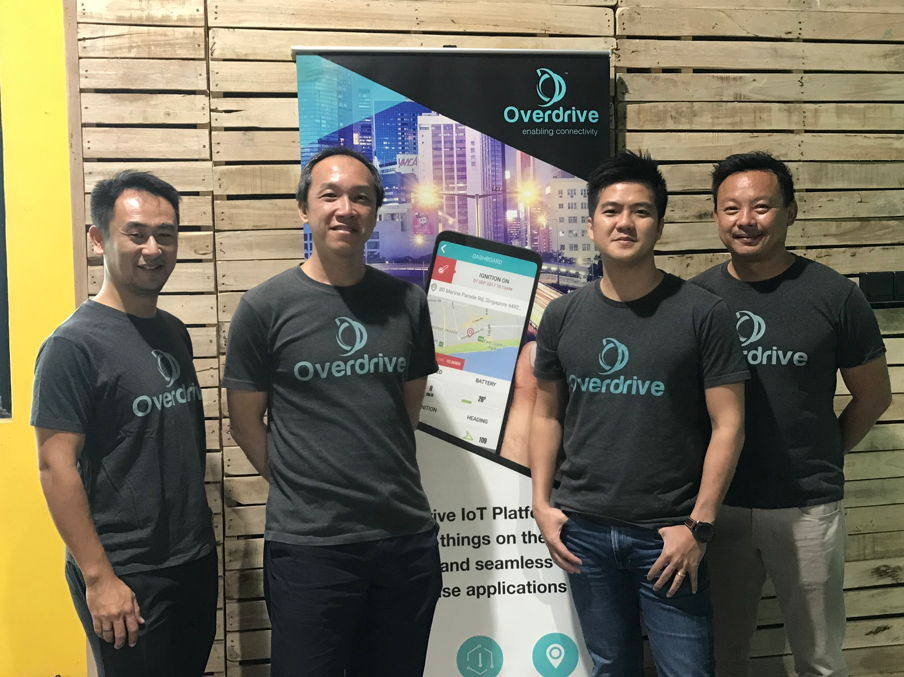
The investor relationship had a history of its own. Through the 123JumpStart programme, the founders met Benjamin Tan, who became a mentor and angel investor. Zen described spending time aligning their plans with an investor willing to contribute practical help as well as capital. The funding announcement likewise presented Tin Men as an investor that had worked with the founders from an early stage.
This is a less cinematic fundraising story than a handshake with a stranger followed by a sudden cheque. It involves an association programme, a mentor and a relationship that preceded the formal round. The photographs have suits and smiles; the more consequential part is the time spent working out whether everyone wanted to take the business in the same direction.
Chia’s stated ambition in that period was regional expansion across logistics, facilities and transportation, alongside continued platform development. The business was selling customers an ongoing system. Investment could help it extend that system to more settings, but the customers would still need a reason to keep using it after the funding announcement had disappeared from their screens.
Four thousand vehicles is a different kind of traffic
The airport work made the operational stakes more visible. Changi Airport Group appointed Overdrive to design, develop and deploy its Vehicle Tracking at Airside system, known as VETA, after a year of tests and trials. The design allowed monitoring of up to 4,000 vehicles, with room to expand.
The fleet described in the project included passenger buses, baggage transport, cargo vehicles, runway sweepers and tank trucks. Each has a task; together they create a moving logistical puzzle. An aircraft turnaround depends on activities around the aircraft as well as the aircraft itself. Passengers generally encounter the boarding gate. Chia’s software concerns itself with the work beyond the window.
VETA was intended to combine tracking information with fleet-management functions, including visibility of driving behaviour, congestion and roadway conditions. Those functions connect location to decisions: where space is becoming crowded, how movement is changing, and where an operations team may need to respond.
A later Wireless Logic account describes an Overdrive airport deployment monitoring more than 4,000 airside vehicles. It reports an estimated 30 percent improvement in operational efficiency. That estimate belongs to the deployment account; it is useful as a reported result, rather than a promise for every airport. Chia emphasised dependable connectivity as a requirement for giving teams a continuous view of the fleet. A map that loses its vehicles at an inconvenient moment is an expensive guessing game.
The building was already full of equipment
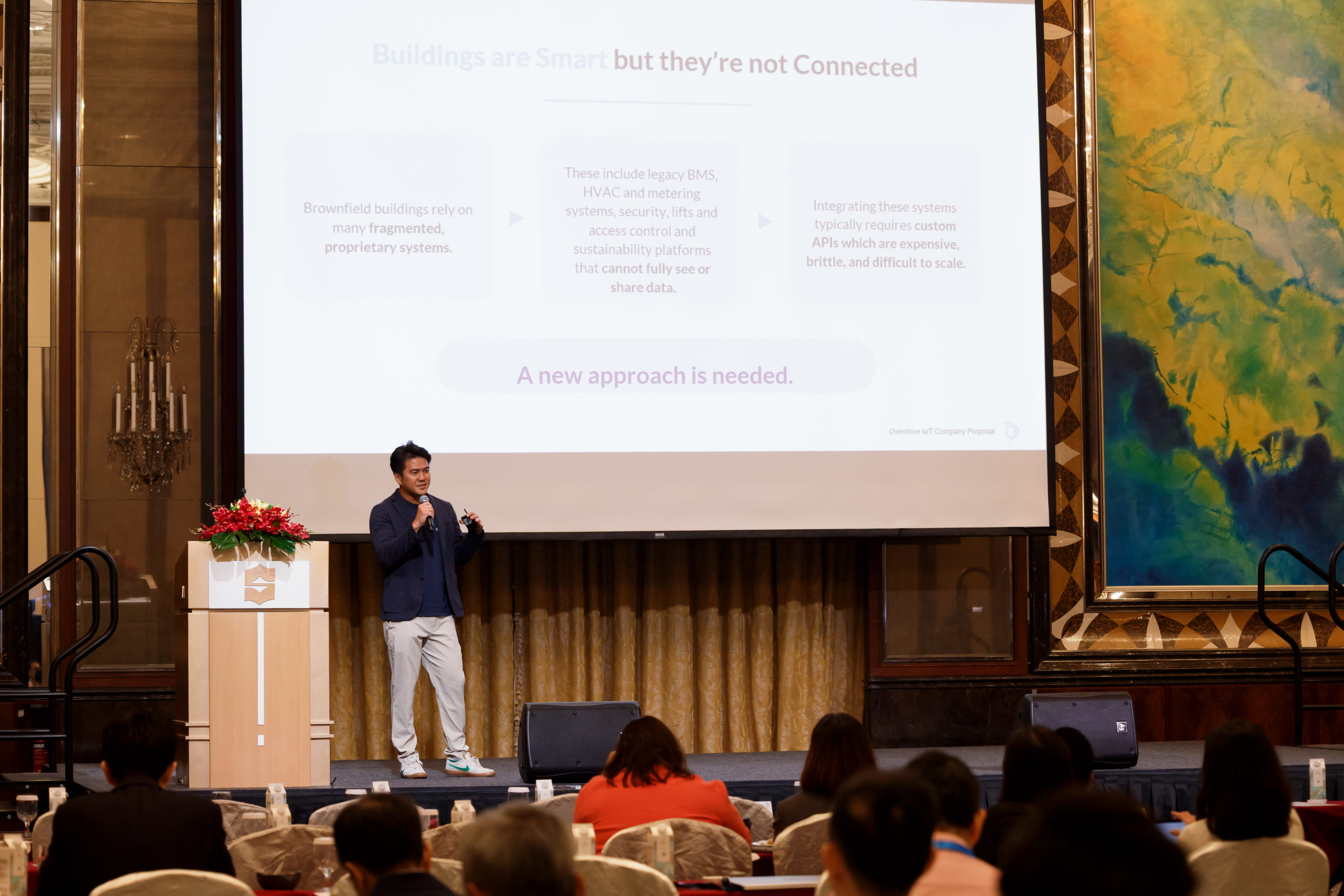
In January 2026, Chia presented Overdrive’s proposal for Schneider Electric’s challenge in the Singapore-Japan Fast Track programme. Overdrive was selected as the winner. The subject was brownfield building interoperability: helping systems in existing buildings exchange information without replacing the entire installation.
An existing building can have several generations of controls, meters and monitoring software. Each may work adequately on its own while making cooperation awkward. Overdrive proposed a common software layer to integrate legacy and proprietary systems, standardise their data and enable communication in both directions. The approach was intended to be reusable across buildings and portfolios.
There is a connection to Chia’s airport work here. Both settings contain equipment from multiple suppliers and systems that were installed for different purposes. Overdrive’s proposal drew on its aviation integration experience. The company described further discussions, including potential pilots, as the next step. Winning the challenge established recognition for a proposed approach; the subsequent deployment work had its own road ahead.
The event photograph catches Chia explaining the problem with a microphone in hand and a large slide behind him. It is a different job from programming, though it requires the same clarity about what is broken. The slide has to make sense to an audience before the connectors can make sense of a building’s data. The founder who once led developers now also has to make an integration problem worth someone else’s attention.
An airport needs more than one map
On 24 September 2026, Veovo announced a partnership with Overdrive. The plan joins Veovo’s airport-wide operational platform with Overdrive’s aviation platform, connecting information about airside vehicles and equipment with the wider picture of flights, resources and terminal activity. Veovo identified Changi as a deployment of Overdrive’s aviation platform.
“Safety and efficiency go hand in hand.”Aston Chia · September 2026
“Safety and efficiency go hand in hand,” Chia said in the announcement. His emphasis was on giving airport teams greater context for decisions and helping them respond more effectively. The partnership extends the same integration idea to the relationship between two platforms: information becomes more useful when the next team can see it alongside its own responsibilities.
His own public writing has also turned towards the time available to react. He has described Overdrive’s development of an Airside Collision Avoidance System, combining information from several sources with a predictive model that considers a driver’s reaction buffer. The intended warnings reach both drivers and operations teams. The ambition reaches beyond recording a position towards recognising a potential conflict early enough to act.
That is where Chia’s work now leads: towards systems that help people make decisions while the situation is still changing. The school bag and the airfield are separated by scale, machinery and consequence. They share a requirement for information that arrives in a useful form at a useful time. Chia’s career has accumulated around that requirement, from mobile software to industrial sensors to airport partnerships. Somewhere in the growing collection of maps and interfaces is the old lesson from the bus: give the system a job it can reliably do, and let the people get on with theirs.