A roof can be a surprisingly effective gatekeeper. In March 2019, Jen Wee Kang published a LinkedIn article asking how someone living in a Singapore HDB flat could go renewable when the roof was not theirs to put solar panels on. It was a household question, with a business problem tucked inside it. Wanting clean electricity and having somewhere to generate it are two very different circumstances.
Kang had spent years around the equipment, panels and commercial arrangements that make solar power possible. By then he had founded T-RECs.ai, the business now called REDEX. His attention was turning to the arrangements that let people support renewable generation even when they could not install a panel themselves. The roof question made that work intelligible without requiring anyone to attend a conference first.
There is something pleasingly ordinary about this starting point. Energy debates tend to acquire imposing nouns: infrastructure, decarbonisation, transition. Kang’s question involved an apartment and a roof. A whole market could be explained through the awkward fact that enthusiasm for solar does not confer ownership of the building above your head.
The equipment salesman follows the electricity
His renewable-energy career began at Applied Materials in 2007. Working with a solar equipment manufacturer placed him close to the industrial foundations of the business. The customers included Q-Cells, MEMC and SunPower; he closed equipment deals with those solar companies. Before the certificate marketplace, there were machines and the people prepared to buy them.
In 2014, he joined REC Solar. The move brought him into the module business and closer to the question of how generated power reaches a customer. He helped develop a hybrid solar-and-grid electricity product with PacificLight. Later, heading REC’s North Asia market, he closed a foreign module supply deal in Taiwan with Equis.
Those jobs put several kinds of transaction within his view. A manufacturer buying equipment has one set of concerns. A developer buying panels has another. An electricity customer has another again. Each sits somewhere along the same chain, but getting them to agree on a purchase requires more than a common enthusiasm for sunshine.
In 2018, Kang started T-RECs.ai after observing a disconnect between renewable-energy investors and buyers of renewable electricity in Asia. That decision gives his career a clear direction: from helping sell the means of generation to helping create a market for what generation makes possible. REDEX grew out of a commercial gap he had encountered, rather than an abstract invitation to build something green.
Applied Materials
REC Solar
T-RECs.ai / REDEX
A certificate earns its keep
A Renewable Energy Certificate, usually shortened to REC, records the renewable attributes of one megawatt-hour of electricity generation. It allows those attributes to be bought and claimed through a recognised system. The electricity itself flows through a grid; the certificate supplies a record that a buyer can use in the appropriate renewable-electricity accounting framework.
That distinction matters. Buying a certificate does not install a solar panel on your apartment block or reserve a particular electron for your kettle. It provides a way to document renewable generation and allocate the corresponding claim. The useful questions concern where the generation happened, when it happened, which rules apply and whether somebody else has already claimed it.
REDEX supports the certificate lifecycle, from registering assets and verifying production through trading, transfer and retirement. Retirement is the final step that takes a certificate out of circulation for a claim. The apparently modest task of keeping records is doing considerable work here. A renewable claim has little value if the same certificate can be sold and counted repeatedly.
Kang also contributed to Singapore’s REC standard, SS 673:2021. Developing a marketplace and helping shape its rules are closely related activities. Buyers need to know what they are purchasing; sellers need to know what they can credibly offer. A successful transaction depends on an agreement about the evidence long before it depends on a persuasive sales pitch.
- RegisterIdentify the generating asset.
- VerifyCheck its recorded production.
- TradeConnect the certificate to a buyer.
- RetireRemove it from circulation for a claim.
One REC represents the renewable attributes of 1 MWh of generated electricity.
Solar for people without a solar roof
The household question had a practical counterpart. In 2019, PacificLight worked with T-RECs.ai on its Sunny Side-Up 12 electricity plan. Residential customers could track the source and vintage of their certificates, which were purchased from existing solar farms in the region. Supporting renewable generation could become part of an electricity purchase.
PacificLight also gave three RECs apiece to nearly 8,500 existing customers who had chosen electronic bills. That was equivalent to 3,000 kilowatt-hours per customer. The promotion linked an everyday administrative choice to an introduction to renewable certificates. People did not have to become power-market specialists before encountering the idea.
This was an early expression of the participation problem that keeps appearing in Kang’s work. Some buyers have ambitions larger than the physical space available to them. Some producers have useful output but limited access to the buyers willing to pay for its renewable attributes. A marketplace has to make room for both.
The small producer at the other end
In a November 2023 business roundtable, Kang described sellers ranging from major power producers to individuals with rooftop solar. The breadth of that description is revealing. A large generator can afford people to manage documentation. A household-scale installation has much less room for administrative expense. Making the same market available to both means taking the smaller participant’s costs seriously.
In March 2025, REDEX received the I-TRACK Foundation’s first approved Verification Label. It was designed to improve participation for small generating devices below 250 kilowatts, using more automated registration and verification. The process was developed in phases with Evident, the I-REC(E) code manager and registry operator.
For small devices, the difficulties included the financial cost and documentation required for onboarding and issuance requests. Standardised data collection and verification could support requests in bulk. That is a concrete form of access: reduce the burden of getting a legitimate record into the system, while preserving the checks that make that record useful.
“our shared ambition to democratise renewable energy”
Jen Wee Kang, on working with Evident and I-TRACK
The phrase is broad. The work behind it is specific enough to inspect: smaller devices, approved methods, automated processes. Kang’s ambition becomes more persuasive when measured against the chores a rooftop owner would otherwise have to complete. Paperwork has rarely enjoyed a glamorous reputation, but here it sits between a producer and a possible source of revenue.
A founder among lawyers, financiers and coders
Building this business takes Kang into rooms well beyond the solar industry. At CERAWeek’s Innovation Agora in 2024, he argued that companies could begin with available measures for purchased-electricity emissions while working through the more complicated problem of supply-chain emissions. His position favoured taking a usable first step instead of postponing action until every difficulty was resolved.
At Sustainability Week Asia that year, he highlighted distributed rooftop solar and the potential for certificate income to improve the economics of renewable assets. His argument was conditional: extra revenue can help make projects more attractive. It does not turn every certificate purchase into proof that a new power plant has been built.
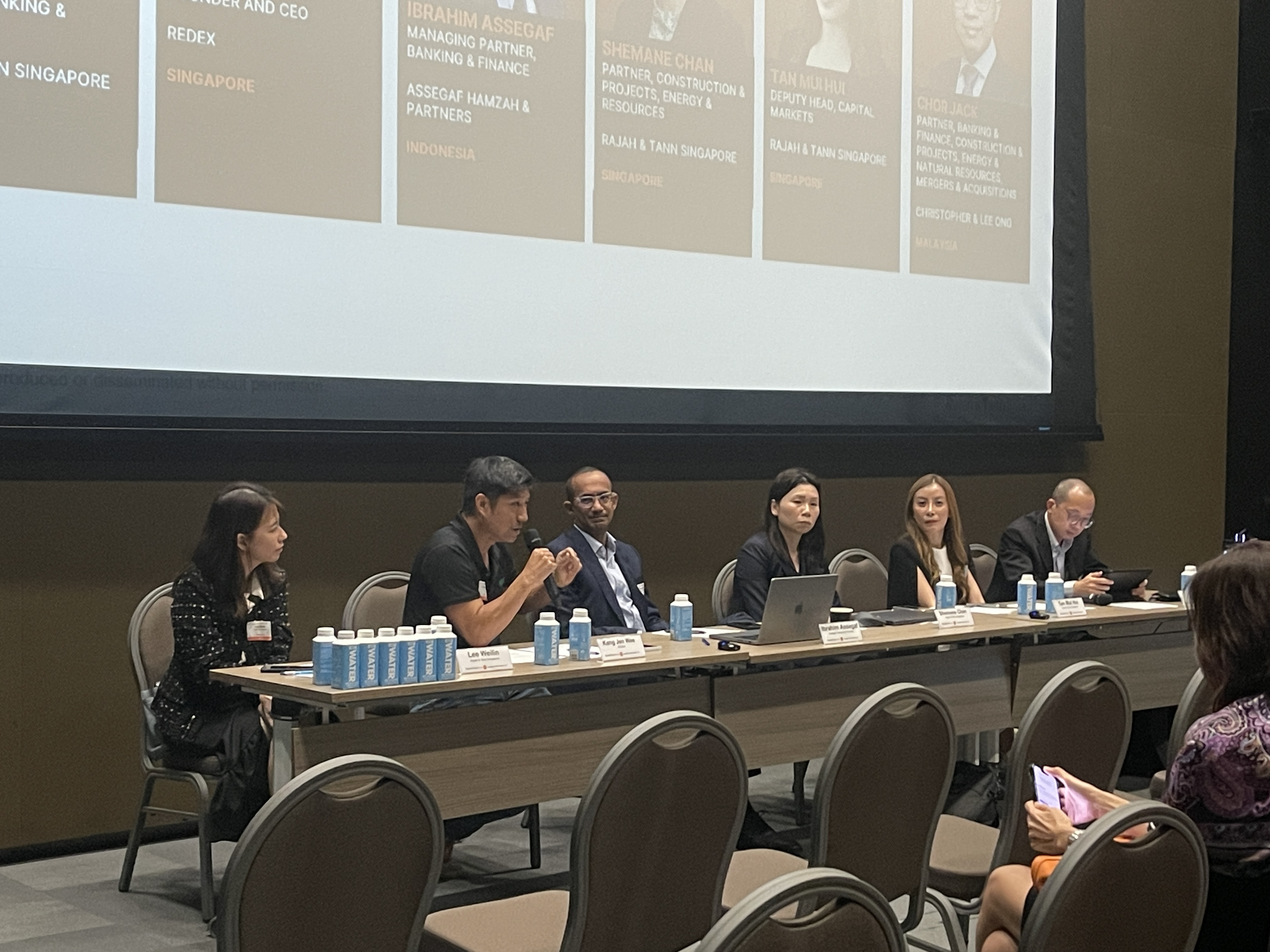
In August 2024, he discussed the energy transition at Rajah & Tann Asia’s regional M&A conference. In October, he joined a renewable-energy sourcing discussion at an ASEAN Catalytic Green Finance Facility workshop on data centres. The audiences included legal and financial professionals whose decisions influence which projects and purchases proceed.
There is a software team behind those conversations. In a January 2025 LinkedIn post, Kang celebrated the Vietnam team’s growth from one person in 2020, giving credit to Son Le. REDEX’s chief technology officer had worked on stock-exchange projects and order-matching systems. His background fits a business that needs transactions to work reliably as well as an energy proposition to sound appealing.
Investment, then the work of entering another market
In 2023, REDEX raised a $10 million Series A led by Aramco Ventures. Greenway Grid Global joined the round, alongside investors from the Middle East, Southeast Asia and Japan. The company also received the Emerging Enterprise Sustainability Award, presented by The Business Times and OCBC. These were milestones for the business Kang had begun five years earlier.
The award recognised the company’s place in the green economy. The investment offered resources and relationships for expansion. Neither removed the need to understand the next market. Certificates rely on local arrangements as well as international systems, and a company taking its software abroad must establish how those arrangements fit together.
A September 2025 agreement with Three Pillars Consulting addressed that practical task in Oman and other Gulf markets. The partners planned integration between REDEX’s REHash platform and ClimateTab, the consultancy’s reporting software. The aim included matching certificates to the temporal and geographical specifications of electricity consumption.
That same month, Kang spoke at a data-centre conference in Kuala Lumpur about renewable energy and supply-chain emissions. The setting brought him back to buyers with substantial electricity needs, while the small-device work addressed generators at a very different scale. His company’s problem remains the space between them.
Back to the apartment
The roof question still makes a useful test of Kang’s project. Can someone participate when they lack the obvious prerequisites? Can an owner of a small installation reach a market designed around much larger producers? Can a buyer understand the claim well enough to stand behind it?
His career has taken him through equipment sales, solar modules, electricity products, standards and software. The recurring concern is how a willing buyer and a willing seller actually complete a credible transaction. That involves patient commercial work, and occasional invitations to explain certificates to rooms full of people who have other jobs.
A roof is easy to see. The arrangements that connect its output to another person’s purchase are less visible. Kang has chosen to build there: among the registrations, checks and transactions that let more people take part in renewable energy. Even the resident without a roof of their own has a question worth answering.