A restaurant full of televisions is a fine place to discover the limits of a sales brochure. Every screen promises a picture. Getting the right picture to the right screen, keeping the system running, and making the controls intelligible to the staff is another line of work. Ryan Lampel had experience with all of it before he co-founded Just Video Walls.
His earlier company, Constrology, combined construction with technology. The name practically arrives carrying its own explanation. The work involved the less convenient business of fitting the two together inside actual buildings, where a network, a construction schedule, and an opening date must eventually agree.
That history gives Lampel’s current business a useful starting point. The CEO of a company selling enormous displays had already spent years dealing with what happens around them. A screen could look splendid. The project still had to work.
A building with the wiring included
Constrology’s account of its beginnings describes an idea reached after a sleepless night: bring Lampel’s interests in construction and technology into the same business. Its services put project management alongside computer networks, construction supervision alongside multimedia systems, and scheduling alongside digital signage.
There is a particular logic to that combination. Buildings and their technology share space, deadlines, and customers. Treating them as connected work means the conversation can begin before the equipment needs somewhere to go. A display has dimensions; the room has opinions.
Lampel’s professional history includes restaurant projects across South Florida. One involved turning two retail units, a salon and a Verizon outlet, into a VooDoo BBQ & Grill in Boca Raton in about nine weeks. The assignment included construction management and technology. Another involved remodeling a 12,000-square-foot Twin Peaks in West Palm Beach and installing its AV and network systems.
Those are jobs with several moving parts and one public result. The diner sees a restaurant. The person responsible for delivery sees all the individual decisions that allow it to open.
The two trades behind Constrology, and the working background Lampel brought to Just Video Walls.
His interest in the connected room predates those Florida projects. In a March 2012 article about home technology, Lampel was identified as the owner of Innovative Multimedia in Gaithersburg, Maryland. He was discussing the move toward streaming entertainment, as movies and music became things accessed over networks rather than fetched from a shelf.
The equipment would change considerably. The underlying assignment, helping people use technology in the places they occupied, would remain recognizable.
The sports bar test
A Panasonic case study offers a closer view of Lampel at work. Constrology’s Twin Peaks installation brought together dozens of professional displays, multiple video sources, digital signage, audio, networking, surveillance, and lighting control. Staff operated the system through an iPad interface laid out like the floor plan.
That final detail matters. A substantial technical undertaking ended in a control surface shaped around the building and the people using it. Nobody ordering lunch needed a tour of the network.
“Technology is at the forefront of this restaurant concept and everything had to be perfect.”
Ryan Lampel · on the Twin Peaks project
Lampel also described reliability problems with previous display installations. He went looking for another supplier at InfoComm and found Panasonic willing to discuss the concerns and work on them. The purchase depended on the relationship as well as the hardware.
It is an early version of a question that runs through his later work: who helps when the equipment becomes someone’s responsibility? A television on a trade-show stand and a television in an operating restaurant lead rather different lives.
The problem before the picture
Just Video Walls, founded in 2022 with Angel Rodriguez, grew out of another experience of being the integrator. Their customers wanted video walls. Researching how to supply them brought confusing prices, inconsistent information, and delays in getting quotations.
Lampel’s description of the founding need was plain:
“We’re born out of what we feel is a necessity.”
Ryan Lampel · 2023
Rodriguez recalled an early video wall delivery arriving as crates of unidentified parts without instructions. As an origin story, it has the advantage of being specific. There is a customer expecting a finished installation and a shipment that has introduced more questions.
The founders’ answer involved making the category easier for other integrators to handle. Research and manufacturing relationships preceded the business. The ambition was to help dealers move from a customer’s proposed project to a suitable display without having to unravel the supply chain first.
The distinction is visible in the work they chose to do. Specifying, pricing, and supporting a system all belong to the experience of buying it. Each can become the place where a promising job stalls.
Five minutes was the proposition
In September 2023, Just Video Walls announced a beta program for a MicroLED design tool. Its stated aim was to bring quoting down to five minutes or less. That was an objective for the tool, rather than a published measurement of every dealer’s experience.
The process began with project parameters. Dealers could work through the application, receive options and pricing, and produce a proposal. The company also described project records and visibility into production, quality control, and shipping.
For Lampel, the tool addressed something his team had needed while doing integration work. Its significance was practical: a customer conversation could move toward a proposal, with fewer calculations and unanswered questions between them.
- 01Describe the room
- 02Compare the options
- 03Prepare the proposal
By March 2026, development partner Goodspeed reported launching a dealer platform that combined live configuration and pricing with branded PDFs and a HubSpot connection. Its account also described a distributor version for Lunar Walls. The work was continuing through the commercial machinery of the business, well beyond the luminous part of the product.
There was also a Porsche
The launch period had a more theatrical side. In 2023, Just Video Walls announced a contest for dealers selling $1 million in MicroLED. The first to reach the target was offered a one-year Porsche 911 lease. Other dealers reaching the threshold before the announced March 31, 2024 deadline were offered new Ford work vans.
The pairing has a certain professional accuracy. One vehicle celebrates the sale; the other can carry the equipment. The announcement established the incentive, without establishing who eventually collected either set of keys.
The large-screen demonstrations also brought Lampel into contact with other specialists. During a 2023 visit, madVR co-founder and CEO Richard Litofsky met Lampel and Rodriguez at Just Video Walls’ Davie headquarters. A 237-inch display with a 2.67 aspect ratio was part of the demonstration.
A display at that scale makes an effective introduction. The processing and integration behind it explain why the conversation includes more people than the screen supplier.
Let the dealers into the room
When Just Video Walls introduced Lunar Walls in August 2024, the company invited dealers to help shape margins, price points, and its approach to the market. It gave the people expected to sell and install the products a role in the terms of the offer.
The launch included Ledge, a packaged video wall television, and Expanse, a range of pre-engineered configurations. These extended the business into more standardized choices alongside its custom work. A dealer could approach a familiar application with more of the engineering already settled.
That development is consistent with the founders’ original problem. A specialist supplier can give customers more choice while also giving the installer a manageable way to make it. The work lies in deciding which decisions need to be made afresh.
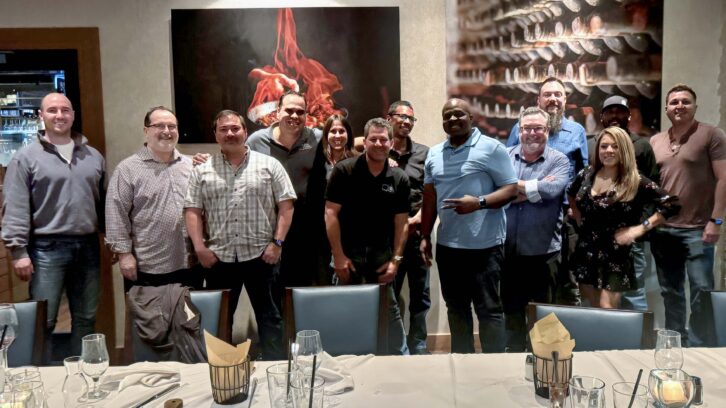
Making room for the next installation
In March 2025, Just Video Walls announced another 5,500 square feet at its Tamarac facility. The expansion included a Lunar Walls showroom and a dedicated training center for hands-on experience and dealer education. Six hires added capacity in sales and project engineering.
The setting matters to Lampel’s story. An installation business develops knowledge on individual jobs. A supplier serving more installers needs ways to pass that knowledge along. A training room turns some of that experience into something another team can practice.
Other relationships widened the company’s reach. It became a Home Technology Association Supporting Brand in May 2025. ProSource announced Just Video Walls and Lunar Walls as vendor partners that August. In April 2026, Lunar Walls announced Global Solutions as its distribution enablement partner and Scott Salzman as national sales manager, with training and initial project support among the partnership’s responsibilities.
Today, Lampel remains listed as CEO and co-founder, alongside Rodriguez as chief product officer and co-founder, Jim Koenig as chief revenue officer, and Skyler Meek as chief marketing officer. The company presents custom residential systems through Autograph and standardized systems through Lunar Walls.
The current dealer offer gives that approach a concrete form. It includes live and on-demand training, remote and on-site technical support, proposal materials, and help with showrooms. Homeowners and designers who contact the company are directed to certified dealers in their area. The installer remains part of the relationship after an inquiry reaches the manufacturer.
For a founder who once had to coordinate a building and its systems, these are familiar kinds of dependencies. A sale needs a person nearby who can deliver it. A new product needs someone who understands how to install it. The company’s offer gives those responsibilities a place alongside the hardware.
The picture has grown since the restaurant installations. The recurring concern is still wonderfully ordinary: give the people doing the job a workable way to finish it. Lampel’s career makes that concern concrete. Behind the large display sits a sequence of choices, deliveries, conversations, and people who have to agree on what happens next.
Eventually, someone gets to sit down and watch.
Follow the work
- Ryan Lampel on LinkedIn
- Just Video Walls
- Lunar Walls
- Constrology: construction and technology
- The Twin Peaks installation
- The founders on the 2023 launch
- The 2023 design tool announcement
- The announced Porsche dealer contest
- The 2023 madVR visit
- Lunar Walls’ 2024 introduction
- The 2025 team and training expansion
- The HTA announcement
- ProSource partnership
- Lunar Walls’ April 2026 distribution announcement
- The 2026 configurator build
- Lampel on connected homes in 2012
- Watch: company installations and showroom tours
- Company Instagram
- Company LinkedIn
- Company Facebook