The customers who changed George Schaeffer’s life were shopping in a dental supply business. They were nail technicians, buying materials for a purpose that reached beyond the supplier’s original trade. Schaeffer had moved to Los Angeles in 1981 and bought the operation. Here was a useful complication: the people at the counter were showing him another business he could be in. His team developed an acrylic system for nails and took it to salons. The company that emerged was OPI.
A bottle of lacquer is an unlikely starting point for a story that eventually arrives at Florida home insurance. Yet Schaeffer co-founded People’s Trust Insurance in 2008, while OPI was still his business. He became the insurer’s chief executive in 2014. Between those dates sit a company sale, another beauty venture and a foundation. The route is more interesting when the businesses overlap. He was preparing a next chapter before the previous one had closed.
01 / Los Angeles, 1981The customers at the wrong counter
OPI began as Odontorium Products Inc. The initials survived a considerable change of occupation. Dental supplies gave way to products for nail professionals, and a company name that needed explaining became one customers could recognize on a salon shelf.
Early selling was physical work. The team brought its products to salons along Ventura Boulevard in Los Angeles. OPI later called the package the “rubber-band special.” Before there were collections and celebrity collaborations, there were individual businesses to visit and professionals to persuade. A salon owner could try the material, use it during an appointment and decide whether to buy again. That put the product close to the person whose work depended on it.
Schaeffer’s recollection of the beginning is practical: he saw nail technicians using materials from the dental trade and hired a chemist to develop a nail acrylic. The opportunity was visible in the existing customer traffic. Serving those customers properly required a product developed for their work.
It is a pleasantly untidy origin for a beauty brand. The glamour arrived after the supply problem. Anyone looking for a perfectly composed founding moment must first accommodate a counter, a chemist and some deliveries.
- Hungary to New York, with his family.
- City College graduation; the family garment business.
- Los Angeles; the dental supplier that became OPI.
- People’s Trust Insurance is co-founded in Florida.
- Coty announces its acquisition of OPI.
- Schaeffer takes on the chief executive role at People’s Trust.
02 / The family businessA family business, with room to leave
Long before Los Angeles, Schaeffer’s family had built a business in New York. His parents survived the Holocaust. In 1956, the family left Hungary during the revolution and immigrated to the United States. They settled in New York and established a garment manufacturing company.
Schaeffer graduated from City College of New York in 1970 and worked in that family enterprise. The education and the work belong together in his biography: a public college, followed by a business whose relationships were also family relationships. His later move west took him away from garments and into another trade.
There was other work, too. Before purchasing the dental supply company, Schaeffer drove a cab in New York City. It is a small biographical detail that widens the picture of the founder: his working life included both the family’s manufacturing operation and a job spent taking other people where they wanted to go.
At OPI, Suzi Weiss-Fischmann became his longstanding business and creative partner. She brought the fashion and color work that helped give the brand its identity. The familiar OPI story needs both names. Years later, Weiss-Fischmann described Schaeffer as a business leader and teacher when discussing her own role models.
Working with family can make succession seem obvious. Schaeffer eventually accepted that his children had interests of their own. When the time came to sell OPI, those interests were part of his explanation. The company could continue without requiring the next generation to inherit his working life. It was a choice with particular weight for someone who had himself left his father’s business.
03 / A bottle with a personalityColor travels; a company changes hands
OPI made naming part of the pleasure of choosing a color. “I’m Not Really a Waitress” is rather more conversation than a shade number. The names gave customers something to request, remember and repeat. Weiss-Fischmann’s creative work helped make the bottle a small piece of fashion with a sense of humor.
The humor had an administrative companion. Collections went through naming meetings and legal review. An amusing name still needed permission to exist on a label. Somewhere behind the salon counter’s wit stood a lawyer, checking whether the joke belonged to somebody else.
“Any color the customer buys.”
George Schaeffer, asked for his favorite nail polish color in 2012
By November 2010, Coty had announced its acquisition of OPI. The companies did not disclose the transaction terms. Schaeffer and Weiss-Fischmann were to remain with the business, and operations were to continue in North Hollywood. A sale can be a dramatic date in a founder’s biography while leaving a great many people with familiar work to do the following morning.
The business had become an operation of quite another scale. OPI sold 30 million bottles in 2010. When a new president, John Heffner, joined in 2012, the company had about 675 employees, and Schaeffer continued as chief executive. Those figures belong to that period, but they help explain what had been built since the early salon deliveries. Keeping the founder involved after a sale also made the transition a longer affair than a single announcement. There were responsibilities to hand over, a professional customer base to serve and an established business to keep running.
Schaeffer also acquired Aloxxi, the professional hair color brand. In a 2014 interview, he explained the appeal in terms of continuing his interest in color and making a product that met hairdressers’ needs. The customer was still a salon professional. The subject had moved from the manicure table to the colorist’s chair.
04 / Florida, 2008 onwardThe next customer has a damaged roof
People’s Trust began with Schaeffer and Michael Gold in 2008. Its home was Florida, where the company’s homeowners insurance business was built around preparation and a preferred contractor approach. In 2013, the company received the Enterprise Florida Governor’s Innovators in Business Award. Schaeffer took on its chief executive role the following year.
His explanation of the model starts with the repair process. After damage, a homeowner faces work that extends beyond filing a claim. There are materials to find, people to schedule and repairs to coordinate. People’s Trust’s Preferred Contractor Endorsement puts a contractor relationship into that process. Schaeffer has emphasized advance investment in equipment and materials, alongside emergency response.

The change of industry is substantial. Salon products are chosen repeatedly, often with pleasure. Home insurance becomes particularly consequential when something has gone wrong. The work of running the second business brings repairs, preparedness and the policyholder’s recovery into focus. In Deerfield Beach, the details of a damaged home replaced the details of a lacquer collection.
The repair process, in his business model
- Prepare aheadInvest in equipment and materials before demand rises after a storm.
- Respond to damageBring the preferred contractor into emergency mitigation.
- Coordinate the workUse the contractor relationship for covered repair and restoration.
05 / A benefit that traveledThe benefit that followed him to Florida
One practice crossed the distance between OPI and People’s Trust particularly clearly: help for employees’ children. Schaeffer’s computer and scholarship tradition began during his OPI years and continued at the insurer.
On July 16, 2024, he presented eleven laptops, mice and printers to employees’ children. The program alternates computer giveaways with school scholarships. Eligibility includes an employee’s length of service, an essay from the child and academic requirements. The giveaway has a selection process, as well as a photograph at the end.
given in July 2024
announced for 2025/26
The scholarship amount announced for the 2025/2026 school year rose from $1,000 to as much as $1,800 for eligible students. These are manageable numbers to picture: a computer on a desk, a printer beside it, financial help toward another school year. They give the language of treating employees like family a specific, recurring form.
06 / Education and memoryA way back to Hungary
George and Irina Schaeffer created their foundation in 2009. From their base in Boca Raton, its giving has included scholarships, universities, cultural organizations and music education. Their names appear together in projects that reach well beyond either company.
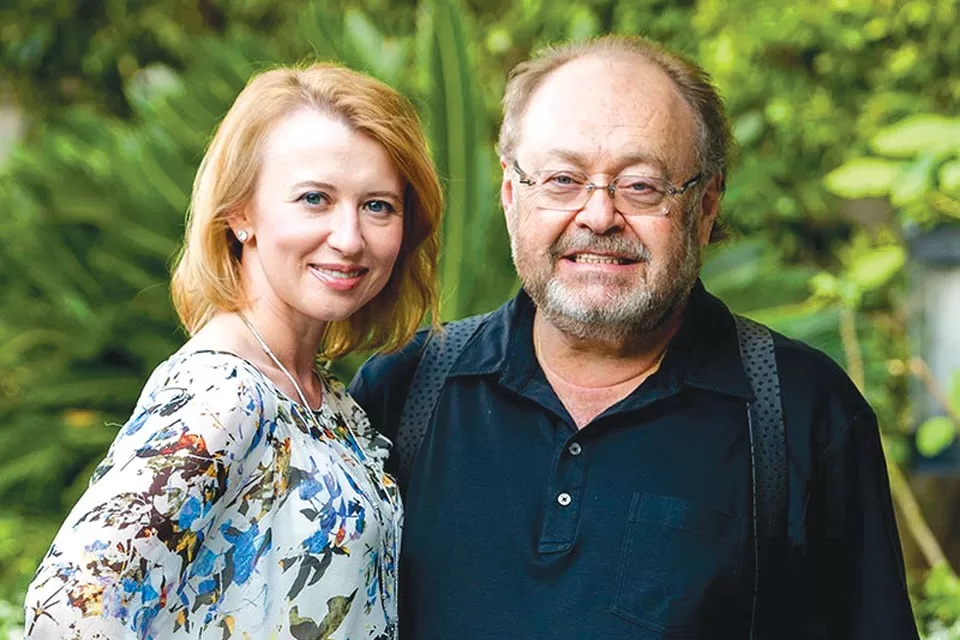
For Schaeffer, preserving Holocaust testimony connects directly to his parents’ lives. His support helped make USC Shoah Foundation’s Visual History Archive available at Eötvös Loránd University in Budapest. His foundation paid for three years of access for students, faculty and researchers. In 2013, the university awarded him its Senate Medal.
He also supported international teacher training, including initiatives in Hungary, Russia, Poland and at the American University in Paris. The work extends the usefulness of an archive beyond keeping recordings. People need the opportunity to encounter the material, and teachers need ways to bring it into a classroom.
“The world needs to remember in order to make sure it doesn’t happen again.”
George Schaeffer, on preserving survivor testimony, 2020
That commitment continued in South Florida. In February 2025, Florida Atlantic University committee minutes recorded a $300,000 gift from the foundation for the Wallach Holocaust and Jewish studies building and its programs. The committee approved recommending that the Dimensions in Testimony exhibit carry George and Irina’s names.
Other projects have used music and cultural space as their starting points. Bnai Zion established the George W. Schaeffer Music Conservatory in Ma’ale Adumim in 2013; the George and Irina Schaeffer Cultural Center followed in 2017. A classroom, a conservatory and an archive ask different things of their visitors. Each gives someone a place to learn.
07 / An evening in Boca RatonThe evening in Boca Raton
In May 2024, Florida Atlantic’s College of Business celebrated Schaeffer as its 30th Business Leader of the Year. Hundreds attended the ceremony at Boca West Country Club. The evening recognized his business career and his community work together.
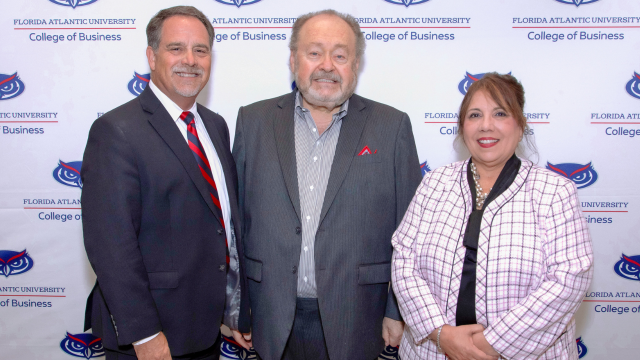
His connection to beauty continued, too. The Personal Care Products Council’s 2025/2026 board list includes him representing Aloxxi International Corporation. The industry he entered through that dental supply counter remains part of his working life.
The award supplies a tidy public milestone for a career that has rarely stayed tidy. Garments, salon materials, lacquer, hair color, insurance: the names on the doors changed. Along the way, there were professionals to serve, children to equip for school and family history to preserve. George Schaeffer’s story has room for all of them.
Continue the conversation
- PERSONAL WEBSITEGeorge Schaeffer’s biography and foundation
- LINKEDINConnect with George Schaeffer
- PEOPLE’S TRUSTHis letter on preparation and recovery
- WATCH / AMERICAN SALONLeadership Stories: the 2015 Cosmoprof interview
- INTERVIEW / 2012Bottling Happiness
- EDUCATION & MEMORYGeorge and Irina’s support for survivor testimony
- FLORIDA ATLANTIC / 2024The Business Leader of the Year celebration