Roberto Oliveira remembers selling the first phone before his university kiosk was properly set up. It is a pleasing opening scene for a career spent preparing for things that had not quite arrived. In 1997, he and his partners put R$1,500 into Take Phone, a small mobile-phone business on the campus of the Federal University of Minas Gerais. The shop came first. The ambitions attached to it would take considerably longer to unpack.
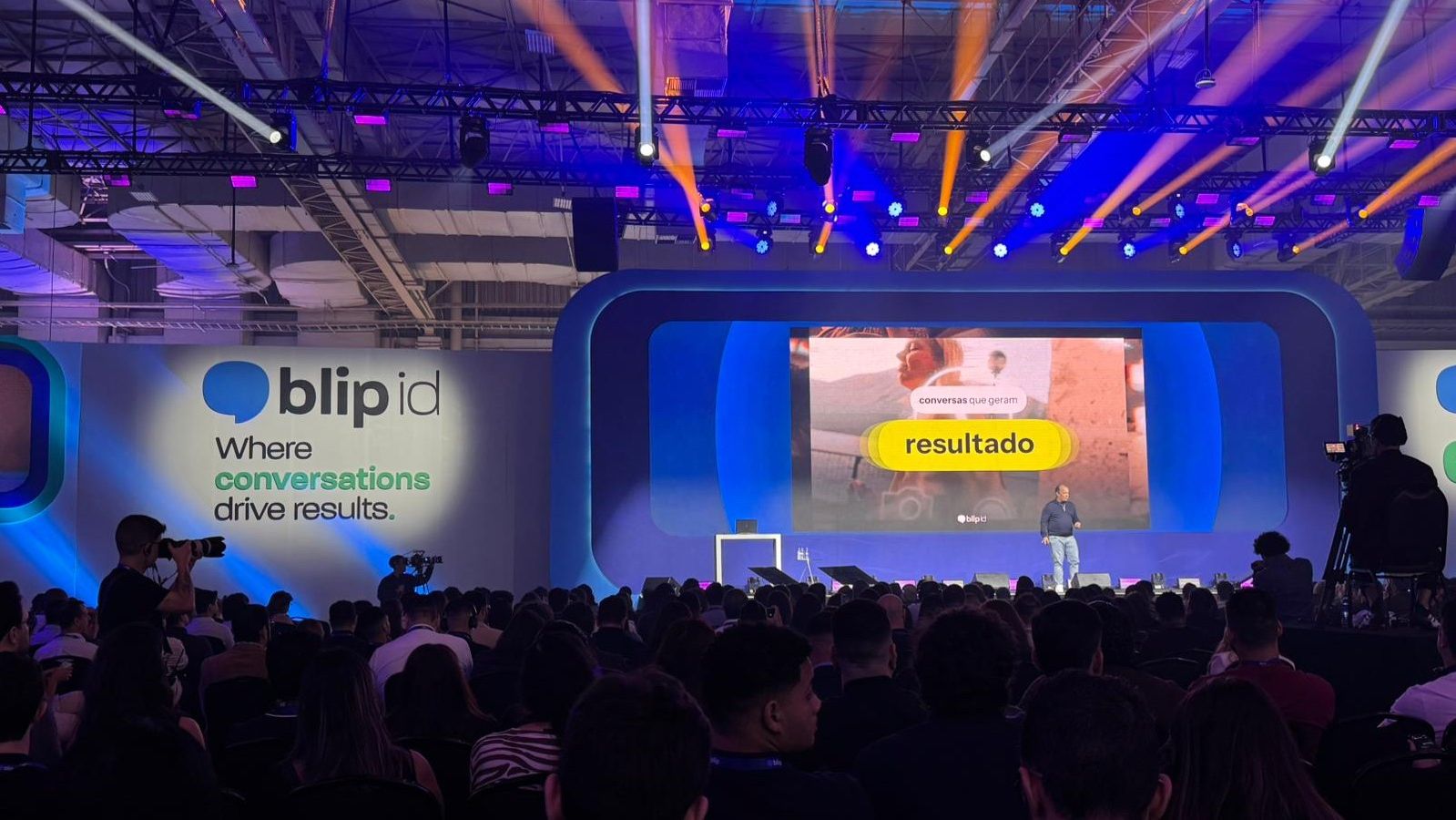
Nearly three decades later, Oliveira leads Blip, the conversational technology company based in Belo Horizonte. Its software helps businesses communicate with customers through messaging services, bringing together automation, people and artificial intelligence. Yet the decision that best explains his career came in 2014. WhatsApp was becoming part of everyday life. He and his colleagues began building infrastructure for a business platform WhatsApp had yet to open.
The opening came in 2018. Four years is a long time to spend getting ready for somebody else’s decision. Oliveira had already lived through enough changes in mobile technology to understand what waiting might cost, and what arriving late might cost more. His earlier businesses had made money, lost their footing, changed hands and found new uses. The straight line on a presentation slide would require a generous supply of correction fluid.
Ten shops, then a different kind of ring
The partnership had roots beyond the shop counter. Daniel Costa and Roberto met during military service at the Centro de Preparação de Oficiais da Reserva. Roberto’s uncle, Antônio Oliveira, became part of the entrepreneurial group. Later, his brother Marcelo and technologist Sérgio Passos joined the evolving business. The people recur in the history even as the products change. Keeping the same collaborators while replacing the commercial premise is one of its more interesting features.
Oliveira trained in electrical and telecommunications engineering at UFMG. That background matters in a story that begins with selling physical objects and gradually moves into the systems connecting them. There is a large practical difference between handing over a phone and arranging what happens inside a mobile network. The early years gave him experience of both the customer’s purchase and the infrastructure behind it.
Take Phone grew to ten stores in Belo Horizonte and an authorized Nokia service operation. Growth brought exposure. Operators began selling phones themselves, and large retailers entered the market. The small chain lost supplier credit and borrowed to buy stock. In 2002, the partners closed the stores, carrying R$3.5 million in debt. Selling a fashionable product had not protected them from better-financed sellers of exactly the same thing.
By then another business was developing: ringtones delivered through SMS. A customer could send the name of a song to a short number and receive a new sound for the phone. Even in this compact transaction, the group was experimenting with a useful idea: make the request feel like a conversation. Costa later recalled replacing the codes used elsewhere with a more conversational way of ordering music. The distance from that exchange to today’s messaging commerce is shorter than the changing vocabulary suggests.
At its peak, Take handled more than 250,000 ringtone downloads a day. In 2005, the Japanese company Faith bought the operation; in 2008, Oliveira and his partners bought it back. The ringtone market was fading as smartphones changed what users could do for themselves. The returned business moved toward corporate SMS. A successful exit had supplied neither a permanent destination nor an exemption from the next technological change.
- 1997Take Phone kiosk
- 2005Ringtone business sold
- 2008Operation repurchased
- 2014WhatsApp preparation
- 2018Business platform opens
Building for a door that was still shut
SMS gave businesses a way to reach customers on their phones. WhatsApp complicated that arrangement by giving people a more attractive place to talk. Oliveira’s group considered a possibility that was commercially awkward in the present and potentially valuable in the future: if WhatsApp let businesses connect through software, brands would need a way to manage those conversations. A new channel could create demand for the experience the group already had.
In 2014, they began preparing for that possibility. Their bet required more than believing that people liked messages. It required believing that a private consumer service would become accessible to businesses, and that those businesses would want help operating there. Oliveira has described Blip as one of the platforms invited into WhatsApp’s early business beta. When the opening arrived in 2018, the company had something ready to bring through it.
What makes the interval revealing is its duration. A founder can be correct about a trend and still run out of time. Here, the preparation stretched across four years. The group’s existing mobile business supplied context while the new opportunity developed. The history suggests a useful reading of Oliveira’s apparent patience: he had customers to understand and systems to build while waiting. There was work inside the wait.
On the Sunday Drops podcast, and in his own account of that conversation, Oliveira identified four trends behind Blip’s development: the growing importance of customer experience, messaging, artificial intelligence and software connected through APIs. Taken together, they describe a business in which the interface can change without every system behind it being replaced. The customer sends a message; the organization still has to locate the order, answer the question and complete the task.
2014: the bet begins.
2018: WhatsApp’s business opening arrives.
An intelligent contact, with people still in the picture
Oliveira prefers the phrase “intelligent contact.” It puts the continuing relationship with a brand at the center of the discussion. In his explanation, a person can return to a conversation rather than repeatedly begin a fresh journey through a website or telephone service. Automation and human assistance can share that relationship. The attractive part is the ordinary convenience: a question goes into a place the customer already knows how to use.
The operational details are less romantic and more consequential. At Blip’s 2024 event, a discussion of customer service contrasted the timing of a call with the timing of a message. A person on the phone generally answers immediately. Someone using WhatsApp may reply minutes or hours later. Ending a messaging interaction after a few quiet minutes imports the habits of a call center into a different setting. A chat window alone cannot repair that mismatch.
That example helps explain Oliveira’s attention to learning from interactions. A customer’s pause is part of the experience. So is a question the company did not anticipate. A platform becomes useful when the business can learn from these moments and adjust the service. His argument asks organizations to attend to behavior as closely as they attend to the software. The message is small; the change in working habits can be substantial.
In a July 2026 essay, he gave this thinking a sharper commercial edge. Generative agents, deterministic workflows and people each have situations in which they work well. Computing costs still matter. He argued for coordinating those resources around the customer’s journey, and for using what businesses learn in conversations to improve their campaigns. The test is whether a useful interaction leads to a useful outcome. Fluent small talk is a pleasant accomplishment, but it makes a rather unconvincing purchase order.
“As empresas precisam estar onde o seu cliente está.”Roberto Oliveira“Companies need to be where their customer is.”
English translation
Learning to let other people decide
The external machinery has an internal counterpart. In a public reflection on Blip Ownership, Oliveira described encouraging employees to make decisions and involve other specialists when needed. The aim was to prevent work from stalling because someone felt unable to move it forward. He wrote with evident pride about seeing that behavior among colleagues. For a company selling responsiveness, the everyday permission to respond is a consequential management choice.
He also speaks about decisions beginning in corridor conversations, messages sent outside meetings and comments that change his thinking. In his account, the formal meeting often confirms what conversation has already built. That is a revealing observation from someone whose business depends on extracting value from exchanges organizations might otherwise overlook. It also brings the grand language of conversational technology down to the familiar experience of a useful chat at work.
His professional connections extend beyond Blip. He cofounded Confrapar and Minu, invests in startups, serves on Confrapar’s board and appears among eMotion Studios’ group advisors. These roles place him on several sides of a founder’s table: building a business, discussing governance and helping other companies develop. He completed executive education in innovation and entrepreneurship at Stanford in 2014, the same year the WhatsApp bet began.
There are quieter glimpses, too. After appearing on Dario Perez’s Papo de CEO podcast, Oliveira wrote that the conversation had moved him at the end. Elsewhere, he has described ordering replacement coffee capsules through a brand’s chat. One moment shows his attachment to the history he is telling; the other shows the product proposition in miniature. Even an ambitious theory of the internet can arrive as a reminder that the coffee is running low.
The capital arrived after the practice
The financing sequence came much later than the kiosk. Warburg Pincus invested $100 million in 2020. A $70 million Series B followed in 2022. In late 2024, Blip completed a $60 million Series C led by SoftBank, with Microsoft participating. Those three rounds total $230 million. The order matters: the group had spent years finding products and adapting to mobile habits before that sequence of institutional funding began.
The investors also changed what expansion could involve. A five-year strategic collaboration with Microsoft was announced in December 2024, covering development of Blip’s platform with cloud and AI technology. Oliveira’s opportunity now included the technical and commercial work of serving businesses beyond Brazil. Funding supplies resources for that work. It leaves the central question of customer behavior to be answered again in each market.
Blip acquired GUS in 2023, giving it a route into Spain and a team with related experience. Today, its official site lists operating hubs in Belo Horizonte, São Paulo, Madrid and Mexico City, and describes customer presence across 32 countries. The headquarters remains in the city where the early phone business began. Geographic expansion has added destinations to the story without requiring a new hometown for its opening chapter.
Another opening, another wait
In October 2026, Oliveira was again discussing what might come next. He said Blip was developing voice capabilities for its AI agents, pointing to demand in the United States and Europe. The plan carried a familiar element: observe how people want to communicate, then prepare the platform to accommodate them. Voice remains a stated direction here, rather than an achievement to be penciled into the past.
Europe presents a further test of the Brazil experience. Oliveira has described conversations with prospective international customers as reminding him of earlier conversations at home. Familiar questions can be encouraging. They still leave the work of winning trust, fitting local practices and making the service useful. His history contains enough closed shops and replaced products to make the distinction between an opportunity and a finished result plain.
The first phone sale makes an appealing beginning because somebody bought something before all the preparations were complete. The WhatsApp decision supplies the reverse: years of preparation before the opening arrived. Between those two moments sits a career built around the moving habits of phone users. Oliveira has repeatedly had to decide what to keep, what to rebuild and when to start. Now he is making those decisions again, with a much longer conversation behind him.