André Florence offered a prospective business partner something rather less polished than a pitch deck: access to people who might criticize him. There were 15 former colleagues to call. Guilherme Azevedo could speak to all of them. Florence had already warned them to expect the conversation. The invitation ended with two words: “Zero filtro.”
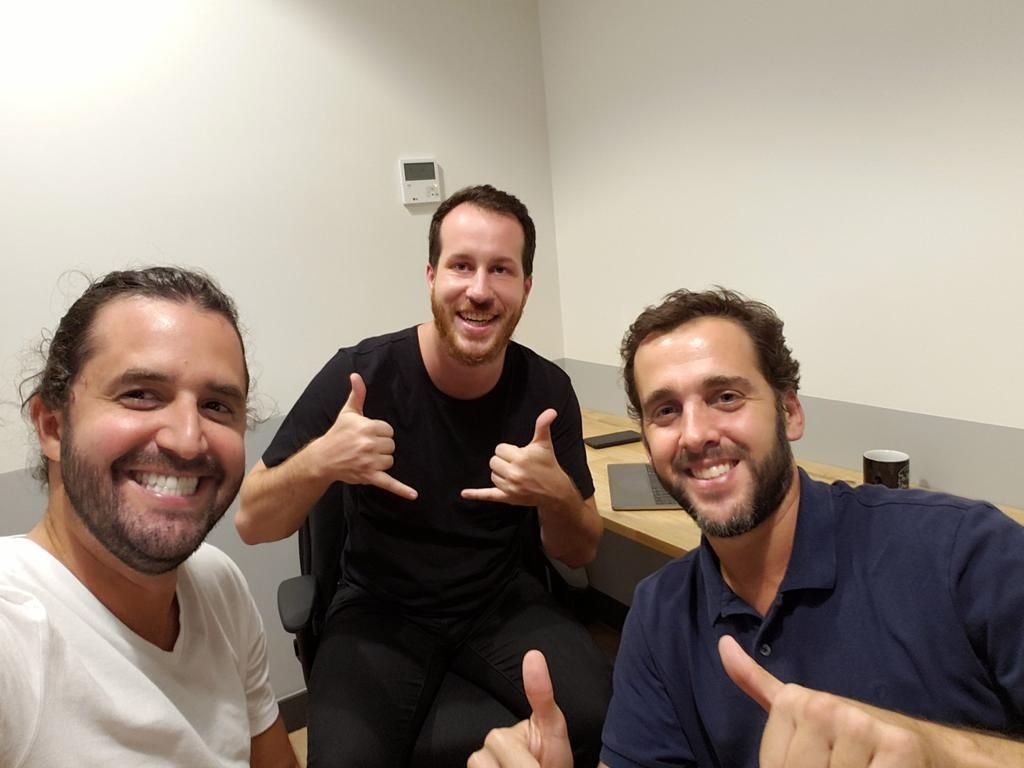
Azevedo reciprocated. There were calls, notes and letters. The two men arrived independently at the same recommendation for their new company: Florence should be CEO. In March 2019, a photograph caught Alice’s founders in a WeWork office, smiling around a table. Matheus Moraes, Florence’s former colleague at 99, completed the trio.
Consider the order. The references came before the title. Before asking other people to believe in an organization, Florence had invited someone to examine the person who would help lead it. It is an unusually useful beginning for a business biography. The awkward question had been given a seat at the table.
A finance desk with a moving target
Florence studied economics at Insper, graduating in 2010. His early career included Lazard and Goldman Sachs. By 2014, he had moved into the finance leadership of 99, where he would serve as CFO until 2018. The progression connects two professional worlds: advising around money and helping run a company that needs it.
Inside a growing business, a financial decision acquires legs. It becomes a hiring plan, a product launch or another city on the map. A spreadsheet may be tidy; the operation it describes rarely has that luxury. Florence’s years at 99 put him inside a company whose ambitions were changing quickly.
In 2017, he described plans to take 99 Pop into 25 Brazilian cities by the end of that year. The company also intended to multiply its workforce by five, reaching about 1,000 people. Those were plans expressed at the time, rather than figures to be mistaken for a later scorecard.
The distinction matters. Startup histories tend to tidy yesterday’s intentions into today’s inevitabilities. Here, the contemporary picture is more interesting: an executive trying to explain a fast-moving business while its next version was still being assembled. Financial leadership meant keeping pace with an operation that was asking for more room.
Insper
99
Alice
and training
What an exit leaves in the room
In January 2018, Didi acquired 99. The transaction made 99 Brazil’s first unicorn, and Florence helped manage the sale. An exit supplies a wonderfully convenient ending: the deal closes, the valuation makes the headline, and a complicated stretch of work gets a date.
His career continued past it. So did the careers of colleagues. Former 99 employees went on to build businesses including Swap, Kovi and Quicko. Florence and Moraes became part of that wider alumni story through Alice. The connection is concrete: people who had worked inside one growing organization were building others.
The company’s original founders were Ariel Lambrecht, Renato Freitas and Paulo Veras. Florence’s place in this account is as an executive who later became a founder himself. Keeping those roles clear makes the transition more revealing. He had experience of the journey without having begun that particular journey.
A successful transaction can travel on a résumé. Shared work travels through relationships. A person who has watched you handle a difficult period knows something a job title cannot communicate. That helps explain why the cast of Florence’s second venture deserves as much attention as the sequence of his employers.
Starting small, with people who remembered
After leaving 99, Florence took a sabbatical. Grazi Ballico, who knew him from the company, later recalled his return and invitation to join Alice. When she arrived, the team consisted of about ten people. She came to work in finance and found herself doing a little of everything.
Her account includes invoices, cash flow, building work and conversations with suppliers. As hiring gathered pace, she also became involved in personnel matters. Eventually, CFO Luiz Santos asked whether she wanted to take responsibility for that area. Ballico’s route into people operations ran through the miscellaneous work of an early company.
This is a useful corrective to the glamour that accumulates around a second venture. A previous exit does not process an invoice. It does not finish an office or call a supplier. The new organization still has to acquire the ordinary machinery that allows a working day to happen.
Florence was starting again with professional experience and established relationships. The administrative beginning remained a beginning. In Ballico’s recollection, the company becomes visible through tasks rather than announcements. It is a small scene, but it gives the later funding figures something solid to stand on.
A culture that could be revisited
Alice’s early team also spent time defining how it wanted to work. Discussions among roughly 20 founding-team members addressed beliefs, attitudes and behaviors. These were questions about the organization they were making together, with consequences for team formation and working arrangements.
Later, its people leader, Sarita Vollnhofer, described the importance of leaders practicing the culture and of reinforcing it through meetings and other routines. The office included an arena-shaped auditorium, giving one of the company’s stated virtues a literal place to sit. Corporate language had acquired furniture.
The company calls its employees Pitayas. An organization can certainly choose a more solemn collective noun. The interesting question is what happens after the naming: whether people can recognize a shared way of working in the decisions they encounter. A nickname is easy to print. A habit requires repetition.
Alice’s founding correspondence offers one interpretation of how that repetition began. Azevedo connected the exchange of letters with the organization’s preference for substantial written documents. Writing leaves an argument available for inspection. It gives a colleague something to return to after the meeting, when the enthusiasm has cooled and the questions become more precise.
“Zero filtro.”
André Florence’s invitation to check his references, recalled by Guilherme Azevedo
More than one column on the dashboard
In 2021, Alice described a system for monitoring diversity and inclusion indicators. Florence spoke about following the data closely so the company could adjust its course. The organization also described commitments involving racial equity and women’s empowerment, alongside training and internal processes.
That decision extends the management question beyond financial performance. If something matters to an organization, where does it appear in the working week? Who examines it? What happens when the result is uncomfortable? A stated intention becomes more tangible when somebody has a process for revisiting it.
Measurement has limits, particularly when the subject is people. A dashboard cannot contain every experience of belonging or exclusion. It can, however, make a question harder to forget. For a founder whose career passed through finance, the choice of what to monitor is a meaningful part of the leadership story.
The money, and the morning afterward
Alice acquired Cuidas in November 2021. Its founders, Deborah Alves and João Vogel, joined the executive team. The purchase added another set of entrepreneurs to an organization already shaped by previous working relationships. The transaction’s financial terms were not disclosed.
A month later, Alice announced a US$127 million funding round led by the SoftBank Latin America Fund. Kaszek and ThornTree Capital Partners participated, alongside other investors. The sum belongs to the company’s financing history; it says nothing by itself about Florence’s personal wealth.
The founders marked the round with a public letter. They tied the ability to attract investment to building a team and executing, and described the responsibility that accompanied investor confidence. It was an appropriate concern for a CEO who had already worked through a major transaction from the finance seat.
Capital changes the range of possible decisions. The decisions still have to be made. After the celebratory announcement come the slower questions of what to build, whom to hire and how to keep the organization coherent. A financing round can be completed. The work it finances keeps arriving.
A trading floor is a backdrop
In October 2022, Florence and CFO Luiz Santos appeared in an interview for NYSE Floor Talk. Alice also featured on the Nasdaq billboard in Times Square. These were separate public appearances involving two exchanges, rather than an announcement that Alice had become publicly listed.
The distinction gives the scene its proper scale. A recognizable backdrop can do an extravagant amount of work in a business photograph. It lends the borrowed confidence of a landmark. The career behind this one already had its own sequence: economics, banking, startup finance, a sale and another beginning.
Florence has also discussed entrepreneurship in podcast appearances, including TalksbyLeo and The J Curve. With Azevedo, he addressed partnership and the shift from pursuing growth at any cost toward efficiency. That is a different conversation from celebrating an investment round. It concerns how a company intends to keep operating after the applause.
The next tool still needs a judgment
By May 2026, Florence was discussing another organizational change: wider use of AI in engineering and staff training. Alice reported a month-long pilot involving six engineers, with faster bug resolution and more deliveries per sprint. These were company-reported pilot results, rather than a universal promise about the technology.
He described plans to alter the company’s infrastructure and broaden employees’ understanding of the tools. Training targets and longer-term growth ambitions were presented as future goals. In Portuguese, his assessment began simply: “Estamos vivendo um mundo novo.” We are living in a new world.
The recurring question in his career is who can be trusted with the next responsibility. At 99, that meant an operating role through expansion and a sale. At Alice’s beginning, it meant prospective partners examining one another. With new technology, it means people learning to make decisions using different tools.
Return to the small office photograph. The founders are smiling, with plenty still ahead. What makes the picture interesting is the work behind that ease: conversations, references and written judgments. Florence’s invitation had allowed the difficult questions in early. A company would soon have many more of them.