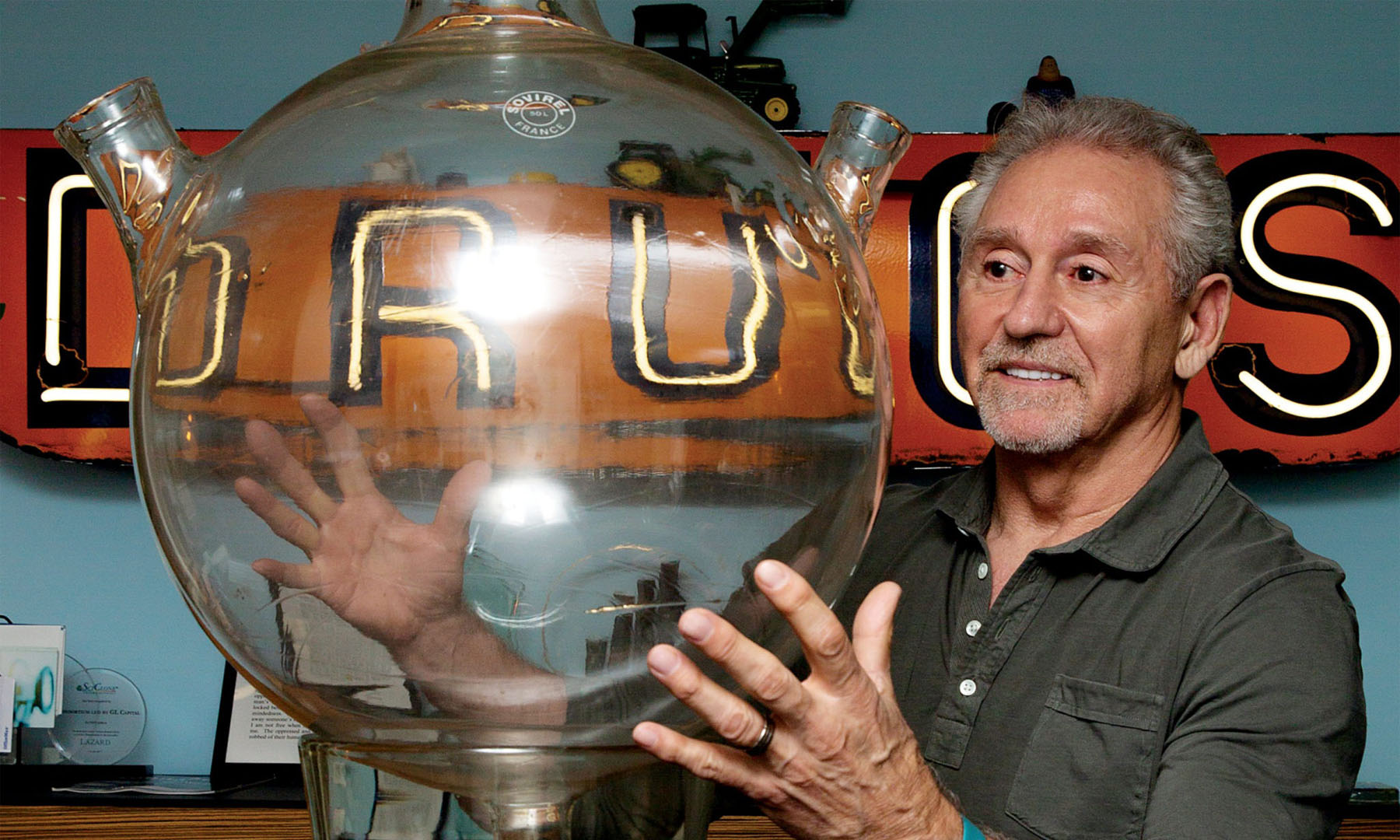
Rick Hawkins keeps a tractor in his office. A model, mercifully. Alongside a drugstore sign, it makes a small exhibition of the distance between rural Ohio and a career spent starting companies in Austin. The objects are more revealing than the usual executive furniture. One points back to where he came from. The other points toward the industry in which he learned to earn his living.
Hawkins founded Lumos Pharma and served as its chairman and chief executive. Before that came Pharmaco, Sensus, a manufacturing venture, and other businesses. Read the names in a row and the career resembles a collection. Look at the work underneath them and a pattern appears: he has repeatedly assembled the people and capabilities that another organization needed but did not have.
There is a particular sort of ambition in that. Inventing something attracts attention. Arranging for it to be developed, manufactured, financed and managed requires an appetite for the less photogenic parts of enterprise. Hawkins made a career in those parts. His story offers a useful corrective to the idea that a founder’s chief qualification is having an idea before everyone else.
The cornerback’s next assignment
On his LinkedIn profile, Hawkins lists a full football scholarship to Ohio University and All-Mid-American Conference recognition as a cornerback and punt returner in the 1970 and 1971 seasons. That is an unusually specific beginning for a business biography. It gives the future executive an earlier occupation, with a position, a team and a scoreboard.
A cornerback works within a system while being conspicuously accountable for his own assignment. A punt returner must decide quickly what the available space will permit. Neither description proves anything about business ability. Still, they make an interesting preface to a career spent judging opportunities inside complicated organizations. His working life would involve a similar combination of personal judgment and dependence on other people’s execution.
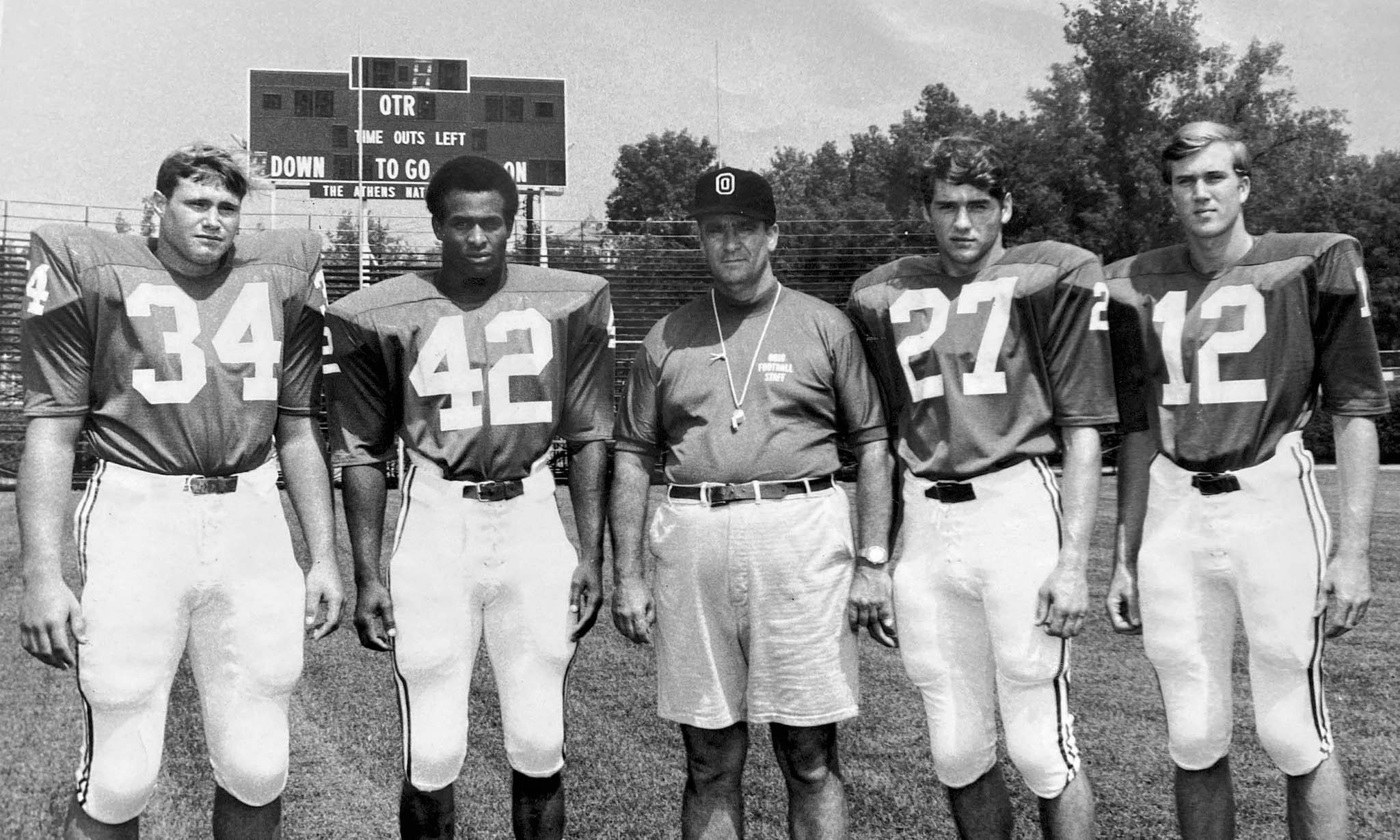
His degree was in biology. The combination matters: a scientific education, competitive sport and, subsequently, years inside an established corporation. Those are different kinds of training. A university supplies concepts. A team supplies consequences. An employer supplies a close view of how an industry actually organizes its work. Hawkins eventually put all three on the same résumé.
A company built around someone else’s to-do list
Hawkins began his professional career at Johnson & Johnson. In a later interview, he described experience across preclinical work, clinical development and regulatory matters. This was an apprenticeship in the whole process, rather than a single isolated task. It gave him a view of how many separate activities must line up before a project can move forward.
He went on to establish Pharmaco in Austin in the early 1980s. The business provided services to pharmaceutical companies. Its offering included analytical chemistry and work across several stages of development. The proposition was practical: a company could hire outside expertise rather than maintain every necessary capability within its own walls.
The BIO convention’s account of his career separates two scales of responsibility. Hawkins grew Pharmaco to more than 700 employees, then managed international research and development operations numbering 2,000 after its combination with Applied Bioscience International. Pharmaco subsequently became part of the PPD story. The distinction is useful. A startup and an international operating group ask different things of their leader.
Delegation becomes a different activity when there are hundreds of people involved. A founder can no longer personally supply the answer to every question. The service itself has to become dependable. That is the organizational achievement behind the employee count: customers were buying work that required coordination, and Hawkins was responsible for an enterprise built to deliver it.
There is also a pleasantly unromantic quality to this version of entrepreneurship. Someone else has a difficult list of jobs. You build a business capable of doing them. The list may be technical, expensive and heavily supervised, but the underlying exchange is familiar. Reliability can be a product, too.
The introduction that survived the laundry
One of Hawkins’s consequential professional connections began with Ohio football coach Joe Dean. John Kopchick, an Ohio University scientist, had been discussing his difficulty attracting commercial interest in his work. Dean knew a former player who might understand the business problem. He wrote down Hawkins’s telephone number.
The paper went through the washing machine in Kopchick’s clothes. His wife rescued it. Kopchick eventually called, sent a proposal, and found a willing reader in Hawkins. The relationship led to Sensus, formed with John Scarlett. A professional partnership had arrived by way of a coach, a scrap of paper and unusually fortunate laundry.
It is an excellent anecdote because its machinery is so ordinary. Nobody had designed an elaborate introduction strategy. Dean knew enough about two people to put them in touch. Kopchick followed up. Hawkins considered the proposal. An opportunity became actionable because several people performed small, specific acts in sequence.
“To me, a ‘no’ was only a delayed ‘yes.’”
Rick Hawkins
That line captures his stated attitude toward resistance. It also raises the interesting practical question: what happens during the delay? His career suggests an answer involving colleagues, agreements, operating plans and new businesses. Persistence becomes more useful when it produces another route forward. Simply repeating a request would make for a much shorter biography.
When the supplier becomes the next company
Hawkins’s account of his next move begins with a gap in contract manufacturing. In working on Sensus, he saw the need for an outside facility that could manufacture recombinant proteins. He helped establish that capability in North Carolina’s Research Triangle Park. The operation was acquired by Akzo Nobel and became part of the lineage now associated with FUJIFILM Diosynth Biotechnologies.
The business logic is worth lingering over. A difficulty inside one enterprise can reveal a service that other enterprises will also require. Resolving the immediate problem creates an additional possibility: build the missing capacity as a company with customers of its own. The original obstacle becomes evidence about a market.
This is an interpretation of Hawkins’s company-building record, rather than a formula he has published. It connects Pharmaco’s outside services with the manufacturing venture: both depended on work being able to cross organizational boundaries. A large company did not have to own every capability. A smaller company could make supplying that capability its principal occupation.
His later record included founding LabNow and helping establish id2, a research management company. He also chaired LoopOne, a shipping and logistics software business. That last entry makes a welcome interruption in a résumé crowded with biotechnology. It places a different kind of operating problem on the same desk.
Ten people can still need a large address book
In 2016, Lumos raised a $34 million Series B round led by Deerfield Management. New investors included Clarus Ventures and Roche Venture Fund, alongside existing backers New Enterprise Associates, Santé Ventures and UCB. At the time, the company worked with a virtual team of ten.
The small headcount carried a large implication. A company organized around external specialists needs people who know how to choose and coordinate them. Hawkins’s previous experience supplied that context. The financing story described a founder whose international network made an Austin-based virtual company workable. The organizational chart could be small because the working relationships extended beyond it.
Lumos also added experienced executives. John McKew joined as chief scientific officer in April 2016. In August 2021, the company promoted him to president as part of its succession planning. Hawkins described a working relationship stretching back nearly ten years, including an earlier collaboration before McKew joined Lumos.
That promotion provides a quieter milestone than a financing announcement. Giving a colleague more responsibility changes how a company runs every day. It also makes continuity a deliberate management task. A founder’s accumulating experience is useful; so is an organization that can distribute responsibility among people with experience of their own.
A change of ownership, a longer working life
Lumos’s merger with NewLink Genetics brought Hawkins to the leadership of the combined public company in March 2020. He took on the chairmanship that month. In December 2024, Double Point Ventures completed its acquisition of Lumos, bringing another change in ownership to a career already familiar with mergers and sales.
Hawkins’s October 2024 message to employees addressed that transition directly. The business would continue under the Lumos name as a privately owned company once the transaction closed. The emphasis was on the next operating chapter. Corporate transactions have a vocabulary of their own, but employees still need to know who will own the business and how work will continue.
His working life extends beyond the former Lumos role. Aether’s current board biography lists him as founder and chairman. Orphagen lists him as a board member. These appointments put accumulated operating experience into a different setting: helping guide enterprises rather than occupying every executive chair himself.
Ohio University awarded him its Konneker Medal for Commercialization and Entrepreneurship in 2014. He has also received the university’s Distinguished Business Achievement Award and recognition in the University of Texas College of Natural Sciences Hall of Honor. The word commercialization in that first award is particularly apt. Much of his work has concerned the arrangements that allow a promising project to become an operating enterprise.
Company names change. Ownership changes. The useful work between an idea and an organization keeps presenting itself. Hawkins’s career makes that interval visible: finding the missing person, securing the missing capability, making the introduction, handing over responsibility. There is room for ambition in all of it. There is even room for a tractor on the desk.
Follow the working life
Company pages, conversations and further reading.
Rick Hawkins on LinkedIn ↗Lumos Pharma ↗Aether leadership ↗Orphagen board ↗The Ohio University connection ↗Watch: 2015 Innovation Awards keynote collection ↗