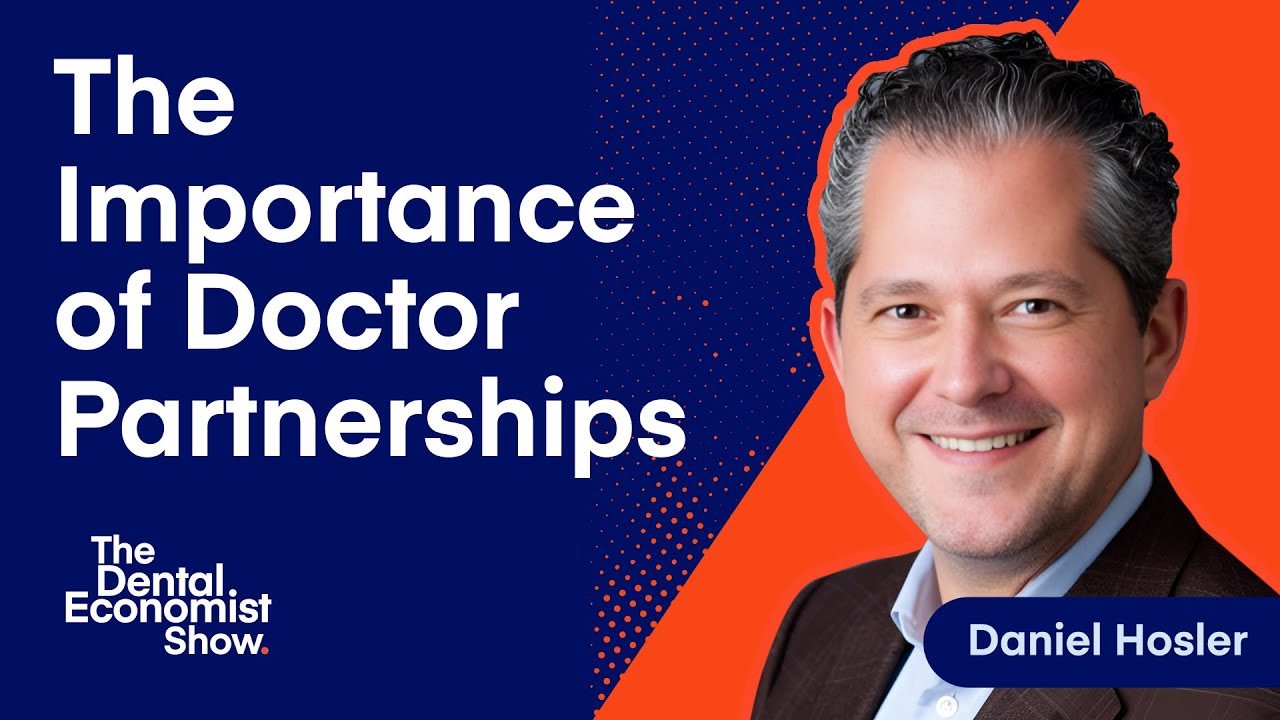
Daniel Hosler once gave a university talk that put DJ, biochemist, and private equity investor in the same title. Most résumés try to make the route look inevitable. His allowed for a little wandering. Years before he became co-founder and CEO of Allied OMS, Hosler was working on agricultural products and software. The boardroom arrived after several encounters with the less polished parts of running a business.
Today he holds two jobs that bring those experiences together: chief executive at Allied and managing partner at DuneGlass Capital. One involves operating a company with professional partners across the country. The other involves choosing investments and building the teams that will execute them. Between the two sits a question that follows him through his public conversations: how should the people building a business share in its decisions and its value?
A résumé with mud on its shoes
Hosler earned a BA in biochemistry at Rice University, where he belongs to the class of 2001. His early ventures included Microganics, an agricultural products company he co-founded and operated. There, his responsibilities included designing products and building a nationwide distribution network. The scientific degree had found a commercial assignment, complete with the unromantic requirement that the product actually reach someone willing to buy it.
At The Activ Group, he worked in product marketing and oversaw retail sales and sales operations. He also developed software for electronic data interchange compliance, helping the company handle orders for retailers including Rite Aid, Walgreens, and Albertsons. An order from a large retailer is a pleasant development until the paperwork prevents it from leaving the building. Hosler’s work addressed that very practical gap between winning business and delivering it.
One surviving artifact from the agricultural chapter is especially concrete. A patent granted in June 2011 names Hosler alongside Ronald J. Gourley and Griscom Bettle III. Originally assigned to Microganics, it concerns a composition used in poultry litter management. Its subject is a long way from an investment committee, though both enterprises require close attention to what accumulates beneath the surface. The patent is a reminder that his earlier company building involved a physical product and a specific industrial problem.
Business school followed. Hosler attended Northwestern University’s Kellogg School of Management from 2004 to 2006, completing an MBA with concentrations in finance, marketing, and management and strategy. His public profile also lists participation in an NVCA team and service as class gift fundraising chair. By then, he had already spent time trying to make young businesses work. The classroom came with operating experience attached.
US 7,963,252 · Granted June 21, 2011
Co-inventor: Daniel Hosler
Original assignee: Microganics LLC
Learning both sides of the table
Hosler’s investing career included Sterling Partners, where he became a principal and co-managed a sector investment effort. It placed him inside the institutional machinery of buying, building, and eventually exiting businesses. In 2014, he returned to Rice to speak to undergraduates about his winding route. By then, the former student who had built products and software could also explain the investor’s side of the transaction.
He became managing partner at DuneGlass Capital in 2019. At DuneGlass he chairs the investment committee and helps direct its thematic investments, with particular attention to assembling management teams. The emphasis on people is concrete: an investment strategy needs someone to recruit, integrate, budget, and make the decisions that a spreadsheet can only describe. His remit includes the organization required to turn a transaction into an operating business.
In a 2023 conversation with Geoff Cockrell, Hosler described education as the starting point of the firm’s approach to professional ownership. Partners need to understand the investment structure before they can participate intelligently in it. There is a sensible order to that work: learn the vocabulary, examine the incentives, then consider the arrangement. A signature is a poor substitute for understanding what one has signed.
“To us, doctor equity starts with knowledge-sharing with all our partners.”
Daniel Hosler · 2023
The company with more people holding the pen
Allied OMS launched in April 2020. Its formation brought together Fort Worth Oral Surgery, Evergreen Oral Surgery, and DuneGlass Capital. Hosler became its CEO and co-founder. The undertaking combined independent business owners with executives experienced in private equity, creating a shared organization through which the partners could build value together. By the July formation announcement, the team had already made more than 100 presentations to practices nationwide.
The business has an unusually explicit answer to the question of participation. Allied maintains a doctor-majority board, and network doctors chair its management committees. Hosler sits on the board alongside professional partners and fellow executive Ryan Graham. Board membership makes the partnership visible in the place where strategy gets decided. It gives the company’s ownership philosophy a practical setting, with agendas, responsibilities, and votes.
His collaborators include Jonathon Jundt, a co-founder and chief medical officer, and founding partners Greg Scheideman and David Kostohryz Jr. Kostohryz also chairs the recruiting committee. In Allied’s June 2025 investment announcement, he described doctors working with management to identify needs and implement business solutions. These connections matter because Hosler’s job depends on an organization in which professional owners take part in building the platform.
Structure reaffirmed in the June 2025 investment announcement.
In his public discussions of prospective partnerships, Hosler encourages questions about debt and stock ownership. He also discusses the business education younger professionals need when considering their options. Joining a platform brings a set of financial relationships that deserve examination. His repeated attention to those mechanics makes ownership a working subject, something to be understood before the welcome dinner has been cleared away.
When the numbers got larger
Growth brought a more demanding operating assignment. Hosler said Allied tripled in size in 2022, then invested heavily in its team in 2023. The areas he identified were recognizably business functions: human resources, finance, IT, operations, marketing, and education. Adding more partners also meant adding people who could support them. The less glamorous work deserved its own line in the growth story.
In 2024, Allied secured a $116 million credit facility from four banks. At that point, the company described a network of 30 independent practices and doctor ownership exceeding 90 percent. Those are dated measures of a business at a particular stage. The facility provided financing for expansion; it was not a statement of revenue, company value, or Hosler’s personal wealth.
June 2025 brought the company’s first institutional capital. The minority investment was led by 65 Equity Partners, with Everberg Capital co-investing. Allied then supported more than 50 locations. Its announcement emphasized expanded capabilities, acquisitions, and operating resources while reaffirming the doctor-majority board. For Hosler, finding a financial partner included finding one prepared to work with the company’s existing culture and structure.
Announced credit facility sizes. The 2025 financing refinances existing debt and supports growth. These amounts are not additive equity funding.
In August, Comvest Credit Partners announced a $245 million senior secured credit facility, together with a preferred equity investment. The facility’s purposes included refinancing existing debt and supporting future growth. That announcement described 38 practices across more than a dozen states, with over 50 locations. Practices and locations measure different things; a business can have several offices under one practice partnership.
Hosler’s plans included both acquisitions and new offices. In discussing the business after the minority investment, he emphasized selective partnerships. Another interview highlighted partners who had started businesses from scratch or reinvigorated practices acquired from retiring owners. The company was recruiting people with their own experience of building. That gave the growth strategy a human constituency as well as a financing plan.
The daily work behind a bigger business
His later operating discussions became specific about integration. Changes should relieve an operating burden or reduce costs, preferably both. He also discussed daily reporting, breaking processes into measurable components before applying AI, and maintaining several banking relationships. These are the habits of managing a distributed company: know what happens, understand how it happens, and judge a new system by the work it improves.
Leadership brought another kind of friction. After seeing speaker Sterling Hawkins at an industry summit, Hosler brought him into an Allied meeting. The work addressed difficult conversations and the tendency to postpone them. Hosler described being challenged to stop making excuses and engage with discomfort. It is a more personal admission than a financing announcement, and a useful one for an executive asking many owners to work together.
Education remains visible in the organization’s newer activities. The October 16-18, 2026 Office Hours: Launch Lab Fall Summit in Scottsdale was presented as part of a year-long associate development program. Its materials include a welcome video message from Hosler and describe books, podcasts, TED Talks, mentorship, and regular guidance. The reading list is an agreeable reminder that growing a business still involves people sitting down to learn.
The random walk has accumulated a recognizable set of responsibilities: build something useful, find people who can help it grow, and decide how they will participate. Hosler’s current work puts those questions inside the same company. The next chapter will be written through its partnerships, operating decisions, and board meetings. For a career that began with such varied assignments, sharing the pen is a fitting occupation.