In March 2009, a company Jeffrey Aronin had founded nine years earlier became the American foothold of a Danish buyer. Lundbeck’s acquisition of Ovation Pharmaceuticals was valued at up to $900 million. That is the sort of number that tends to end a founder’s story with a photograph, a handshake, and an agreeable view of the sea. Aronin’s next chapter involved going back to work.
He stayed on as chief executive of Lundbeck Inc. until 2011, then led Marathon Pharmaceuticals. In June 2017, he founded Paragon Biosciences. Across those changes, the recurring subject was the company itself: how to assemble one, how to give it a purpose, and how to persuade capable people to spend years making it function. The transactions are easy to put on a timeline. The people who make them possible deserve a longer look.
Lundbeck’s 2009 valuation of Ovation. A company transaction, with a founder’s next chapter still ahead.
A marketing graduate in a world of specialists
Aronin grew up in Baltimore and moved to Illinois during high school. His undergraduate qualification was a B.S. in marketing from Northern Illinois University, completed in 1989. He also earned an MBA at DePaul University. His first job after NIU was in sales and marketing at Carter-Wallace. A later role at Medcare Technologies added experience inside an equipment business.
The marketing degree is an interesting detail in a career spent around scientific specialists. A company needs people who can understand a discovery and people who can explain why an organization should exist around it. Aronin’s subsequent work sits at that junction. His role has been to build businesses around expertise, putting a commercial structure beside the technical work rather than claiming the discoveries as his own.
In 2019, NIU’s College of Business recognized him with its Innovation and Entrepreneurship Award. The university’s alumni record lists him with the same degree and graduation year he had taken into his first job three decades earlier. Returning to an alumni luncheon with a company-building career behind you gives the familiar question about what to do with a marketing degree a rather substantial answer.
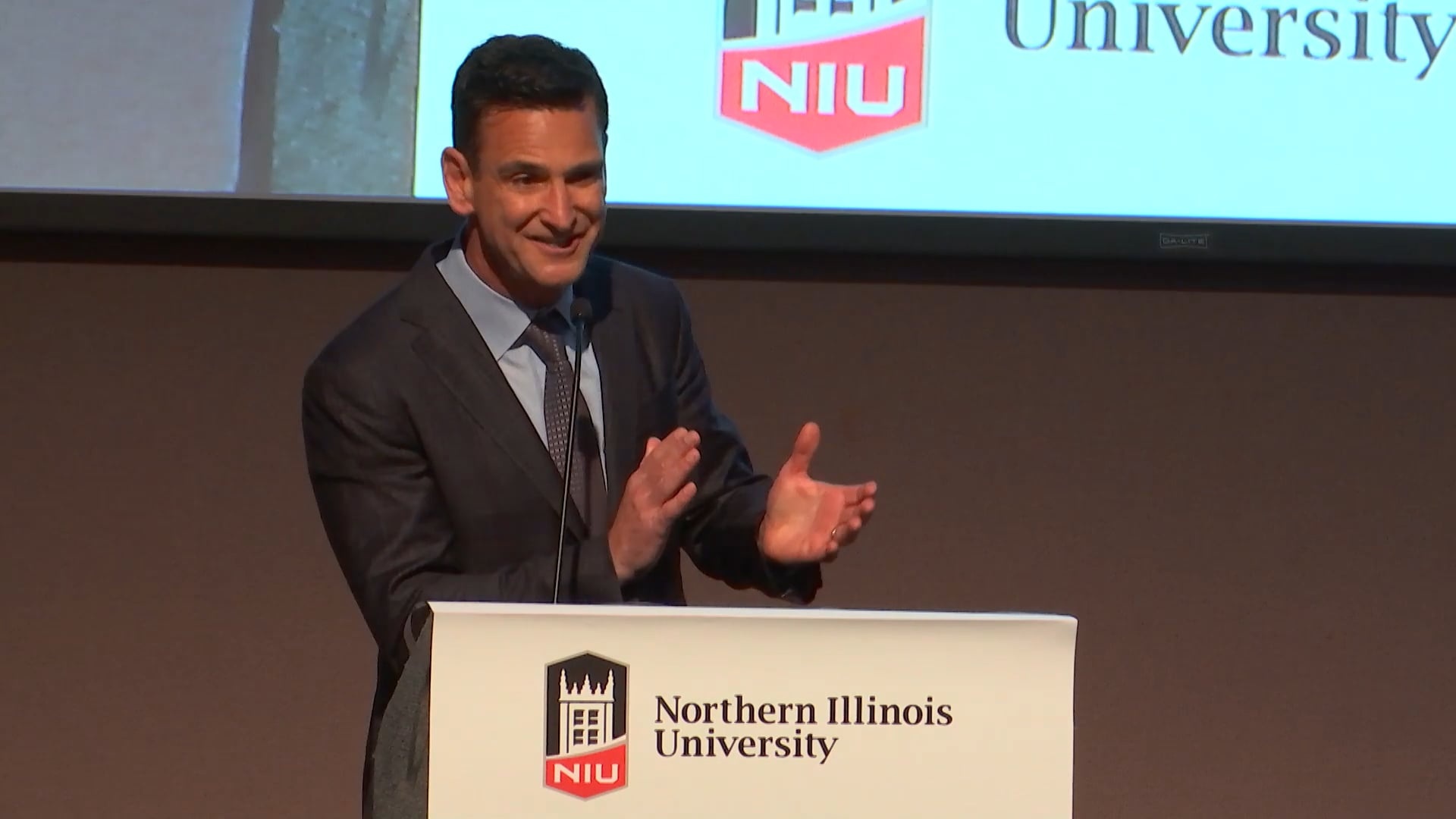
There was a practical connection behind the ceremony, too. NIU had announced a partnership with MATTER in December 2018. The following spring, business students could work with and consult for its startups. An alumnus’s relationship with a university can include a trophy; it can also give students an actual business problem to solve. The second arrangement offers considerably more homework.
The company survives the handshake
Ovation began in 2000. By the time Lundbeck bought it, the attraction included an operating American business with a commercial infrastructure. The buyer was acquiring an organization that already worked, with products, employees, and a place in the market. Behind the acquisition price was the slower accomplishment of making those parts fit together.
Aronin’s years as a founder were followed by years running a business inside its new owner. The distinction matters. A sale changes ownership immediately; the work of an organization carries on. For the employees, customers, and managers involved, the photograph of the closing is a small part of the calendar.
Marathon occupied the next stretch, from 2011 to 2017. Paragon followed in the same year that chapter ended. A useful way to read this sequence is as a continuing interest in organization building. A founder’s experience does not disappear when a company changes hands. It becomes available for the next set of decisions, including the less glamorous ones that never earn their own announcement.
- 1989NIU marketing degree
- 2000Ovation founded
- 2009Lundbeck acquisition
- 2017Paragon founded
- 2026Emalex sale closes
The courage of employee number ten
Aronin has an unusually sympathetic way of looking at the first people to join a startup. The founder has chosen the adventure. Early employees leave more settled jobs to join a venture someone else imagined. He has argued that those first ten or twenty recruits may be taking a greater risk than the person whose name is on the founding documents.
“The single most important thing you do as an entrepreneur is hire your team.”
Jeff Aronin
His hiring advice includes extended conversations with references to understand how a candidate works. It is a decidedly unromantic detail, and a useful one. The future colleague needs to function after the interview is over, when a decision is difficult and everyone has stopped being quite so charming.
In a 2015 interview, he described giving talented people creative freedom within a clearly defined mission. He also said some colleagues had worked with him for more than twelve years. That combination makes his interest in hiring more tangible: recruitment establishes relationships that may outlast the first company in which they begin.
His account makes room for mistakes and mutual accountability. Taken together, these suggest a demanding arrangement. Employees get space to exercise judgment, and the team has to understand what it is trying to accomplish. Creative freedom requires a purpose that people can remember after they close the presentation.
Chicago needed somewhere to begin
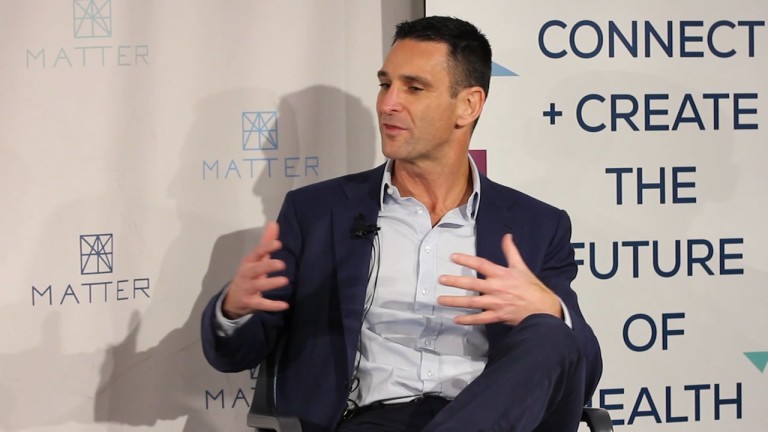
Aronin’s work with MATTER took the problem of building a company into a shared setting. He helped establish the organization in 2014; its Chicago startup center opened in 2015 at the Merchandise Mart, beside the digital startup hub 1871. The idea gave entrepreneurs access to a community of people who could help them turn specialist knowledge into a business.
For a city with universities, established companies, and scientific talent, the difficulty was connecting those resources to people starting something new. A promising idea does not arrive with instructions for recruiting a team or finding a useful adviser. MATTER created an institutional place for those encounters. It also gave experienced executives a way to make their knowledge available beyond their own payroll.
By 2023, its community included 336 member startups across 100 cities and 20 countries. It recorded 3,392 mentorship hours that year. The geographical spread is striking for an organization whose story began in a particular Chicago building. The hours are the more human measure: someone had to sit down, listen, and help another person work through a decision.
In October 2025, MATTER reported having incubated more than 1,000 startups over its first decade. Those member companies had raised more than $5 billion. These are collective results, achieved by the founders, staff, partners, and advisers who took part. Aronin’s place in the story is as a founder and former chairman of the institution that helped bring them together.
MATTER also opened a new office as it entered its second decade. An institution that begins with a founder has to develop a life of its own. New rooms, new leaders, and new participants give that idea a physical form. The community becomes useful to people who were nowhere near the original planning meetings.
A fellow among other founders
In 2010, Aronin joined the Aspen Institute’s Henry Crown Fellowship. His class included LinkedIn co-founder Reid Hoffman and Pandora founder Tim Westergren, among executives from a range of businesses and countries. The program brought together people under forty-five who had already established themselves professionally and asked them to consider community leadership.
It involved four seminars over two years and an individual leadership project. That structure places a different demand on a business career. The discussion extends to what a person can contribute outside an organization they control. Fellowships offer a rare chance for accomplished executives to resume being students, complete with assigned reading and people who are entitled to disagree.
Aronin was elected to Aspen’s board of trustees in April 2019. He also serves on the board of the Weizmann Institute of Science and spent fourteen years on the board of Discover Financial Services. The range takes him through science, finance, and civic conversation. It is a public record of responsibilities that extends beyond Paragon’s portfolio.
Teaching is another part of that record. He has lectured at the University of Chicago’s Booth School of Business and Northwestern’s Kellogg School. In June 2022, he moderated a MATTER conversation with Northwestern chemist and entrepreneur Chad Mirkin about moving research discoveries through commercialization. For someone whose work depends on other people’s expertise, asking the questions is a fitting part of the job.
Another closing, seventeen years later
At Paragon, Aronin holds both the chairman and chief executive roles. The company creates, builds, and funds businesses. Its approach pairs scientific opportunities with teams and operating support, making company formation an ongoing activity rather than a single event in its founder’s past.
His involvement can change as a business develops. At Harmony Biosciences, which he founded in 2017, he briefly served as executive chairman during a leadership transition in early 2023. After Jeffrey Dayno was appointed president and CEO that April, Aronin returned to the non-executive chairmanship. The shift illustrates a specific responsibility of a founder: helping an organization move between leaders and then letting the appointed executive lead.
On June 11, 2026, Paragon announced the completed sale of Emalex Biosciences to Teva. The transaction included $700 million in cash, up to $200 million in commercial milestone payments, and net-sales-based royalties subject to regulatory approval. Aronin credited the talent and perseverance of the Paragon and Emalex teams. Seventeen years after the Ovation acquisition, another company he helped build had reached a new owner.
These figures give the story its visible milestones. The less visible continuity runs through colleagues, classrooms, and the places where a new founder can ask an experienced one for help. Aronin’s career offers several ways to participate in that work: start a business, oversee its development, support the people running it, or help create somewhere the next venture can begin. The closing documents mark the transaction. The next team still needs hiring.