The desk was a door. Richard J. Lenz laid it across two filing cabinets in his basement, bought a 486 PC on a credit card, and began. In April 1992, the arrangement became a company. There is something pleasingly literal about starting a business on a door: an object intended to let people through, temporarily recruited to keep the paperwork off the floor.
Thirty years later, Lenz had a firm bearing his surname and a career that had wandered productively into literary festivals, recorded music, and broadcast conversations. His business was marketing, but the work often ended somewhere more interesting than an advertisement. A reader went to a festival. A listener discovered a songwriter. An entrepreneur sat down at a microphone and explained how things had actually happened.
Then came another practical decision. In 2023, Lenz stepped away from daily operations, and Mike Killeen, who had joined the company in 2002, became its president, CEO, and sole owner. The name remained. Its founder moved into consulting. After three decades of helping other people introduce themselves, he had helped prepare someone else to run the business.
The signature over the door
Lenz chose his family name for the company as a personal guarantee of its work. That makes the eventual transfer of ownership particularly interesting. A surname can be a useful promise, but it also creates a question: can the promise survive when somebody else is in charge? In this case, the answer would depend on relationships developed inside the firm over years.
The business assembled several kinds of communications under one roof: advertising, public relations, graphic design, and web technology. That breadth matters to the shape of Lenz’s career. He could participate in a project through its words, its appearance, its publicity, or the means by which an audience reached it. The cultural ventures grew from a business already accustomed to connecting those pieces.
At the University of Georgia, where his education listing runs from 1980 to 1983, his activities included The Red and Black newspaper and WUOG 90.5 radio. Print and sound were present before the agency. Years later, they would reappear in the public life of Decatur, where his company became involved in occasions that gave both a place to be heard.
A town learns to gather
The Decatur Book Festival began in 2006 with Daren Wang’s idea for celebrating the spoken and written word. Lenz joined a group that included Tom Bell, Linda Harris, Alice Murray, Bill Starr, and Judy Turner in bringing it into being. He became a founding board member. It was a collective undertaking, with the sort of cast that reminds you how rarely a civic event has a single author.
The appeal of a book festival seems obvious once there are readers in the square. Before that, somebody must make an unfamiliar event legible: what it is, who it is for, why people should come, and where they should go. Enthusiasm needs an address. An author can finish a manuscript alone; a festival requires rather more coordination.

Lenz was the festival’s first sponsor. Its work extended from strategy and branding through public relations, digital marketing, graphic design, and web and mobile development. The agency’s historical account described an event drawing more than 300 authors and tens of thousands of visitors, with no spending on paid media. Those figures describe that period of the festival’s development, rather than a promise about every subsequent edition.
For Richard, the connection was explicit: “Celebrating and promoting reading and literacy is the epitome of cause marketing.” It is a revealing sentence because it puts a professional discipline alongside an enthusiasm. He could care about reading and still bring the machinery needed to promote it. The communications work was part of what made the celebration possible.
A record label with a breakfast name
Music offered another route from private enthusiasm to public gathering. In August 2008, Lenz Music presented a free outdoor concert with Patterson Hood of Drive-By Truckers on Decatur’s square. By 2010, that division of the company had a record label: Red Eye Gravy Records. The name sounds reassuringly unlikely to have emerged from a solemn committee discussion.
Its first artist was Nashville singer-songwriter Nathan Beaver, and its first release was his second studio album, Universal You. The May 28 launch included private and public parties, with two performances at the Lenz offices. Advance copies of the record and newly designed T-shirts were available. The office had become a place to encounter the product with its maker present.
A record label makes the connection between creative work and its promotion unusually visible. There is a person singing, something recorded, and a listener who may never have heard the name. Between them come design, publicity, distribution, and an invitation to pay attention. For an agency interested in the arts, that was familiar work with a different soundtrack.
By September 2011, an executive profile was drawing together Lenz’s ventures in literature, broadcasting, and Red Eye Gravy Records. They belonged in the same career. The recurring interest was language and sound, and the possibility of making a business around them. His company gave those interests practical instruments: people who could design, publish, promote, and organize.
When the music pays its neighbors back
Amplify gave the music connection a further civic purpose. Founded by Mike Killeen, the organization raised money for community nonprofits through live events. Richard served as chair of its advisory board. At the 2022 Amplify Decatur Music Festival, Lenz was the presenting sponsor and contributed marketing and communications services. There was a division of labor behind the entertainment.
Christine Mahin served as festival director; colleagues contributed across production and promotion; Jon Waterhouse was the emcee. That year’s program included Ben Harper, Old Crow Medicine Show, Son Volt, The War and Treaty, S.G. Goodman, and Mike Killeen Band. The festival raised $50,000 for Decatur Cooperative Ministry’s work against poverty and homelessness.
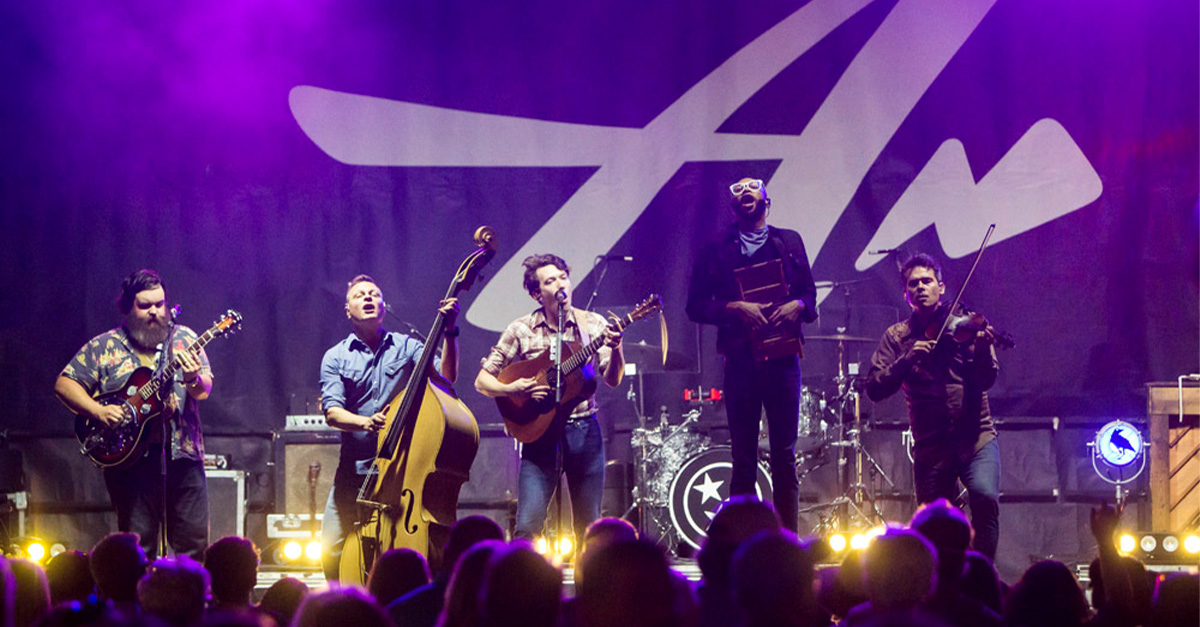
Raised by the 2022 Amplify Decatur Music Festival for Decatur Cooperative Ministry.
Richard’s public thanks went to the city, sponsoring businesses, and volunteers. That distribution of credit fits the event itself. A concert has performers, but it also has people arranging the conditions under which a performance can happen. The marketing firm’s contribution was useful precisely because it could be turned into work: a website, publicity, designs, and a reason for neighbors to turn up.
The microphone changes the meeting
In 2017, Lenz created Lenz on Business on WSB. He became its original host, interviewing business leaders about their careers and decisions. The launch included a preview with Atlanta mayoral candidates Keisha Lance Bottoms and Mary Norwood; subsequent programming ranged into travel, social media, and music. Business supplied an expansive guest list.
He framed the program around the place business occupies in everyday life. That premise leaves room for personalities as well as procedures. A company can be described by a balance sheet or a list of services. An interview can ask how somebody arrived there, what went wrong, and what they learned along the way.
“Business touches all our lives and deserves to be explored.”
Richard J. Lenz · on launching the radio show
A July 2021 episode brought the conversation close to the office. Richard appeared with his partners, John Lenz and Mike Killeen. Their topics included family relationships at work, balancing different kinds of projects, and continuing education. The host was discussing a business whose decisions he had lived through, alongside people who had helped make them.
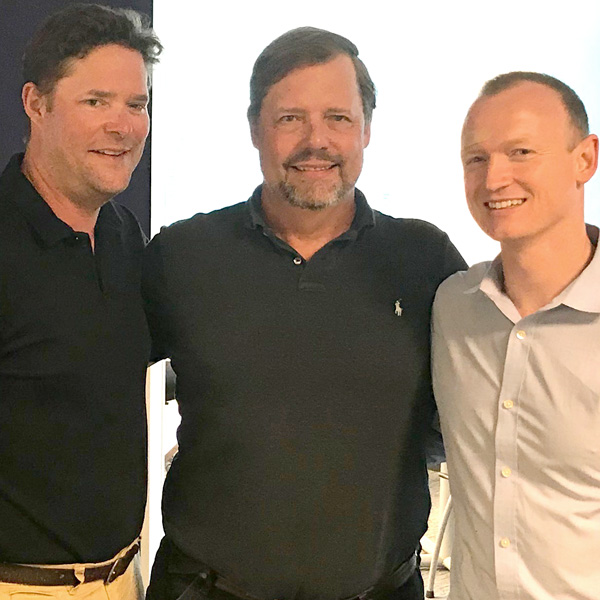
John had joined the company in its founding year. In his thirtieth-anniversary reflections, Richard singled out his brother’s creativity, dedication, and loyalty. That is a long time to work beside someone. The public conversation with both partners offers a useful companion to the founder story: an opportunity to hear a company discussed as a shared undertaking.
The name stays on the door
The 2023 handoff had its own history. Killeen had arrived as a recent graduate and had not initially imagined a business career. He later described how much Richard and John had invested in his development. By the time he took ownership, the relationship stretched back two decades. A succession announcement compressed years of work into a change of title.
The transition also established a leadership team, with Mahin as vice president and experienced colleagues responsible for engineering, media, and creative work. Richard moved out of daily operations and into consulting. “The company is in great hands,” he said. He expressed confidence in Killeen and in the team around him. The firm bearing his name would continue under another person’s direction.
His founder biography now places him in Savannah, married to Wendy Lenz, with four children, and identifies him as a senior consultant to the business. Jon Waterhouse is the producer and host listed by the radio program. There is room in this later chapter for the distinction between starting something and being the person who runs it every day.
The basement door remains a fine beginning. The ending of his CEO years is just as telling: colleagues with experience, a successor with ownership, and a founder able to step aside. Between those two arrangements sit books, songs, conversations, and a town square repeatedly given reasons to fill. It is a working life with a considerable amount of company.