Forty thousand people are a persuasive reply to a party invitation. On September 25, 2016, Cleveland Spears III and his team held their first Fried Chicken Festival in Lafayette Square. More than 40,000 people came during the nine-hour event. A square had become a rather literal description of the available space.
The next year brought a move to Woldenberg Park, a venue reported to be five times larger, and an expansion to two days. For a communications entrepreneur, this was an unusually physical form of feedback. People had understood the proposition. They had brought their appetites. Now somebody needed to make more room.
Spears has spent much of his career working on that last problem, in several senses. Room for young professionals to meet across familiar social boundaries. Room for independent restaurants to find customers. Room for a New Orleans business to work nationally while keeping its home address. Fried chicken happens to make a very effective invitation.
The computer business that never opened
His original business idea involved computers or computer networking. Born in the Lower Ninth Ward and raised in New Orleans East, Spears attended Abramson High School, then studied marketing at the University of New Orleans. A public professional résumé lists his bachelor of science degree in 2005.
By high school, he already expected to become an entrepreneur. The product was still negotiable. After college came corporate work and experience at an advertising agency with an entertainment division. There he gained practice in both the agency business and the business of getting people into a room.
He founded Spears Consulting Group in July 2008, at 25. It was an awkward year to ask the economy for a favor. Looking back in 2025, he described youth and relatively few responsibilities as reasons to try. The timing carried risk, but his calculation was personal: he had an opportunity to start, and he took it.
The computer company remained hypothetical. The appetite for running his own business did not.
A social calendar with a civic purpose
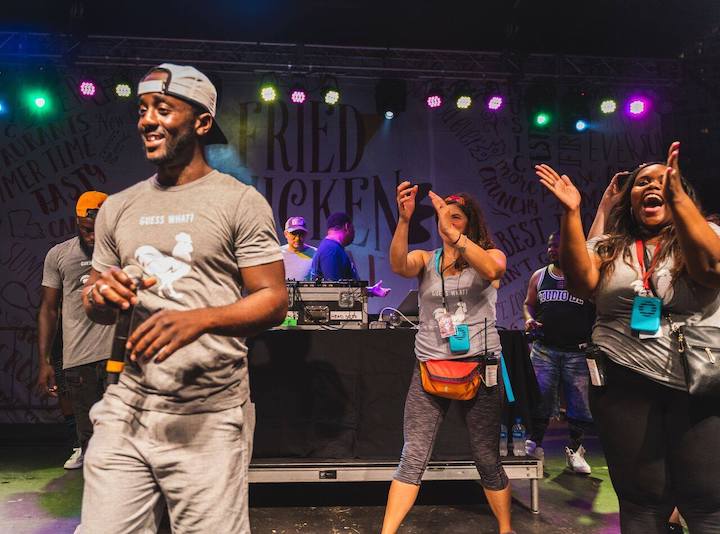
Before the chicken crowds, there were smaller gatherings. An early client project, Uncommon Saturdays, was an indoor summer series. Later came the much more conspicuous spectacle of Le Dîner en Blanc, with guests dressed in white and a meal assembled in a shared outdoor setting.
By 2013, his Social Renaissance series included that dinner and the Millennial Awards, which recognized young professionals under 40. The series directed proceeds to local charities. His firm also offered discounted services to nonprofits, including Habitat for Humanity and the Young Leadership Council. Commercial work and local participation were developing alongside each other.
In 2014, he explained the social ambition plainly. New Orleans was diverse, he said, but people did too little mixing across race and class. The events offered a practical way to change the guest list. An invitation could give people a reason to enter a room they otherwise might never share.
He also saw celebrating younger New Orleanians as encouragement for the next person considering a business. Recognition had a second audience: the person watching from a seat in the crowd, wondering whether to begin.
“The goal is always to find ways to bring people together.”
Cleveland Spears III, 2017
The idea belonged to a friend
The festival's origin is more interesting than a marketing brainstorm. During a gathering on racial reconciliation convened by then-mayor Mitch Landrieu, Spears's friend Jade Brown Russell suggested a fried chicken festival. The reasoning was direct: people from different backgrounds liked the same food. Perhaps they would come together to eat it.
Spears has repeatedly credited her with the idea. That matters in a career where his name appears on the agency door. This particular invitation started in a conversation with someone else. He took the suggestion back to his team and helped turn it into an event.
His later account also includes reservations about being a Black entrepreneur associated with a fried chicken festival. The idea had to survive that discussion before it could survive the logistics. Ultimately, he and his collaborators decided the shared appeal was worth pursuing.
The first festival arrived in 2016. It made a civic proposition easy to understand without asking anyone to read a civic proposition. Come for the food. Stay for the music. Find yourself among people who may not usually share your Saturday.
The restaurant on the other side of the counter
A festival crowd looks different from behind a food stall. Restaurants commit ingredients, labor and time before they know how many plates they will sell. Spears has discussed the festival as a way to help independently owned restaurants through a slower part of the New Orleans calendar.
In 2019, he described the event's restaurant partnerships as a deliberate choice to support small businesses. Nonprofits also had a place there. The occasion could generate trade and create encounters at the same time. A good day for an attendee and a good day for a vendor were connected objectives.
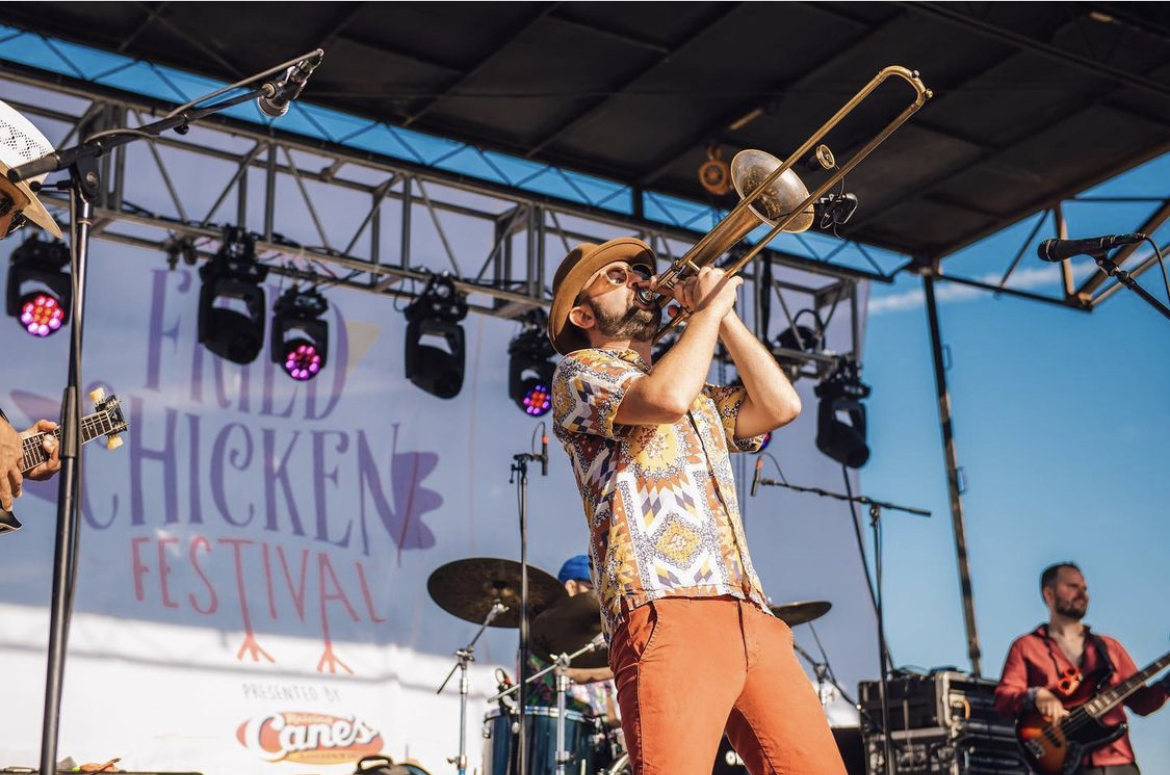
By 2023, the numbers required considerably more planning. In a presentation recorded in Lakefront Management Authority minutes, Spears reported more than 123,000 guests over two days, 50 restaurant participants, and more than 150 performers, hosts and celebrity chefs. The festival footprint had grown by another 100 yards.
These are event totals, with all the bustle those totals imply. Every added restaurant needs a place to operate. Every additional stretch of grounds needs to work for the people walking it. Expansion brings a fresh collection of practical obligations.
The party is only part of the company
The visibility of the festivals creates an amusing occupational hazard. People can know Spears's work and misunderstand his business. In a September 2025 conversation with entrepreneurs Sevetri Wilson and Sheena Allen, he explained that client services accounted for more of the agency's revenue and staff than events did.
Spears Group works from New Orleans and Houston. Its work includes communications strategy, creative development, media and public relations. The attention belongs primarily to the client, which helps explain why a festival with its own name and a crowd with its own photographs can overshadow the quieter daily business.
The firm appeared on the Inc. 5000 at No. 1,815 in 2019 and No. 3,299 in 2020. Those rankings describe the company rather than his personal finances. They do, however, put dates and numbers beside the expansion of a business he started at 25.
For Super Bowl LIX in 2025, the agency worked with the NFL and BZA on earned media and public relations. Its team handled on-site media relations and press operations for more than 20 official NFL events, including Super Bowl Experience and NFL Honors. Here, the task was helping an existing occasion tell its stories.
White clothes, pink clothes, his own decisions
Some growth involved deciding what to stop doing. Spears's team produced Le Dîner en Blanc under license in several cities. In 2025, he explained that they wanted more autonomy over their experiences and had completed their New Orleans license agreement in 2019. A recognizable event could be successful and still cease to suit the business.
Another project gave him a different palette. Founded in Atlanta in 2018, Célébrez en Rosé combined wine and music with a pink-and-white dress theme. Its announced 2022 tour included Atlanta, Washington, Houston and Chicago. Fashion, food and music supplied several reasons to accept the same invitation.
The contrast between an all-white dinner, a rosé picnic and a fried chicken festival is part of the pleasure of his résumé. The particulars change. He keeps working with occasions in which the audience participates in making the atmosphere. Guests arrive dressed for it, hungry for it, or ready to hear the band.
When the invitation needs a rain date
September 2026 brought a less photogenic responsibility. Organizers postponed the National Fried Chicken Festival because of the threat of severe weather, moving it to October 9-11 at the Lakefront Arena Festival Grounds. Spears described the decision in terms of guests, workers and the independent restaurants investing in the weekend.
By October 7, crews were preparing the rescheduled site while another storm complicated the outlook. His comments put safety ahead of the money and planning already committed. For the founder, responsibility included the people who had bought ingredients and scheduled staff, along with the people who had bought tickets.
That same season, he described an ambition to make the festival a destination that brought visitors into New Orleans to spend a weekend and support its restaurants. Scale remained part of the plan. So did the question of who benefited when the crowd arrived.
A Saints fan's version of staying put
There is a smaller detail in an early portrait of Spears: away from work, he liked dining with friends and watching sports. In 2013 he was a Saints season-ticket holder, with hopes of becoming one for the Pelicans. “I'm always working,” he admitted. Even his leisure sounded comfortably at home.
His public ambitions have repeatedly returned to New Orleans: more mixing across social boundaries, more opportunity for businesses, more reasons for people to visit and participate. The national work has grown around that attachment. The local table has acquired a much longer guest list.
A crowd cannot settle every question raised at a meeting on racial reconciliation. It can give people an afternoon together, a restaurant a new customer, and an entrepreneur a demanding reason to do it again. Spears has kept arranging those afternoons. The invitation has proved easier to write than the seating plan.
Keep the conversation going
Explore Spears Group · Cleveland on LinkedIn · National Fried Chicken Festival · Agency blog
Watch: 2019 National Fried Chicken Festival
Listen: sponsorships and the agency business, Rich Lessons
Read the conversation about the festival's beginnings
Read his early vision for New Orleans
Read the 2026 festival postponement coverage