The interesting thing about a CPAP machine is how little it asks you to understand. Air moves through a tube into a mask. Pressure helps keep an airway open. The difficult part arrives later: getting comfortable, falling asleep, doing it again tomorrow. ResMed has spent decades working on that less tidy problem. Its business sits between a medical prescription and the ordinary habits of a bedroom.
- Connected machines deliver therapy; masks make it wearable.
- Patient coaching and provider software support the work after diagnosis.
- Devices, replacement supplies and subscriptions create three revenue streams.
A$558,000, and an unfinished idea
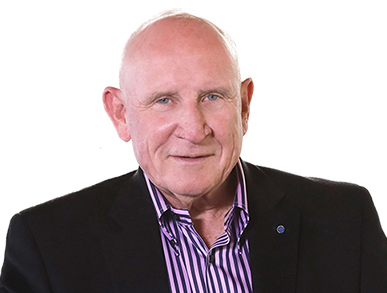
ResMed’s origin has a useful wrinkle. Peter Farrell did not invent nasal CPAP. Australian physician Colin Sullivan did. Farrell’s contribution was to build a company around it. That distinction matters: proving a treatment works and making it available to people are different assignments, requiring different kinds of patience.
In 1989, Farrell founded ResCare, later renamed ResMed. The company’s published history records A$1.2 million raised in loans and equity, and an initial A$558,000 payment for Baxter’s sleep-apnea assets. Baxter’s research venture had unraveled. The new company inherited an uncertain market, limited capital and a product described as little beyond an advanced prototype. The commercial structure needed rescuing before the technology could travel.
The numbers are small beside today’s accounts, but they clarify the gamble. Buying intellectual property was the opening expense. Manufacturing, distribution and repeated improvements would turn that purchase into something a clinician could prescribe and a patient could live with.
The second night is the product
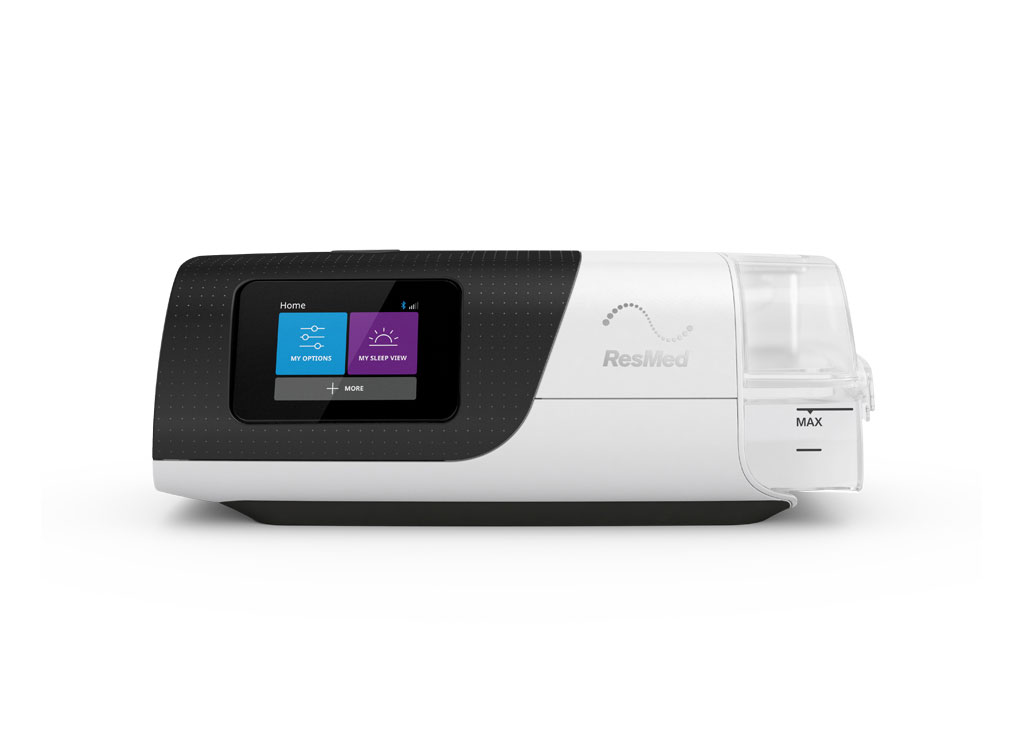
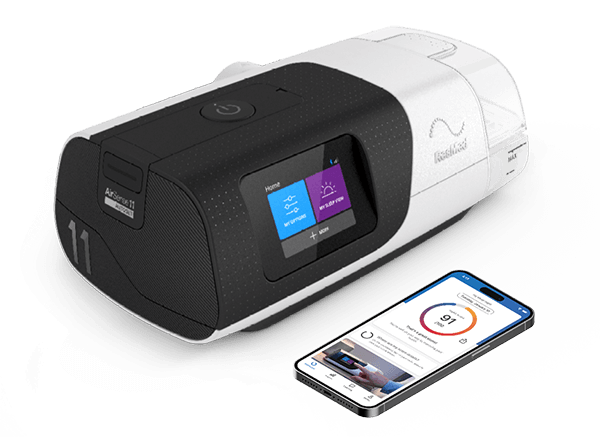
Look at AirSense 11. It combines PAP therapy with a touchscreen, humidification and access to myAir, ResMed’s patient support app. AutoRamp starts with lower pressure while a person falls asleep. Expiratory pressure relief eases exhalation. These features address the moment when a technically sound treatment meets a tired human being.
The mask deserves equal billing. In February 2026, ResMed introduced AirTouch F30i Comfort in the United States, with a fabric-and-silicone cushion and a fabric-wrapped frame. Chief product officer Justin Leong described the aim as designing technologies “that people want to use night after night.” The fabric is an engineering decision about continued use.
There are other jobs in the range. AirMini makes PAP portable. AirCurve and Astral address different breathing-support needs. NightOwl brings sleep testing into the home. The expertise spans airflow, interfaces, diagnostics and software. Each product occupies a particular part of care; a travel machine and a ventilator have very different responsibilities.
The machine goes home.
The work follows it.
Two screens, one night
A patient sees myAir. A healthcare professional can use AirView to monitor therapy and manage compatible devices remotely. The distinction explains much of ResMed’s position in the market: it builds for the person wearing the mask and the organization supporting that person. Feedback can reach either side without waiting for another office visit.
In its fiscal 2026 filing, ResMed reported more than 35 million patients using cloud-connected devices on AirView and over 12 million myAir registrations. Those platform counts overlap. They describe reach, rather than a sum of distinct active users. Competitors include Fisher & Paykel Healthcare, Philips, BMC and Löwenstein. ResMed’s breadth connects hardware, patient support and provider workflows; it does not make every product the right choice for every patient.
Smart Comfort adds another layer. Cleared by the FDA in December 2025 and introduced to select users in early 2026, it recommends personalized comfort settings. Its scope is specific: helping people get started and stay comfortable. Prescribed therapy settings remain a separate clinical matter.
For a provider, the appeal is practical: a view of therapy between appointments and tools for finding patients who need attention. For a patient, the promise is less abstract than a dashboard: help getting equipment set up, seeing how the night went and knowing where to look when something feels wrong. Neither screen eliminates the need for a care team.
The economics of doing it again
ResMed earns money from devices, replacement masks and accessories, and software subscriptions and services. Patients use its equipment; clinicians, home medical equipment suppliers and distributors help get it into use. Brightree serves the provider’s less visible tasks, including billing and clinical workflows. ResMed agreed to pay $800 million for Brightree in 2016, primarily financed with debt.
Fiscal 2026 revenue reached $5.65 billion, up 10%. Research and development cost about $378 million. For a patient, however, there is no single universal checkout price: supplier, country, accessories and insurance change the bill. A useful business model does not remove the practical problem of paying for treatment.
Knowing what to keep
ResMed’s software expansion also acquired limits. It bought MatrixCare in 2018 for $750 million in base consideration. In 2026, it agreed to sell the business for $490 million; the transaction closed September 1. Those prices alone cannot measure the investment’s total return. The stated rationale was to concentrate on businesses more closely connected to sleep, breathing and care at home.
The same year, ResMed acquired Noctrix in a publicly announced $340 million transaction, adding wearable treatment for restless legs syndrome. Its ŌURA partnership addresses an earlier step: helping people move from sleep awareness toward education and care. The portfolio decisions point toward a broader sleep-health business with a more selective appetite for software.
That direction also gives the acquisitions a useful test. Does a new business help identify a sleep problem, deliver appropriate treatment or support continued care? The question is more demanding than whether a company happens to sell healthcare software.
A connection is another promise
Connected care introduces its own failure points. ResMed’s account of an Air11 data delay describes a firmware update that increased transmissions and created a backlog. The app’s view of therapy lagged. A useful feedback system becomes less useful when its feedback arrives late.
The transferable lesson is practical: study what happens after delivery. Make setup easier, notice friction, give the customer and support team usable information. This approach depends on access to care, appropriate treatment, reliable infrastructure and a product people can tolerate. An app cannot repair a poor mask fit by itself. ResMed’s next night still begins where its first one did: with a person deciding whether to put the mask on.