Reed Henry once explained enterprise software by talking about a concession stand. The customer who queues for a drink has to do the approaching. The seller walking through the seats can meet a customer where the customer happens to be. In 2015, Henry used that distinction to explain what Genesys wanted to do with customer service: carry the context of a conversation along with the person having it. A stadium was a pleasantly ordinary place to take a discussion that might otherwise have expired beneath a pile of acronyms.
Henry was Genesys's chief marketing officer then. Today he is the co-founder and CEO of Aquera, working on the connections between human resources software, identity systems and business applications. His subject has changed from the customer moving between channels to the employee moving between systems. The awkward handoff remains a useful place to begin.
There is a familiar version of the technology story in which somebody invents the next destination. Henry's career offers another plot: the work required to make the destinations cooperate. It runs through telephony, an online marketplace, enterprise integration, security software and customer experience. Then comes Aquera, where the promise of a new employee's productive first day depends on a collection of applications agreeing that the employee exists.
Three degrees, several kinds of conversation
Henry's education joins two disciplines that technology companies often keep in separate departments. He earned a bachelor's degree in electrical engineering at the University of Washington, a master's in electrical engineering at Caltech, and an MBA at Stanford Graduate School of Business. The qualifications span the workings of a technical system and the workings of a business that must persuade somebody to buy it.
His early entrepreneurial work included co-founding Vertical Networks, backed by Kleiner Perkins and Accel Partners. The company supplied telephony and contact center technology, including solutions for smaller businesses and branch offices. Henry's responsibilities covered marketing and product management. Long before Aquera, he was working on products whose usefulness depended on helping other people communicate.
He subsequently ran strategy and new business at eBay, with work that included mergers and acquisitions. A marketplace brings together participants with different needs; an acquisition brings together organizations that may have developed very different habits. Neither is accomplished by announcing that everyone is now connected. The details matter, sometimes rather more than the announcement.
At SeeBeyond, Henry's remit included marketing, business development and alliances. The company worked on enterprise integration and composite applications, and he played a role in its acquisition by Sun Microsystems. His later marketing leadership at ArcSight put him in enterprise security. By the time Genesys appointed him in December 2012, his experience crossed the product, partner and commercial sides of software.
- Vertical NetworksCo-founder; marketing and product management
- eBay / SeeBeyond / ArcSightStrategy, integration and security leadership
- 2012 · GenesysAppointed chief marketing officer
- 2016 · AqueraBegins leading the company as CEO
The customer should not have to start again
Genesys gave Henry a conspicuously human problem to explain. A person might begin with a website, move to a mobile app and eventually speak to an agent. Each channel could work perfectly well in isolation while the overall experience remained maddening. The customer knew the history. The next person answering the call might not.
In 2013, Henry described how routing could account for a caller's identity and the journey already under way. The ambition was to put a customer with an appropriate agent, with enough context to help. That made a technical discussion about routing into a practical discussion about being understood. Anyone who has repeated an account number to three successive departments can supply the dramatic tension.
By March 2015, his explanation had become more explicit. The platform was meant to connect and coordinate interactions across channels, with customer journey analytics, self-service and a desktop that brought the history together. “We call this orchestrating the customer journey,” he said. The concession-stand comparison supplied the picture: service that could approach a need rather than wait for the next isolated request.
“We call this orchestrating the customer journey.”
Reed Henry · discussing Genesys, 2015
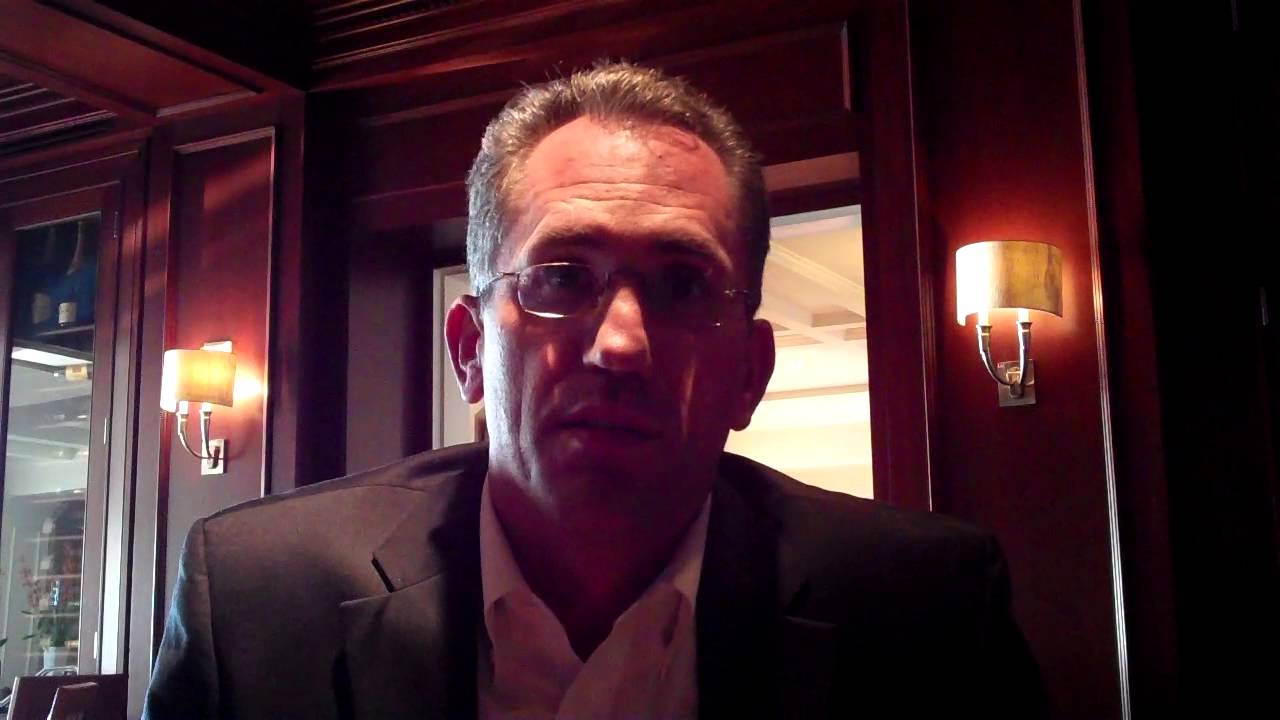
A 2014 video conversation with interviewer Blair Pleasant records him discussing Genesys and its view of customer experience. Seen alongside his later work, it preserves an earlier chapter of the same broad business problem. An organization can own plenty of software and still leave a person stranded in the space between its systems.
A familiar name on the other side of the business
Aquera's leadership brings Henry together with Jerry Waldorf, its co-founder and CTO. Their professional histories both include SeeBeyond. Henry worked on taking the business to market; Waldorf was chief architect and vice president of engineering. Waldorf later held architecture roles at Sun Microsystems and Oracle, and worked as a principal architect at Okta.
That is a specific combination of experience for a company selling integration around identity management. Henry's background covers the commercial work of defining and selling enterprise products. Waldorf's includes building integration technology and working through complex identity deployments. The founding partnership puts those different responsibilities at the same table.
Henry's CEO tenure is dated to late 2016 in his career records. Aquera's corporate paperwork adds a concrete early marker: a June 2017 securities filing lists Henry and Waldorf as executive officers and directors. Henry signed it as chief executive officer. The company was incorporated in Delaware in 2017, a distinction worth preserving when a founding story is reduced to a single year.
The first day is a systems problem
Aquera works on the administrative events that follow a person through an organization: joining, changing roles and leaving. An HR record needs to reach the systems that manage accounts and access. Business applications need the corresponding changes. Some steps can be automated; others require a ticket for somebody to do physical or administrative work.
A new hire's first day is the friendly face of that process. A role change introduces a different question: which permissions should change with it? A departure makes timing matter again. Aquera connects systems across those transitions, including cloud and on-premises applications. The practical attraction is fewer custom connections for an IT team to build and maintain.
The company's current published customer count is more than 1,300. Its catalog includes over 80 HR applications and over 1,000 business applications. These are company-reported figures, useful for understanding the variety of systems involved. They also explain why integration becomes a continuing business rather than a task that can be declared finished on a Friday.
The messier cases have been part of Henry's public agenda. In June 2024, he and Aquera's Craig Glogower appeared on the European Identity and Cloud Conference program for a session about disconnected applications. The topic was file collection: helping application owners supply user and entitlement data, validate it and keep to a schedule. It is difficult to imagine a less glamorous conference subject. It is equally difficult to govern access to an application whose data never arrives.
In December 2025, another joint session focused on engaging application owners without an expanding calendar of meetings. The Identity Survey Hub presentation addressed a bottleneck in bringing applications into identity governance programs. Across those appearances, the product discussion reaches beyond a connector's code to the people responsible for completing the process.
An investor with a taste for pretzels
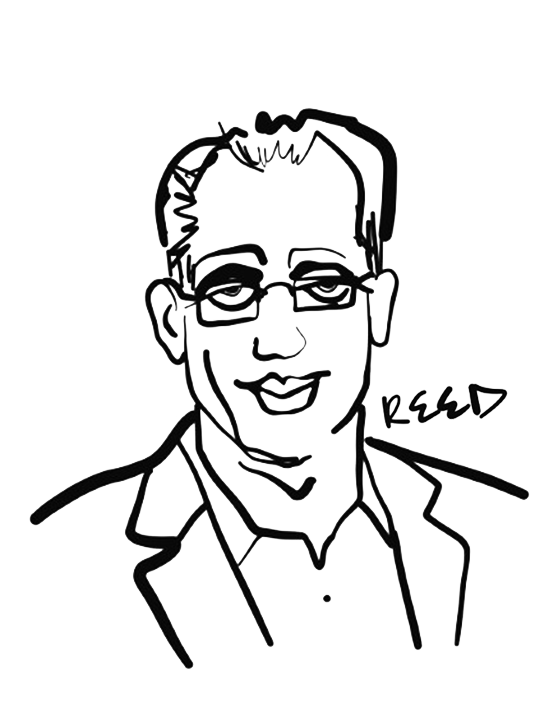
Then there is the investment that requires considerably less explanation at a dinner party. Stellar Snacks lists Henry among its investors. The pretzel business was founded by Elisabeth Galvin and her daughter Gina. Its team page includes an illustrated Henry, complete with glasses, among portraits of employees, backers and other members of the company's circle.
On LinkedIn, Henry congratulated the founders and team, expressed pride in being an investor, and added that he loved the pretzels. It is a small public detail, but a welcome one. Enterprise software careers tend to arrive in biographies as a procession of titles. Here is an investment with an actual taste attached.
He also used LinkedIn to amplify a 2020 appeal from Stellar Snacks seeking food-bank connections for a large snack donation. The action is modest and specific: a person using a professional network to help an organization reach other people. It belongs beside the career milestones without needing to be promoted into a sweeping theory of character.
The next connection needs permission
In November 2024, UKG named Aquera the technology partner recipient of its Innovator of the Year award. In 2025, Aquera appeared at number 1,256 on the Inc. 5000. Both are company achievements under Henry's leadership, rather than personal awards. They mark the commercial progress of a business built around work that is usually noticed when it fails.
By June 2026, a new participant had entered the access discussion: the AI agent. Okta named Aquera among more than 25 early adopters in its expanded Cross App Access ecosystem. Henry described Aquera's Agentic AI Bridge and MCP Servers connecting enterprise systems to agents authenticated and authorized by Okta. HR, finance and customer systems remain the destinations; the software asking to enter them is changing.
The work returns to a question Henry's career has encountered in several forms. What needs to move between systems, and what must accompany it? Once it was a customer's conversation history. At Aquera it includes worker data and access permissions. Now an agent can make the request. The connection still has to know who is asking.
Continue the conversation
- Aquera · company and leadership
- Reed Henry · LinkedIn
- Reed Henry · Twitter/X archive
- Watch · the 2014 Genesys conversation
- Watch · disconnected applications at EIC 2024
- Read · the concession-stand analogy
- Meet · the Stellar Snacks team
- News · UKG’s 2024 partner awards
- News · Aquera in the 2026 XAA ecosystem