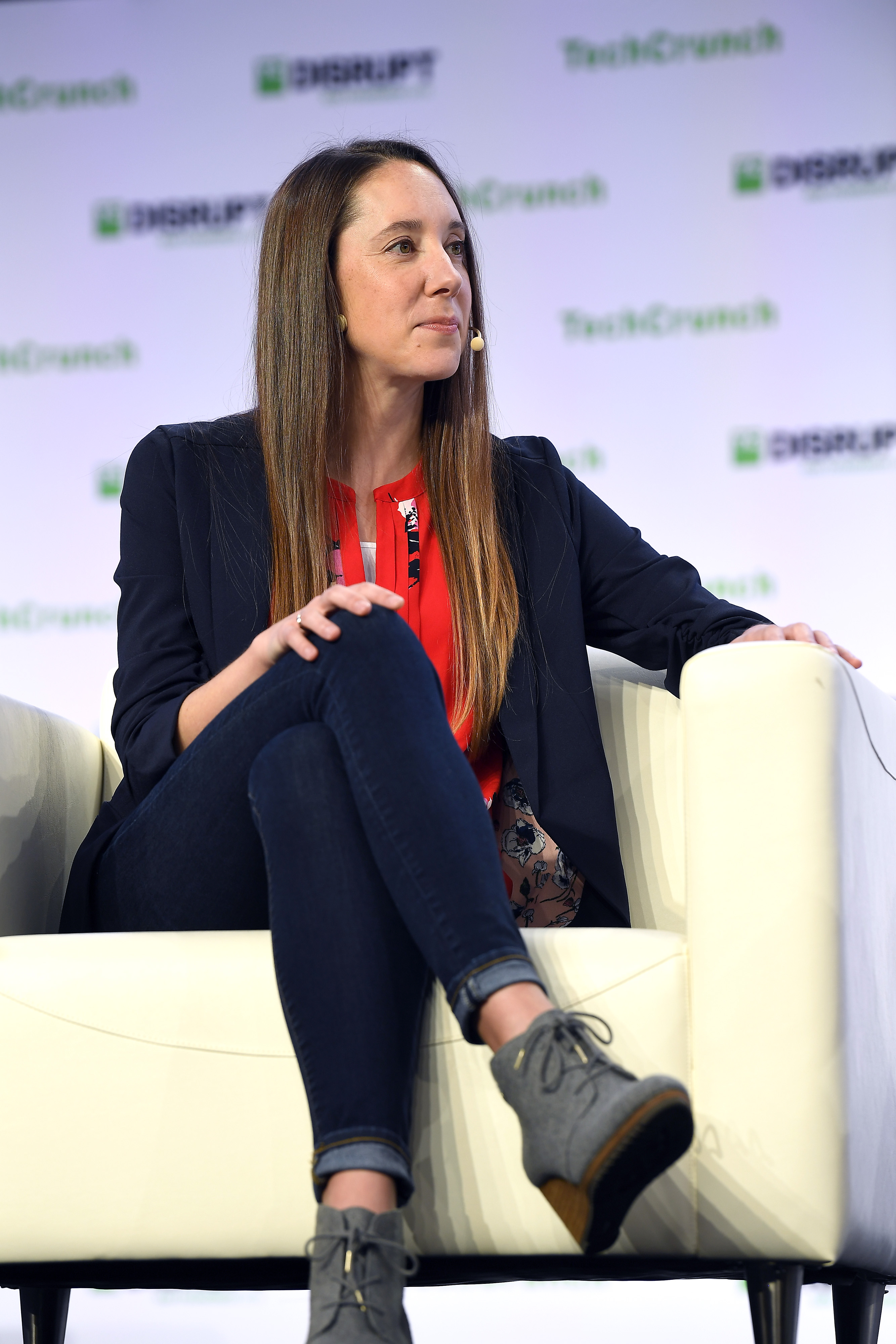
The CRISPR co-founder who chose patients over patents
In 2008, a 21-year-old Rachel Haurwitz walked into Jennifer Doudna's lab at UC Berkeley and started working on a molecular system that most biologists had barely noticed. The system was CRISPR. She was the first student in the lab to touch it. Fourteen years later, she runs a clinical-stage biopharmaceutical company built on what she found there.
Caribou Biosciences - the company she co-founded in 2011 with Doudna, Martin Jinek, and James Berger while still finishing her doctorate - is developing off-the-shelf CAR-T and CAR-NK cell therapies for blood cancers and autoimmune diseases. The word "off-the-shelf" is doing enormous work in that sentence. Traditional CAR-T treatments are manufactured from a patient's own cells, a slow and expensive process that excludes many who need it most. Caribou's approach edits donor cells with enough precision and sophistication that they can be stored, shipped, and administered to patients who've never met the donor.
"My goal is to help realize the promise of CRISPR genome-editing technology and develop new, potentially transformative cell therapies, which provides the opportunity to contribute to the development of new therapies for patients that could have a meaningful impact on their lives."- Rachel Haurwitz, President and CEO, Caribou Biosciences
The technology at the center of this is Caribou's proprietary chRDNA platform - short for hybrid CRISPR RNA-DNA guides. Unlike the Cas9 enzyme that made CRISPR famous and earned the 2020 Nobel Prize in Chemistry for Doudna and Emmanuelle Charpentier, Caribou works primarily with Cas12a. The distinction matters clinically: Cas12a allows researchers to make multiple simultaneous gene edits with exceptional specificity, targeting several genes at once while preserving the genomic integrity that regulators and patients both need. In a CAR-T therapy, this means engineers can knock out genes that would cause the donor's immune cells to attack the recipient (graft-versus-host disease), disable checkpoints that cancer exploits, and insert new receptor genes all in a single manufacturing run.
Haurwitz grew up in Austin, Texas, the daughter of an environmental journalist and an elementary school teacher. Neither parent was a scientist - a fact that makes her trajectory feel less like inheritance and more like discovery. She went to Harvard for her undergraduate degree in Biological Sciences, developed a fascination with RNA, and initially planned to channel that interest into intellectual property law. Biotech patents, specifically. Then she started her PhD at Berkeley under Doudna, encountered CRISPR, and the law school applications never got filed.
Her early graduate work produced foundational CRISPR papers. A 2010 publication in Science - "Sequence- and Structure-Specific RNA Processing by a CRISPR Endonuclease" - and a 2012 paper in Nature Biotechnology on programming gene expression with RNA, helped establish the mechanistic understanding that CRISPR commercialization would later depend on. She is a named inventor on multiple patents covering CRISPR-based technologies, which is somewhat ironic given what she walked away from in law school.
She co-founded Caribou Biosciences in 2011 - a year before she finished her PhD. The company and the dissertation ran in parallel, which is either terrifying or impressive depending on your tolerance for administrative paperwork. After completing her doctorate in 2012, she transitioned full-time into the CEO role, becoming one of the earliest examples of a CRISPR researcher choosing to commercialize rather than publish.
In 2014, Caribou co-founded Intellia Therapeutics alongside other CRISPR scientists including Rodolphe Barrangou, Luciano Marraffini, Erik Sontheimer, and Derrick Rossi. Intellia went public and has since become one of the most closely watched CRISPR therapeutics companies in the world. That same year, Forbes named Haurwitz to its "30 Under 30" list in Science and Healthcare. Two years later, Fortune put her on its "40 Under 40" list of most influential young people in business. The recognition kept coming: the Association for Women in Science Next Generation Award in 2018, Bloomberg New Economy Catalyst in 2021.
Walter Isaacson included her in "The Code Breaker," his 2021 bestseller on Jennifer Doudna and the CRISPR revolution. Isaacson's books tend to document the people who shape how society works at its foundations. Being in one is not a minor thing.
"She was always cool under pressure - she never got rattled."- Jennifer Doudna, Nobel Laureate and Caribou Biosciences co-founder, on Rachel Haurwitz
Doudna's assessment tracks with how Haurwitz describes her own management philosophy: hands-off on execution, clear on top-line goals and deliverables, and willing to roll up her sleeves when needed. She describes the culture at Caribou as collaborative by design, not by default - something she actively cultivates rather than assumes. For a company trying to do something as technically complex as multiplex genome editing in human immune cells, the margin for cultural dysfunction is thin.
Outside the lab and boardroom, Haurwitz trains for marathons and knits. The combination is not as incongruous as it sounds. Long-distance running requires the same kind of patient tolerance for sustained effort that genome editing demands - months of incremental progress before anything meaningful changes. Knitting, meanwhile, involves counting, pattern recognition, and an acceptance that you will occasionally have to pull everything back and start over. Both hobbies describe the biotech development process reasonably well.
As of December 2024, Caribou holds $249.4 million in cash, cash equivalents, and marketable securities - sufficient to fund operations into the second half of 2026. In March 2025, Haurwitz personally purchased approximately $20,400 in Caribou stock through The City Canyon Family Trust. CEOs buy their own company's stock for many reasons; sometimes it's a required disclosure formality, sometimes it's a signal. Given Caribou's pipeline timing, the gesture reads like the latter.
The company presented at the 43rd Annual J.P. Morgan Healthcare Conference in January 2025 and planned two clinical data disclosures for the first half of 2025. Clinical data, in biotech, is the moment when theory meets biology. Everything before it is promising. After it, you either have a therapy or you don't. Caribou and its CEO are, as of this writing, mid-stride toward that answer.