The early coupon was for apple juice. Twenty-five cents off Veryfine, Steven Boal recalled in a 2010 interview. His fledgling website had precisely one direct coupon, padded out with affiliate offers. When attention arrived, the server crashed. An enterprise advertising company had begun with a grocery discount and a machine that could not keep up.
- Brands paid to put offers and advertising in front of shoppers.
- Retail integrations helped connect campaigns to purchases.
- Changing contracts and retailer relationships put pressure on the model.
- Neptune bought Quotient in 2023; Atolls bought Coupons.com separately.
Founded in 1998, the business became Coupons.com, then Quotient Technology in 2015. Its eventual proposition was considerably more elaborate than saving a quarter. It helped manufacturers reach shoppers, retailers distribute promotions, and marketers investigate whether their spending produced sales. The useful thing to understand is how those three jobs came together.
01The customer behind the coupon
A shopper sees a discount on detergent. The detergent manufacturer sees a chance to win a purchase. The retailer sees an opportunity to bring someone back into its app or store. Quotient supplied technology between these interests: digital offers, advertising, audience targeting and analysis. The shopper received the saving; brands and retail partners bought the marketing capabilities.
Its 2022 network included approximately 800 consumer packaged goods advertisers representing more than 2,100 brands. The acquisition announcement named relationships including Clorox, Procter & Gamble, Unilever, CVS and Dollar General. This was infrastructure for the companies filling supermarket shelves, working across retailer websites, loyalty accounts, mobile experiences and other media.
Retailer iQ, launched in 2014, connected digital promotions with retailers’ point-of-sale systems. The broader portfolio grew to include cashback, display and social advertising, sponsored search, and digital out-of-home screens. Purchase and loyalty data helped make the advertising relevant and assess results. Compared with buying exposure alone, the appeal was a connection to what happened at checkout.
Its alternatives depended on the job. Ibotta and Fetch competed for consumer rewards activity; Inmar and Catalina supplied promotions capabilities. Retailer-owned media networks offered brands another route to shoppers. Quotient occupied the junction of promotions and advertising, with retailer connections doing much of the competitive work.
02When a popular offer ran out
One awkward detail explains Quotient’s pricing evolution. In an activation-based campaign, an unexpectedly popular offer could use up its allocation early. The promotion might disappear while the retailer’s merchandising calendar was still counting on it. Success at attracting attention could become a nuisance for the people planning the sale.
Quotient introduced duration-based national promotions in 2021 and retailer-specific versions in 2022. Advertisers paid a fixed fee for a defined campaign period, generally seven to twenty-eight days. There were also setup fees. Media contracts could charge by impressions, clicks or acquisitions. Those are charging mechanisms; they do not establish a universal dollar price for a campaign.
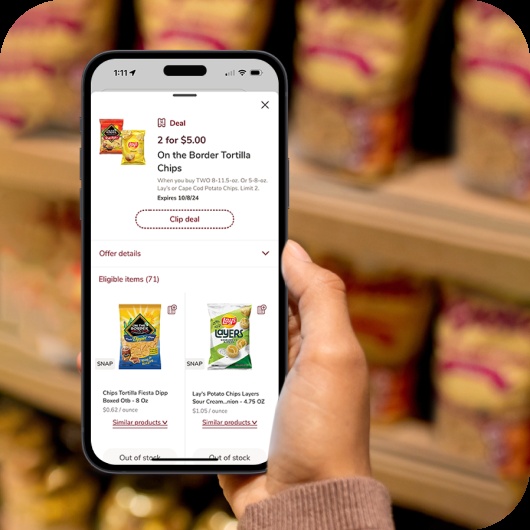
The lesson is pleasantly concrete. Price around the unit the customer needs to manage. A merchandising team plans dates, shelves and availability. A model that keeps the offer aligned with that plan can be easier to use than one whose budget disappears faster when shoppers respond.
03The checkout becomes contested ground
Quotient’s advantage came with a dependency. Retailers controlled valuable shopping environments and transaction information. Some began bringing retail media operations in-house. The company acknowledged the pressure in its annual report. A retailer could be a distribution partner and a competing advertising business, sometimes in the same conversation.
The Albertsons relationship illustrated the exposure. A disputed contract termination in 2021 led to litigation; the last services ended in February 2022. The parties settled in December. It would be too tidy to call this the single cause of Quotient’s difficulties. It was a specific, consequential break in the network the business depended on.
Historical Quotient figures. Revenue fell about 45% from 2021, affected by lost business and changes toward net revenue reporting. The decline is not a clean measure of campaign demand.
Management moved toward self-service technology and away from labor-intensive managed work. In its February 2023 results announcement, it said the shift had lowered costs and improved margins. Retailer losses, supply constraints and advertising budgets still mattered. Better software could reduce execution costs; it could not guarantee continued access to a retailer’s shoppers.
04Two buyers, two different assets
The name had already become a problem. In 2015, Boal said, “In some ways, the Coupons.com name overshadows the great products and services we provide to brands and retailers.” The consumer destination was recognizable. The corporate work behind it was harder to see.
Eventually, they went separate ways. Global Savings Group, now Atolls, acquired the Coupons.com brand and domain, with the handover completed in 2023. Quotient launched Shopmium in the US in 2022 as its replacement consumer offering. Neptune’s separate acquisition of Quotient closed on September 5, 2023, at roughly $430 million in equity value, or $4 a share.
The website and the machinery behind it went to different buyers.
TWO TRANSACTIONS / ONE OFTEN-CONFUSED NAME
Neptune paired Quotient’s digital technology, promotions relationships and data with its in-store marketing network. The direction continues: in May 2026, Neptune announced Kigo distribution into loyalty, publishing and media audiences. Separately, a July 2026 notice announced a proposed $48 million settlement of merger-related shareholder litigation, subject to court approval. That proposal should not be confused with the original purchase price.
05What to steal from a coupon company
For a brand, the practical idea is to connect the offer, its distribution and purchase measurement before buying more impressions. For a retailer, it is to make savings useful inside an existing shopping habit. Test whether the campaign generates additional purchases; a redemption alone does not establish that the shopper needed persuading.
This approach needs retailer cooperation, usable transaction data, available products and offers shoppers value. Without those conditions, targeting has little to work with. Quotient’s story leaves marketers with a demanding question to ask of every clever campaign: what happened at the register?