New York offered Puneet Mehta an unusual route out of Wall Street: help people find their way around New York. He and two fellow technologists built a city app, entered a competition, and found themselves discussing their future with Michael Bloomberg. A mayor is an uncommon career counselor. In this case, the advice came with the possibility of investment.
The app was NYC Way. The company became MyCityWay. Mehta’s co-founders, Archana Patchirajan and Sonpreet Bhatia, were also coming from financial technology. Their entry won three awards in the city’s BigApps competition. Bhatia later recalled Bloomberg asking why they were still working on Wall Street and encouraging them to make a business of their invention.
It is a useful opening scene for understanding Mehta, now the founder and CEO of Netomi. His career is often introduced through AI, funding, and enterprise customers. The city app gets closer to the question underneath: how can software use the circumstances around a person to help that person do something?
In New York, that might mean finding a subway departure or a parking space. At Netomi, it means getting a customer through a complicated business process. The glamour varies. The person waiting generally has another place to be.
A city app, a mayor, and a way out
MyCityWay began as an idea developed in Bhatia’s garage in late 2009. The founders were working through the aftermath of the financial crisis, with experience in handling large amounts of data. They could see a different use for that experience in the small computer people were beginning to carry everywhere.
GPS, a camera, an internet connection: a phone knew things that a printed city guide could only envy. MyCityWay combined local information with location and intent. It could help a resident or visitor choose what to do next, rather than merely deliver another list to scroll through.
By 2011, BMW i Ventures had made MyCityWay its first investment. A car company was looking beyond the car to the surrounding business of getting around. For Mehta and his colleagues, the partnership put their city-navigation work inside a larger discussion about urban mobility.
The founding team said its first NYC Way app took 40 days to build. Expanding into India exposed a slower problem: finding dependable local information and checking it. The phone could be clever; the underlying data still needed work. It was an early lesson in the distance between a neat interface and a useful service.
- 2010MyCityWay
Navigate the city - 2015msg.ai
Meet customers in messaging - 2026Netomi
Act across the customer journey
The habit of taking things apart
Mehta grew up in Chandigarh, India, and studied computer science and engineering at Punjab Engineering College. He has described a childhood household shaped by a physicist father and a mother who worked in education. Both parents also started ventures. Changing direction was something he had seen at home before he attempted it professionally.
He says he first wrote code at nine. A high school computer science teacher gave his curiosity room, allowing him to stay late in the lab and explore. The memory he emphasizes is the freedom to follow an interest beyond the prescribed lesson.
His early career included IBM’s TJ Watson Center and, later, trading technology on Wall Street. At Citi, he held a senior technology role before co-founding MyCityWay. Those were environments where software had to combine information and act while the information was still useful. That experience would follow him into the apparently less hurried world of customer support.
The phone already knew where you were
Before Netomi, Mehta also co-founded MobileROI, a mobile marketing business. His writing from 2013 is concerned with timing, relevance, and the danger of irritating the person carrying the device. Even then, he was asking companies to consider whether a message deserved the customer’s attention.
“Just because you can, doesn’t mean you always should,” he wrote.
There is a pleasing restraint in that sentence coming from someone selling technology for reaching people. A phone was personal territory. Brands could enter it frequently enough to become unwelcome. Useful information, delivered in the right circumstances, had a better chance than another blast of promotional enthusiasm.
The continuity with his later work is visible. In both businesses, Mehta has been concerned with what surrounds an interaction: timing, intent, recent activity, and what the customer is trying to accomplish. A company’s opportunity to speak creates a corresponding obligation to have something worth saying.
First, a ventriloquist’s dummy
The company now known as Netomi was founded in 2015 as msg.ai and joined Y Combinator’s Winter 2016 batch. An early project helped Sony Pictures create a chatbot based on Slappy, the character from Goosebumps. Enterprise software has few openings for a ventriloquist’s dummy. Conversational marketing briefly supplied one.
The experiment belonged to a particular moment in internet life. People were spending time in messaging services, and brands wanted to meet them there. Mehta’s argument was practical: customers were unlikely to install a separate app for every company they occasionally needed.
By September 2016, he was presenting a talk in Montreal about messaging as a new browser and AI as a new interface. The ambition was already broader than a single bot. He was interested in how customers would reach businesses when a conversation could stand in for a screen full of controls.
The later shift toward customer service made the promise more demanding. A fictional character can entertain. A customer with a booking problem expects the conversation to produce an actual change somewhere. The interface must connect to the organization behind it.
“Our idea is to give time back.”
Puneet Mehta, 2019
Capable is only half the question
In 2019, Mehta described two separate considerations when deploying AI: its ability to perform a task and its authority to perform it. Businesses could train a system to handle something well while still limiting what it was permitted to do. Permission could expand gradually.
That distinction is easy to lose in a polished demonstration. An answer appears. The conversation flows. Yet a real business has policies, exceptions, account records, and transactions. A persuasive sentence does not settle whether the software should be allowed to change any of them.
For Mehta, the trading background provides a way to think about these boundaries. He has described testing agent behavior against historical conversations, setting performance limits, and using circuit breakers when thresholds are breached. The same attention to speed is accompanied by a means of stopping.
Illustration of Mehta’s approach, simplified.
His explanation of Netomi’s architecture pairs agents that interpret a request with agents that execute defined actions across business systems. The underlying concern is recognizable without the specialist language: understand what the customer means, then do only what the business has authorized.
Airline service makes the difficulty tangible. A single request can involve a booking, a loyalty record, fare conditions, and changing flight information. The customer experiences one problem. The company may have divided the relevant information among several systems. Mehta’s work concerns the effort required to bring those pieces together.
He describes the goal as giving time back to both customers and agents. That is a more human unit of measurement than the number of messages a system can produce. A conversation that goes on forever is an achievement chiefly for the conversation.
A motorcycle is allowed to be interesting
Outside the enterprise vocabulary, Mehta’s published biography includes riding and working on a vintage motorcycle, mixing music, and studying minimalist industrial design. These are welcome details in a career otherwise populated by platforms, integrations, and capital letters.
They also resist the temptation to make every hobby a management lesson. A motorcycle need not explain a financing round. A person may simply like the machine. The interest in design sits comfortably beside his professional concern for how people experience technology, but the pleasures do not require a business justification.
His reading recommendations are more directly connected to company building: Paul Graham’s essays, Zero to One, and Ben Horowitz’s The Hard Thing About Hard Things. He has said he returns to Graham’s essays at different stages and finds different meanings in them. The reader changes while the words remain available.
The next window may never open
In April 2026, Netomi announced $110 million in new funding led by Accenture Ventures, with participation including Adobe Ventures and WndrCo. Accenture also announced a strategic partnership. Mehta’s project now has partners with established routes into large companies and their digital experiences.
The investor relationships bring together different worlds. Netomi lists Greg Brockman, Demis Hassabis, Mustafa Suleyman, and Jeffrey Katzenberg among its backers. In October, Justin Wexler, a longtime Netomi board member from Katzenberg’s venture firm, became president alongside Mehta as founder and CEO.
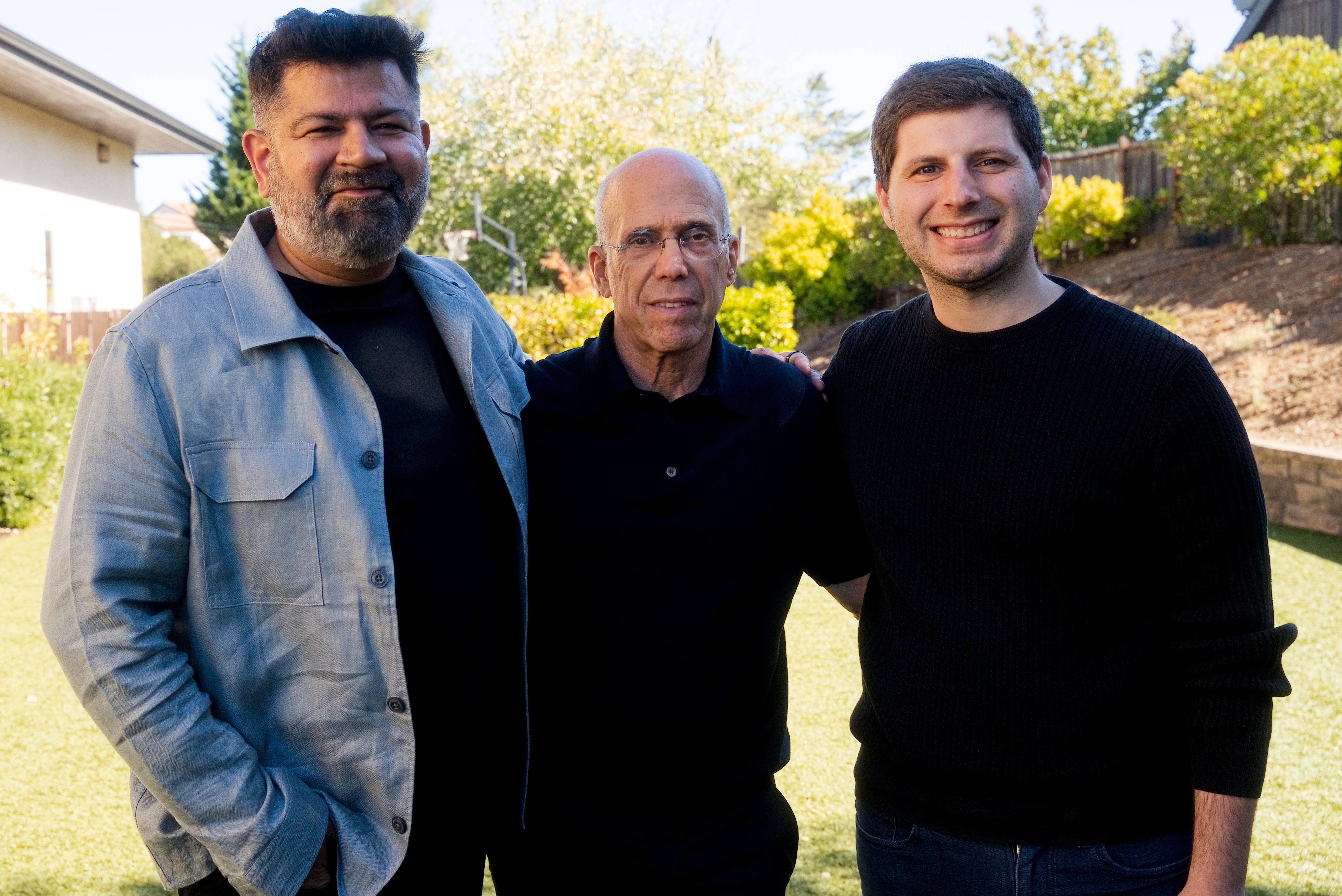
The direction is increasingly toward AI inside the digital experience itself. Mehta wants assistance that can anticipate a need and act before the customer has to navigate a support channel. It is an aspiration that follows naturally from his earlier concern with context, while asking considerably more of the technology.
The test will be the ordinary customer’s experience. An interaction avoided because everything worked is difficult to stage as a dazzling demonstration. It may leave very little to show. For someone who has spent years working on messages, Mehta is pursuing an interesting outcome: fewer occasions when a customer needs to send one.
The route began with helping people find their way through a city. It has led to helping them find their way through a company. In either setting, getting on with your day is a perfectly respectable destination.
Follow the conversation
Interviews, essays, and the next chapters.