Pedro Pizarro can make a pizza from first principles. Dough, sauce, a wood-fired oven brought to 800 degrees: the former chemistry student has described an occasional domestic project with unusually satisfying experimental results. There are ingredients, a process and an answer you can eat. Running an electric utility offers fewer opportunities for such a clean finish.
Pizarro is president and chief executive of Edison International, the parent of Southern California Edison. His professional life concerns what happens when electricity leaves the diagram and enters the world: a power contract, a transmission line, a customer’s home. He became CEO in October 2016. A decade later, the job brings together the long promise of a cleaner economy and the immediate obligations of the company helping to power it.
His route there included chemical physics, management consulting and a graduate-school transfer motivated by love. It helps explain his preference for working through a problem. It also offers a useful warning about biographies: the straight line usually appears after the journey.
A different sort of chemistry
He grew up in Puerto Rico, in a family he has described as lower middle class, and moved to Florida while in high school. A scholarship helped take him to Harvard. Quantitative science appealed to him; he liked the prospect of deriving an answer from equations. Graduate study initially seemed a route toward an academic career.
Then geography intervened. Monica Kohler, his girlfriend and a future earthquake scientist, was heading to Caltech. Pizarro transferred there from MIT. He completed his chemistry doctorate in 1994. The relationship became a marriage; the California move became a lasting part of his life.
He subsequently declined an NSF postdoctoral fellowship to enter McKinsey. Business offered teamwork and decisions with consequences beyond a research group. That choice changed the scale of the questions he would work on. The habit of analysis could travel with him, even when the laboratory stayed behind.
The education inside the company
At McKinsey in Los Angeles, Pizarro advised clients across energy, technology, engineering services and banking. Strategy, acquisitions and organizational work all figured in the job. He joined Edison International in 1999 and moved to SCE in 2001, beginning a long apprenticeship inside the businesses he would eventually lead.
His responsibilities expanded through strategy and power procurement to an executive vice presidency overseeing transmission, distribution and generation. Those jobs put different parts of the electricity system on his desk. Buying power raises one set of questions; moving it raises another. A customer experiences the combined result.
From 2011, he led Edison Mission Energy, a competitive power producer. Its history complicates any frictionless account of his rise. EME filed for bankruptcy in December 2012; its principal assets were sold to NRG Energy in 2014. A utility executive’s education can include restructuring as well as expansion.
The sequence matters when Pizarro talks about energy investment. His experience includes the regulated utility and competitive generation, with different ways of buying, selling and financing power. An energy system may look like a single industry from the outside. Inside a company, the responsibilities have different rules, risks and balance sheets. He had worked across those boundaries before reaching the parent company’s chief executive office.
He became SCE president in October 2014, then Edison International president in May 2016 and CEO that October. The eventual appointment followed years in which the business had been his responsibility from several directions. The résumé contains the glamorous word “strategy,” but also the less decorative business of procurement and operations.
The car needs the wire
In 2023, Pizarro sat opposite Elon Musk at the Edison Electric Institute’s annual meeting in Austin. The setting brought an electric-car executive into conversation with someone whose company has to help supply the electricity. Their subjects included decarbonization and Tesla’s charging network. The connection between those subjects was quite literal.
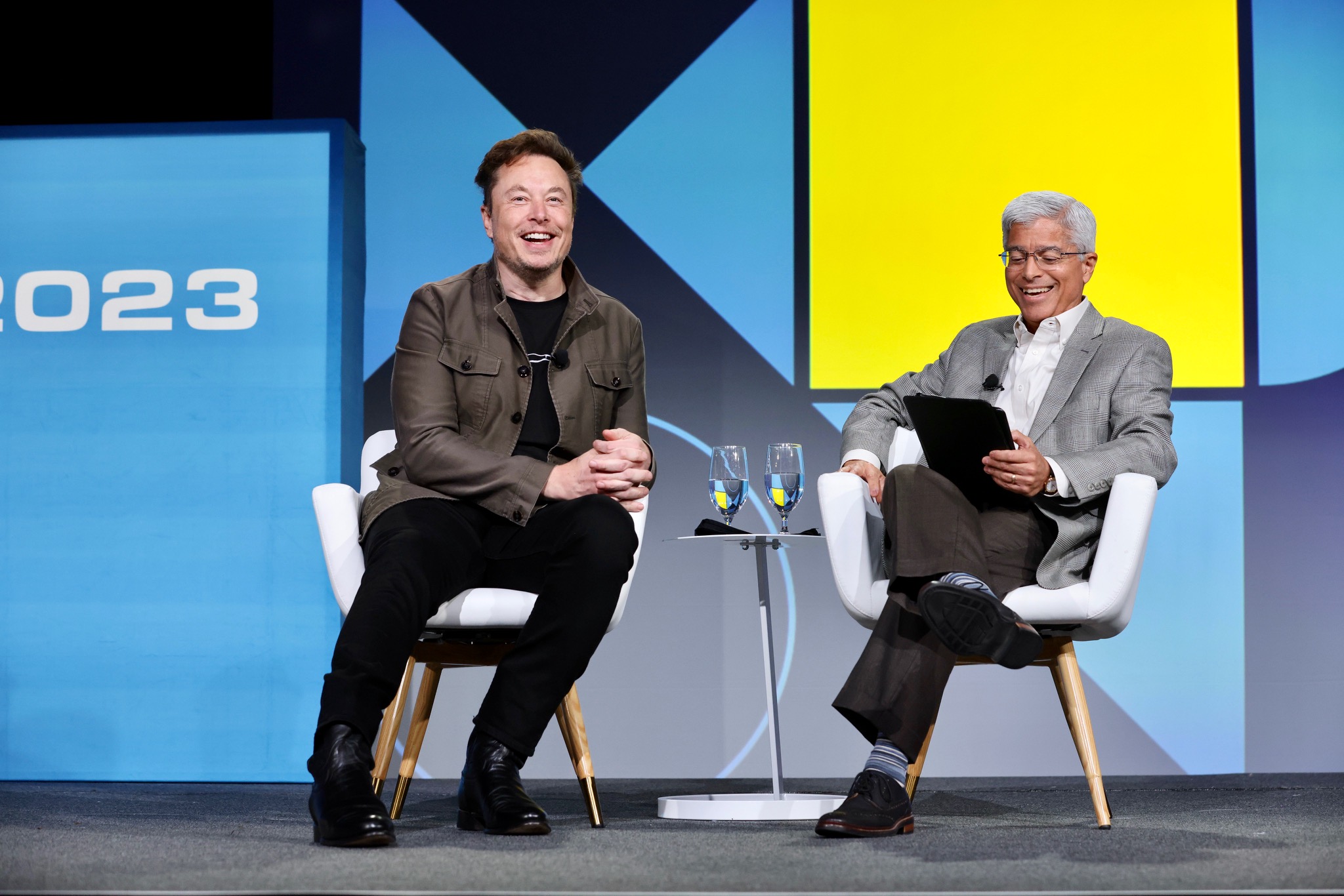
Pizarro was taking over EEI’s chairmanship for 2023-2024. The industry platform suited a theme already visible in his company’s work: cleaner electricity would need to reach further into transport and buildings. Selling a new machine is one stage of that change. Connecting it to a dependable system is another, with its own expenses and deadlines.
SCE’s 2019 Pathway 2045 analysis made the relationship concrete. It described a California with carbon-free retail electricity, much more clean generating capacity and millions of electric vehicles. These were modeled requirements for a future system. Reading them as a list of things already accomplished would rather defeat the purpose of having a plan.
Scenario requirements for 2045, not present-day results. Edison has since published further analyses.
The argument became more urgent in Edison’s 2021 Mind the Gap paper, which called for faster emissions reductions, more electrification and stronger infrastructure. The ambition carries a commercial logic too: an economy using more electricity needs more of the service Edison provides. Public purpose and business opportunity share the same wires.
The bill arrives in the present tense
Pizarro’s case depends on investment. In conversation with NosTerra’s Dave Welch, he connected the energy transition with new technology and public-private cooperation. “Investment is critical,” he said. It is a short sentence with a long invoice attached. Equipment must be financed before customers can rely on it.
“Investment is critical.”
Pedro Pizarro, in conversation with Dave Welch
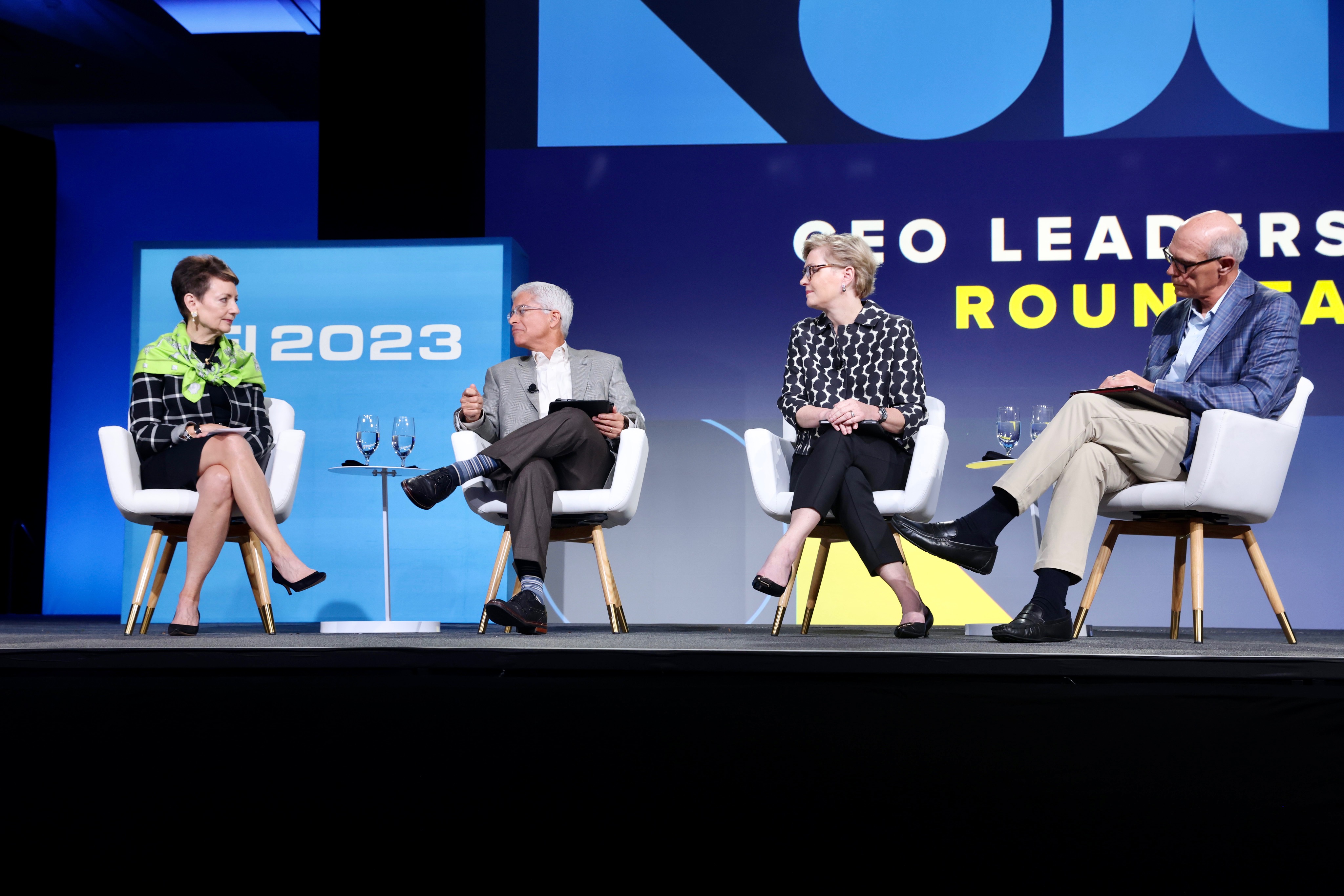
He has also defended the investor-owned utility model as a way to draw outside capital into community infrastructure. At the 2023 EEI roundtable, his emphasis was on the capacity to finance and operate the system. That is the institutional argument behind the electric future: somebody has to organize the money as well as the engineering.
Regulation supplies a boundary. Discussing investment in an October 2026 interview, Pizarro pointed to the California Public Utilities Commission’s role in approving spending. “We don’t have carte blanche, and that’s appropriate.” His account put near-term demand growth alongside a much larger electricity system by 2045. Forecasts can explain why a company wants to invest; approval still requires a public process.
The household timetable is shorter. A family can support a cleaner future and still need this month’s bill to make sense. Those positions fit together perfectly well. For an executive, the awkward task is to make the spending schedule, the benefits and the customer’s ability to pay fit together too.
Who gets a seat at the table?
Pizarro’s descriptions of community engagement become most useful when they reach the mechanics. In a 2022 discussion, he explained how SCE’s Community Advisory Panel had influenced the Charge Ready program. Customers could speak directly about what would make a charging initiative work better. The feedback reached the design of the program.
He also described advisory groups drawing in local government, businesses and small businesses. These are less photogenic than a stage conversation, but they address a similar question: who gets to help define the problem? A charger, after all, needs to be useful to the people expected to use it.
Education appeared in that same discussion as a particular pleasure. Pizarro singled out Edison Scholars, describing scholarships for high-school seniors and the planned increase in their value. The connection to his own academic route is easy to see. Access to education belongs in this story alongside access to electricity: both can change the choices available to someone.
The obligations closest to home
Any account of Pizarro’s leadership has to include the Eaton Fire. In August 2026, Los Angeles County fire officials attributed the January 2025 ignition to electrical arcing involving an out-of-service SCE transmission tower. The finding placed the utility’s equipment at the center of the disaster and its consequences for Altadena.
In an AirTalk interview after the report, Pizarro discussed the remaining questions about the mechanism that could have produced the sparking. The distinction deserves care: uncertainty about a physical mechanism does not erase the investigators’ conclusion about the equipment. His public explanations sit alongside that finding and the demands of people rebuilding their lives and businesses.
By October 20, 2026, SCE said its voluntary recovery program had received claims from more than 16,250 individuals, trusts and legal entities. It reported nearly $1.1 billion in compensation offers, with almost 80 percent accepted. Offers and completed payments are different measures; the figure describes offers. The company was publicizing a November 30 submission deadline.
These obligations change the texture of the story. A utility’s plans are experienced in particular places, by people with their own losses, questions and decisions. For Pizarro, the ability to describe a future electricity system has to coexist with responsibility for the institution operating the present one.
The forecast has to meet the weather
In September 2026, Edison released Adapting Today, drawing on SCE’s climate vulnerability assessment. The analysis examined heat, flooding, sea-level rise and weather conducive to wildfire. Its purpose was to bring climate projections closer to decisions about individual assets and infrastructure planning. The scale moved from the atmosphere to the equipment.
The adaptation work adds a second task to decarbonization. Reducing emissions concerns the future climate; adapting infrastructure concerns conditions the system will encounter as it operates. A utility has to carry both tasks into its investment decisions. The physical life of equipment gives those decisions a stubborn quality: a forecast may be revised much faster than a network can be rebuilt.
Here the chemistry graduate’s career comes back into focus. Pizarro’s work has repeatedly involved taking analysis into an organization that must act on it. He also chairs 3M’s Science, Technology & Sustainability Committee, extending that connection between technical questions and corporate decisions beyond Edison.
A model can clarify a choice. It cannot build the equipment, answer a customer or restore trust on its own. Those tasks require a company and the people directing it. Pizarro chose business for its reach. The reach is now inseparable from the responsibility: a future calculated in decades, delivered through decisions made today.