A missing hour on a paycheck creates a peculiar little investigation. Someone remembers working late. Someone else searches a timecard. A payroll administrator opens a record, checks an approval and starts the repair. The employee knows the detail that matters. The system discovers it after the money has moved. Paycom built a product around changing that sequence. Then it discovered that preventing repairs could also remove revenue.
- The product: payroll and HR in one database, with employees reviewing pay before submission.
- The tension: fewer errors meant fewer billable corrections and unscheduled payroll runs.
- The lesson: move verification earlier, then measure the work that disappears.
The person who knows the missing hour
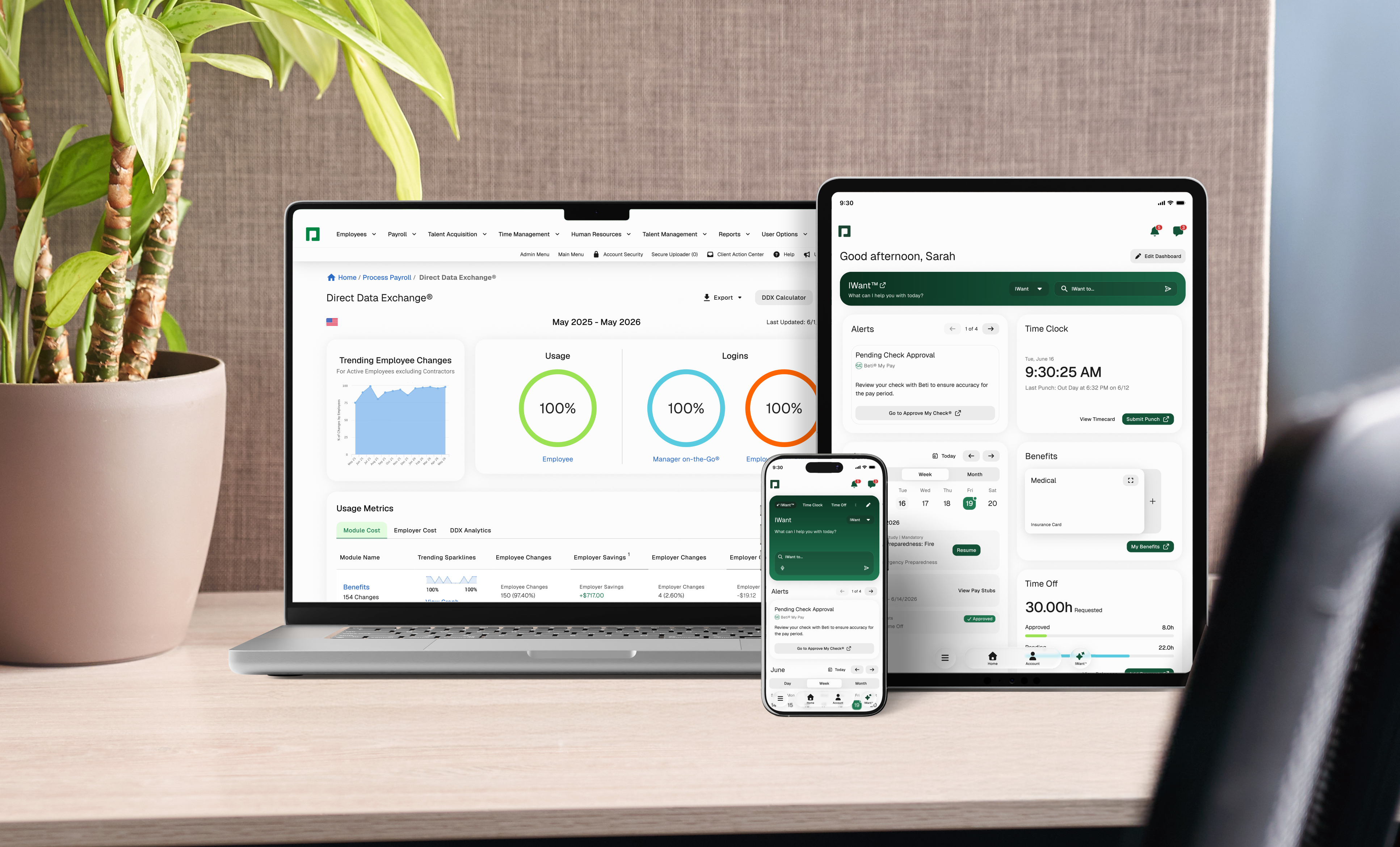
Paycom calls its payroll experience Beti, short for Better Employee Transaction Interface. Introduced in 2021, it pulls information from timecards, expenses, benefits and other employee records. It flags outstanding tasks and guides employees to check their pay before payroll submission. Administrators monitor the process through a dashboard. Employees cannot simply award themselves a raise; Paycom says they cannot change their pay rate.
The interesting move is the timing. An employee can recognize a missing punch before it becomes a wrong paycheck. An administrator can see pending approvals while there is still time to act. The software distributes attention across the people who possess the relevant information. That is a practical answer to a familiar office problem: the person responsible for correcting the record often knows least about what happened.

First, sell the internet
Chad Richison founded Paycom in Oklahoma City in 1998 after working in payroll sales. In a company podcast, he recalled how unusual it was for businesses to use the internet for more than a website. Selling online payroll meant getting customers comfortable with the delivery mechanism as well as the service. The obstacle came before anyone could appreciate a cleaner workflow.
Paycom eventually took that approach across the employment cycle: recruiting, onboarding, timekeeping, benefits, performance and learning. Its organizing idea remained one database. Enter information once and let the appropriate processes use it. The company went public in 2014 at $15 a share. Its own share sales generated $69.1 million before offering costs, with net proceeds used to repay debt.


The customers now include employers with considerably more complicated lives than a single office. The Kraft Group runs 20 businesses, including the New England Patriots. Paycom’s published case study says the group reduced payroll preparation time by 75% after implementing Beti. Treat that as a customer example rather than a universal forecast. The useful question: which tasks vanished, and does your organization have them?
By the end of 2025, Paycom reported roughly 39,200 clients, or 20,300 when grouped by parent company. That distinction matters: multiple entities can belong to the same buyer. It stored 7.4 million employee records. Its stated mission, simplifying life for employees and helping clients succeed, meets a demanding everyday test here. Does another person still have to chase the same information?
The bill for fewer fixes
In its 2023 annual report, Paycom described the uncomfortable consequence of that product logic. Beti reduced payroll errors that produced billable corrections and unscheduled payroll runs. The company said the reduction adversely affected revenue growth, alongside other factors. The software was doing what it was designed to do. Some of the associated revenue opportunities were disappearing with the work.
That creates an unusually clear test for an automation business. If customers become more efficient, can the supplier earn enough from the ongoing relationship to replace the transactions it eliminates? Paycom’s model centers on recurring software and services, with pricing shaped by workforce size and selected tools. It also earns interest on funds held for clients. This is a business with several economic moving parts.
Annual revenue · US$ billions
Rounded reported totals. Zero baseline; chart scale ends at $2.2bn.For a buyer, the bill involves more than a subscription. Paycom offers customized quotes; its pricing page specifies a one-time implementation fee and no-cost ongoing support from a dedicated specialist. Internally, someone must validate employee records, configure policies and teach people the new routine. Paycom provides implementation and companywide training. That assistance matters because changing software also changes who must do what, and when.
One record, many consequences
Two later products extend the same argument. GONE, launched in late 2023, applies employer-defined rules to time-off decisions, then passes approved requests into payroll and scheduling. IWant, launched in July 2025, accepts typed or voice-to-text questions about information inside Paycom. Asking for a time-off balance becomes another entrance to the employee record. Neither product removes the need for sensible rules or accurate underlying information.
The market offers plenty of alternatives: ADP, Paychex, Paylocity, Dayforce, UKG and Workday among them. Paycom’s case rests on consolidating work inside its system. An organization determined to retain several specialist applications needs to examine that choice carefully. Paycom itself acknowledges that competitors may offer integrations its single software does not. Simplicity inside one platform can require commitment to that platform.
International buyers have a second boundary to check. Global HCM advertises HR functionality across more than 190 countries, while Beti lists payroll availability in the United States, Canada, Mexico, the United Kingdom and Ireland. A shared employee record across borders does not automatically supply local payroll everywhere. The relevant buying question is the country where the employee actually gets paid.
“The best payroll error is the one that never happens.”
Chad Richison · October 2026
Move the check upstream
Paycom’s latest cost argument puts a number on the repair. An October 2026 commissioned EY analysis estimated $339 per error. That figure updates 2022 survey data for inflation; it is not a fresh measurement of every employer’s costs. Still, it gives a payroll team something concrete to investigate: how many corrections happen, who handles them and how much time they consume.
A useful pilot would track missing punches, late approvals and corrections over several pay periods. Those counts reveal whether a new interface has removed work or merely reassigned it. Employees need time and access to participate; managers still need a route for exceptions. Those are operating requirements, even when the software is working as advertised.
The part a reader can copy requires no software purchase. Give people a chance to verify information before the transaction. Measure exceptions and repeated entry before and after the change. Keep a human route for unusual cases. Paycom’s wager is that catching the missing hour early makes the relationship more valuable than fixing it late. Its own fees made that wager tangible.