The app sounded sensible. Plumbers would use it. A business would grow around it. Then Patrick van der Pijl and his colleagues went looking for the people who were supposed to make the plan work. Roughly half the plumbers they spoke to did not have a smartphone. An elegant concept had encountered a rather inconvenient customer. There is no download button for that.
Van der Pijl tells this story when explaining business models. The lesson is wonderfully unglamorous: go and ask. Before investing in the machinery of an idea, establish whether the people it depends on can use it, want it and will make room for it. A presentation can glide past all three questions. A conversation with a plumber tends to be less accommodating.
His advice is to explore several possibilities, then test a smaller selection in the market. The point is to give an entrepreneur options before affection hardens into certainty. Loving your own concept is understandable. Expecting customers to reciprocate is a commercial arrangement that requires evidence.
This has become the recurring question of his working life: how do you move strategy out of an executive's head and into a form other people can challenge? Books, canvases, workshops and now AI occupy different parts of his answer. The customer keeps the deciding vote.
The book before the business
Van der Pijl studied economics in Amsterdam and began consulting at Arthur Andersen in 1997. A master's degree at Nyenrode followed. He knew the established consulting world from the inside: its professional habits, its emphasis on management and its appetite for plans. His later work would retain the business questions while changing how people approached them.
The decisive project was Business Model Generation. Alexander Osterwalder and Yves Pigneur supplied the book's central intellectual work; van der Pijl was its producer. That distinction matters. His contribution belongs to the practical business of bringing a shared project into the world. The Business Model Canvas was not his solo invention, and the book's story was never a solo performance.
The original 2009 publication involved 470 co-creators in 45 countries. It made the production of a business book a demonstration of the collaborative habits the book encouraged. Readers could become participants. A handbook about creating value was itself being assembled through a network of people willing to help shape it.
Business Models Inc. grew around that work. Van der Pijl describes the book as the beginning of the consultancy. The relationship between publishing and consulting is central to his career: make a way of thinking accessible, let people use it, then work with teams facing problems that a book alone cannot settle.
A club with a balance sheet
In an early interview, van der Pijl remembered expecting a market of about 20,000 books. Supporters could buy an initial copy for $24. The first 5,000 sold quickly; another 10,000 followed. A modest forecast met a much larger appetite. It is a pleasing irony for someone whose job involves questioning assumptions.
His Amsterdam office offered another clue to his taste. Designed by Monique des Bouvrie, it was intended to feel like a club, complete with Ibiza beats. He also spoke warmly about walks with his dog, DJ, after years of spending much of his time abroad. The international business designer had discovered the attractions of staying put.
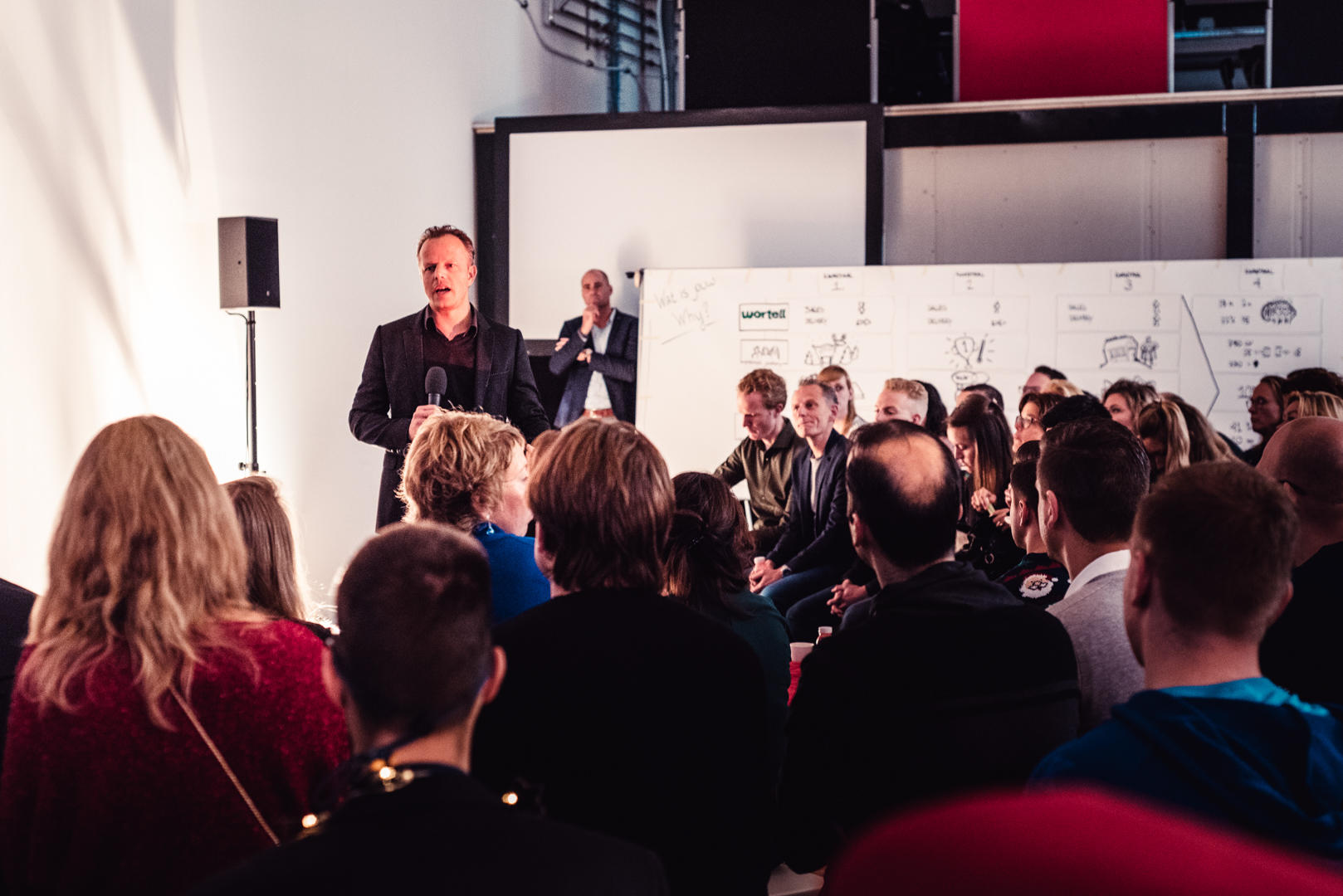
The consultancy's work made visual thinking a practical service. Its current process moves through identifying problems, strategy, design, prototypes, building, testing and launch. Teams participate in the work rather than simply receiving its conclusions. The drawings and workshops belong to a longer chain that must eventually produce something customers can react to.
A sketch earns its keep when it gives people a precise disagreement. Which customer? Which cost? Which reason to buy? Where a fluent paragraph can conceal an assumption, a visible model leaves an empty space that someone has to fill. The boardroom gains a surface on which its thinking can be inspected.
Giving the tools away
In 2016, van der Pijl became a co-author of Design a Better Business with Justin Lokitz and Lisa Kay Solomon. Maarten van Lieshout and Erik van der Pluijm designed the book. The credits themselves describe the kind of collaboration he favours: business thinking, facilitation and visual craft working on the same object.
The book brought together more than 20 tools and examples from organisations including ING, Audi, Autodesk and Toyota Financial Services. Its ambition extended beyond explaining a model. It took readers through the work of building a team, understanding a situation, developing ideas, making prototypes and preparing to scale.
That progression matters because understanding a diagram is a different accomplishment from changing a business. A tool needs people who can use it, a setting in which they can work together and a reason to return to it. Otherwise, the workshop photograph becomes the principal surviving product.
Business Models Inc. received Good Design Australia's inaugural Design Pioneer Award at the 2017 Design as Strategy Forum. The recognition was for strategy design and making design thinking tools accessible. The organisation had also worked with Australian government departments to develop design capabilities. The audience for this approach extended beyond companies selling consumer products.
An award for making tools available is an apt milestone. Consulting can attach prestige to possession: the proprietary framework, the guarded method, the special answer. Van der Pijl's publishing career gives people something they can hold, mark up and use without asking him to stand beside them. A useful method acquires a life outside its maker's calendar.
“The biggest competitor of a successful company is often not a new player, it's the success of its current business model.”
Patrick van der Pijl
Six directions, no single destination
Business Model Shifts followed in 2020, written with Justin Lokitz and Roland Wijnen and designed by Maarten van Lieshout. It examined six changes in the way organisations create value. Products could become services. Shareholder thinking could expand to stakeholders. Physical operations could gain digital connections. Businesses could organise platforms, pursue exponential growth or build circular systems.
The six shifts offer a vocabulary for alternatives. A company can ask whether its customers need ownership or ongoing access, whether it should provide everything itself or connect participants, and whether value can survive another cycle of use. Each question changes more than the object being sold.
The book's structure fits van der Pijl's preference for keeping several business models in view. A catalogue of possibilities gives a team more room to think than a prediction about the one future everyone must inhabit. It also puts responsibility back on the people doing the choosing: an attractive pattern still has to work in their circumstances.
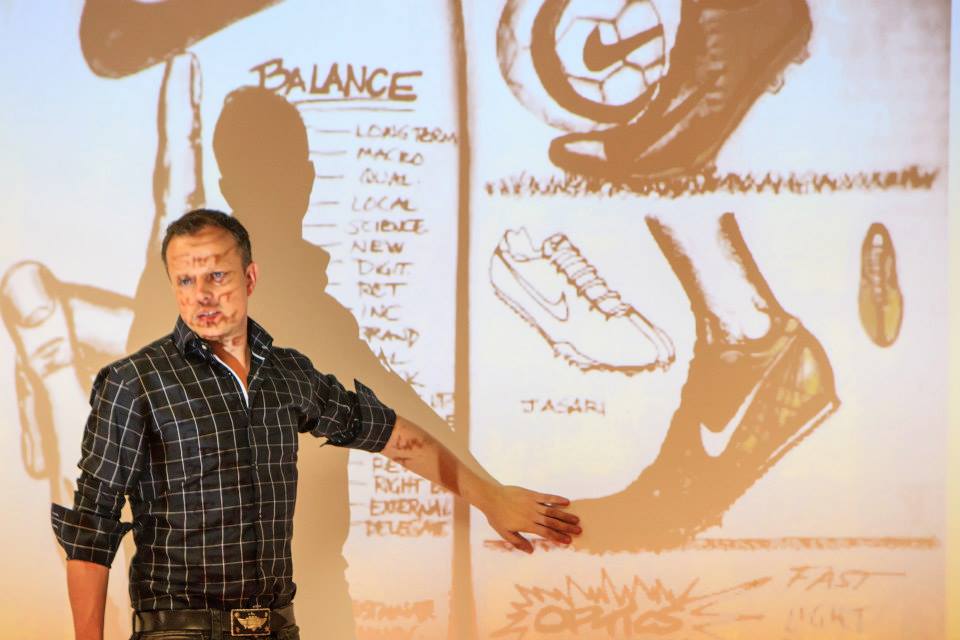
His speaking career has carried these questions across more than 30 countries. He delivers keynotes, training and workshops in English and Dutch. The recurring subject is how companies understand customers and organise their work around that understanding. There is a useful tension in the job: a speaker gets the stage, while his advice asks the audience to give other people a say.
When the model was his own
The difficult test came inside Business Models Inc. In a September 2026 conversation with Ruud Hendriks and Richard Bross, van der Pijl described a failed joint venture and a period when work dried up. The company that helped others rethink their businesses had reached a point where its own future was uncertain.
He recalled asking a friend for help at Christmas. He also discussed whether he remained the right person to lead the business. These are more revealing subjects than a smooth founder biography usually permits. The practitioner had become a participant in the problem, with his own position among the things that might need reconsidering.
It gives his insistence on adaptation a personal cost. Changing a business model sounds appealing when the boxes belong to somebody else. It becomes harder when the arrangement includes your identity, your colleagues and the company you built. The invitation to question assumptions eventually comes addressed to the founder.
A new colleague at the canvas
His current project is Augmented Collaboration, developed with a community of more than 250 contributors. Its premise is that people from different disciplines and AI should work together on a shared customer problem, in the same space and at the same time. The book's store lists delivery of the final print edition from 15 October 2026.
The ambition follows his earlier work but changes the working environment. The canvas can now be digital. AI can participate in research and development. Teams can bring several kinds of expertise to a question before it passes through a succession of departments. The organising problem remains the customer's, even as the participants change.
Van der Pijl has also revisited the Value Proposition Canvas. His redesign puts the customer first in the reading order, makes the persona explicit and adds a clear customer problem statement. A familiar tool receives the same scrutiny he would apply to a new business. Its reputation does not exempt its layout from a difficult question.
Another recent experiment was his company's website. He publicly called the launch a bad version and invited feedback. The team had built an AI-powered engine to replace its earlier website and content management system. It was a concrete example of putting an unfinished proposition into circulation and learning from what happened next.
The phrase has a useful lack of ceremony. Anyone can announce a vision. Calling your own work a bad version gives other people permission to notice its faults. For a consultant who sells the practice of experimentation, that is a small but public way to expose the method to the treatment he recommends.
A book, a business model and a website all offer the temptation of a final version. Van der Pijl keeps arranging occasions for revision. The practical question is what happens after people have admired the idea: who uses it, what they discover, and whether its maker is willing to change it. Somewhere, a plumber is still entitled to decline the app.
Keep the conversation going
Books, working tools and conversations with Patrick.