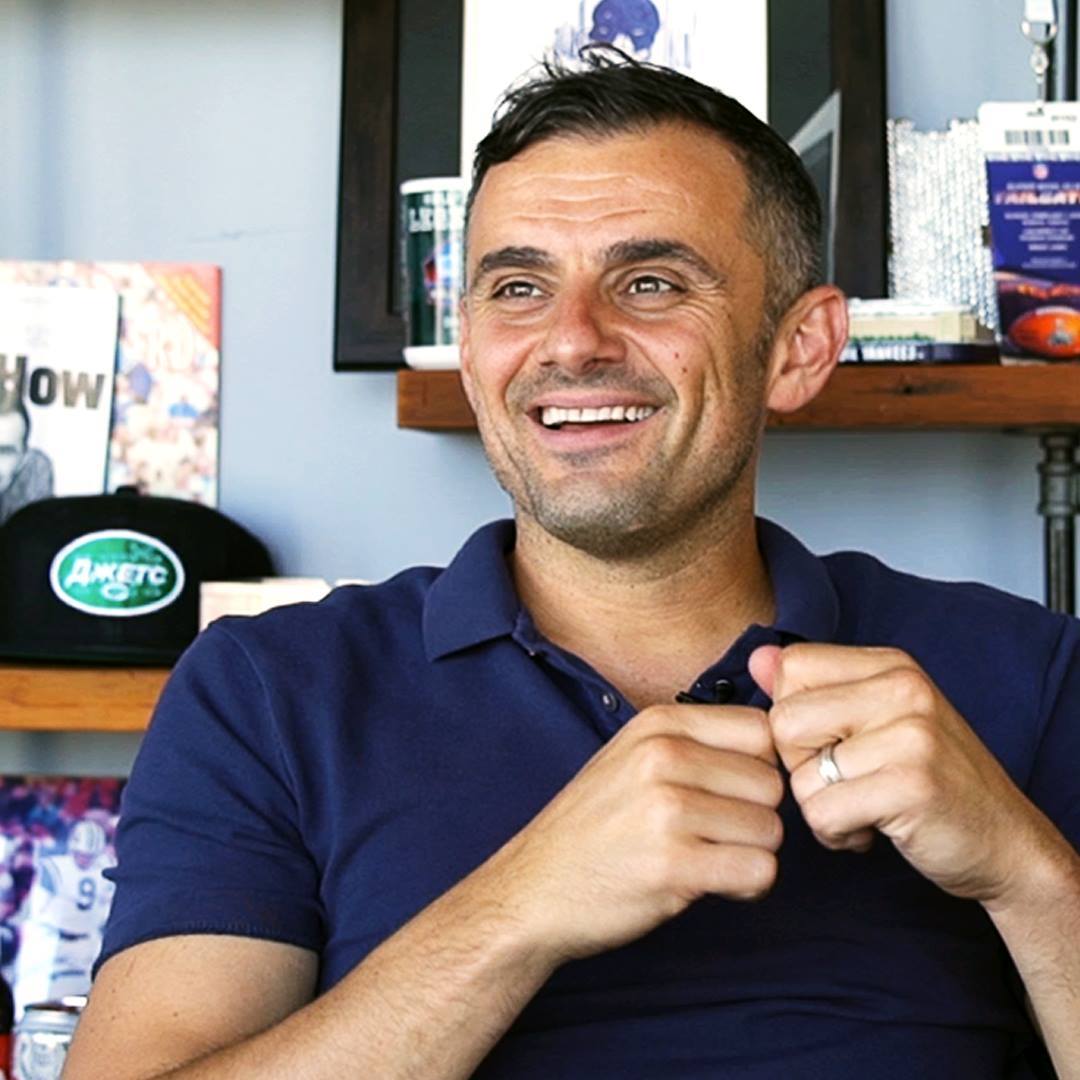
The Man Playing a 30-Year Game in a World That Counts Quarters
Gary Vaynerchuk doesn't explain himself. He already said it - in a tweet, a TikTok, a podcast episode, a keynote, probably a hot dog stand conversation in Midtown. By the time you've caught up to the idea, he's already moved to the next platform everyone else is ignoring.
The story starts in Babruysk, Belarus, 1975 - then Soviet Union, then chaos, then a three-year-old boy named Gary on a plane to Queens, New York. Eight family members. One studio apartment. His father Sasha went to work in a liquor warehouse. His mother Tamara, who Gary credits as the single biggest influence on his self-belief, worked wherever she could. Gary sold lemonade at seven. Not a stand - a franchise. He hired neighborhood kids to run multiple stands while he managed the operation. At twelve he moved to baseball cards. By sixteen he was clearing $2,000 a weekend at Edison flea markets.
None of this is background. It is the thing. Every business Gary has built runs on the same algorithm he figured out before high school: find where the attention is going before everyone else does. Price in early. Execute with more energy than seems reasonable. Wait.
"Macro patience, micro speed."Gary Vaynerchuk
He graduated from Mount Ida College in 1998 with a management degree and walked straight into his father's liquor store - Shopper's Discount Liquors in Springfield, New Jersey, doing $3 million a year. Within two years he had an e-commerce site. Within five years, $60 million in annual revenue. He didn't do it with a new product. He did it with a website and a mailing list, in 2001, when neither thing was obvious.
In 2006 he launched Wine Library TV on YouTube. A daily wine show. Shot in a warehouse. No makeup, no script, no set. He called wines "purple teeth juice" and "barnyard in a glass" while wearing Jets jerseys. For five years, every single day, he published. At episode 1,000 he stopped. Not because it stopped working - because he'd made his point and built something else: a reputation as someone who understood attention on the internet better than anyone in media did.
"Content is king, but context is God."
The 2008 Web 2.0 Summit keynote is the hinge moment most people don't know about. Gary walked on stage, gave a talk about social media and personal branding that most people in the audience dismissed as hype. HarperCollins didn't dismiss it. They offered $1 million for a 10-book deal before he left the venue. He published Crush It! in 2009. Then The Thank You Economy. Then Jab, Jab, Jab, Right Hook. Five of his eight books have hit the New York Times list. The most recent, Day Trading Attention (2024), is his sharpest argument yet: that the marketing industry is systematically misallocating capital, and that organic social content is the most underpriced distribution channel on earth.
VaynerMedia, which Gary co-founded with his brother AJ in 2009, now generates over $200 million annually. It works with Fortune 500 companies on social strategy and creative. It is not a legacy agency that "does digital." It is a native-digital agency that has never worked any other way. VaynerX, the holding company Gary chairs, includes Gallery Media Group, The Sasha Group (SMB marketing), VaynerSpeakers, and VaynerCommerce. The whole thing was built on a single thesis: attention migrates, and most incumbents are too slow to follow it.
The investment portfolio is quieter and more consequential than the public persona. Gary has written checks into 90+ companies with 37+ exits. The early-stage calls read like a greatest hits of the internet: Facebook (2009), Twitter, Tumblr, Venmo, Snapchat, Uber, Coinbase. He invested in Uber when most of his peers thought the regulatory risk was fatal. He invested in Coinbase when crypto was considered a punchline. The thesis was always the same: platform risk is lower than people think, and the team and the timing are right.
In 2021, Gary launched VeeFriends. The timing was peak NFT mania, which made it easy for critics to dismiss as hype. The vision, though, was something different: build an entertainment IP from scratch using a digital ownership layer as the distribution mechanism. Two hundred and fifty-five hand-drawn characters, each one named after a positive human character trait - Patient Pig, Empathy Elephant, Accountable Ant. The pitch was Pokémon meets Sesame Street, but built in 2021 instead of 1969.
VeeFriends has since partnered with Mattel for physical toys and with Macy's for branded merchandise. Whether or not NFTs become mainstream, the IP exists. The characters have names and personalities and stories. Gary has published a children's book - Meet Me in the Middle - in the VeeFriends universe. He is building the infrastructure for a franchise that could outlast him.
In 2026, Gary's primary argument to marketers is what he calls "Interest Media." The algorithm, he says, no longer distributes content based on social connections. It distributes based on demonstrated interest. A video about vintage sneakers reaches sneaker people whether or not they follow you. This breaks the paid social model that most big brands built their digital infrastructure on. Gary's prescription: spend 20% of your total marketing budget creating organic social content, because the reach-to-cost ratio is the best it has ever been and most brands aren't using it.
The personal life has not been separate from the brand - it never was. He separated from his wife of 18 years, Lizzie, in 2022, handling it publicly with characteristic directness. In June 2025 he married health coach Mona Vand in a small ceremony in Toronto. He has two children, Misha and Xander, from his first marriage. He coaches his son's baseball team. He still watches every Jets game with the focused hope of a man who genuinely believes he will own the franchise one day.
"Legacy is greater than currency."Gary Vaynerchuk
What makes Gary Vaynerchuk unusual isn't the hustle - plenty of people hustle. It's the combination of raw operational credibility (he actually built the businesses), genuine early-adopter instinct (the calls on Facebook, Uber, and Coinbase weren't lucky - they were systematic), and an authentic self-awareness about his own brand that most people who preach personal branding lack entirely.
He has never sold a course on how to get rich without working. He has never sold a system for passive income. He sells the idea that if you are radically honest about who you actually are - your actual DNA, your actual strengths, your actual patience capacity - and then work that angle with intensity and patience, you will win. It's not complicated. It's also not easy. And he'd be the first to tell you the difference.
He posts on eight platforms every day. He answers DMs from fans he barely knows. He remembers names - not strategically, because he genuinely finds people interesting. He has been saying the same things about patience and self-awareness for fifteen years, and the world keeps catching up to him on a delay. The Jets are still not for sale. He's still waiting.