Before Paolo Bertolotti had a thousand financial institutions to think about, he had a boat. At Columbia, he sailed competitively, appearing as a skipper in college regattas up and down the East Coast. In the spring of 2016, the sailing team’s newsletter listed him among its graduating seniors: financial engineering, with a job ahead on AQR’s macro team. A small announcement, tucked among regatta plans. The next destination looked reasonably settled.
Ten years later, his professional life concerns a different sort of movement. Bertolotti is the co-founder and CEO of ModernFi, which builds deposit infrastructure for banks and credit unions. In September 2026, the company announced that more than 1,000 financial institutions were participating in its networks, across all 50 states. The former college skipper now spends his time on a problem that tends to become interesting at precisely the moment everyone wishes it would remain dull: where money goes.
There is an appealing mismatch here. His academic training is in the mathematics of connections. His customers are institutions whose business depends on human relationships. His task is to make those two things work together, without asking the local bank to stop being local.
A thesis with a life outside the library
Columbia supplied more than the first degree. It was where Bertolotti met Adam DeVita, the fellow undergraduate with whom he would later start ModernFi. Before they became founders together, their careers took them through different parts of finance. DeVita worked in product management at Citi. Bertolotti worked in quantitative research at AQR, then went to MIT.
His doctoral defense took place on December 10, 2021. The title was Inference and Diffusion in Networks. MIT awarded the doctorate in February 2022, in Social and Engineering Systems and Statistics. The title deserves a moment’s attention. A network gives you a way to examine relationships as a system: individual entities, the connections between them, and what moves across those connections. Inference asks what the evidence permits you to conclude.
Those questions can sound comfortably removed from the daily business of a bank branch. Yet a bank is an institution built around movements and expectations. Customers put money into accounts. Borrowers take out loans. The money available today has to support commitments that may stretch decades into the future. A checking account and a thirty-year mortgage keep very different calendars.
By 2023, Bertolotti was also teaching introductory statistical reasoning at Columbia. The course emphasized intuition over mathematical rigor. It is a pleasing detail in the biography of someone trying to explain complicated financial plumbing: being able to do the mathematics and being able to make it intelligible are separate qualifications.
The problem was already there
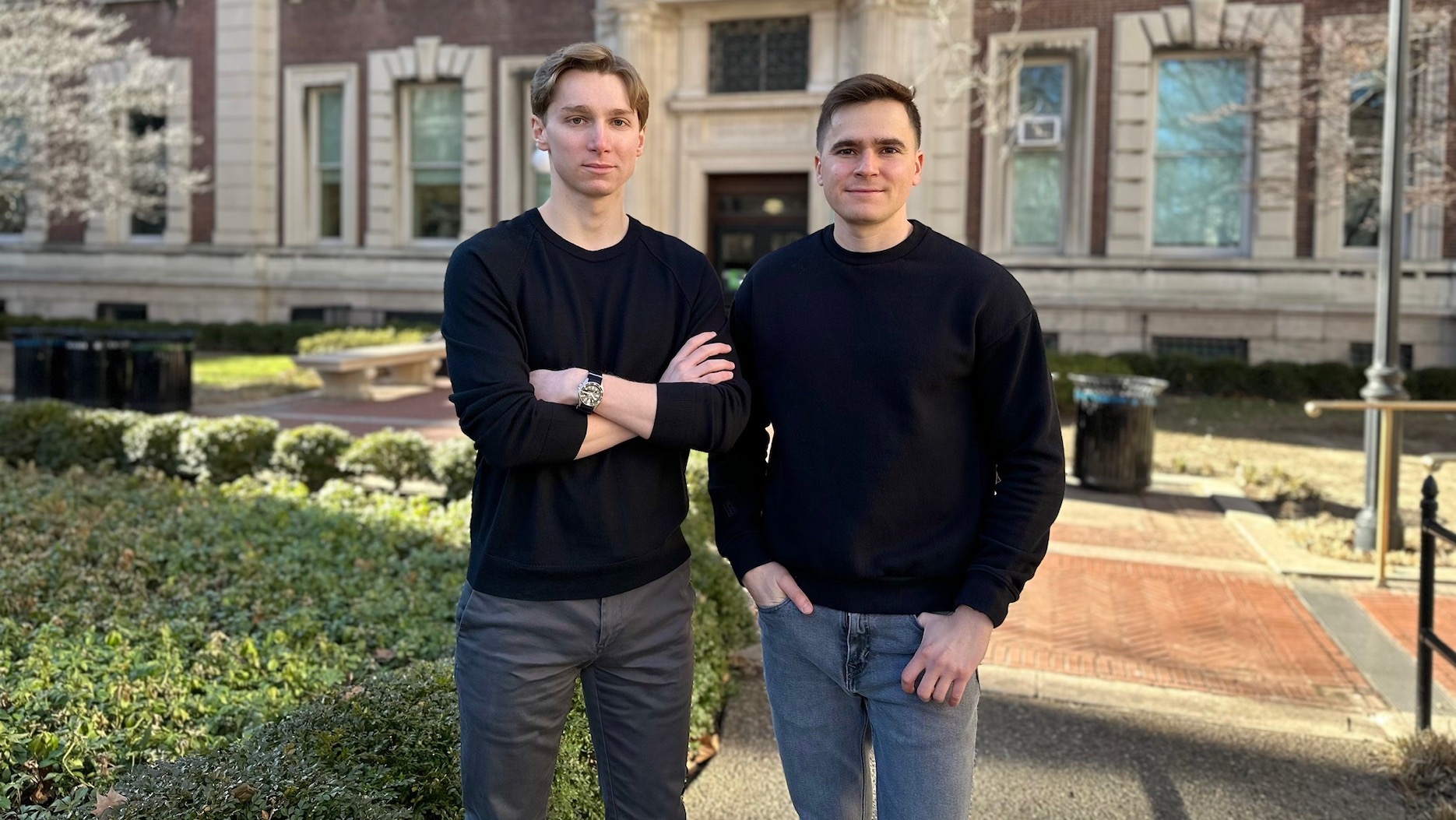
Bertolotti and DeVita launched ModernFi in January 2022. Their initial proposition concerned a mismatch between banks: some had deposits they could not readily put to work, while others needed funding. Connecting the two could help each manage its balance sheet. One institution’s surplus might be another institution’s useful supply.
On February 14, 2023, ModernFi announced $4.5 million in seed funding led by Andreessen Horowitz. The company described a marketplace connecting banks with excess deposits to banks seeking funding. At the time, it was working with institutions ranging from $500 million to $100 billion in assets. There was already a practical business underneath the academic interest.
“ModernFi has brought technology and transparency to a historically antiquated and opaque market,” Bertolotti said in that announcement. The vocabulary is unromantic. Deposits, funding, balance sheets: nobody has ever needed a velvet rope to keep people out of this conversation. But the consequences reach well beyond the bank’s finance department. Funding supports lending, and lending supports the purchases and businesses that make a community’s economy move.
Then, in March 2023, Silicon Valley Bank failed. A subject that had required an explanation suddenly required an answer. For a founder already working on deposit management, the sequence mattered. ModernFi existed before the emergency. The emergency brought a much wider audience to the problem.
- 2016Columbia graduation; AQR ahead
- 2022MIT doctorate; ModernFi launches
- 2023Seed funding, then banking turmoil
- 2026Networks pass 1,000 institutions
The customer wants to keep the bank
To understand Bertolotti’s work, start with a business owner who likes the local bank. The owner knows the people, uses the accounts, and would prefer to keep the relationship. The complication arrives when the cash balance becomes large enough that ordinary deposit insurance limits become a concern. Loyalty is a fine quality. It does not settle the insurance question.
A deposit network lets participating institutions place portions of eligible customer funds at other institutions. The customer can maintain the home banking relationship while obtaining access to insurance across the institutions holding those portions. In a reciprocal arrangement, deposits come back through the network, helping the originating bank retain funding on its balance sheet.
ModernFi supplies the technology and operation around that process. It is not itself an insured bank or credit union. Coverage depends on the receiving institutions and on satisfying the applicable requirements for pass-through insurance. Those details are part of what the software has to support; an attractive screen cannot do the paperwork’s job.
Conceptual illustration. Eligible deposits are allocated across participating institutions; actual insurance depends on program terms and applicable conditions.
For Bertolotti, the commercial purpose is tied to a larger preference: a banking system with room for institutions of different sizes and specialties. In conversation with former Comptroller of the Currency Gene Ludwig and investor David Haber, he argued for the value of banks that know particular communities and industries. His company’s opportunity depends on helping those institutions remain useful to customers as their needs grow.
The awkward business of starting a network
A network presents a founder with an unusually impolite opening question: who is already here? The next customer wants evidence that other customers have joined. The first customer has to arrive before that evidence exists. Banking adds another complication. The organizations being asked to cooperate may also compete for the same deposits.
This makes Bertolotti’s company a test of coordination as much as software. A product can be demonstrated to one buyer. A network has to become credible to several buyers whose decisions depend on one another. The early work includes finding institutions prepared to participate before participation looks routine.
In January 2024, ModernFi announced an $18.7 million Series A led by Canapi Ventures. Huntington National Bank, First Horizon and Regions were among the participating investors. Banks had become part of the financing story as well as the customer story. That connection gave the company more than money: it put institutions with operating experience close to the product.
The relationship with Canapi also brought Bertolotti into regular contact with Ludwig and Neil Underwood. Ludwig’s experience spans regulation and deposit networks; Underwood’s includes building financial technology companies. For a founder crossing between mathematics, banking operations and institutional trust, those are useful people to have within conversational distance.
“I feel in many ways that we’ve built the firm together.”
Paolo Bertolotti, on the partnership with Canapi
His account of that partnership gives considerable credit to other people. He describes bank partners helping determine priorities and a product roadmap, alongside introductions and advice from investors. The company’s development involved people who understood the customers as well as people who could build the technology. An interbank network needs institutions on both sides of the connection.
When the participants become owners
Ownership is now a distinguishing feature of ModernFi’s approach. The company operates NBID, the National Bank InterDeposit Company, as a separate bank-owned network. Its credit union business operates through a credit union service organization, or CUSO. These structures give participating institutions a stake in infrastructure they help make valuable.
The logic is worth separating from the acronyms. Each institution brings deposits, relationships and capacity. The network becomes more useful because those institutions participate. Giving them ownership and oversight makes the arrangement a question of governance as well as purchasing. Bankers are being invited to help shape something they depend on.
For Bertolotti, that changes the job description again. The researcher who studied networks has become an executive responsible for their operation, their economics and the confidence of their members. A working allocation mechanism is necessary. So are people willing to trust its rules.
A $30 million Series B followed in September 2025, with Intercontinental Exchange joining the investor group. By September 2026, ModernFi’s networks had passed the thousand-institution mark. Those milestones describe different things: one is capital raised to build the company; the other is participation in what it operates. The second tells us more about whether the coordination problem is yielding.
financial institutions across 50 states
Participation in ModernFi’s deposit networks
A thousand is still a beginning
There is a temptation to end a founder’s story with the large number. Bertolotti’s stated ambition reaches further: supporting thousands of financial institutions. His explanation returns repeatedly to the businesses and communities those institutions serve. The scale he wants is a network of local relationships, rather than a single replacement for them.
The sailing entry from 2016 remains an agreeable footnote. It gives this story a person before it gives it a company: a graduating student, a place on a team, a job to start. It would be too convenient to claim that a college boat explains a banking business. A regatta result cannot tell us why someone becomes a founder.
What the career does show is a sustained interest in how connected systems work, followed by a decision to build within one. Bertolotti went from studying the movement of information to helping institutions coordinate the movement of money. The resulting company lives in the machinery behind ordinary financial life. When that machinery works, the customer can get on with running the business. For a founder in banking infrastructure, being allowed to fade into the background is a respectable ambition.