Kaustav Das knew lending. Raising money for a lender supplied a different education. When he began approaching venture investors in late 2021, he concentrated on five firms. He had a co-founder, a pitch deck and a career in credit risk. By his account, all five eventually said no. An impressive résumé had proved rather less negotiable than cash.
He later described the mistake plainly: he had cast his net too narrowly. He widened the search, met investors focused on earlier companies and connected with 645 Ventures. The first financing followed. For someone building a business around access to capital, the opening lesson was inconveniently practical.
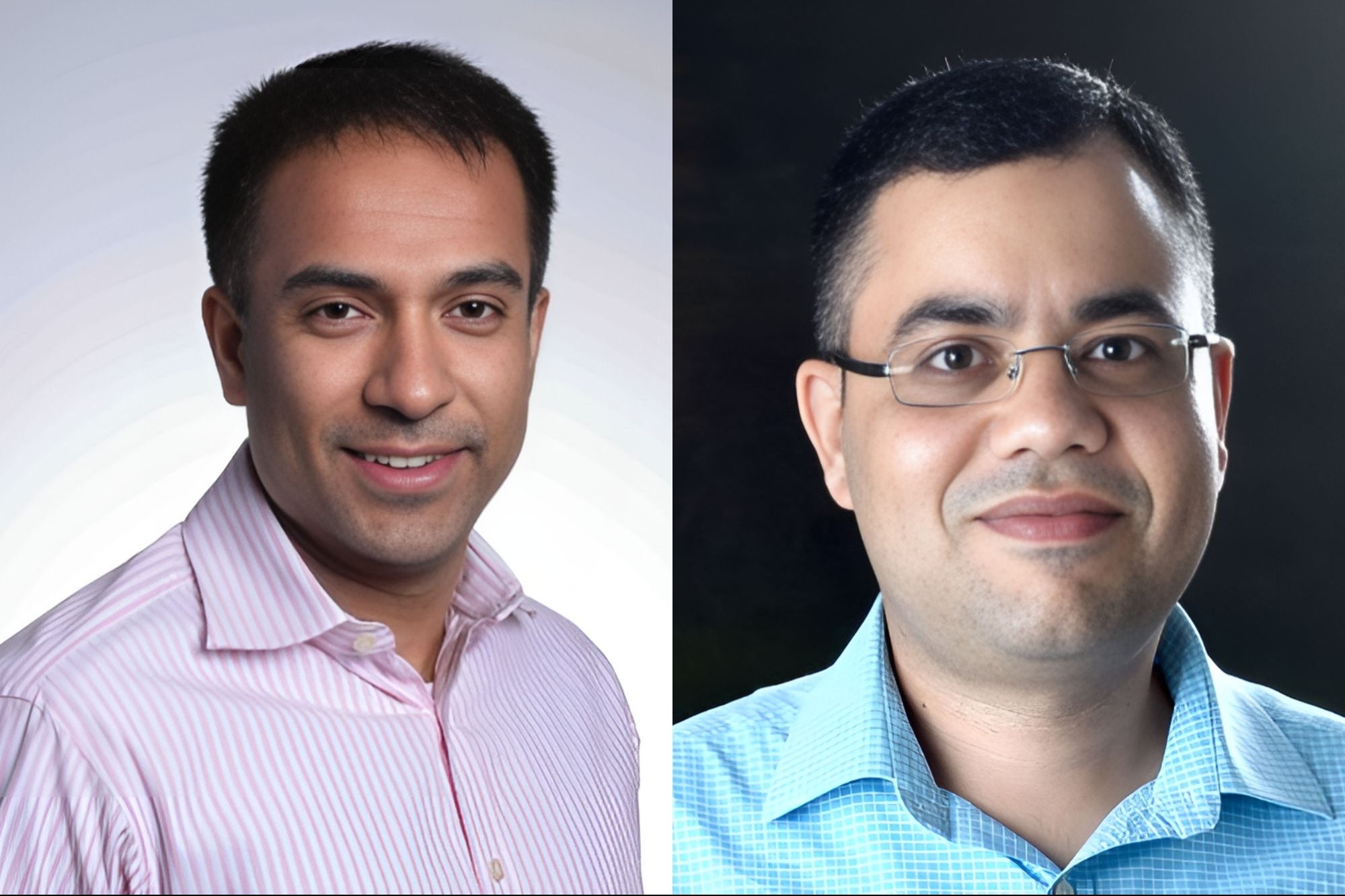
Today Das is the New York-based CEO and co-founder of Efficient Capital Labs, or ECL. Alongside Manish Arora, he has built a business serving software companies whose customers, employees and money sit in different countries. The question beneath it is deceptively simple: if software can cross a border so easily, why should financing become so much harder?
A respectable career meets a blank sheet
Before ECL, Das spent roughly 15 years at American Express, working across commercial credit and risk. He became chief credit officer for its non-card lending business. Merchant financing, working capital and supply-chain financing belonged to his professional vocabulary long before startup fundraising did.
He went on to become chief risk officer at Kabbage, then held senior risk roles at Petal and Quadpay. These were different businesses with a common obligation: understand who could repay. A lender can acquire customers quickly and discover much later that enthusiasm was an expensive underwriting policy.
Experience also gave him relationships with providers of debt capital. Those connections mattered when ECL faced a familiar financing puzzle. Equity investors wanted confidence that the company could obtain lending funds. Debt providers wanted confidence that it would have equity behind it. Each side would have preferred the other to arrive first.
Das recalled securing preliminary debt term sheets that helped prospective equity investors assess the opportunity. The distinction between the two kinds of money mattered. Equity could pay for people and a platform. A lending facility came with agreed conditions governing the loans it could finance. The large number on a debt announcement was never a giant office-expenses account.
The company was global. The loan application wasn’t.
The opening came through conversations about revenue-based financing and a visit to India in 2021. Das encountered software founders building businesses for international customers. Some already had American entities and bank accounts. Yet their access to financing still depended heavily on where they operated.
He and Arora founded ECL in 2022 around that mismatch. Arora brought experience in financial technology and B2B software, including leading PayJoy’s South Asian business. Their starting point was the India-US corridor: companies could earn dollars from American customers while employing teams and meeting operating costs in India.
A lender examining only the American entity could miss expenses elsewhere. An assessment confined to India could overlook revenue in the United States. ECL’s approach was to examine both sides. The same operating business should remain recognisable after its accounts had crossed a border.
That meant building the ability to evaluate companies across markets, currencies and records. Banking information, financial statements and contracts supplied different pieces of the picture. The task was to bring those pieces together before deciding what financing a business could sustain.
Conceptual illustration of ECL’s initial US-India lending approach.
There is an unglamorous intelligence to this idea. Cross-border entrepreneurship sounds expansive until a finance team has to reconcile its accounts. Das’s work begins where the international ambition acquires bank statements.
Currency added another layer. In November 2023, ECL described a multi-currency financing product that would let customers combine funding currencies according to their cash-flow needs. A company receiving dollars and spending rupees has decisions to make about where money should arrive and where repayment obligations should sit. The currency on a loan agreement belongs in the operating plan, alongside the amount and the timing.
For Das, that was part of the original opportunity. The borrowers he was meeting had already done the difficult work of finding customers beyond their home market. Their financial arrangements needed to accommodate the business they had become. The underwriting infrastructure had to follow those arrangements across both jurisdictions.
Buying time without selling another piece
Revenue-based financing advances money against a company’s revenue stream. For subscription software businesses, recurring payments can help a lender assess expected receipts. A company may receive capital sooner than its customers’ payment schedules would otherwise allow, then repay under the financing agreement.
ECL’s proposition is non-dilutive capital. Founders can finance part of their growth without issuing additional shares for that financing. Ownership remains a separate question from repayment, which still has to happen. A useful loan brings the next milestone closer while leaving a manageable obligation behind it.
The model fits a particular sort of impatience: a business has customers and recurring revenue, but needs funds before the next set of receipts arrives. Product development, a sales effort or expansion may require spending now. A contract can promise future income; it cannot itself pay this month’s invoices.
By the August 2024 Series A announcement, ECL reported more than $70 million in financing originated and over 100 companies served. QED Investors and 645 Ventures co-led the $11 million equity round, with existing and new investors participating. The financing supported further expansion in Singapore and Southeast Asia.
Company-reported figures at that announcement. Equity raised and financing originated measure different things.
His announcement also described an automated lending stack, financing for India-domiciled entities and a presence spanning more than 15 countries. Those details show how far the work had moved beyond the original corridor. The initial observation had become a set of operating systems.
The investors were part of that continuity. QED and 645 Ventures had backed the business before the Series A. Riverside and Generalist participated again, while FJ Labs and Eudemian Ventures joined the round. For a first-time founder who had begun by approaching too few firms, the eventual roster represented a broader set of people willing to support the company’s next stage.
The risk officer gets a different reading list
Young software businesses create a particular challenge for credit assessment. The records can be short, the business can be changing and the next year may look quite different from the last. A lender needs enough context to distinguish a growth expense from an obligation the company cannot support.
By November 2025, ECL had introduced AURA, its Agentic Underwriting Risk Analytics Platform. The name was considerably shorter than the work description. The platform brought together banking records, financial statements, contracts, counterparty information and decision support.
Its published design kept underwriters involved: people could review, validate, adjust or override the outputs. That detail matters to Das’s story. After a career in risk, he was leading a company applying AI to the paperwork around judgment while retaining a human role in the judgment itself.
A contract’s renewal terms, a customer concentration or a transfer between entities can change the meaning of a revenue figure. Collecting more data is useful only if somebody can understand the obligations it describes. AURA extended ECL’s original effort to evaluate a whole business across borders into the machinery of daily underwriting.
Then he followed the dollars out
Lending brought ECL close enough to its customers’ finances to notice another problem. In a public video, Das described looking at money sent to India after a company received financing. The amount arriving after conversion was lower than expected. He asked colleagues to examine more customers and found a pattern.
That observation led to ECL Flow. Announced in March 2026, the payments product addressed US-to-India transfers for AI and SaaS companies. Its stated features included one-business-day settlement, clearer foreign-exchange pricing, payment tracking and automated compliance documentation.
“We kept hearing the same thing from founders and finance teams.”
Kaustav Das, on the launch of ECL Flow, March 2026
The complaint he described was specific: transfers took too long, pricing lacked clarity and teams spent time chasing banks. A financing company had encountered a problem that persisted after the financing was approved. Money could be available and still be awkward to move.
For Das, the connection is direct. The original business addressed access to capital across borders. Payments addressed what happened when that capital travelled. ECL’s current team page says it serves more than 250 AI and SaaS startups across 20 countries. The geography has widened; the recurring subject remains the practical difficulty of running one company in several places.
A longer visit home
There are smaller details that bring the executive back into focus. In 2023, Das said he had lived in the United States for 19 years without learning to drive. A person financing international expansion had managed his own American life without a driver’s licence. Geography, evidently, presents different problems at different scales.
He has spoken of Kolkata as his hometown and of wanting to spend a year working there, rather than returning for a brief visit. In a 2024 conversation, he also mentioned reading Amitav Ghosh’s River of Smoke. His working week gets its own preparation: he reviews his calendar and makes room between meetings that require different kinds of attention.
That wish for a longer stay in Kolkata gives the story a human destination. His company is concerned with helping businesses operate across countries. His personal ambition includes making enough room to work from a place he left years ago. Both depend, in their different ways, on making distance less obstructive.
The first five rejections now sit at the beginning of a much longer financing history. They remain a useful detail. Das entered entrepreneurship knowing how to assess a borrower and discovered that he still had to learn how to be a founder. The résumé opened conversations. What followed required building something people would use.