The person who buys the ticket is not always the person who walks through the door. A friend transfers a seat. A colleague brings a guest. The box office has completed a transaction, yet the venue has just met someone new. Whether it notices that introduction is a surprisingly consequential question.
Consider Select Your Tickets, a ticketing organization whose approach Paciolan describes in an August 2026 post. It saw accounts arriving through transfers and built a welcome email for their owners. The message introduced the organization, explained future communication and invited guests to choose their interests. A piece of administrative housekeeping became an invitation to return.
- Paciolan supplies the ticketing machinery behind venue and team brands.
- Its particular strength is connecting ticket sales with marketing, donor relationships and customer data.
- The useful lesson: recognize the attendee, then give different people different reasons to come back.
This is a good entrance to Paciolan itself. The company operates in the space between a seat sold and a relationship understood. Its technology can issue the ticket; its other work helps a venue decide what to do with the knowledge that a person bought, transferred, used or renewed it. The show supplies the applause. The database has quieter ambitions.
01 / A supplier behind the school colors
Paciolan is a white-label ticketing provider. A fan may encounter its systems through a university or theater’s branded website, without making the supplier’s name the center of the experience. That arrangement matters: the institution wants a direct relationship with its audience, and the technology sits behind it.
The company reports supporting more than 500 live entertainment organizations and enabling over 120 million ticket sales each year. College athletics is its particularly deep specialty, with more than 160 college clients across North America. Performing arts organizations, arenas and professional sports extend the customer base. A football season, a theater subscription and a touring concert have different rhythms; all need to account for seats and people.
Each sale is also a possible beginning.
Co-founder Jane Kleinberger helped start Paciolan in 1980. LEARFIELD’s retirement announcement credits her as the first female CEO of a major ticketing company. Across nearly four decades, she helped build a supplier embedded in the working lives of institutions. There is a particular kind of staying power in software that becomes part of somebody else’s daily routine.
The brand briefly disappeared into Spectra, Comcast Spectacor’s umbrella name. When LEARFIELD announced its acquisition of the ticketing division in 2017, it restored Paciolan. The decision acknowledged a plain commercial truth: customers were still using the old name. A rebrand can change the stationery faster than it changes the conversation.
02 / One person, several offices
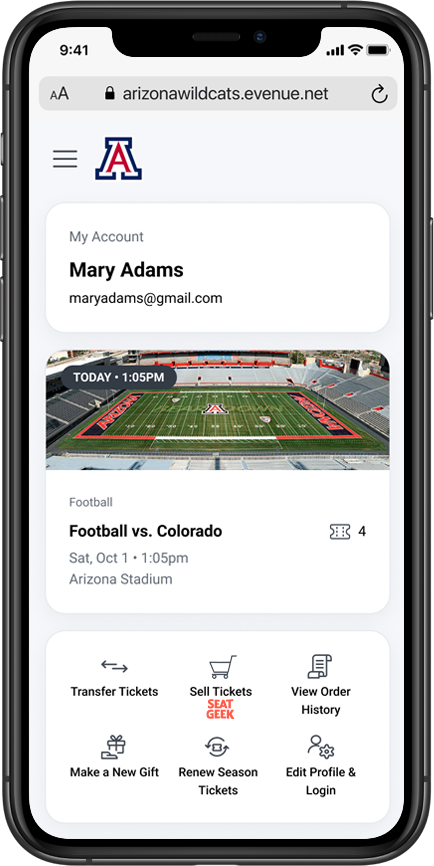
Start with the practical product. Paciolan provides interactive seat selection, mobile-friendly checkout, digital delivery and My Account tools for renewals, transfers and resale. Operators can adjust seat-level prices as demand changes. Kansas Athletics’ Scott Hahn describes the frequency succinctly:
“We can reprice multiple times daily to respond to how the inventory sells.”Scott Hahn · Kansas Athletics
The seat travels.
The relationship can, too.
Renew, manage and transfer tickets through the venue’s digital account experience.
Athletic departments often need a second ledger alongside the seat map. Paciolan’s fundraising tools connect pledges, payments, donation history and priority points with ticketing. They support annual giving and longer capital campaigns, including required seat donations. A development officer and a ticket representative can therefore work with related information about the same supporter.
That connection helps explain the company’s market position. A generic checkout solves a sale. Institutions also have benefits to allocate, donations to record and relationships to maintain across seasons. Paciolan’s domain expertise lives in those details. Buyers comparing it with Ticketmaster, AXS or Tickets.com have to consider the whole operation. Performing arts organizations may also consider Tessitura, with its own ticketing and customer-relationship focus.
The surrounding ecosystem is substantial. Paciolan lists SeatGeek for secondary sales, FEVO for group and social purchases, Salesforce for CRM and SIDEARM Sports for websites and mobile applications. Oracle Eloqua handles marketing automation. The company sells a connected institutional operation, with specialists and partners doing work that a buy button cannot finish.
03 / Michigan’s quieter reminder
Michigan Athletics had information but a cumbersome handoff: teams downloaded lists and uploaded them into marketing software. Working with Paciolan iQ, it used attendance, purchase history and marketing engagement to score renewal likelihood from one to five. Those scores fed Eloqua audience segments.
Less-likely renewers received more explanation, including payment-plan information. More-likely renewers received fewer reminders. Marketing and sales coordinated their work. The resulting vendor-published case study reports $1.7 million in email-campaign revenue and a 273% year-over-year increase in paid renewal campaign return on ad spend. Those are reported campaign outcomes, rather than an experiment isolating the software’s effect.
The decision worth studying is the restraint: some existing customers needed less persuasion.
Information becomes useful when another team can act on it.
Paciolan introduced iQ in 2024. It combines customer-record management, a Snowflake warehouse, Tableau dashboards and analyst support. Its premise is almost unfashionably sensible: before interpreting a customer, make sure the records belong together. A fragmented identity makes a clever campaign less clever. Connecting the tools also removes some of the manual transport work between departments.
04 / The business behind the checkout
This is an enterprise software-and-services business, bought through institutional agreements. A useful glimpse of its economics appears in the University of Texas System’s May 2020 board minutes. UT Austin’s approved Paciolan agreement listed $8.75 million for July 2020 through June 2032.
The scope included a ticketing, parking and donation platform, together with services, equipment, integrations and features. The figure describes that bundled agreement. It should not be treated as a catalog price for another theater or athletic department. The purchasing unit is an operating system for the institution, with obligations stretching far beyond opening night.
12-year term · July 2020-June 2032
Approved bundle: software, services, equipment and integrations.Ownership places Paciolan inside a wider college-sports business. LEARFIELD brings adjacent sponsorship, licensing and digital capabilities. In April 2026, TPG announced an agreement to acquire LEARFIELD, with Charlesbank remaining a minority investor. That announcement explicitly included Paciolan in the integrated platform receiving investment support.
The company’s history also touches a more contentious chapter in ticketing. The 2010 Ticketmaster-Live Nation merger remedy required Ticketmaster to divest Paciolan. The Justice Department regarded the divestiture as a means of preserving competitive pressure. Paciolan’s place in the market has consequently involved both software preference and the structure of the industry itself.
05 / When the software had to catch up
Event software faces an unforgiving schedule. A venue can postpone a meeting about a report; it has much less freedom when thousands of people are waiting for entry. The pressure reaches all the way into how engineers release changes.
SUSE’s customer account describes an early bottleneck. Paciolan used AWS Elastic Beanstalk for microservices, but deployment slowed as the footprint grew. Its engineering team wanted more consistent operations across cloud and data-center systems. It adopted Kubernetes infrastructure managed with Rancher Prime. The account reports deployments up to 80% faster, alongside easier troubleshooting and rollback.
At the gate, the current roadmap keeps extending. Paciolan’s April 2026 Wicket announcement adds optional facial authentication to PAC io Entry. Fans who enroll can use that route; conventional ticket entry remains available. The relevant innovation connects an identity method to the venue’s existing access operation, including the rules about where and when a ticket works.

Paciolan describes its internal values as Passion, Accountability and Collaboration. Its careers page makes the vocabulary more tangible with mentoring, hybrid work, paid volunteer time and an on-site gym. It also lists a sand volleyball court. An employer’s self-description is a limited window, but these details give the enterprise machinery a human address.
06 / The useful part you can borrow
A venue can copy the underlying discipline without copying every part of the technology stack. Start with the difference between a buyer and an attendee. Give a new guest a welcome and a way to express preferences. Reconcile duplicate identities before dividing an audience into groups. Agree which department acts on a signal, so a report becomes somebody’s responsibility.
The fit depends on the operation. A one-off event with a small audience may have little use for connected donor records or a warehouse. A recurring institution has more opportunities to use those connections. Even there, fragmented records and teams unwilling to coordinate can leave the technology doing little more than moving the fragmentation around.
Dartmouth’s newly announced partnership shows how broad the relationship can become. Alongside game tickets, the college plans to use Paciolan for gym memberships, fitness classes and locker rentals. The same person may meet the institution through several doors. Remembering them across those doors is a useful ambition for software - and a fairly decent definition of hospitality.