A ticket gets you into the show. It does not buy the T-shirt, run the bar, find the next audience, or settle the box office after everybody has gone home. Those jobs explain where Etix is heading. The company that began selling tickets online in 2000 now has designs on more of the evening, including the transaction across the merchandise table.
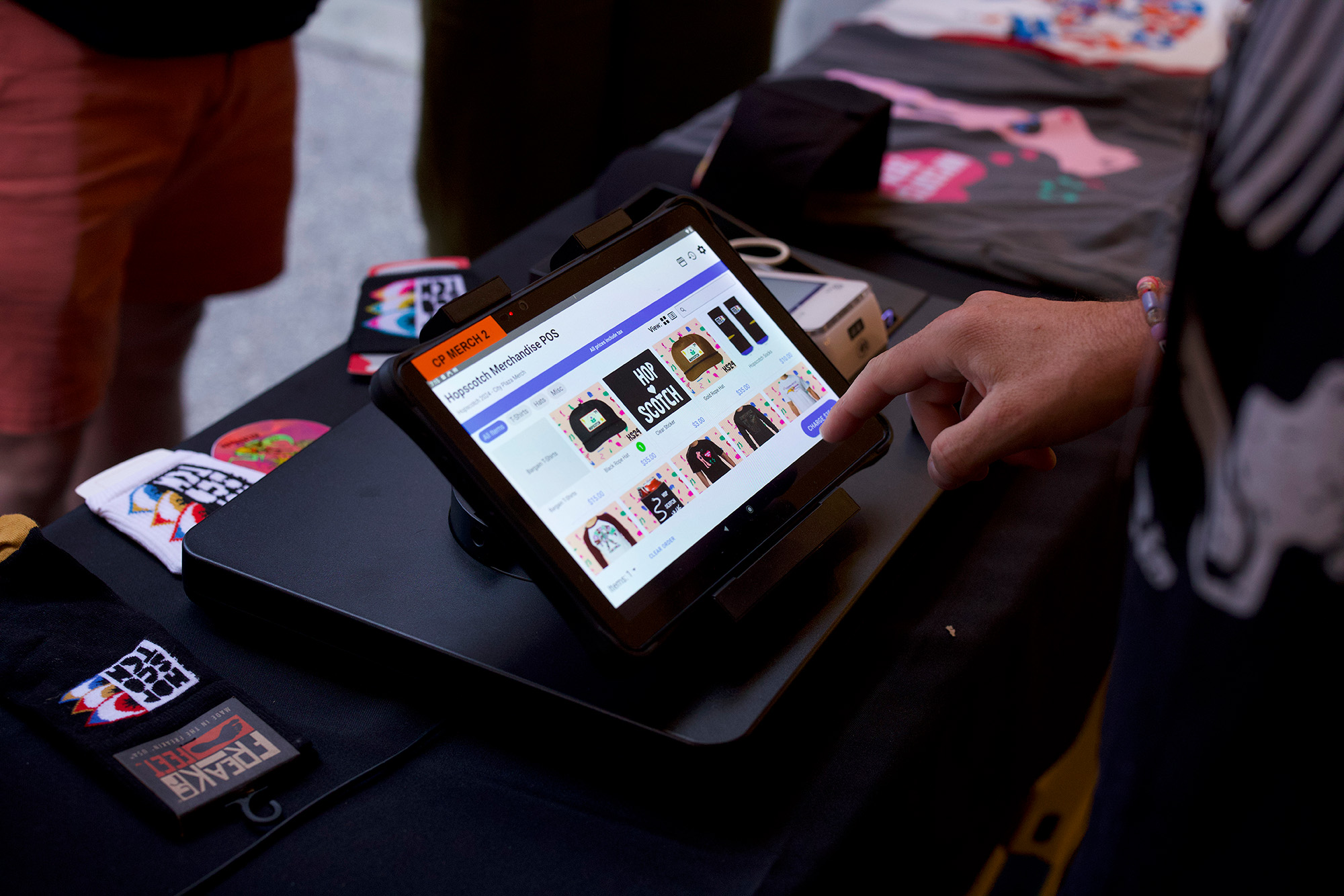
The revealing scene is a Hopscotch festival sales counter: shirts on the table, a tablet in front of the seller, Etix’s Octave software keeping track. There is no grand technological spectacle. Someone wants a souvenir. Someone else needs to take payment and know what sold. For a company serving live entertainment, that small exchange is a substantial product opportunity.
One night. Several businesses.
Etix’s customers are the organizations putting on the event: music clubs, performing arts centers, fairs, museums, casinos, sports facilities, and promoters. Its website also courts railroads, haunted attractions, and dance studios through Tututix. A business that sells museum admission must understand timed arrivals. A theater needs reserved seats and subscriptions. A fair may need to sell entry to both the grounds and a grandstand concert.
The company’s December 2023 announcement of a partnership with OC Fair & Event Center makes that variety tangible. The agreement covered online and on-site admissions for a year-round calendar, including the 23-day OC Fair and Pacific Amphitheatre’s summer concerts. Etix said it served more than 150 American fairs at the time. Here, ticketing includes parking, gates, seating, and the problem of getting people through a busy entrance.
Its scale has moved beyond the figures repeated in older company descriptions. In a February 2026 Prism.fm interview, sales executive Michael Reklis estimated that Etix sold more than 100 million tickets in 2025. He explicitly called the number a ballpark figure. It measures ticket volume, not company revenue, and deserves to travel with that qualification attached.
Tickets sold, according to Michael Reklis in February 2026. An approximate volume figure.
The venue keeps the relationship
Etix’s pitch centers on the venue’s brand and customer data. Its marketing tools include abandoned-cart messages, on-sale reminders, audience records, and exports for email campaigns. The Etix Community system lets clients sort buyers and identify repeat customers. These capabilities address a mundane commercial problem: the person who bought a ticket last month may be the easiest person to persuade next month.
Rockhouse Partners, the marketing agency Etix acquired in January 2011, gives that proposition a service component. Etix offers help with digital advertising, email, website development, and campaign planning. A venue can buy software and still struggle to write the campaign or measure its results. Adding people who can do those jobs puts Etix closer to the customer’s sales effort.
Reporting ties the pieces together. Etix advertises more than 150 reports, with tools for tracking cash, balancing ticket sellers, and examining buyer behavior. Its analytics offering includes a connection to a venue’s own Google Analytics account, following purchases from the venue website into Etix. A useful report answers a specific question: which campaign brought buyers, which performance needs attention, or which sales channel deserves the next dollar?
That suggests a useful way to evaluate the marketing pitch. Ask the team to identify an audience it wants to reach, explain the offer it will send, and show how it will recognize a resulting purchase. Software should make that sequence easier to repeat. A dashboard full of totals is less useful than one clear connection between an action and a sale.
The system also reaches beyond individual visits. Membership renewals, exclusive member offers, checkout donations, and standalone giving are part of the product range. Donor records can be tagged and sorted. For a museum or performing arts organization, a supporter’s renewal or donation belongs beside their ticket history. Reassembling those relationships from unrelated exports is work someone has to do.
- 01 / FindDiscovery & advertising
- 02 / BookTickets & memberships
- 03 / AttendEntry, food & merchandise
- 04 / ReturnAudience records & campaigns
A city puts a price on the switch
Ticketmaster is a documented alternative. A March 2025 West Plains, Missouri, council memorandum said the incumbent wanted to focus on larger venues. The civic center consequently considered Etix. Its proposed three-year agreement specified ten cents per paid box-office ticket and an online service fee of 10 percent of face value, with a $1 minimum and $5 maximum.
Those were proposed terms for one customer. The attached schedule separately listed a 3 percent bank card fee and optional on-site support at $1,500 per agent per day plus travel expenses. Setup and support-and-maintenance were listed without charge. The business model is visible in those details: transaction fees fund the ticketing relationship, while processing and additional services have their own economics.
The online service-fee curve
The purchasing lesson is to compare an entire operating arrangement. A low headline fee means little without understanding hardware, staffing, payment handling, and the work left to the venue. A box office is a service desk under time pressure. Its software bill should be judged alongside the labor and practical support needed to keep it running.
The queue that needed to shrink
One documented problem inside Etix involved a different queue: suspicious orders waiting for human review. Sift’s case study describes fraud growing alongside online and mobile sales, with chargebacks sometimes arriving after events. Manual checking became difficult to sustain. The team wanted earlier decisions about risky purchases while keeping ordinary customers moving.
According to Sift, one engineer implemented its solution in three weeks. During the first trial week, Etix identified and blocked $15,000 in risky orders. That figure describes orders stopped, rather than proven net savings. The implementation allowed automated decisions based on risk scores and reduced the burden of cross-referencing suspicious activity. The case is a vendor account, but the operational change is specific.
The copyable idea is to move a decision to the point where it can still prevent a loss. It works only if screening distinguishes legitimate buyers well enough to avoid turning prevention into lost sales. A growing list of rejected transactions is not, by itself, proof of success. Buyers who should have been admitted matter too.
Software that has to survive the door
The core ticketing product handles reserved seating, general admission, timed entry, packages, and controlled inventory. Performance Builder can copy an earlier event, while SeatSuite supports detailed seat maps. Those features reflect repeat tasks: build another performance, preserve the right holds, show a customer the right seat, and make sure a sold ticket can be validated.
Even the mobile app reflects the distinction between buyer and operator. Etix Manager is a client tool for checking revenue, orders, and tickets sold by performance. It is available without an additional app charge to Etix clients. A promoter checking sales away from the desk has a different problem from a fan looking for a ticket, and the product is built around the former.
Etix also offers mobile scanning, self-service kiosks, and tools for event-day operations. The practical test comes when a stream of arrivals meets a fixed number of staff. A purchase completed online does not finish the job. Someone still has to recognize the ticket at the entrance, direct the visitor, and handle exceptions without making everyone else wait.
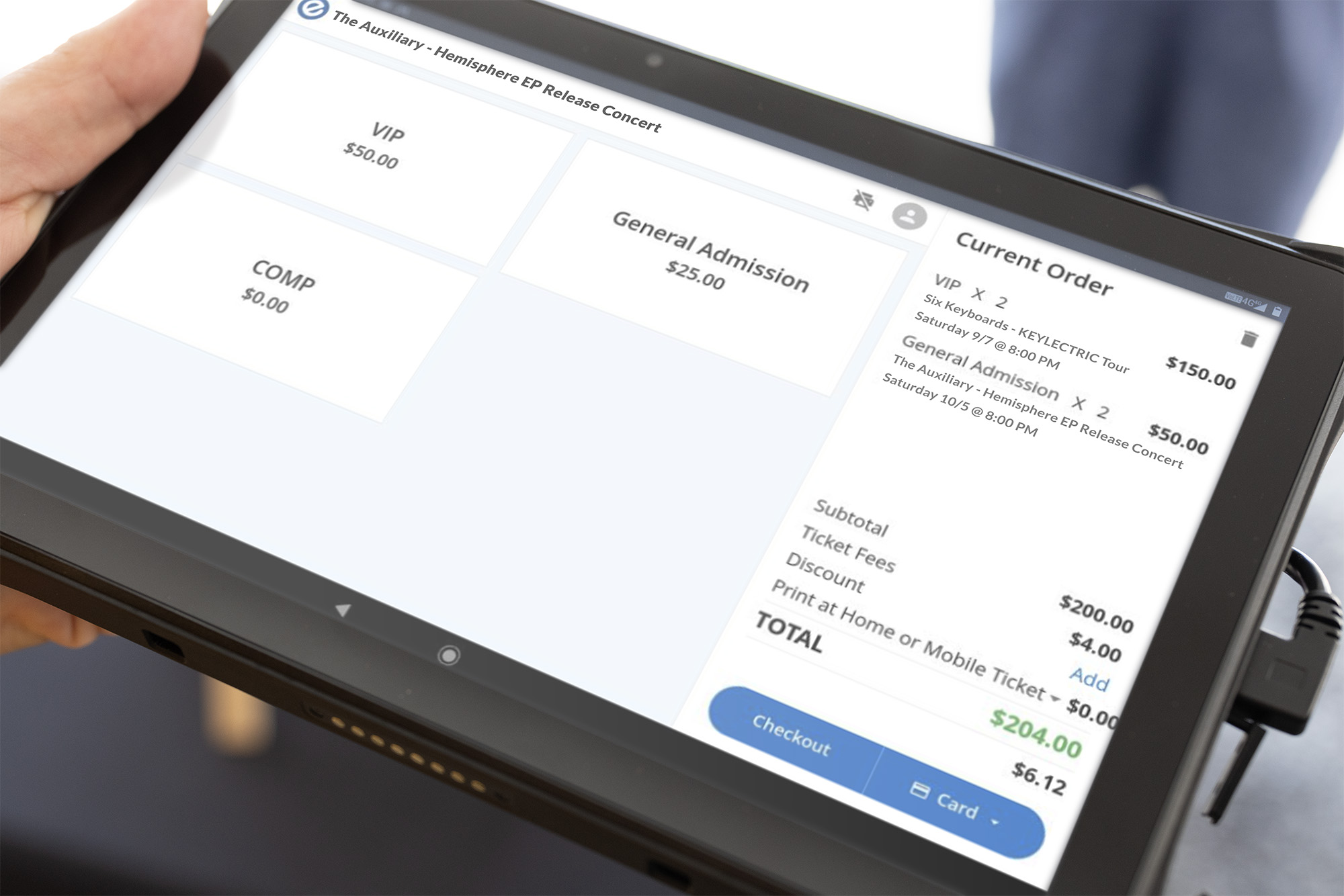
The Summer 2025 product roundup introduced Etix Sell for tablet and desktop ticket sales. It also described mobile tickets cached for access without an internet connection and support for Apple and Google Wallets. Octave, meanwhile, brought food, drink, and merchandise into the company’s product range. Etix reported 32 devices and more than 3,800 transactions on Hopscotch 2024’s first night.
Seat Relay extends the same venue-focused thinking into ticket exchange. The initiative aims to give organizers more control over resale and the resulting customer relationship. In the February 2026 interview, peer-to-peer resale remained a forthcoming feature. That distinction matters to a prospective client: a product direction and an available workflow belong in different parts of a buying decision.
“Our philosophy is to give venues control.”
Michael Reklis / Prism.fm interview, February 2026
The people behind the purchase button
Founder Travis Janovich’s company took its first institutional investment in July 2017 through a growth recapitalization with Parthenon Capital Partners. The announcement said Etix had been independently profitable since 2004. Capital was intended to support innovation and expansion, including acquisitions. In 2019, Etix announced purchases of Michigan’s Star Tickets and Arizona’s TicketForce, adding regional businesses to its operations.
Buying ticketing companies can bring local relationships and experienced teams along with technology. That matters when support is part of the pitch. Etix’s public values emphasize service, simplicity, tenacity, and results. Its staff page supplies a more entertaining detail: first live-event memories. Marketing chief Aaron Bare names ZZ Top with the Black Crowes. Another employee remembers receiving a tree at a John Denver show.
Training is an unusually visible part of the offering. A January 2026 guide points clients to a knowledge base with more than 1,600 articles, a product roadmap, free training, and archived videos. The fraud team runs a webinar series called Fraudy Fridays. The joke is optional; having someone explain an unfamiliar payment problem is useful when a small venue cannot employ a specialist for everything.
Etix is most persuasive where an organizer needs that combination of software, institutional memory, and ongoing help. Its API supports connections with websites, membership systems, and other applications, giving clients ways to join their existing tools. But connections need a purpose. If nobody acts on the customer records or campaign results, collecting them does little for the next show.
The ticketing company can simplify a sale, improve admission, and help a venue ask an audience back. It cannot make an unappealing event irresistible. That is the sensible boundary around Etix’s expansion: more of the evening can run through its tools, but the venue still has to give people a reason to leave the house.
Keep the conversation going
Explore Etix’s ticket listings, ticketing tools, product news and stories, and the demo request page.
Follow Etix on LinkedIn, X, or Facebook. Watch Inside Etix: the February 2026 Prism.fm interview.