Consider the festivalgoer who has bought a ticket, cleared the gate and found the right stage. Then comes the drink. There may be a queue to pay and another to collect it. The music continues while the customer conducts a small administrative expedition. Zig. The Global Funtech has built its business around those interruptions, selling the machinery that helps a night out keep moving.
- Ticketing, access, consumption and management in one product family.
- Customers range from neighborhood venues to Rock in Rio and Lollapalooza.
- The practical lesson: fix the handoffs where guests and money get stuck.
A queue with a business model
Zig sells to the people running the party: promoters, restaurant owners, nightclub operators and arena managers. Guests encounter its wristbands, cards, payment terminals, kiosks and app. Behind those touchpoints sit orders, inventory, financial records and customer histories. Its place in the market is where hospitality software meets payments and ticketing.
The distinction matters. A card terminal can collect money without knowing whether the kitchen received the order. A ticketing platform can admit a guest without understanding what that guest buys inside. Zig’s proposition is to connect these moments. The operator gets a more coherent account of the visit; the guest gets fewer reasons to stop enjoying it.
Two halves of the same night
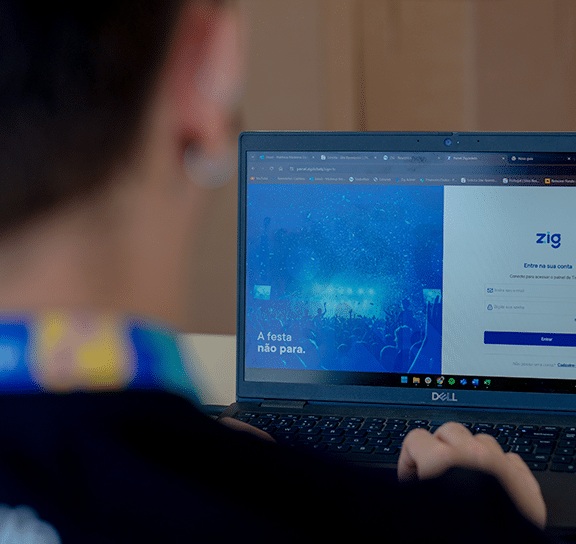
The company’s official origin is a 2022 merger. ZigPay worked with consumption in bars and nightclubs; NetPDV brought cashless payments to events. Putting them together widened the customer base and combined expertise in permanent venues with the temporary cities that festivals become.
The founders’ backgrounds help explain the emphasis on control. Endeavor’s profile describes Nérope Bulgareli’s career in risk management and consulting, alongside investments in more than ten hospitality and entertainment businesses. David Pires taught himself programming and founded the software house Cubos. Both came from Salvador. One understood the operator’s mess; the other knew how to write software around it.
The pandemic interrupted the live-events market, exposing the business’s dependence on people gathering in person. A 2021 financing round helped support its development through that period. The return of crowds gave the combined company a larger field to work in. The merger reflected complementary businesses and the demands of that reopening.
“Where there is pain, there is a solution.”Eduardo Alvares, co-founder, in a 2023 ClienteSA interview. Translated excerpt.
A wristband is a small database
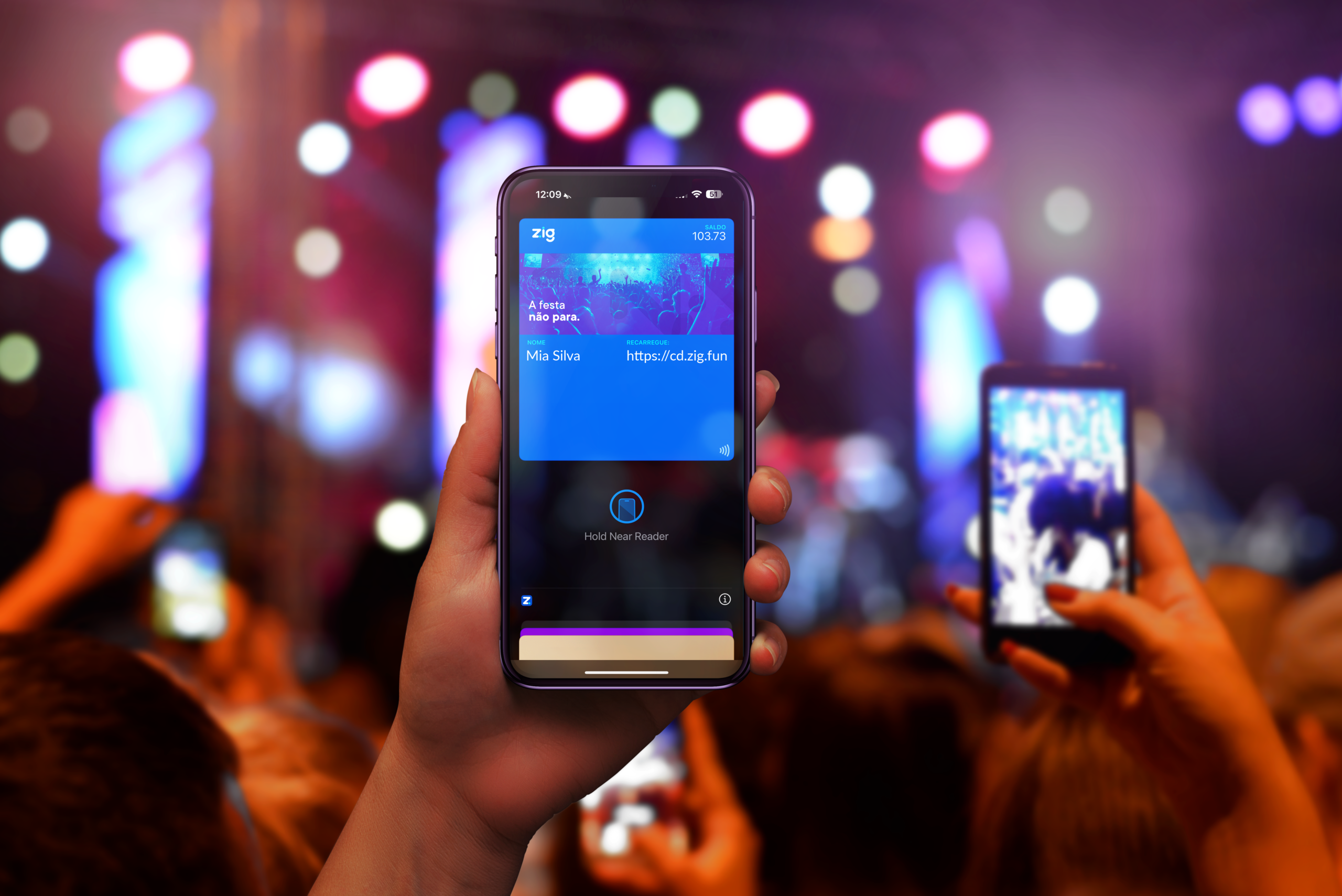
At Lollapalooza in 2022, Zig says the wristband served as both admission credential and consumption currency. Advance top-ups, self-service kiosks and a refund website surrounded the physical token. That cheerful strip on the wrist was doing several jobs.
There are different ways to settle the bill. Prepaid cashless means loading credit before spending. Postpaid consumption means attaching orders to an individual account and paying at the end. Table management organizes a restaurant’s orders around a table instead. Zig supports these different arrangements because roaming festival crowds and seated diners behave differently.
A product workflow, not a measured speed comparison.
Connectivity is another distinction. Zig’s restaurant materials describe orders continuing without internet, prepaid cashless spending against existing credit, and synchronization when the connection returns. For an operator, that shifts the question from whether a dashboard looks attractive to what keeps working during a crowded service.
A December 2023 report described Zig and Visa developing direct payments with online or offline validation. The idea drew on high-throughput environments such as transit gates. At that point it was a development and testing plan. Its appeal was straightforward: remove the preliminary trip to load a separate payment card.
Buying the moment before arrival
Zig extended upstream in September 2023 through Superticket, renamed Zig Tickets. Contemporary reporting described a 40% stake exchanged for an undisclosed portion of Zig’s shares. Superticket had sold more than two million tickets across roughly 3,000 events.
The initial focus was smaller and medium-sized shows, rather than immediately taking on every giant festival. Ticketing added a relationship before the guest reached the bar. The product family now includes online sales, check-in, promoter management, discount coupons and reserved seating. The strategic logic is easy to see: connect the invitation to the evening’s transactions.
The price of connecting the night
Expansion took capital. Zig raised R$110 million in April 2024, followed by a R$155 million Series B extension led by Kaszek with Across Capital participating. The combined R$265 million supported ambitions in restaurant management, digital wallets and international growth. Those are financing proceeds, not sales.
The commercial model combines business software and payments with consumer-facing ticket sales. Venue operators request a proposal. A 2023 report put Superticket’s historical convenience fee at 12%; that figure should not be mistaken for a current tariff across Zig’s products. Buyers need to compare the actual package, payment terms and implementation support.
In August 2026, Exame reported possible sale discussions. Zig acknowledged conversations with iFood and other companies but said no values had been discussed. That leaves a reported negotiation, rather than a completed deal. It also highlights why in-person consumption data might interest a broader restaurant ecosystem.
Follow the handoffs
Operators can copy the diagnostic approach: trace entry, ordering, preparation, payment and closing. Find the point where information has to be entered twice, where money and stock disagree, or where guests join an avoidable queue. Measure that point before buying another screen.
Software still needs a workable operation around it. A faster payment cannot pour a drink, and offline capability depends on the configured product and payment method. Zig’s useful idea is to make the systems agree about what happened. The audience can get back to watching the stage.
Zig website · Operations blog · LinkedIn · Instagram · Zig videos · Cashless Digital tutorial · Co-founder interview