The interesting word is “dolphin.” In a startup world fond of sharks, Oxford Entrepreneurs Network lists Dolphin Tanks among its activities. The name makes a good entrance. The more revealing detail is what co-founder Christian Mammen remembered about the network’s early meetings: two founders would present, and the audience would respond with questions and advice. Before anyone could become a success story, they could become someone the room had actually met.
- Oxford-educated founders meet investors, mentors and fellow builders.
- Local gatherings sit alongside virtual bootcamps and mentoring.
- The associated investment fund is a separate organization.
OxEN’s proposition begins with a modest observation. A shared university gives strangers something to talk about. An entrepreneurial problem gives them something to do. Put those together, repeatedly, and an alumni connection can become more useful than a name in a directory. That is the promise behind the events, introductions and practical education.
Two founders, then the room
The story starts in the San Francisco Bay Area in 2015, with Oxford Entrepreneurs of the Bay Area. Mammen, an intellectual-property lawyer, credits Gauthier Philippart and Richard Yonge with much of the original thinking. There were Oxford alumni involved in entrepreneurship, a bond between them, and an opportunity to organize around that combination. The global network launched in 2018; alumni accreditation followed in 2019.
Consider the economy of the early meeting format. Two presentations are enough to give an evening a purpose. Questions let the audience contribute. Advice gives the founder something to take away. In his 2021 college interview, Mammen recalled ventures ranging from desktop robotics to drone reforestation. The common denominator was the Oxford connection, rather than a single technology or sector.
“Build your network. Find mentors.”
Christian E. Mammen · The Martlet, 2021
That breadth helps explain OxEN’s place in the market. It is an alumni entrepreneurship community, serving people who want advice, relationships and opportunities to present their work. A founder can bring a question. An investor can meet a company. An experienced operator can contribute judgment. Those are different reasons to attend the same gathering, which is rather the point.
Advice that comes back around
The most instructive account comes from Thomas Vout, a knowledge engineer at Oxford Semantic Technologies. Writing in The Martlet in 2025, he described the disorienting range of responsibilities at a small startup: coding, marketing materials and sales. The company was acquired by Samsung, but his account also dwelt on the support surrounding the work.
Vout credited OxEN with resources and mentoring, then described giving back by leading events and programs. This is a more revealing community story than a large membership number. Someone receives help, stays involved and becomes useful to the next person. His experience illustrates the mechanism; it does not establish that mentoring caused an acquisition.
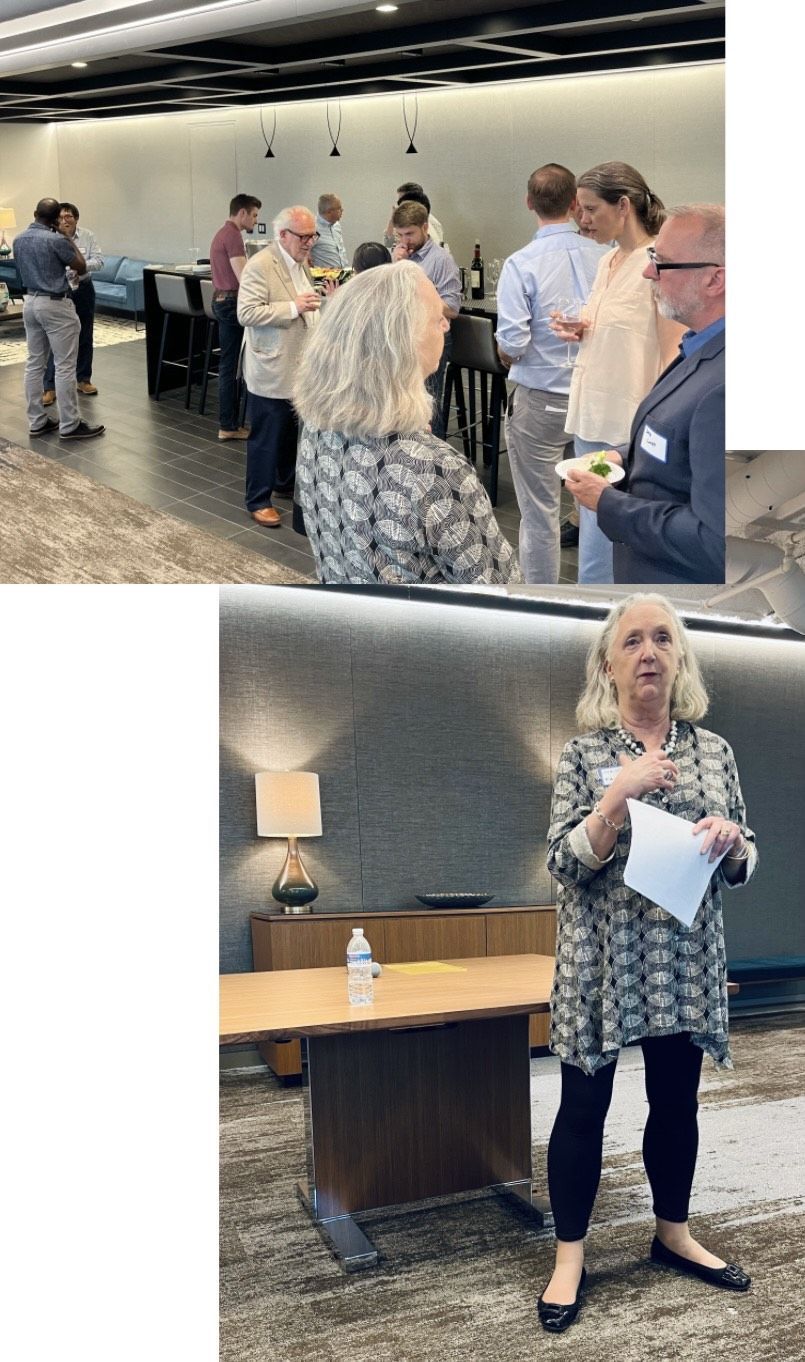
The network’s services give that exchange several settings: local meetings, online community discussions, mentoring and virtual bootcamps. Its early mentoring cohorts also appear in the history of The Oxbridge Method, whose founders say they first ran cohorts for OxEN. The distinction matters: a program’s origins do not make every later version of it an OxEN service.
The $15 experiment
On September 24, 2025, a New York pitch competition supplied a concrete example of access. The Cambridge alumni listing advertised $15 tickets, with free admission for investors. The program allocated four minutes to a pitch and four to questions, followed by networking and an applicant industry panel. The structure made room for both presentation and scrutiny.
A small stage. Equal time for the questions.
OxEN’s recap reported roughly 150 attendees and seven presenting founders, with BMI OrganBank taking first place. Co-hosts included Cantab NYC and the Columbia Business School Alumni Club of New York. This was a health, life-sciences and biotech gathering that crossed university boundaries. The shared-interest room could grow beyond a single alumni badge.
The commercial arrangement is similarly practical. OxEN publicly invites businesses to sponsor content and events in exchange for exposure to its community. The New York ticket is one documented event price. It is useful evidence of how that evening worked, rather than a price list for everything the network offers.
A network is not a term sheet
Money is nearby. OxEN has a close relationship with the investment organization formerly called Oxford Angel Fund, now Oxonian Ventures. Mammen explicitly described the fund as formally separate. That boundary is useful to a founder: a conversation, a mentoring relationship and an investment decision are three different things.
Oxonian Ventures describes itself as an alumni fund investing in Oxford alumni founders, and its website lists three investment funds and more than 30 portfolio companies. Those figures belong to the fund. They should not be mistaken for OxEN’s funding, revenue or a count of companies created by its programs.
Oxford also has several entrepreneurial doors. Saïd Business School’s oNetwork offers experienced advisers to its students and alumni. Oxford Entrepreneurs is a separate student-founded society. OxEN’s distinctive territory is the geographically dispersed alumni community, with gatherings in cities including Boston, New York, Washington, San Francisco and London, alongside online participation.
Copy the meeting. Earn the trust.
The transferable idea is refreshingly small: give an existing community a specific task. Invite a founder to explain a problem. Give experienced people time to ask questions. Make returning as a mentor an intelligible next step. Another professional or alumni group could borrow that format without pretending it can reproduce Oxford’s existing relationships overnight.
The conditions matter. A useful room needs relevant experience, candid questions and people willing to return. A founder seeking customers must still test demand beyond fellow alumni; someone seeking capital must still persuade an investor. OxEN offers occasions for those conversations to begin. Its most persuasive product is the possibility that, next time, the person with the answer already knows your name.