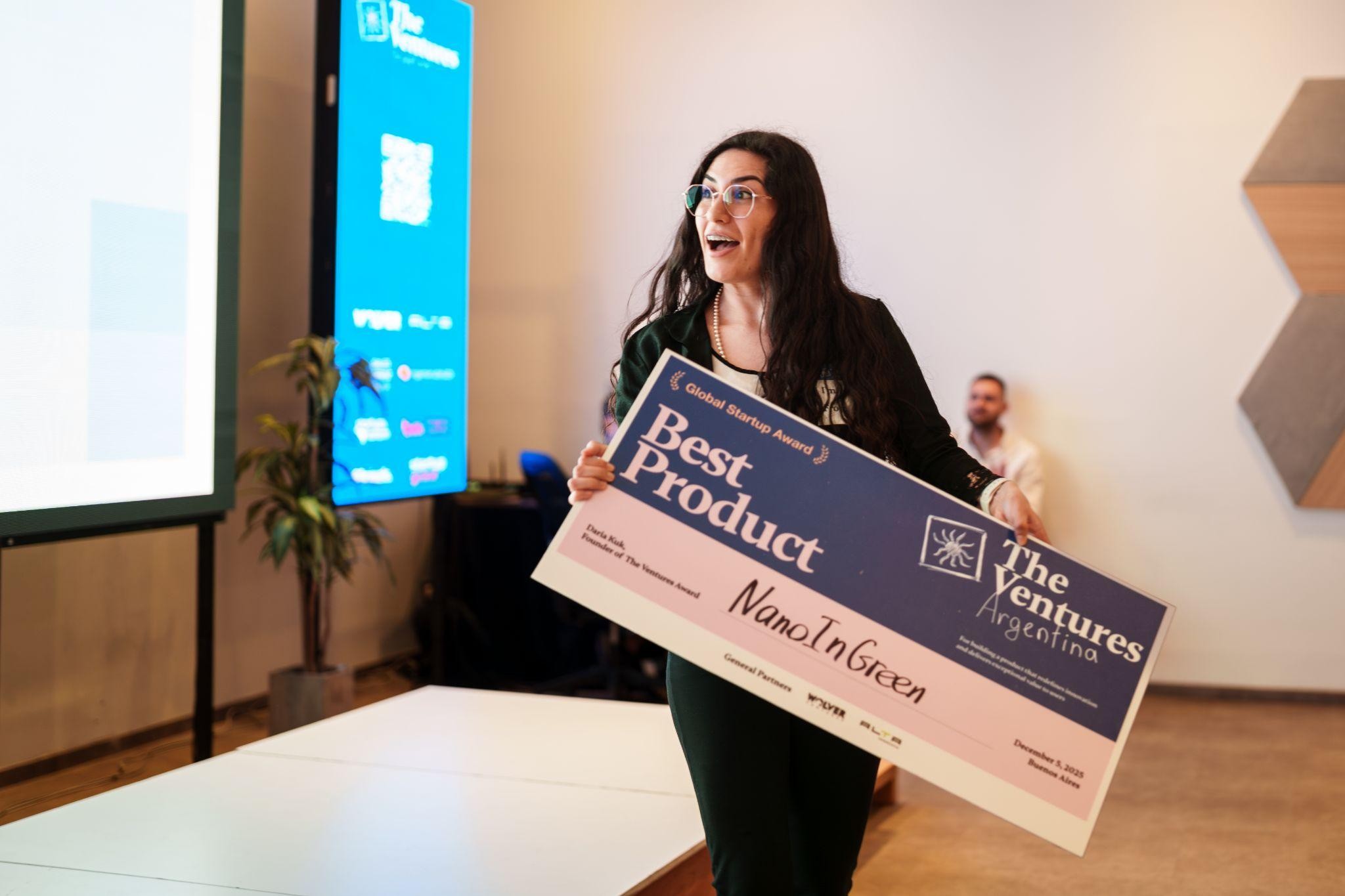
There is a peculiar detail in the rules for The Ventures startup awards: there is no cash prize. A founder can submit a deck, survive the screening, travel to the final, impress the judges and leave with a title. The money, if it comes, arrives through a different transaction, later. For an organization sitting beside the venture capital industry, that distinction explains almost everything.
- Free startup competitions bring selected founders face to face with investors.
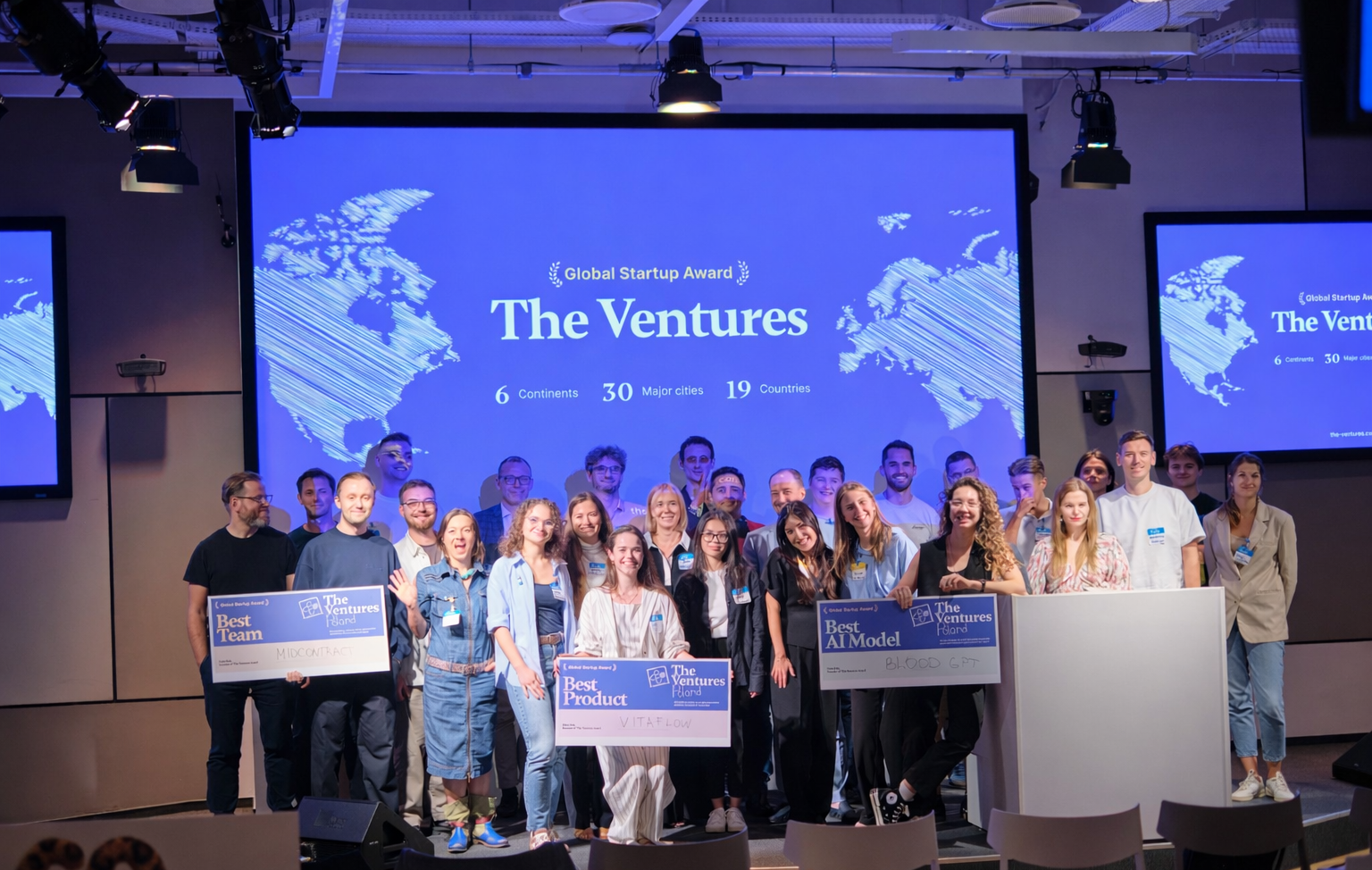
- Four awards recognize product, traction, team and AI solution.
- A selective club keeps mentorship and introductions going between events.
The Ventures organizes a meeting that both sides have reasons to attend. Founders want a hearing. Investors want promising companies without reading every deck on the internet. An award gives the meeting a deadline, a shortlist and something to talk about. The trophy is visible. The work of choosing who gets into the room is easier to overlook.
A shortlist is a product
Consider Madrid. In a public account of the June 2026 Spanish edition, a local organizer reported 213 applications, ten selected startups and twenty investors. That is roughly one finalist for every twenty-one applicants. For someone raising money, those odds might look forbidding. For an investor deciding whether to attend, the same numbers describe time saved.
The format has a useful wrinkle. A company can be strong in one dimension before it is strong in every dimension. Product, traction and team are different arguments for paying attention. The separate AI category gives technical work its own route to recognition; the general competition also welcomes companies that do not use AI. Multiple categories make the conversation more specific than a single best-startup crown.
The published process starts online, using a website or prototype link and an investor deck. Judges assess matters including market potential, team strength and traction. Finalists then pitch in person. The shortlist varies by edition: Spain advertised ten places, while the Israel launch offered twelve. Local rules matter more than a remembered number from another city.
Build the relationship before the round

Daria Kuk launched The Ventures in 2024 after working in venture investing and accelerator programs. Her starting point was the value of personal relationships across industries. In her December 2024 founder interview, she described the awards as an entrance to a business club where connections could continue. The event was already being designed with a second act.
That choice addresses an awkward feature of fundraising: the first conversation often happens when the founder already needs money. A competition supplies an earlier reason to meet. A judge can ask about the product before being asked to lead a round. A founder can discover which objections recur before spending months repeating the same pitch.
“When you share what you have, others will do the same.”
Daria Kuk, founder / December 2024
The Ventures Club extends this logic into mentorship, startup analysis, accelerator access and introductions. Admission is selective. Its published founder criteria include funding progress, revenue milestones and industry recognition; meeting one criterion can earn an interview. The club and the open award application serve different moments in a founder’s journey. Winning attention for an early prototype and joining a vetted professional circle require different evidence.
Free entry. Real work.
The awards’ application fee is zero. Their FAQ also says there is no cash prize. The benefits offered are feedback, investor introductions, mentorship, visibility and networking. That makes the proposition straightforward to examine: apply for access, then decide whether the people attending justify the preparation and journey.
In-person attendance is mandatory for finalists. For a founder outside the host city, transport, accommodation and time away from customers belong in the calculation. A free application does not make the entire exercise costless. Nor does a judge’s interest become committed capital. A useful introduction still needs a suitable investor, a business that withstands scrutiny and follow-up from both sides.
The organization describes itself on LinkedIn as a nonprofit. Its public-facing model combines awards, a membership community and collaborations with local hosts. Think of it as a convening service in the funding market. Its advertised deliverables are access and evaluation, rather than an automatic investment or a fixed accelerator cohort.
Local hosts, international introductions
The geographic ambition depends on local relationships. Futuround partnered on the first Israel edition in April 2025. The Miami 2026 listing names Mana Tech and Venture Week Miami as co-hosts. These collaborators give a traveling format people who understand the local startup scene, rather than expecting every city to behave like Silicon Valley.
That sensitivity is practical. Kuk has described differences in cultural expectations and hospitality as an organizing challenge. A repeatable judging process can travel; the details of welcoming people need local judgment. By October 2026, the company’s homepage advertised 480-plus investors and a presence in nineteen countries. Those are the organizer’s network figures, rather than the number of investors promised at any one final.
The next extension reaches a different audience. The Founder Effect, announced with Unicorn Factory Lisboa for November 11, 2026, asks what successful entrepreneurs choose to build after an exit. The subject changes from finding capital to deciding how to use experience, money and influence. The underlying mechanism remains a curated gathering.
What happens on Monday?
There is a useful practice here for founders and community builders alike: make the introduction worth making. Define the audience, screen for relevance, give participants a concrete reason to meet and create somewhere for the relationship to continue. A smaller, well-matched group can offer a clearer next step than a crowded calendar.
For a founder, the sensible preparation is equally specific. Bring a working prototype, evidence of customer demand and questions for investors whose interests fit the company. Leave with agreed next steps. An award can start a conversation. The interesting measure arrives on Monday, when someone opens the deck again.