In 2008, Linda Olson started a meetup for technology entrepreneurs in Tampa Bay. A meetup is a modest instrument: it can put people in a room, but it cannot put venture capital in their bank accounts. That distinction would become the organizing problem of Tampa Bay Wave. The founders had ideas. What they lacked was the surrounding machinery that makes an idea easier to turn into a business.
- The offer: free accelerator cohorts, with no equity taken.
- The machinery: specialist mentors, investor introductions and corporate connections.
- The catch: founders still need validation, runway and time to participate.
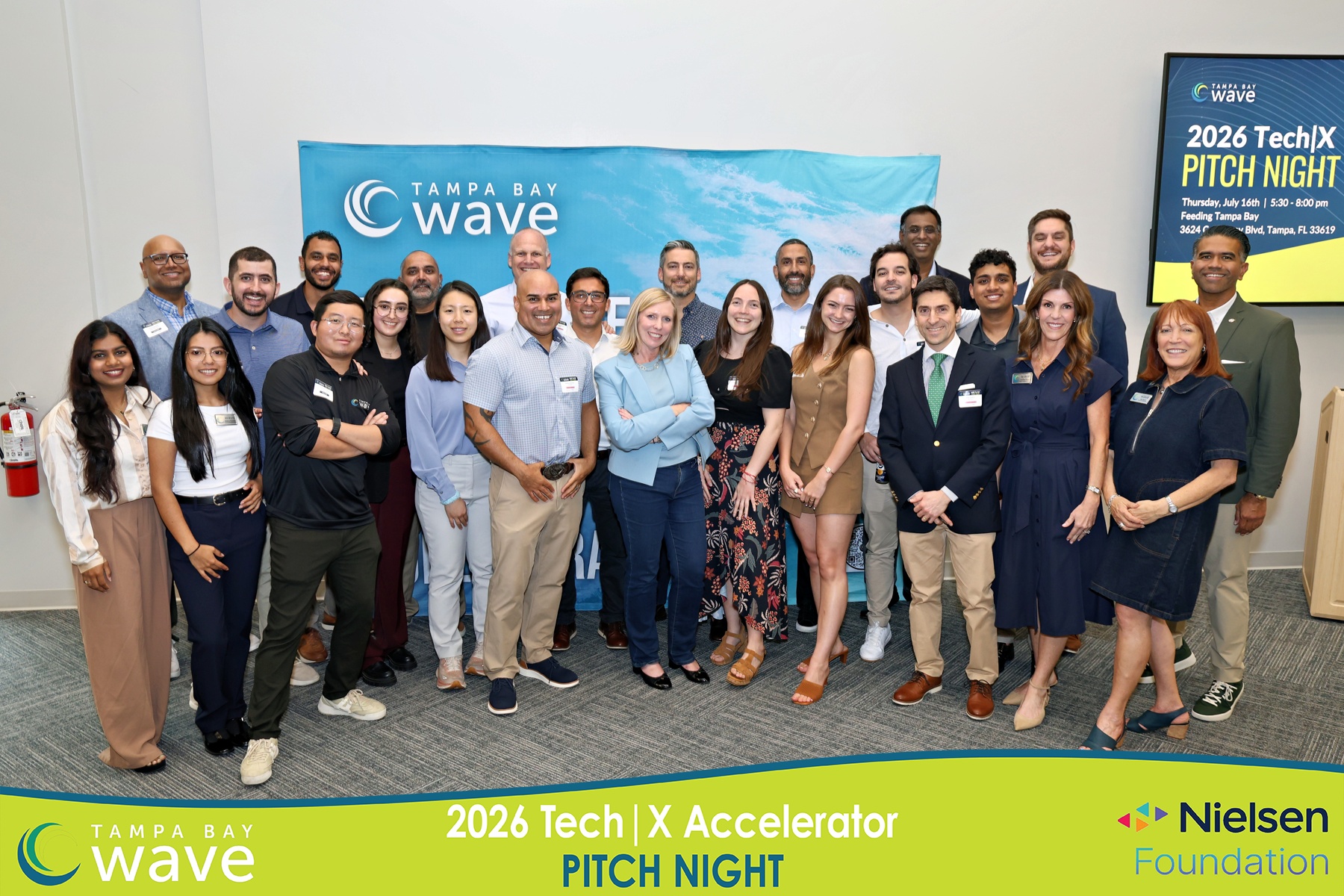
By September 2026, Wave reported that its portfolio companies had raised more than $2 billion. It counted over 670 supported startups, 7,600 jobs and 34 exits. These are cumulative, company-reported results. They describe the businesses that passed through the network; they do not tell us what those businesses would have achieved without it. Still, they make that original room worth investigating. Wave announced the milestone at BlueTech|X Pitch Night.
The room was the beginning
In a 2022 StoryCorps conversation, Olson recalled the meetup’s early struggles: little venture capital, difficulty finding the right talent, and founders trying to grow in an incomplete startup ecosystem. The first shortcoming was in the environment around the companies. Meeting fellow entrepreneurs helped, but camaraderie had a limited credit line.
The decisive expansion was tangible. In September 2012, a proposal earned a $1 million federal i6 Challenge grant over two years. Community partners added more than $1 million in cash and in-kind matching support, including $600,000 in paid lease fees donated by Sykes Enterprises. The plan was to establish the FirstWaVE Venture Center and help at least 50 Florida startups secure early funding. A gathering acquired an address, resources and a job to do. Contemporary reporting records the bargain.
Someone pays for zero
Wave now operates as a nonprofit accelerator. Its accepted accelerator companies pay no program fee and surrender no ownership. Grants, donations and corporate sponsorships support the operation. For founders, the appeal is obvious: advice arrives without a new shareholder attached. For supporters, the return can be a stronger regional economy, exposure to emerging technology or relationships with future suppliers.
The accounts reveal the scale of this arrangement. Wave’s 2024 Form 990 lists approximately $2.55 million in revenue and $2.51 million in expenses; contributions supplied 99.7% of revenue. That is the nonprofit’s operating picture, quite separate from the billions raised by its portfolio. A founder’s successful financing round does not automatically replenish the accelerator’s budget. The filing figures make the distinction unusually clear.
Zero equity also positions Wave differently from accelerators whose offer combines investment with an ownership stake. The founder’s choice concerns what is needed next: an immediate check, a particular investor network, technical advice or a route to customers. Wave’s central offer is help getting ready and getting connected. An introduction is an opportunity, with the decision still sitting across the table.
Choose the people, then the program
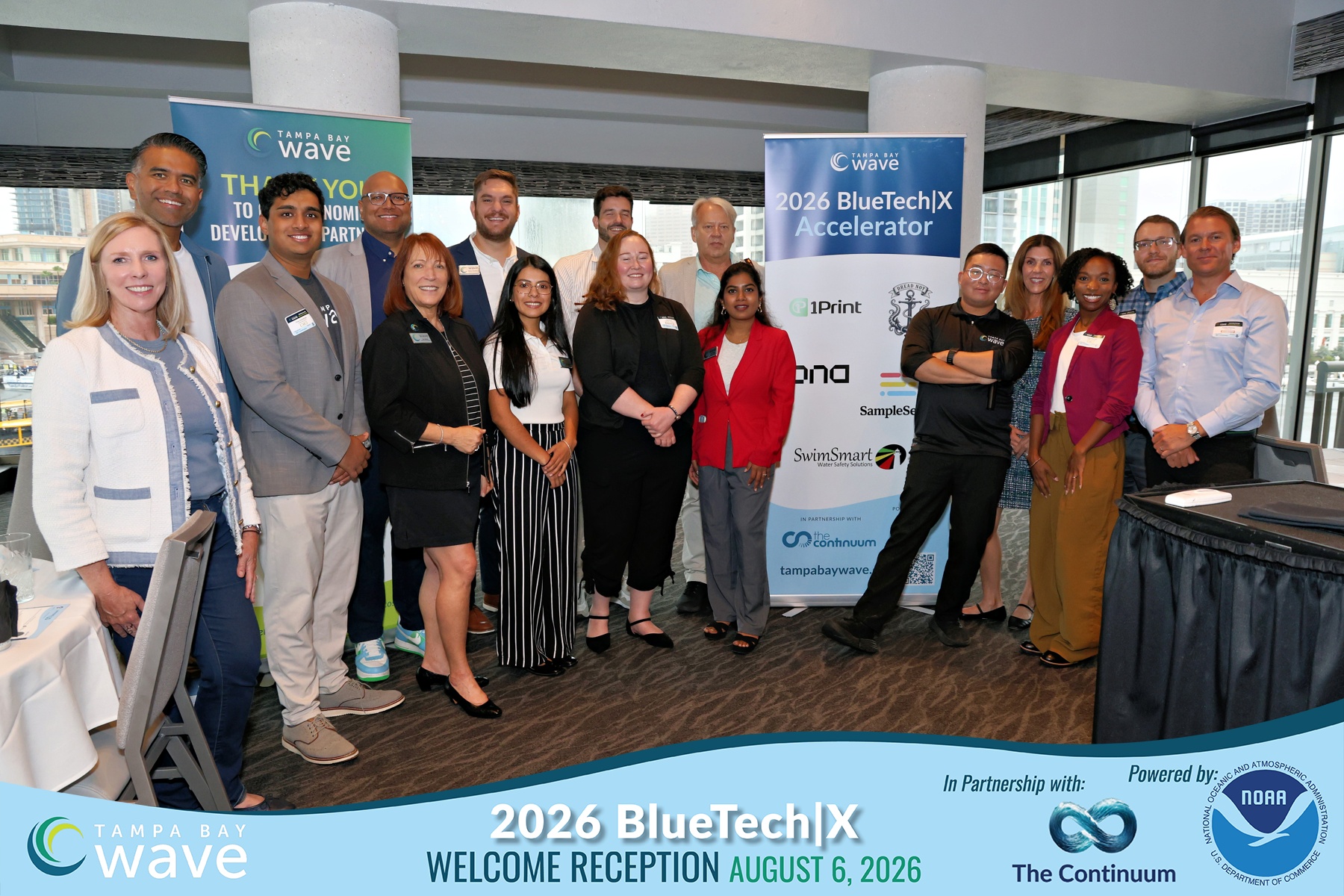
The program names carry a recurring X: CyberTech|X, FinTech|X, HealthTech|X, Tech|X and BlueTech|X. Beneath the branding is a practical distinction. A security company needs different expertise from a coastal-technology business. A financial product needs people who understand its buyers. Putting every founder through the same general seminar would leave much of that work undone.
CyberTech|X names partners including A-LIGN, Bank of America, Thoropass and Potomac Law Group. FinTech|X works with USF’s Muma College of Business and Kate Tiedemann School of Business and Finance. The Nielsen Foundation supports the broader Tech|X program. These relationships give the matchmaking a subject, rather than merely a guest list.
“The Corridor has stood behind Wave founders for more than a decade.”Linda Olson, on the September 2026 partnership expansion
There is useful evidence of that specificity in the 13-company FinTech|X class announced October 7. PayShore, from Riverview, is building cash visibility and business payments across banks. Alogram, from San Diego, tackles fraud and risk decisions. London’s Moola Money works on personal financial decision-making. The common need is commercial progress; the actual conversations each company requires will differ.
After the pitch, another Tuesday
An accelerator has a calendar. Building a company is less cooperative. Wave’s CORE Entrepreneur Leadership Program addresses the continuing work with a year-long format and 15 founders per class. It lists weekly programming, CEO roundtables, investor-relations meetings, pitch practice and help preparing a data room.
CORE has two paid membership tiers. Founders should distinguish that offer from the free accelerator cohorts. It is aimed at companies with a minimum viable product and some traction. Its usefulness lies in returning to ordinary operating questions: acquiring customers, assembling a team, preparing a financing round and finding an adviser who has faced the same problem before.
The next door is a government door
Wave’s expansion keeps following particular markets. In September 2026 it announced a $1.38 million EDA award for DefenseTech|X, with matching support bringing the project above $1.7 million. The planned 18-month pilot covers two cohorts and 30 startups, delivered with USF’s Institute of Applied Engineering and SOFWERX. Its task includes connecting young companies to government relationships as well as private investors. Those are plans, not completed outcomes. The announcement sets out the scope.
- 01 / PrepareValidate the business and sharpen the pitch.
- 02 / ConnectMeet relevant mentors, buyers and investors.
- 03 / BuildTurn useful conversations into commercial progress.
The same month, an expanded Florida High Tech Corridor partnership added pathways to accelerator readiness and federal funding preparation through FL FAST. Wave is extending the routes into its network, alongside the programs themselves.
The lesson readers can copy is precise: identify the missing relationship, find someone with relevant experience, and prepare before requesting the introduction. The conditions matter. CyberTech|X asks for market validation, at least two full-time team roles, travel to Tampa and six to twelve months of runway. A founder seeking emergency cash or carrying only an untested idea faces a different problem. Wave can arrange a more useful room. The company must bring something useful into it.