A refrigerated shipment is waiting. A freight broker wants to spot a fraudulent carrier. Somewhere in a container stack sits the box a driver needs next. These are the kinds of problems on Epicenter Memphis’s logistics challenge list. They are also unusually useful starting points for a startup: somebody already wants them fixed.
The nonprofit’s proposition is that Memphis can help build companies around the work its industries actually do. Founders bring ideas and products; Epicenter supplies training, introductions and access to specialized expertise. Its current strategy puts customer acquisition alongside investment readiness. The organization’s own formulation is blunt: “Where capital access is limited, customer demand is not.”
That is a proposition to test, not a promise of easy sales. A corporate introduction still leaves a founder with budgets, procurement and a product to deliver. But it gives the conversation a subject more concrete than entrepreneurial enthusiasm. The interesting question becomes whether a young company can solve a problem well enough for someone to pay.
A $10 million invitation to join in
Epicenter launched in 2015 out of the Greater Memphis Chamber Chairman’s Circle’s ambitions for entrepreneurship. Leslie Lynn Smith was its founding president and CEO. The original goal, as the Chamber described it, was 1,000 entrepreneurs and 500 startups over seven years. This was a regional economic-development project with a founder-facing front door. The Chamber’s account places that origin in the city’s business community.
By September 2018, Epicenter had announced $40 million in cumulative fundraising. A $10 million FedEx challenge grant helped bring in another $30 million from foundations, economic-development organizations and individuals. The money was intended to support entrepreneurs, programs and local partners. A larger $100 million fundraising ambition belonged to its ten-year strategy; it should be read as a goal.
The early constituency was broad. In 2018, Action News 5 reported that Epicenter had helped more than 250 businesses launch, including The Liquor Store on Broad. Smith described a service that would match entrepreneurs with suitable partners and resources. A restaurant could belong in this story as readily as a technology venture.
The beginner’s door needed another exit
Epicenter’s early impact report contained a useful admission: too many of its entry points suited first-time founders with ideas. Entrepreneurs ready to scale, or experienced founders starting again, needed more. It also acknowledged an awareness problem. Many people did not know the support existed. A front door has limited value if people cannot find the building.
The report said Epicenter was expanding its offerings across stages. That is the documented correction, rather than evidence of one dramatic change of heart. Its historical results included more than 600 entrepreneurs served and 360 companies created or scaled. Those figures describe the report’s early period, not a current scoreboard. The report’s lessons and results make the distinction worth keeping.
Today, the program menu separates problems that founders can easily muddle together: working out what to build, learning how financing works and preparing to sell to a company. Each calls for different evidence. A polished pitch can introduce all three conversations, but it cannot finish them.
Eight weeks to make the idea answer questions
Epicenter Launch gives innovative, high-growth startup ideas an eight-week workout. Weekly two-hour sessions cover customer discovery, market segmentation, communication and business fundamentals. The specified outputs are practical: a Lean Canvas describing the business, a pitch and a 90-day strategic plan.
The customer-discovery component asks founders to test assumptions against market feedback and revise their model. That is a useful discipline to copy even without an accelerator seat. Write down the proposed buyer, the problem, the offer and the revenue stream. Then investigate which parts survive contact with potential customers. A business model should be editable.
The separate Capital Readiness Accelerator runs for six weeks. It covers why and when to raise money, finding investors, preparing documentation and understanding financing terms. Its syllabus gets into cap tables, valuations and converting instruments. These are consequential subjects for a founder preparing to exchange ownership for capital.
Customer Readiness tackles another transaction. The published nine-week program covers pilot design, proposals, budget forecasts, measurable outcomes and selling. Its listed 2025 cohort ran from April 29 to June 24. For a founder approaching corporate buyers, that curriculum offers a useful checklist: specify what the pilot will do, how long it will take, what it costs and how the buyer will judge it.
Put the buyer’s headache on the brief
The 2026 Logistics Opportunity Challenge, presented with Memphis World Trade Club, makes the customer strategy tangible. It lists cold-chain delivery, freight visibility, carrier vetting and oversized-load planning among its problem areas. Up to six finalists are to receive $3,000 each and present to more than 20 potential customers at an October 1 showcase.
Epicenter reports that both the 2024 and 2025 challenges led to paid pilots that became full contracts. It explicitly says a pilot or enterprise contract is not guaranteed. That qualification belongs beside the opportunity: a room of prospective buyers is access, and the founder still has to earn the business.
The transferable method is simple to describe and demanding to execute. Ask operators for specific problems before requesting solutions. Give founders a brief with operational detail. Put people who understand the problem in the room to evaluate the response. This works best where the organizers have credible industry relationships and the proposed solution fits a buyer’s actual priorities.
“Where capital access is limited, customer demand is not.”
Epicenter’s stated customer-acquisition rationale
Medical devices come with different homework
ZeroTo510, listed among Epicenter’s initiatives, takes a specialized approach to medical technology. Its thirteen-week accelerator combines commercialization work with regulatory, quality, reimbursement and product-development expertise. Founders meet advisers and service providers who understand the industry’s particular demands.
The published fall 2026 terms specify a $25,000 investment when a company enters the cohort. Another $25,000 is available if it establishes a Memphis-area location for at least twelve consecutive months. Applicants must demonstrate a planned connection to the area, which can include a clinical adviser or planned study. The program describes the support as equity investment.
The location incentive makes the regional-development purpose visible. Epicenter wants businesses to form meaningful connections here. For a founder, that makes program fit more specific than the size of the check: the expertise, investment terms and regional commitment all belong in the decision.
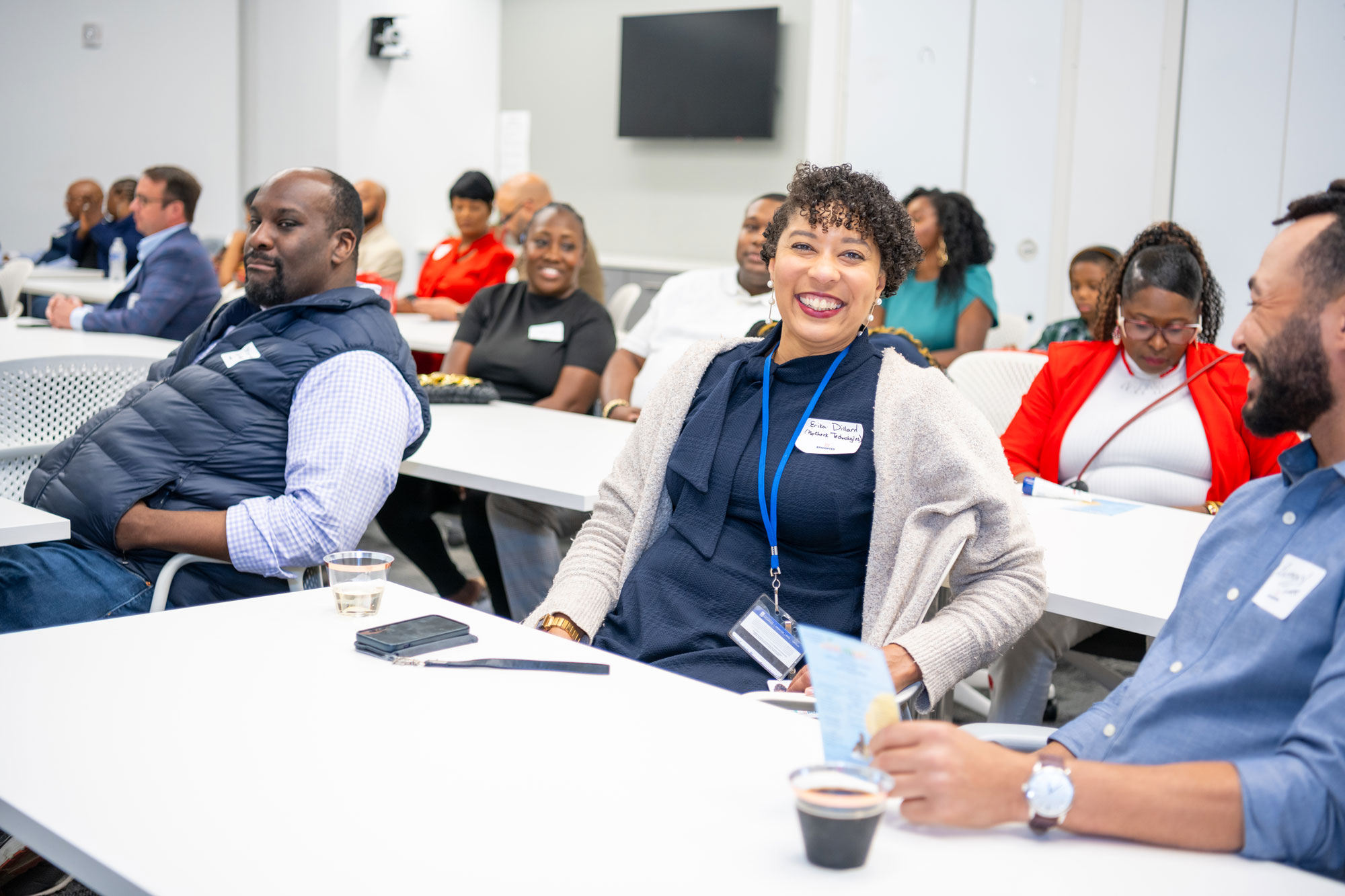
The founder directory illustrates the wider range. It features Benjamin Lazarov of outdoor-guide booking platform AnyCreek, Erika Dillard of PopCheck Technologies and Erica Plybeah of healthcare transportation company MedHaul. These are founders Epicenter highlights, not interchangeable examples of a single product category. The common thread is building a business with access to relevant people.
The nonprofit has its own bills
The money behind the support deserves a separate ledger. Epicenter operates as Vibrant Memphis Inc., a 501(c)(3) nonprofit. Its 2024 Form 990 figures show $2,961,869 in revenue and $3,573,668 in expenses. Contributions supplied $2,748,580, or 92.8 percent of revenue. Program-service revenue was $93,408. The public financial record describes a predominantly donor- and grant-supported operation.
Expenses exceeded revenue by $611,799. Year-end net assets: $11.90M. Rounded bars; figures refer to the nonprofit, not its startups.
Expenses exceeded revenue by $611,799 that year, while year-end net assets stood at about $11.90 million. Those numbers are different from a fundraising milestone or money raised by supported startups. The financial picture makes donor continuity an important condition of this model. Earned program income covered only a small part of the organization’s spending.
Capital initiatives have their own budgets, too. A 2019 Economic Development Administration award committed $289,500, with a $295,000 local match, to Memphis Region Capital Capacity. The project supported Formation and Co-Investment fund operations and sought to retain high-growth companies locally. It shows how grants can pay for the machinery around startup finance.
Paying the next generation to build here
The newer student initiative, EpicenterU, extends that local commitment. In May 2026, reporting described approximately $812,000 from the Delta Regional Authority for a four-year effort with Arkansas State University. The plan includes paid fellowships for selected students, with $40,000 annual stipends and up to $7,500 in company-development funds during the later years. The announced design addresses the time and money required to pursue a venture.
A developer partnership adds a different route. In December 2025, Uncomplicated Inc. announced a collaboration with Epicenter and CodeCrew involving four junior developers building a software business through a three-to-four-month sprint. Epicenter’s role included programming for emerging teams and opportunities to apply for funding. The announcement described exposure to product strategy, customers and operations alongside development.
There is still room for a good evening out. Next Big Thing, run with the Society of Entrepreneurs, offers five-minute pitches and a $10,000 prize. Its past winners include an ice-cream business and a robotics company. The next competition is scheduled for November 12, 2026; DelTech’s conference dates are October 14-16.
For a founder considering Epicenter, the useful starting point is a specific need: test an idea, understand an investment, prepare a pilot or find specialist help. For another city studying the model, the harder assignment is building the relationships behind those services. The event can get people through the door. The work begins when they sit down and ask what needs fixing.
Meet the people. Read the programs.
Epicenter website · Explore programs · News · The Algorithm
LinkedIn · X · Instagram · Facebook · YouTube
WATCH THE FOUNDER INTERVIEW
Gebre Waddell on building a career in music technology ↗