Craig Putt had already tried the future. At Beachy Cove Animal Hospital, his team tested several AI tools promising relief from medical documentation. The subscriptions existed. The habit did not. In Otto’s account of the clinic’s experience, staff avoided the tools and the expected savings failed to arrive. Meanwhile, Putt recalled his wife spending Saturdays finishing charts. A veterinary appointment could be over for the patient and still occupy the doctor’s weekend.
- Otto connects messages, forms, payments and notes to a clinic’s existing software.
- Its AI scribe works independently or within the wider Flow platform.
- Customer results depend on adoption, integration and the humans doing the follow-up.
The software nobody opened
“It didn’t matter what we did. We paid for it, but it wasn’t being used.”
Craig Putt / on earlier AI tools
His account credits Otto’s appointment-linked AI with making recording easier to start. The distinction is wonderfully unglamorous: a tool has to survive the ordinary workday before it can improve one.
The inbox was the waiting room
At Holly Springs Veterinary Hospital in North Carolina, the problem arrived through another door. Pet owners wanted to text questions, pictures and videos. Dr. Hans Bernhard’s team lacked an efficient way to route that traffic to the right person. COVID shutdowns made a previously optional change urgent.
Otto brought communication into a shared platform, alongside intake forms, check-in and payment. In the company’s customer account, Bernhard describes fewer calls and less pressure on the front desk. The clinic also began charging for consultations it had previously supplied free. For a practice, convenience has an accounting department.

A name that outgrew telemedicine
Steven Carter and Price Fallin founded the company as TeleVet in 2015. Its early proposition centered on remote veterinary care. A $5 million Series A in 2020 supported expansion during the pandemic; in 2022, Boehringer Ingelheim announced a collaboration and minority investment. Veterinary communication was becoming a business worth connecting to the wider animal-health industry.
In August 2023, TeleVet became Otto and announced a $43 million Series B. Mercury Fund and Boehringer Ingelheim returned, joined by Hill’s Pet Nutrition. The new name suited a wider remit: scheduling, communication, payments and care memberships. Today, Otto reports serving more than 5,000 clinics. That is the company’s customer count, rather than an independent market-share measurement.
Keep the records. Connect the work.
Otto sits around the practice information management system, or PIMS. Think of the PIMS as the clinic’s filing cabinet and operating ledger. Flow connects the conversations and tasks around it. Its integration roster includes AVImark, Cornerstone, ezyVet, Neo, Impromed and other veterinary systems.
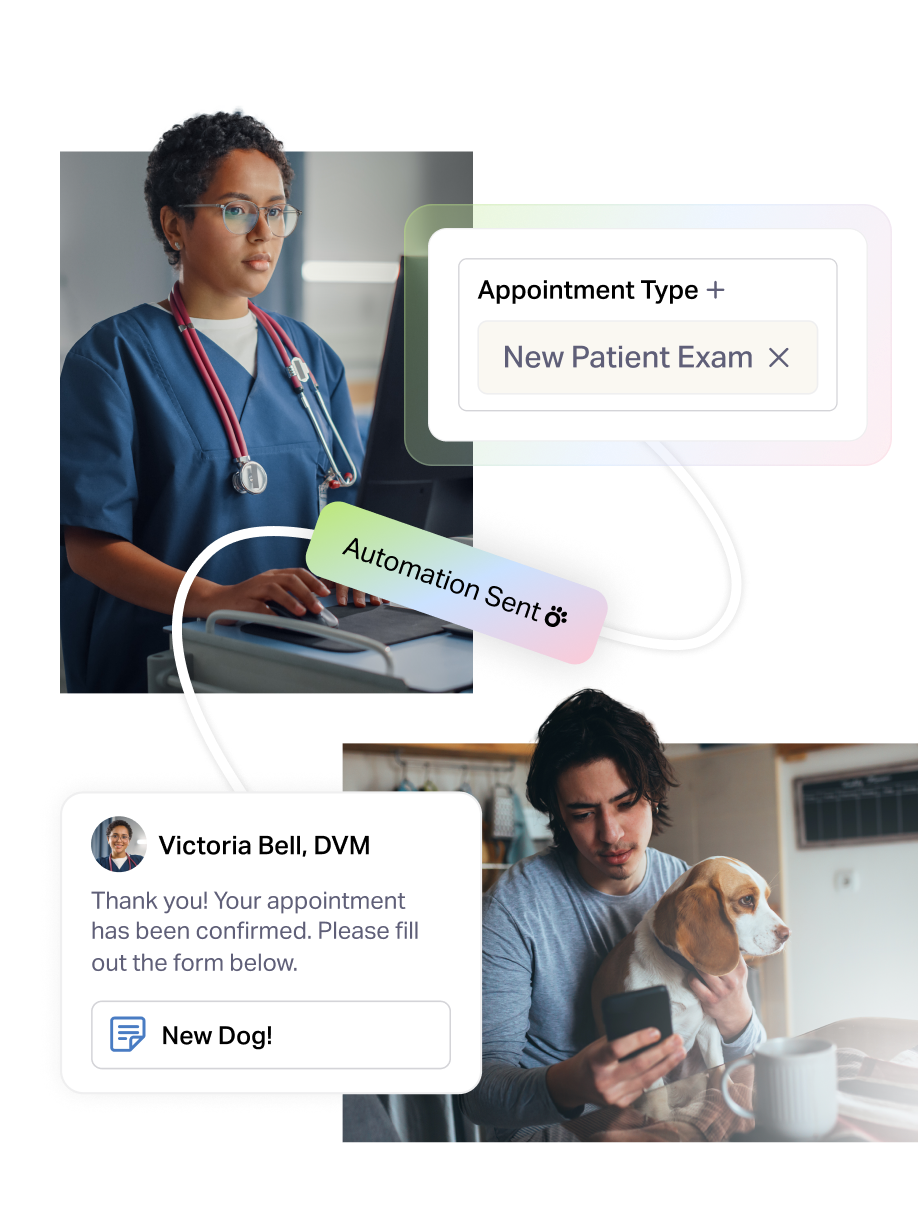
A receptionist can collect information before arrival. A technician can send an update. A veterinarian can generate notes from a recorded appointment. The attraction is continuity: information travels with the work instead of requiring someone to shepherd it between applications.
- 01BeforeBook · remind · collect forms
- 02DuringRecord · generate notes · review
- 03AfterSend recap · pay · follow up
This market has company. PetDesk also sells communications, booking, phones and documentation around existing PIMS. CoVet offers veterinary AI scribing. Otto’s case rests on how its bundle fits a particular practice, rather than on inventing texting or possessing an uncontested claim to AI.
The bill for fewer handoffs
Otto sells subscriptions to clinics. Its published Flow range runs from $350 to $1,000-plus monthly, with discounts available. Standalone scribing starts at $49 monthly. Buyers should compare the actual plan and integrations: the cost of a communications platform and the cost of a note-taking tool answer different questions.
Pay adds integrated payment processing, including deposits and text-to-pay. Care supplies clinic-specific memberships with flexible spending credit and remote triage. The plans page describes an enrollment fee for Care. Together, these products connect administrative efficiency with the financial conversations that can determine whether recommended care proceeds.
Forty percent, with a human attached
Far West Veterinary Clinic reports about a 40% reduction in no-shows after combining automated reminders with personal messages or calls when needed. That second ingredient deserves its own billing. The result came from a routine involving staff, rather than software left to fend for itself.
Clinic-reported result from automated reminders plus personal follow-up. A case example, not a promised outcome.
Rolling Hills Veterinary Service offers a smaller, more tangible clock. Its receptionist and veterinary assistant, Abigail Fulton, described surgery check-ins that previously occupied roughly 8:00 to 9:00 finishing around 8:30 after digital forms moved information collection ahead of arrival. Confirmation calls also fell. Anyone evaluating software can copy that measurement: choose a repeated task and time it.
From the exam room to the kitchen table
In March 2026, Otto announced integrated client recaps. Staff review the AI-generated notes and summary before sending the recap by text or email inside Flow. The summary remains in the conversation history. Standalone scribe users can generate recaps too, but distribute them through their existing systems.
February’s OttoPilot announcement extended the ambition to business questions. Using PIMS data, the assistant identifies trends and suggests actions, such as outreach to lapsed clients. The announcement described an early release and a planned wider rollout. Advice about the practice is another step beyond recording what happened in the exam room.
Start where the work gets stuck
A sensible trial begins with one bottleneck: unfinished notes, repeated confirmation calls or forms completed at the counter. Otto offers a 21-day scribe trial. Measure usage as well as minutes saved. Its own guidance recommends clear audio and reviewing generated notes; integration capabilities also vary. Poor recordings, unused tools and incomplete data weaken the proposition.
Otto’s appeal lives in these ordinary details. A receptionist gets information sooner. A client receives instructions they can reread. A doctor closes the record while the visit is still fresh. Software earns its place when those small changes become the clinic’s routine.