The trouble with a concert is that it happens several times. First as a possibility on a calendar. Then as an offer to an agent. Then as a budget, a contract, a production schedule and, finally, a set of numbers somebody must reconcile. The audience attends only one of these events. The promoter has to survive all of them.
- Prism connects booking, calendars and show finances for venues, promoters and agencies.
- Its useful trick is carrying information forward instead of asking another person to type it again.
- Insights turns contributed box office records into evidence for the next booking decision.
The first thing to fail was the handoff
Prism.fm grew out of an unusually intimate acquaintance with this problem. Co-founder Stephen Sternschein was an Austin venue owner and promoter, with businesses including Empire Control Room and Garage. Fellow founders Matt Ford and Adrian Tavares brought technology and live music experience. They knew the small indignities of organizing a show because they had organized shows themselves.
Sternschein had tried productivity tools. Each solved a piece of the puzzle. His job then became moving details between them so the next person could work. In Prism’s seed announcement, he described the result with admirable economy:
“Having data in a dozen different places created an accounting nightmare”
Stephen Sternschein · co-founder
The failure was at the joins. A calendar might be perfectly competent at displaying Tuesday while remaining oblivious to Tuesday’s unsigned contract. Prism’s answer was to put the show’s administrative life into a connected record. This is the company’s proposition, and the reason its apparently dull subject deserves attention.
The calendar has consequences
Consider a hold: a tentative claim on a date, rather than a confirmed booking. Prism lets teams track holds and confirmed shows across venues, stages and rooms. Availability can be selected and copied into a message. Trusted promoters can receive limited calendar access to place holds themselves. The calendar becomes part of the negotiation.
From there, users build offers, track deal status and payments, assign tasks, and compare estimated financials with actual results. Settlement brings the offer, ticket sales and expenses together. Instead of rebuilding the evening’s economics after the music stops, the team has a record that has travelled with the show.
- 01HoldReserve the possibility
- 02OfferAttach the economics
- 03AdvanceCoordinate the details
- 04SettleReconcile the result
Sharing needs boundaries. Production staff and financial staff have different jobs; universal access would be a peculiar interpretation of teamwork. Prism offers role-based permissions over event and financial information. Its agency tools also let users prepare different itineraries for different recipients. Coordination can improve without handing everyone the same keys.
Six rooms, fewer versions of the truth
The Pabst Theater Group case study gives this argument a physical setting: six Milwaukee venues, from a 400-capacity club to a 4,000-seat theater. Prism describes its customer planning more than 700 events annually and using the system since 2020. Those figures belong to the published case study, rather than a census of today’s operation.
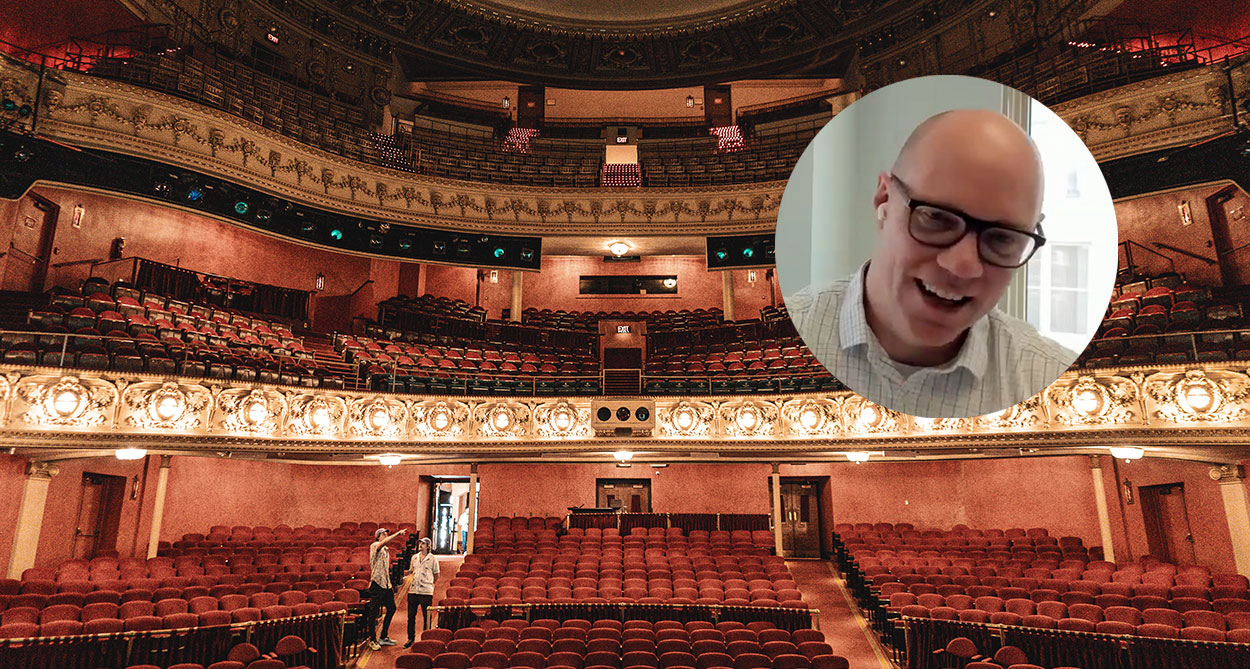
Pabst uses Prism for offer generation, expense tracking, financial reports, settlement and internal communication. Its feedback has influenced product details, including distinguishing internal and external variable costs. An accounting distinction can sound microscopic until two parties disagree about which costs belong in their deal.
At Goldengate Talent Agency, Jason Kupperman uses the platform to monitor money and contracts. Band managers can check information without calling him. Connected Show goes further: agents can import shared promoter offers and settlement details into their own records. Fewer repeated entries mean more attention available for artists.
SaveLive’s Marc Geiger made a related decision: use Prism rather than build and maintain an operating system in-house. His published account describes choosing software close to what he envisioned, then helping shape it through feedback. Buying the tool allowed his company to concentrate resources on helping venues.
What the paperwork is worth
Prism sells subscriptions. A telling historical snapshot comes from Ford’s July 2022 interview with Nathan Latka. Ford described early negotiations that pushed annual fees toward $600 or $800; by the interview, a large customer was paying more than $250,000 a year. Its usage had expanded, and additional work brought additional fees.
Approximate average venue/promoter contract value reported by Ford. A historical figure, not a current price quote.
The lesson is about scope. A customer buying relief from one irritating task has a different budget from a company buying an operating system. Prism’s sales process starts with a conversation and demo. Gigwell offers a specialist alternative with booking, contracts and agency tools; spreadsheet-and-calendar combinations remain another comparison. Buyers should test their actual workflow.
Funding helped pay for expansion. December 2023 reporting announced a $5 million Series B, including a syndicate organized by Frontier Growth’s Andrew Lindner and existing investors. Prism said the money would support product, engineering and go-to-market work.
Yesterday’s ticket becomes tomorrow’s evidence
Prism’s more ambitious extension is Insights. Participating organizers contribute ticketing and settlement data. Other participants can research artists, compare markets and filter leaderboards. The current site reports more than $1 billion in tracked ticket sales and advertises local Spotify signals alongside AI-enhanced predictions.
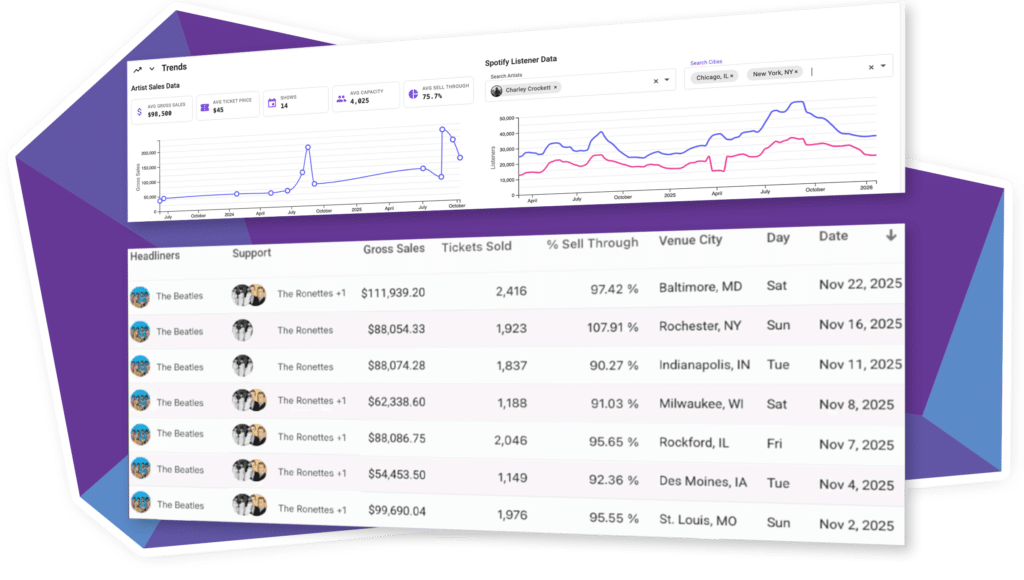
There is a bargain here: access depends on contribution. The current Insights website limits eligibility to consistently ticketing venues or promoters willing to share data; Prism’s core product can be used without joining. Historical results offer context, but a different city, ticket price or supporting bill can change the outcome. Prediction still requires judgment.
Bring a real show to the demo
The useful thing to copy is the sequence. Take one completed concert and trace where its information was copied, corrected or requested twice. Then ask a prospective system to carry that show from hold to settlement. Test permissions. Check the ticketing connection. Compare the final numbers.
This approach works when people maintain the shared record and partners supply usable information. A sparse calendar may justify simpler tools; a team that keeps working in private spreadsheets can recreate the original mess inside a subscription. Prism’s appeal grows with the number of consequential handoffs. For a business built on getting people into the same room, getting its own people onto the same page is a sensible place to start.