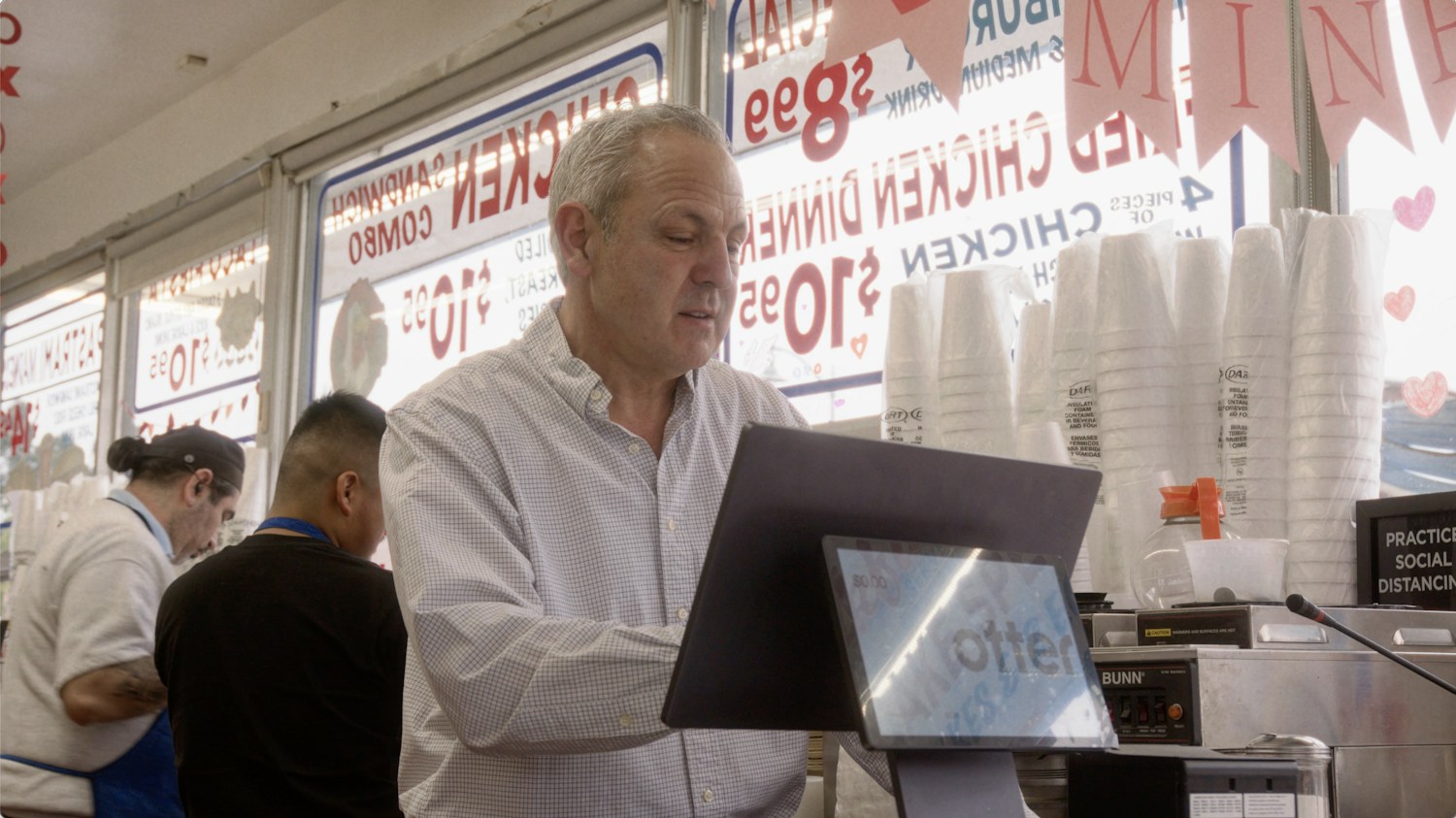
At Jim’s Burgers in Bell, California, the problem with new technology was partly that the old restaurant worked. It had served people since 1958. Some employees had stayed for decades. Owner Gus Frousakis wanted another generation of customers, without turning the place into something his regulars wouldn’t recognize. Then those new customers started arriving through their phones.
- Otter connects delivery apps, counter sales, menus, and payments.
- Operators can connect an existing POS or use Otter’s own.
- The useful test: fewer missed orders after every fee is counted.
A restaurant used to have a fairly obvious entrance. Now it might have a counter, a website, a kiosk, and several delivery-app storefronts. Each can bring in money. Each can also create another queue for somebody to watch. Otter sells the connection between those entrances and the people making the food.
A menu is a set of instructions
The product starts with a familiar irritation: several tablets making several noises. Otter’s Order Manager collects orders in one feed, can accept and print them automatically, and connects them to a point-of-sale system. Staff can adjust preparation times and pause a storefront. The appeal is straightforward. Fewer people have to act as the courier between two pieces of software.
Menus make the job harder. A burger has a price, but also choices: cheese, sides, substitutions, availability. Otter’s menu tools let operators change information across channels and locations, including marking sold-out items unavailable. Its kitchen displays, kiosks, and POS extend that coordination into the restaurant. Online ordering gives customers a direct route back to the business.
The expertise here lives in details a diner should never notice: translating menu choices, routing tickets, and keeping availability consistent. Reporting then gathers sales and item performance; Financials helps reconcile delivery payouts. Revenue Recapture handles delivery refund disputes. These are separate chores, but they circle the same question: did the restaurant receive the order, fulfill it, and collect the right money?
The customer base extends beyond a single kind of dining room. Otter says more than 100,000 restaurants use its products; its published stories span independent shops and multi-location chains. The practical difference is repetition. A mistaken menu change at one counter is a nuisance. The same mistake across many storefronts becomes an operating problem. A common view of orders and sales gives managers somewhere to start looking, though somebody still has to decide what to change.
Ten days that changed the calculation
Skyline Chili offers a revealing example. In Otter’s September 2026 account, the chain’s in-store menu favored speed while its online menu allowed more customization. The mismatch created manual work and errors. Otter built a custom connection for Skyline’s Xenial/Genius environment, including menu translation and retries when sending orders.
During a move to PAR Brink, Skyline tried a direct integration offered free with the transition. According to the case study, one location experienced an estimated $4,000 sales decline over about ten days. Skyline returned to Otter, which worked with the chain and PAR on reliability.
Estimated sales decline at one location over about ten days while testing a replacement integration.
Otter customer case study, September 2026. An estimate, not a controlled comparison.The account also reports 96% less storefront downtime and 74% fewer cancellations after the subsequent work. Those are vendor-reported outcomes, not a forecast for another restaurant. Still, the decision is instructive: compare a connector’s bill with the orders that disappear when a connection fails.
Read past the $79
Otter’s American POS pricing makes the commercial model visible. Starter lists at $79 per location monthly. Advanced, at $178, adds delivery aggregation, online ordering, and QR ordering. Professional, at $278, adds website building, loyalty, and gift cards. Transaction fees sit alongside those prices. Different products and countries have different offers.
The conditions matter. The pricing page specifies a $100 monthly minimum processing fee for POS locations below $25,000 in monthly card volume, and a 24-month commitment for hardware leases. Add-ons change the total. A small cafe should calculate the whole bill against its own volume, rather than assume the cheapest advertised tier answers every operational need.
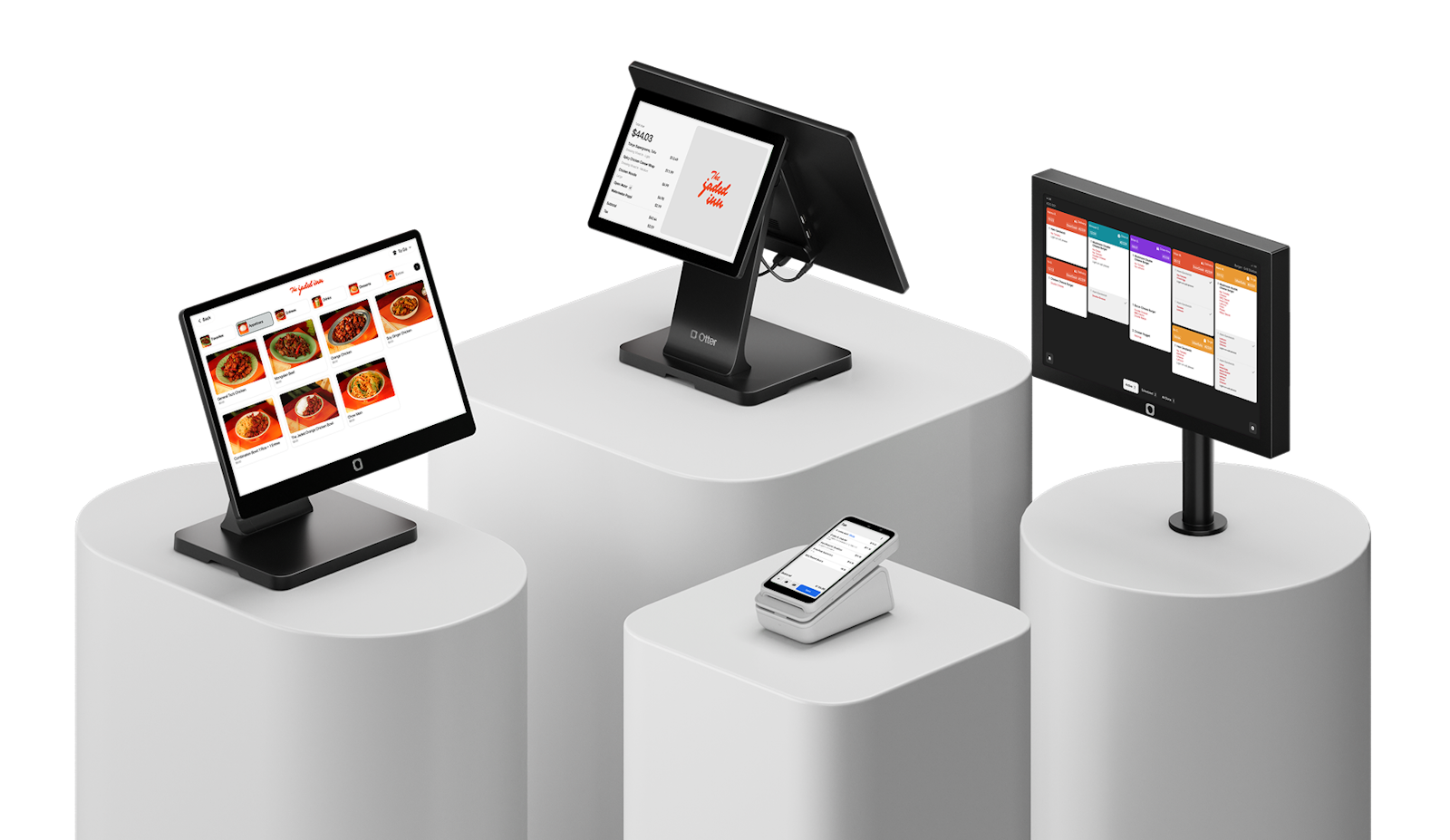
There are other ways into the system. Catering lists at $35 per location monthly and supports advance scheduling, deposits, and invoices. Direct ordering is marketed as commission-free; payment processing and the cost of fulfilling an order still belong in the calculation. Otter’s business combines subscriptions, payments, equipment, and additional products.
A rival can also be a connector
Otter occupies an interesting middle seat. Toast, Square, Clover, and Lightspeed are alternatives when a restaurant shops for a POS. Yet Otter also lists those companies among its integrations. An operator can buy coordination around an existing system, or bring more of the operation onto Otter. The choice starts with how much equipment and software the restaurant wants to replace.
That flexibility mattered to Frousakis. In his customer interview, he emphasized Otter’s willingness to use his existing setup and help employees adjust. His response was wonderfully practical:
“Let’s take a chance. We’ll learn with each other.”Gus Frousakis / Owner, Jim’s Burgers
At IDK Philly, owner Reda Iabbakh had a different starting point. Social videos were bringing attention to his chicken and smash burgers. He chose Otter from the beginning, using menu updates, POS, online ordering, and kiosks together. One customer needed a gentler transition; another wanted room for demand to grow. Both needed the moving parts to agree.
Test the awkward order
The lesson readers can copy is a buying method: test a real order with awkward modifiers, a sold-out item, and a refund. Watch where it appears, what prints, and what reaches the reports. Compare results with the current workflow before expanding. A connector that cannot represent the menu creates another job for staff; a quiet restaurant may have little coordination work to save.
Otter’s September 2026 updates span photo assignment, generated menu descriptions, discounts, and better Uber Eats busy-mode synchronization. The breadth makes sense. Getting someone to order and getting that order through service are connected problems. For the restaurant, the reward is wonderfully ordinary: lunch arrives where it should.