At Nuvei, the trouble became particularly visible after a long weekend. Underwriters returned to queues of cases, then moved between systems to collect the information needed to clear them. A global payments business had a decidedly ordinary problem: too much fetching, too much waiting. According to its Oscilar case study, manual underwriting time eventually fell by nearly half. The interesting question is what had been consuming the other half.
- Oscilar connects onboarding, credit, fraud and AML decisions.
- Risk teams build and test policies through visual tools and plain language.
- Its agents assemble evidence; people retain responsibility for consequential decisions.
Oscilar’s answer starts with the work surrounding a decision. A bank may have a useful fraud signal, a capable underwriting team and a compliance process, yet keep them in separate systems. Someone must carry the context between them. Someone must ask engineering to change the rule. Oscilar sells software that brings those tasks together.
The engineer’s view of a waiting room
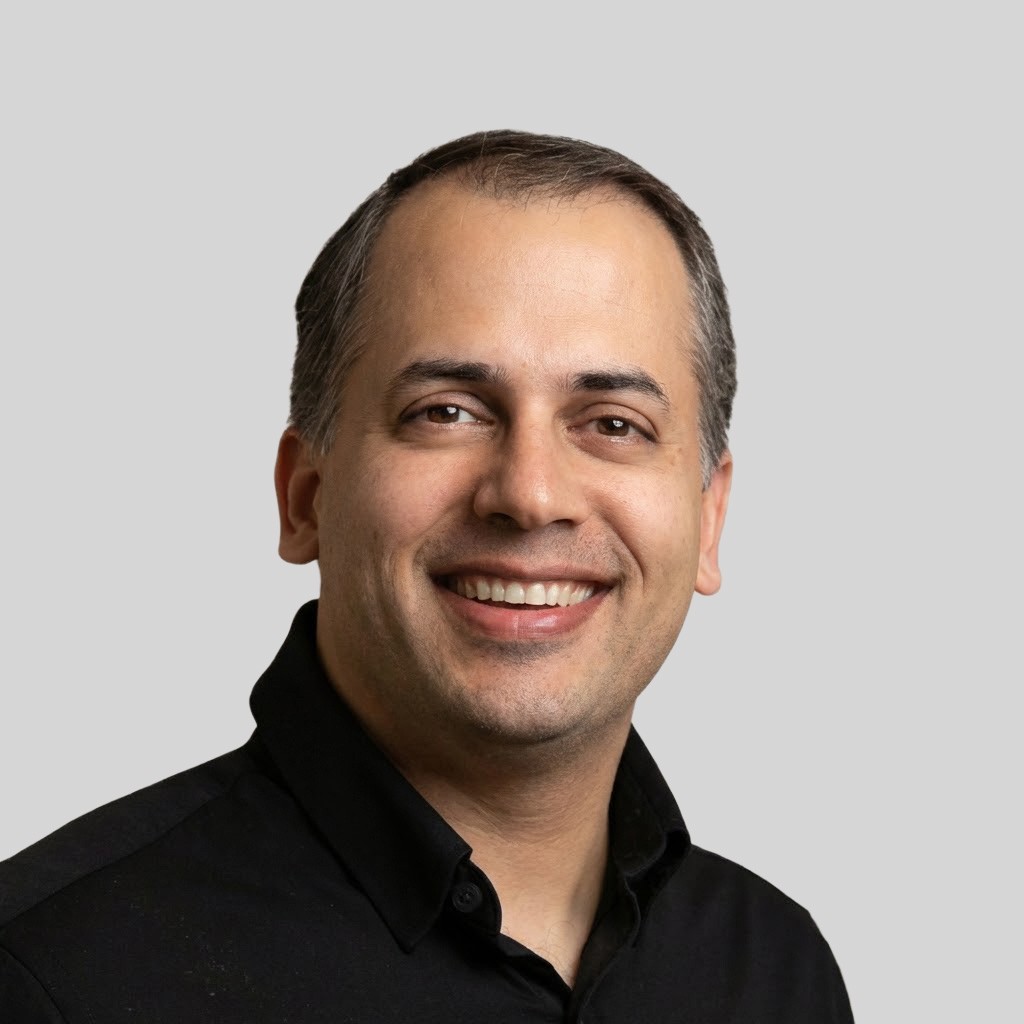
Founded in 2021 by Neha Narkhede and Sachin Kulkarni, Oscilar comes from a world where information is supposed to move. Narkhede co-created Apache Kafka at LinkedIn and co-founded Confluent. Kulkarni worked on infrastructure at Facebook. Their expertise lies in making large systems handle changing information reliably. Financial risk gave that expertise a practical destination.
The founders supplied $20 million themselves before Oscilar’s public launch in March 2023. In their founding-story interview, Narkhede describes fraud detection and risk decisioning as compelling applications of real-time data. The pair are also married. Their business combines two kinds of partnership, although the product’s central concern is rather less domestic: whether institutions can act on what they already know.

The buyer is an institution: a bank, credit union, lender, fintech or payments company. The everyday user may be a fraud investigator or credit strategist. Oscilar is enterprise software, sold through a sales conversation. Its commercial value depends on reducing operational work while preserving the institution’s ability to explain its decisions.
A rule is only useful if you can change it
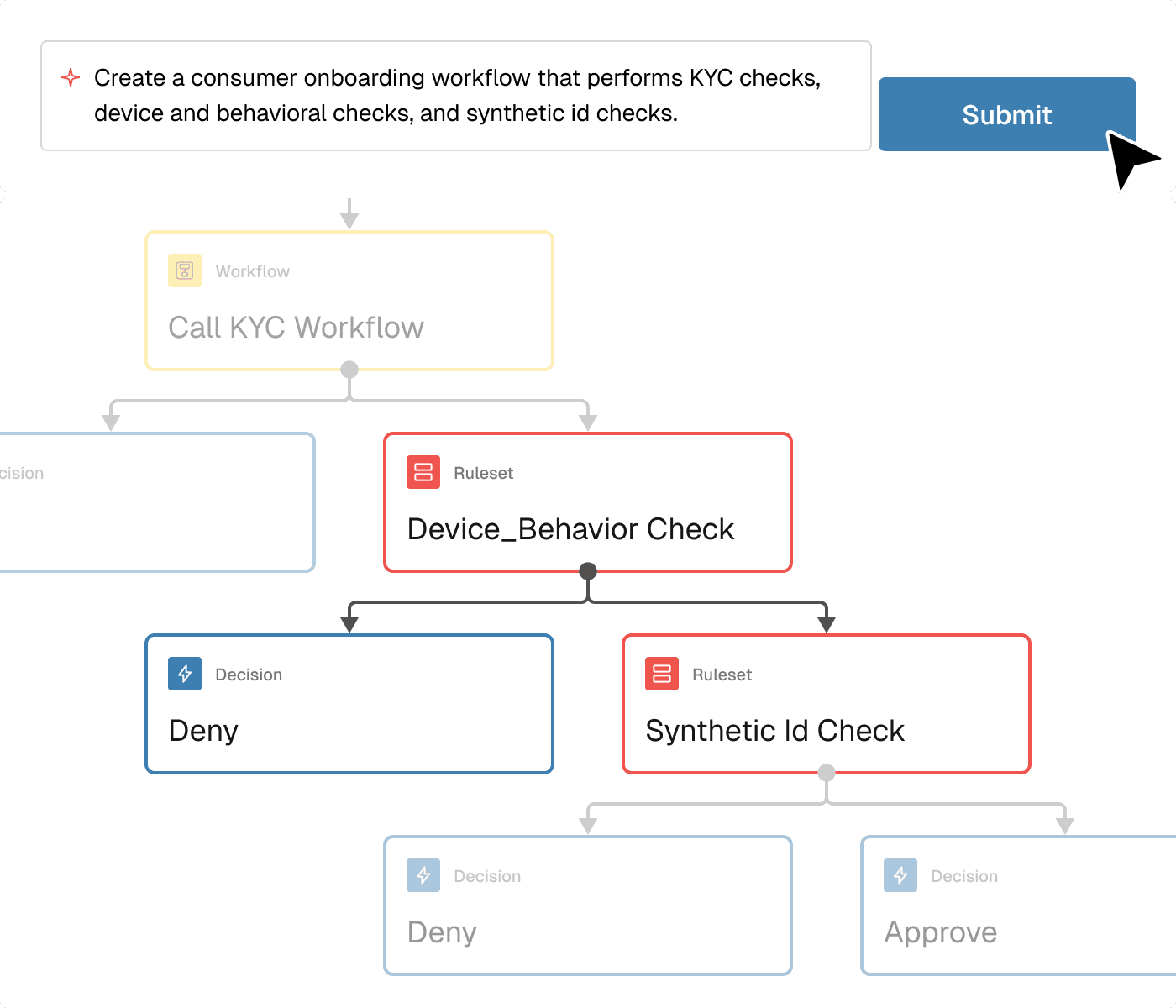
Consider a new applicant. Identity checks may look reassuring while device activity suggests something odd. A credit assessment asks another question. Anti-money laundering monitoring adds another. Oscilar connects these inputs to rules and models, then routes the result toward approval, further checks or review. The institution sets the policy.
Its platform includes a visual workflow builder, machine-learning models, data integrations and case management. Teams can backtest a proposed rule against historical data and compare alternatives. Device and behavioral intelligence adds information about how someone uses a service. These are ways to gather and test evidence before deciding how much friction a customer should encounter.
SoFi’s published case study reports that new credit-risk strategies could be deployed 50% faster, moving from weeks to days, alongside a processing-speed improvement above 30%. Those are separate clocks. One measures how quickly a request receives an answer. The other measures how quickly the institution can change the answer it gives.
What broke before the switch
Nuvei’s account describes restrictive legacy tooling, manual retrieval and teams working across separate systems. Building internally was considered, then deprioritized because of cost, complexity and time. Oscilar allowed region-specific workflows and preferred data providers. Nuvei reported auto-adjudication increasing 10-15% in the first month. These are customer-reported results published by the vendor, rather than a controlled comparison.
“I think of Oscilar as a blank canvas”
Daniel Hough, Director of Risk & Underwriting, Nuvei
Clara, the Latin American spend-management company, reached a similar decision through growth. Its manual underwriting process struggled as applications increased. Oscilar’s sandbox let the team test before launch. The case study reports three-to-four times the throughput capacity without extra headcount, 15 external integrations and more than 80 workflow versions built by the risk team. Eighty versions is an unusually useful detail: it suggests repeated adjustments by the people doing the work.
SoFi
Clara
Different customers, different measures. Reported in Oscilar case studies.
Agents need the same case file
In June 2026, Oscilar introduced Agent Hub, announcing more than 30 specialized agents. Their jobs include building workflows, screening sanctions matches, assembling investigation narratives and explaining credit decisions. The design rests on shared customer context, so information discovered in one risk function can inform work in another.
That is Oscilar’s competitive argument in a market that includes Alloy, Sardine, DataVisor and Provenir, alongside internal engineering teams. The distinction it sells is the combination: signals, decisions, investigations and agent assistance on a common foundation. Whether that combination beats an existing stack depends on the buyer’s actual workflows and data.
Shared evidence→02
Agent recommendation→03
Human review
October brought a concrete boundary. Oscilar’s MCP Server lets an external assistant inspect, draft and test workflows under the user’s permissions. Changes remain drafts; a person deploys them. Oscilar says the connector and its in-product AI assistant are included at no additional cost. The distinction between preparing a policy and publishing it is built into the interface.
The customer list gives the proposition a global setting. MoneyGram announced its partnership in November 2025; Payoneer followed in December. Nacha also named Oscilar a Preferred Partner for account validation, fraud monitoring and risk prevention. In October 2026, Oscilar announced a Banking AI & Automation Award from the Money Awards presented by Money20/20. Recognition helps open a door. A deployment still has to survive the institution’s daily workload.
Oscilar describes its own workplace as remote-first, with ownership and efficient growth among its stated values. Its customer stories put considerable weight on collaboration during implementation. That matters for software entering an existing risk operation: the product has to accommodate local procedures, data sources and review habits before its attractive diagram becomes useful work.
Try it on yesterday’s difficult cases
A prospective buyer can copy a simple method from these deployments: choose one troublesome queue, connect the relevant evidence, test against past cases and measure the work required to resolve each one. Count false declines as well as missed fraud. Ask the analysts whether the explanation is useful. Expand after the results justify it.
This approach depends on usable data, maintained policies and people able to challenge recommendations. Faster automation can spread a poor rule faster, too. Oscilar’s own controls acknowledge that responsibility remains with the institution. Its promise is appealing precisely because the problem is familiar: the answer may already exist somewhere in the business. Getting it to the person who needs it is the work.