A startup can have a handsome website, a working prototype, and absolutely nobody waiting to buy it. Opportunity Machine has organized much of its work around catching that problem early. In downtown Lafayette, Louisiana, the nonprofit incubator offers founders a place to work and people who will ask the awkward questions before those questions become expensive.
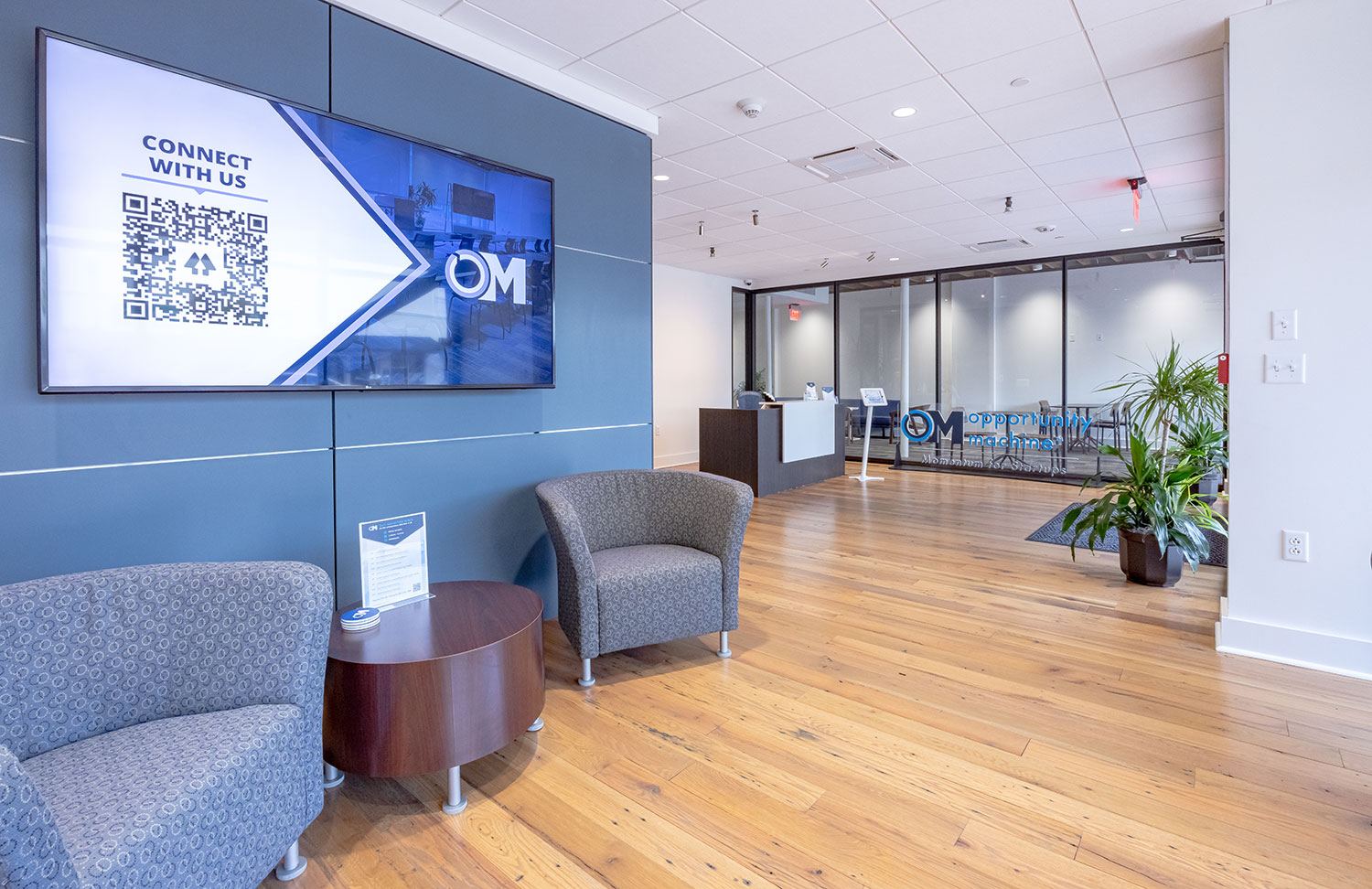
The setting has a sense of humor. Its Jefferson Street home used to be a furniture store, then Karma Nightclub. Now the business is business: meeting rooms, whiteboards, fiber internet, and founders trying to turn an observation into something customers will pay for. The building’s uses have changed. Persuading people to come through the door remains part of the assignment.
A regional project with room to grow
Opportunity Machine began in 2009 as a joint effort by the Lafayette Economic Development Authority, Louisiana Immersive Technologies Enterprise, the University of Louisiana at Lafayette, and the Greater Lafayette Chamber of Commerce, now One Acadiana. Former Stone Energy president David Welch encouraged the initiative. It officially launched in 2010 with five companies and Bob Miller as executive director.
Its first downtown base was called The Switch. When member CSE Icon expanded into two floors, OM moved to LITE in 2014. That is an unusually useful reason for an incubator to need another address: a company inside it needed more room. OM acquired 501(c)(6) nonprofit status in 2017.
The permanent downtown facility opened in April 2022. The opening announcement put its size at 22,000 square feet, with private offices ranging from 100 to 900 square feet alongside shared space. The move also accompanied a deliberate expansion of support for high-growth technology and STEM businesses. A renovated building gave that work a visible address.
The $100 door - and the people behind it
Standard membership currently starts at $100 per person per month. It includes round-the-clock access to flexible workspace, bookable meeting and training rooms, physical and online resource libraries, and access to mentors and certified business coaches. For a founder, that bundles several recurring chores: finding somewhere to meet, finding someone to ask, and finding a useful answer.
Membership also creates a route into educational programming. Accelerator admission is a separate decision; accepted members may receive additional workspace, coaching, program mentors, and access to the Global Accelerator Network. Buying a membership is therefore a starting point, not a promise that every program seat comes with it.
OM also advertises more than $1 million in free and discounted services from partners including AWS, HubSpot, and Agora. That figure describes the advertised package across partners. Its value to an individual startup depends on which offers it qualifies for and actually uses. Software credits are useful when they replace an expense you already need to incur.
A program for the idea that needs questioning
Builder Program 1.0 is the clearest expression of OM’s teaching approach. It serves founders from idea to seed stage, using a cohort to combine business model design, value proposition work, customer discovery, and elevator pitches. Participants work alongside other founders, with coaching and accountability built into the format.
The published fall 2026 schedule runs from September 3 through November 13. The subject matter is practical: define the customer, explain the value, and test whether the business holds together. An idea does not need to arrive with a polished company attached. The program is designed to help establish that foundation.
This matters because technical progress and commercial progress can look deceptively similar from behind a laptop. Finishing a feature is visible. Discovering that a buyer has a different priority is less photogenic, but it can save a founder from months of beautifully executed distraction.
The dashboard met the courtroom
OM’s own case studies make the method tangible. Empath Legal brought trial attorneys an AI concept for identifying juror bias. A dense prototype exposed a problem: lawyers working through jury selection needed information they could absorb quickly. The response was a simpler, more visual dashboard. The first assumption to fail was about how much information a user could comfortably handle.
Keepers, a housekeeping platform, found that reliability meant more than a cleaner showing up. Property managers needed consistent quality assurance. Customer conversations helped shape a more structured management product. Neither example requires a dramatic corporate collapse to be instructive. A rejected screen or a misunderstood requirement can be enough to change the work.
OM recommends talking with 10 to 15 potential customers and using lightweight demonstrations before committing heavily to development. The transferable lesson is to record what changed after each conversation. If every interview somehow confirms the original plan, consider whether the questions leave enough room for disagreement.
“It’s not my job to tell people their baby’s ugly; it’s my job to help them figure that out for themselves.”
Destin Ortego · Executive director
Discover Lafayette, April 2026
The talent problem gets a summer assignment
Once a product direction is worth pursuing, somebody still has to build it. OM’s Emerging Tech Internship pilot put seven University of Louisiana at Lafayette computing students to work with three local technology startups in summer 2024. LEDA underwrote the program. Projects included custom AI chatbots, mobile applications, and data analysis.
Atlais founder Ryan Bourque reported that the students accelerated development enough for the company to launch its platform with its first beta user immediately after the internship. That is a concrete milestone, with a sensible limit: reaching a beta user demonstrates delivery, while sustained demand remains a further test.
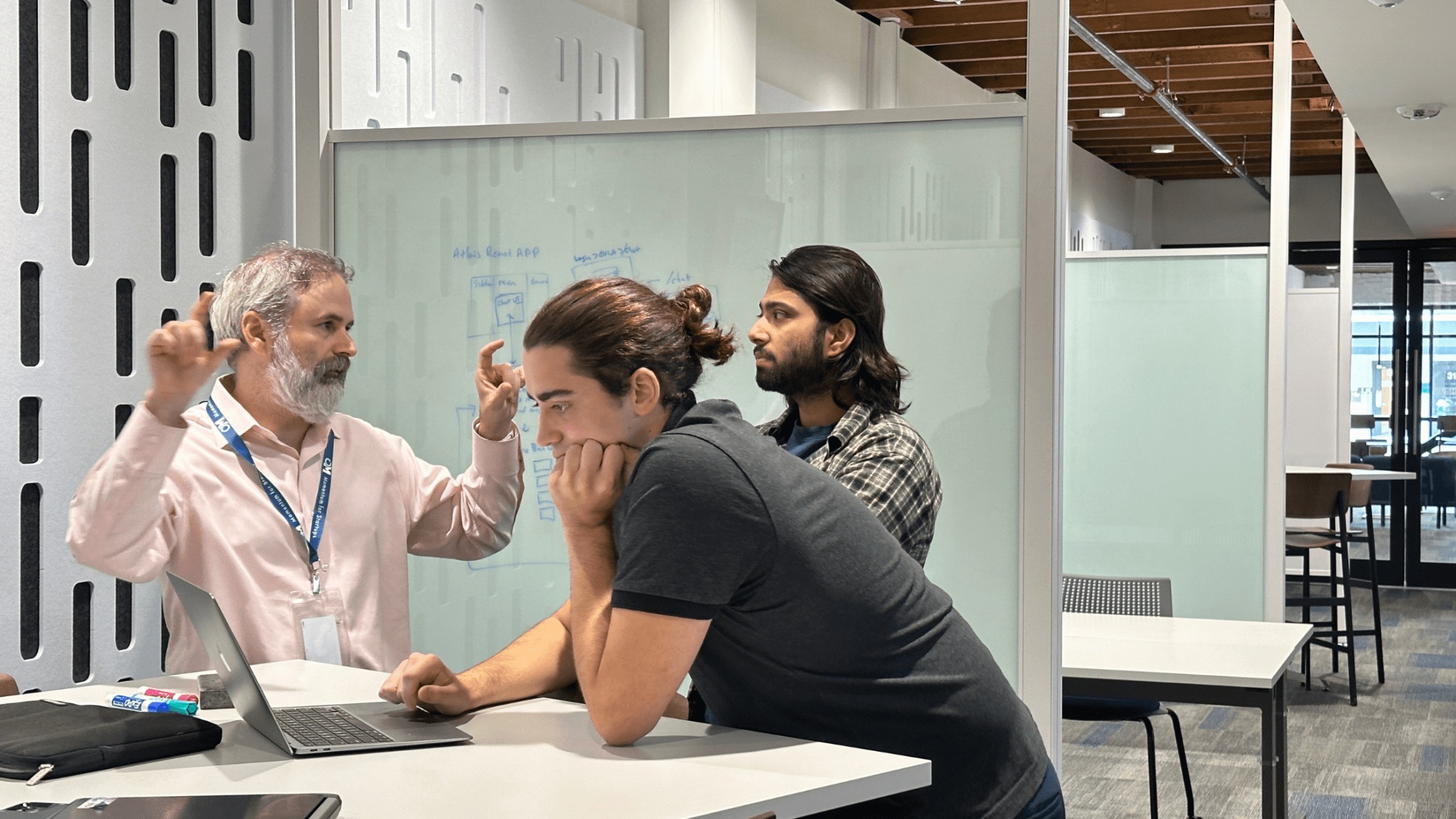
The university describes the collaboration as a partnership among OM, its Informatics Research Institute, and technology companies. Its examples also include Dryve, a navigation app helping parents find food along a route, and work with Keepers and Blue Partner. The arrangement connects students’ need for experience with young companies’ need for technical help.
For another region hoping to copy it, the useful unit is a defined project with a startup supervisor and a university relationship. An introduction alone does not specify what students will build, who will review it, or when the work should be usable. Those details turn enthusiasm into an assignment.
Who pays for the room?
The low entry price sits inside a larger public partnership. OM’s reviewed 2024 financial statements reported $500,453 in total public support and revenues and $364,393 in expenses. Membership dues contributed $118,955. Grants and contracts supplied $220,000; sponsorships added $93,250.
LEDA separately paid $376,929 in salaries and benefits for staff under the operating arrangement. That distinction matters: the expenses shown in OM’s accounts are not a complete standalone price for recreating its operation. The financial notes describe an annually renewed relationship and warn that a change in LEDA funding could substantially affect operations.
So the business model combines member payments, sponsorship, and economic-development support. An entrepreneur can buy access at the published rate. A city trying to reproduce that rate needs to reproduce the supporting commitments too. The arithmetic is part of the design.
A useful introduction has a subject attached
OM’s mentor roster spans the questions that arrive after the initial idea: software development, manufacturing costs, marketing, finance, and early-stage investment. Listed expertise includes Missy Rogers on design for manufacturing, Mike Eckert on angel and venture capital, and Priyanka Sanghvi on early product development and customer interviews.
That range is more useful than the vague promise of meeting “business leaders.” A hardware founder evaluating manufacturing trade-offs needs a different conversation from a software team trying to acquire customers. OM’s accelerator mentorship extends to people who have gone through its programs, allowing those conversations to continue beyond a cohort’s final meeting.
Connections also reach outside the building. In October 2025, OM announced partnerships with Louisiana Innovation and the Louisiana Technology Transfer Office. The latter brings expertise in navigating federal funding that does not require founders to sell equity. Together, the relationships give a local entrepreneur more routes to expertise, potential capital, and contacts.
There is a public gathering point as well. At Innovate South, OM curates founder programming; the conference’s Tech Tank pitch competition is open to startups that have participated in OM programming. The stage is tied to preparation, giving the event a role in the longer process.
The right room for a particular founder
OM focuses on companies from idea stage through Series A, particularly technology, research, and businesses capable of reaching customers beyond Acadiana. Its application guidance asks about intellectual property, technology-enabled growth, and funding needs. Traditional storefront businesses, most consultancies, and several other categories sit outside its current focus.
That makes the alternatives task-specific. Someone needing ordinary small-business advice may be better served by the Louisiana Small Business Development Center or another local provider. Someone seeking only an office can compare workspace options. OM’s distinctive offer is the combination of startup education, specialist relationships, and a university and economic-development network.
In an April 2026 interview, Ortego described supporting approximately 50 technology or research-intensive startup teams and emphasized helping founders test their assumptions. That is a narrower group than the 80-plus startups and businesses described on OM’s general overview. The distinction reflects the work: this is a collection of businesses at different stages, with different needs.
For a founder considering joining, the best opening conversation is specific: here is the customer, here is the problem, and here is the assumption we need to test. A shared room cannot manufacture demand. It can make the next useful conversation easier to arrange.