Olivia Kory likes a result that can survive an awkward meeting. The channel everyone adores may not be creating the sales it claims. The campaign with an unimpressive click report may be quietly moving revenue elsewhere. An experiment may return a confidence interval wide enough to make the room itch. For Kory, these are not measurement failures. They are the point at which measurement becomes useful.
Her career has taken her through the machinery that made modern advertising feel wonderfully measurable: an agency desk in Chicago, a programmatic video platform, Netflix’s global marketing organization, Quibi, Sonos, and finally Haus, the marketing decision science company where she is now Chief Marketing and Strategy Officer. Along the way, she acquired a healthy suspicion of neat answers. A click can be counted perfectly and still answer the wrong question.
The better question is causal: what would the customer have done if the ad had never appeared? Kory uses the language of a counterfactual, but her explanation is plain. Platform reporting connects exposure with a later action. Incrementality tries to separate what the advertising caused from what would have happened anyway. The distinction sounds academic until somebody has to decide where the next million dollars goes.
An English major reads the numbers
Kory studied English literature and language at the University of Michigan. Her professional story began at Starcom MediaVest Group in 2011, amid the cheerful complexity of agency life. She also met her future husband there. The relationship has since acquired an occupational punch line: he has spent years at Google, while her work sometimes requires challenging what advertising platforms say about their own performance. Depending on the day, she has joked, she can feel like Google’s best friend or its worst enemy.
In 2013 she moved into ad tech at TubeMogul, a programmatic video demand-side platform. Automated media buying was accelerating, and her experience arrived at exactly the right moment. Reed Hastings wanted Netflix marketing to borrow qualities from the product itself: algorithmic, personalized, and responsive. Programmatic fluency helped Kory land what she has called her dream job.
At Netflix, Kory found what she now calls her “MBA in incrementality.” The company had enormous organic demand, global reach, and enough noise to make simplistic attribution particularly suspect. It also had a large team capable of running experiments around the world. Marketing could be separated, with unusual rigor, from the cultural weather surrounding the product.
“At Netflix, I got just like an MBA in incrementality.”Olivia Kory
There was no mystical technique. There were talented specialists, sufficient data, and an organization prepared to ask harder questions. The practical revelation was that scientific rigor worked, but it was expensive to assemble. Most brands could not hire their own small battalion of economists and data scientists. That constraint would later become the opening for Haus.
The customer crosses the table
After Netflix, Kory led growth at Quibi and then Sonos. The latter became a hinge in her story. While serving as Director of Growth Marketing and Chief of Staff, she became one of Haus’s first customers. Founder Zach Epstein and his early team were trying to package high-quality incrementality testing into software that cost less than building an internal department. Kory helped test the early MVP from the buyer’s side.
It worked quickly enough to make her curious about the other side of the table. In 2022 she left the familiar head-of-growth track and joined Haus. The company had five customers and no product, a combination that tends to divide sensible adults into two camps. Kory acknowledged both readings: exciting, or completely irrational, depending on one’s tolerance for ambiguity.
The move was less a conversion than a continuation. She had encountered the measurement problem at scale, bought an early attempt to solve it, and then elected to help build the solution. “I joke that I’m a vendor now,” she has said. “I don’t know how I got here, but I’m really a growth marketer at heart.” It is the useful kind of identity confusion. The executive selling the instrument remembers what it feels like to be responsible for the budget it will judge.
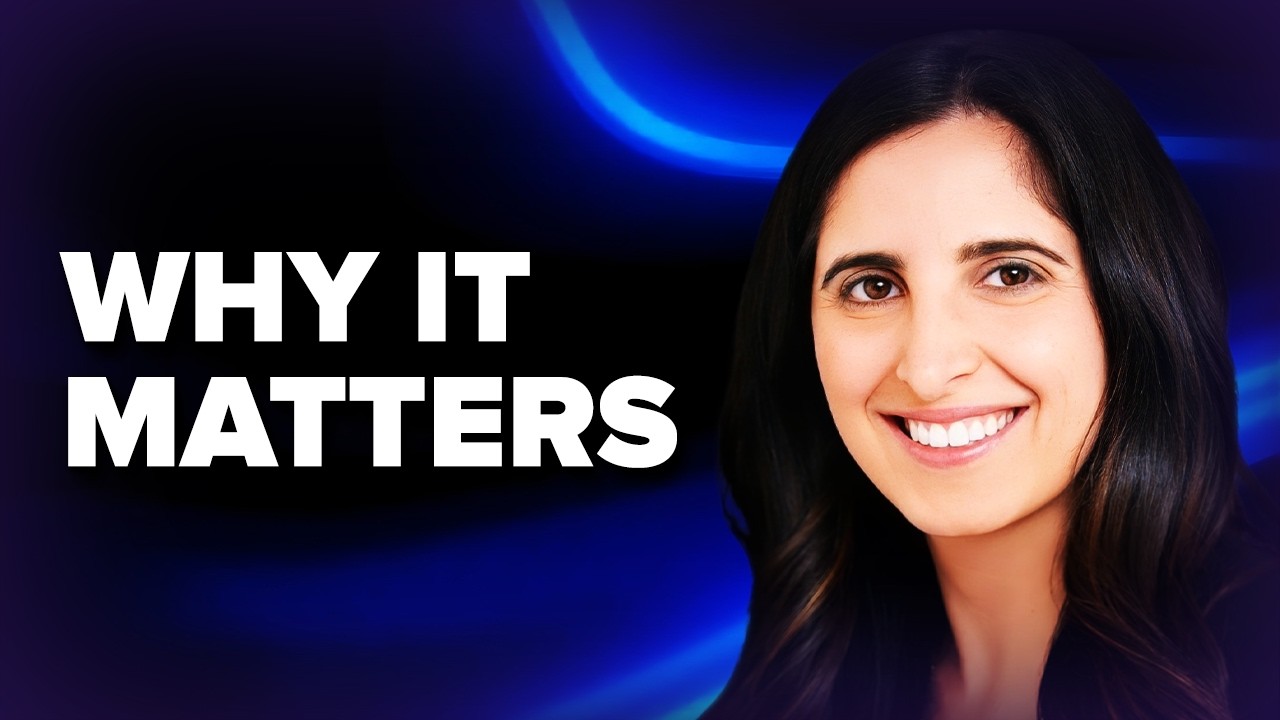
The charm of an inconvenient answer
Kory’s public work is full of an unfashionable virtue: admitting how much the analysis does not know. In an essay co-written with Haus economist Simeon Minard, she argued that transparent uncertainty is more trustworthy than vendors promising guaranteed precision. Their memorable test was social rather than statistical. A disappointing result can be the analytical equivalent of a friend telling you there is salad in your teeth. Irritating for a moment, valuable for the rest of the day.
That posture matters because marketing measurement is structurally tempted by flattery. Platforms grade their own homework. Vendors benefit when a result looks decisive. Teams become attached to channels they know how to run. A narrow confidence interval looks comforting on a slide. Kory’s argument is that the purpose of an experiment is not to decorate certainty. It is to support a decision while being honest about the limits of the evidence.
Precision is helpful. A promise of precision is not the goal. The useful result is the one honest enough to improve the next decision.
This is why she talks about positive and negative tests with similar energy. A campaign that fails to produce lift can prevent months of inefficient spend. A channel that looks mediocre in click attribution can prove valuable when delayed or omnichannel sales enter the picture. The result is not a trophy. It is a fork in the road.
From measurement to decisioning
Over her first years at Haus, Kory’s remit moved through go-to-market, customer support, partnerships, operations, and strategy. She also became one of the company’s most visible teachers. On podcasts and webinars, she has explained geo holdouts, synthetic controls, incremental customer acquisition cost, and how experiments can calibrate day-to-day reporting. Her examples stay close to the operator’s desk: which channel to test first, what data is actually required, how to explain a changed benchmark to finance.
The educational style reflects an important limit of software. A tool can produce an estimate. It cannot, by itself, persuade a finance team to retire a familiar metric or convince an agency to embrace a result that complicates its incentives. Kory has emphasized the coaching required beyond marketing when companies shift from deterministic-looking attribution toward probabilistic measurement. The spreadsheet must travel through an organization full of people.
In June 2026, Haus announced that Kory would become its Chief Marketing Officer; her role is now styled Chief Marketing and Strategy Officer. The appointment gave her thesis a neat recursive turn. For years she had advised other marketing leaders to challenge assumptions, write hypotheses, test boldly, and act on the results. Now she had to apply the advice to Haus.
“The real opportunity is helping marketers move from measurement to decisioning.”Olivia Kory
Her stated priorities begin with independence: Haus should represent the voice of advertisers when noisy data and conflicts of interest make reality hard to read. Next comes a broader ambition for incrementality. It should not remain a niche tactic or a research event. It should become a foundation for deciding how a business allocates money. Finally comes the obligation to practice the method internally.
That final task may be the most revealing. A measurement company marketing measurement risks disappearing into a hall of mirrors. Every claim invites the same question the product asks of its customers: what did the marketing cause? Kory has greeted the predicament with amusement. Haus, she wrote, now has its own incrementality problem. Reaching that point was a “fun little milestone.”
The useful doubt
Kory’s story follows advertising’s long walk from countability to causality. At Starcom, media was being planned across a fragmented landscape. At TubeMogul, programmatic systems made buying more automated. At Netflix, experiments tested what the automation actually contributed. At Sonos, an early product made that rigor accessible. At Haus, the question is how to turn causal evidence into a repeated management habit.
There is a literary quality to the project. A good reader resists the convenient interpretation, notices the missing voice, and asks whether the text can support the claim being made. A good experimenter does much the same with a dashboard. Both know that confidence should be earned sentence by sentence, or test by test.
The marketing industry will not run out of numbers. It may even produce them faster as AI takes on more analysis and campaign execution. Kory’s concern is that an automated system optimizing against the wrong signal simply makes the wrong turn at greater speed. Causal evidence becomes more important, not less, when machines can act before the meeting is over.
Her proposition is modest enough to sound radical: tell the truth about uncertainty, create a credible counterfactual, and let the result change the plan. The glamour lies not in proving that yesterday’s campaign worked. It lies in making tomorrow’s decision less fictional.