Jeff Mason knew Power Digital’s founder before there was a Power Digital to run. At Xerox, he worked with Grayson Lafrenz, a young salesperson who would eventually leave to build a business of his own. Years later, the relationship reversed direction: Lafrenz brought Mason into his company. The former colleague became the first president. Three years after that, he became CEO.
It is an unusually unhurried beginning for a story about growth marketing. The industry likes a quick conversion. This one took years. Long before the appointment announcements, two people had already seen each other work.
That history matters because Mason’s career has increasingly revolved around a difficult question: how do you make a business bigger while keeping the relationships inside it useful? A deal can bring in a team. A title can establish authority. Neither settles what happens on Monday morning.
A colleague comes back as president
Before joining Power Digital, Mason spent 18 years with Xerox. His experience included MRC Smart Technology Solutions, where he served as senior vice president of sales. Power Digital credited his leadership during a decade in which MRC’s revenue went from $43 million to more than $224 million.
Those were sales-organization credentials: hiring, managing, consulting, and turning commercial ambition into a repeatable process. Mason brought them to an agency business in which customers were asking a familiar question about a different purchase. What would they get for their money?
“People don’t buy digital marketing, they buy outcomes and results.”
Jeff Mason, on joining Power Digital in 2020
He officially started as Power Digital’s first president on February 3, 2020. He had come to believe that sales and marketing were converging, and wanted to work where that convergence was happening. The company’s announcement described an existing relationship with both its CEO and chief operating officer stretching back more than 15 years.
For Mason, the move joined an established set of skills to a changing customer problem. For Lafrenz, it brought someone familiar into a business that had outgrown its early arrangements. The reunion came with a specific job: build the sales organization and help develop the company’s leadership and technology.
- Before 2020Xerox & MRCSales leadership and an earlier working relationship with Lafrenz.
- February 2020First presidentMason joins Power Digital to help build its next operating chapter.
- June 2023Chief executiveLafrenz becomes chairman; Mason takes the CEO role.
The handoff was already underway
By the time Power Digital announced Mason as CEO on June 29, 2023, he had spent more than three years inside the business. The preparation was visible in the responsibilities he had accumulated.
He had worked on new business, expanding client relationships, and building the private equity division. The company also credited him with revising its forecasting model, creating client-services and revenue-pillar structures, refining sales processes, and establishing departmental dashboards.
Forecasting is unlikely to earn a standing ovation at a company party. It does, however, help determine whether the promises made by one part of a business can be kept by another. Mason’s brief reached across those connections.
The succession left Lafrenz as chairman, working on strategic direction, acquisitions and mentorship. Mason took responsibility for running the company. The arrangement kept the founder involved while giving the executive who had been working across its functions the chief executive’s job.
For a person whose public language regularly returns to serving and leading, the appointment also made the obligation explicit. His first-president chapter had been about helping the business scale. The CEO chapter would require him to carry the consequences of that scale.
The deal behind the dashboard
A few months before the promotion, Power Digital acquired Sproutward, a marketing consultancy with a platform called Polaric. Its purpose was to connect marketing spend with customer and product data. Power Digital planned to integrate it with nova, its own analytics technology.
In February 2023, the addition of Sproutward’s 30 employees brought Power Digital’s reported headcount to 580. More revealing than the extra desks was the kind of capability it was buying.
A client could have plenty of numbers and still struggle to decide what to do. Separate accounts of advertising, products and customers do not automatically explain one another. The acquisition was intended to bring more of those accounts together and give clients a clearer view of performance.
Mason, still president then, described brands wanting faster ways to understand their marketing investments. The emphasis fits his sales background. A purchase needs an explanation that survives the sales meeting. The dashboard is useful when it helps someone make the next decision.

A few words in Spanish
Acquisitions create another information problem, this time for the people joining the buyer. Mason has described an international integration in which he and fellow leaders took Spanish classes and attempted some onboarding meetings in Spanish. They were learning while asking new colleagues to learn a company.
He also recalled sending ten people to a Latin American office of roughly sixty employees for a town hall before a transaction closed. Questions could be asked while the people responsible for answering them were in the room.
The scale of that gesture is refreshingly ordinary. A flight, a conversation, an imperfect sentence. These are things a leader can actually do.
Mason’s account of the early acquisitions included a correction: the company had sometimes tried to integrate too quickly in pursuit of the financial benefits. He came to favor allowing more time. Buying a service business means depending on people whose working relationships are already established. A spreadsheet can move them into a new column rather faster than they can get used to it.
A little less distance
A photograph on executive coach and facilitator Angela Parker’s website shows Mason beside Parker, both smiling at the camera. The image accompanies his endorsement of her ability to build trust and help people connect. It is a small glimpse of the person whose working day also contains forecasts, acquisitions and marketing technology.
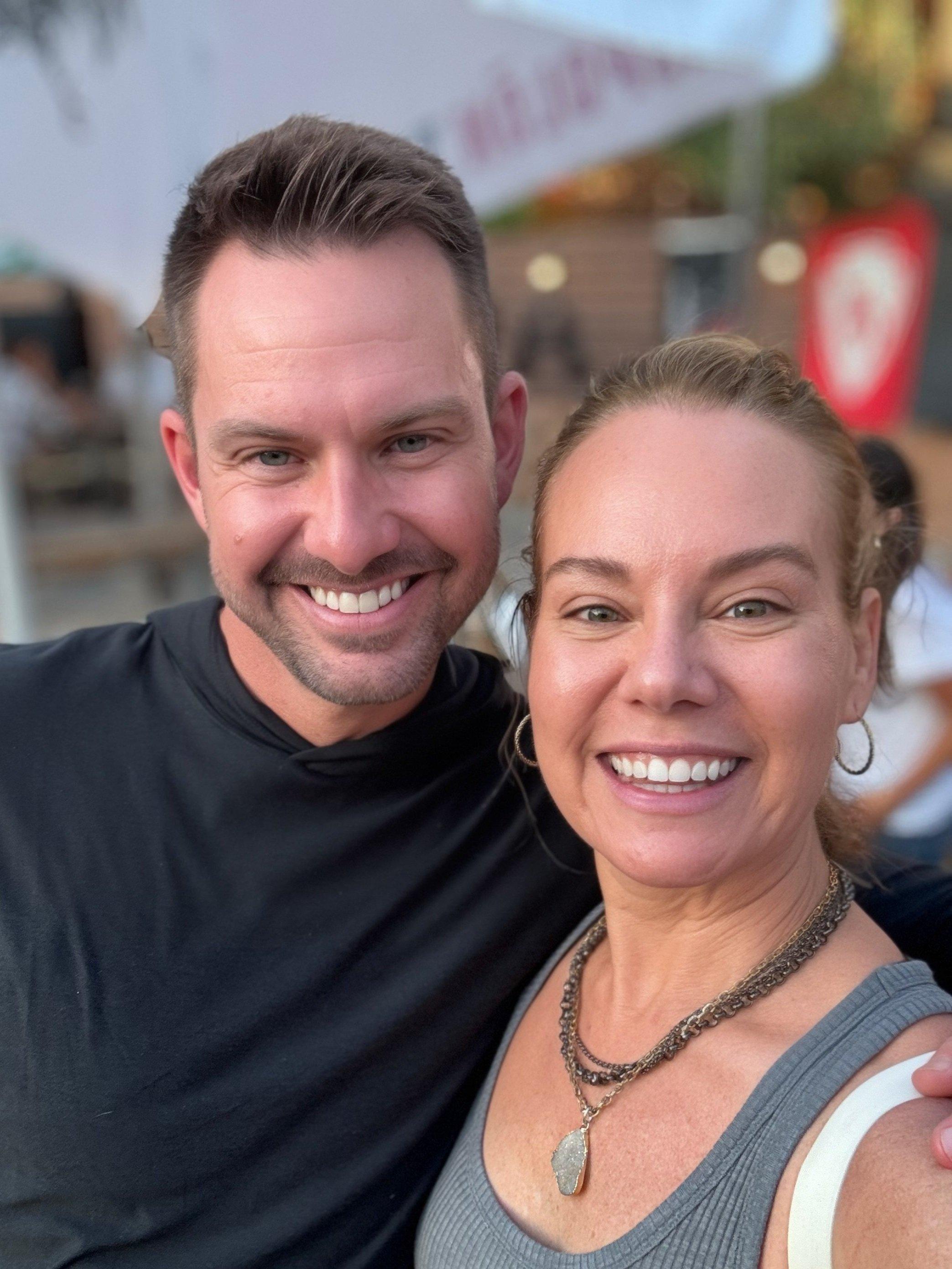
The endorsement is consistent with the integration stories he tells. He pays attention to who is comfortable asking a question and who needs a more direct conversation. Authority can make a person easy to identify and difficult to approach. Mason’s public examples suggest he recognizes the distance.
A bigger firm, a more specific brief
By February 2026, Mason was describing a company that had grown from about 100 people in 2020 to more than 800, with international operations. The expansion explains why the design of the organization had become part of his job.
In 2025, Power Digital reorganized around industry-focused divisions. The idea was to give clients teams that understood the particular business they were running, supported by shared capabilities in strategy, measurement, data and technology.
Fashion, consumer packaged goods and B2B bring different questions to the table. The internal arrangement was meant to give those differences somewhere to live. Growth could add specialist knowledge, provided that knowledge remained connected to the people serving the client.
Mason has described another source of specialization: employees who wanted to build something. In his telling, clients would ask for help with a service and a team member would volunteer to create the department that could deliver it. The appetite to become an entrepreneur found an outlet inside the firm.
That gives his emphasis on autonomy a practical meaning. A growing company needs enough structure to deliver consistently, but also room for someone to notice an unmet need and pursue it. For Mason, developing the organization includes keeping that willingness to start something alive as the firm adds people and capabilities.
In his February 2026 account, Mason also emphasized the human work around AI: testing tools, measuring their contribution and recalibrating them. Faster output leaves a manager with another question to answer. Was it useful?
People at Power Digital: approximately 100 in 2020; more than 800 in Mason’s February 2026 account.
The customer ignores the org chart
Mason’s recent public writing takes the same concern outside the agency. A shopper might discover a product on TikTok, compare it on Amazon, visit the brand’s website and eventually buy it in a store. The order can change. The shopper has no obligation to respect the seller’s reporting structure.
When each channel belongs to a separate team with separate data, understanding the purchase becomes harder. Mason’s stated ambition is to connect direct-to-consumer business, marketplaces and physical retail through a shared view of the customer.
That ambition now sits alongside Power Digital’s description of itself as an AI-native growth firm. Its Omega platform is presented as an operating system that monitors campaigns, investigates signals and helps execute approved actions. The company’s promise is faster decisions grounded in its accumulated marketing data.
The language is newer than the underlying question. When Mason discussed AI-enabled marketing with Knownwell’s Pete Buer, he emphasized getting the data strategy in place first. Customer information, advertising information and financial information need to become useful together before an algorithm can make much sense of the business.
The aspiration is precision: better decisions about which customer to reach, what to say and where to spend. His career has carried that demand for an understandable result from sales into marketing, and now into a business rebuilding its work around AI.
Room for another table
Outside the executive brief, Mason names golf, football and basketball among his interests. He likes dogs, cooking and exploring restaurants. He has also said he is a co-owner and investor in several restaurants around San Diego.
It is a pleasingly concrete set of interests for someone immersed in digital commerce. A restaurant has a room, a team and customers who can tell immediately whether the evening is going well. There is very little opportunity to distract a diner with an attribution model.
Mason’s story keeps returning to that human scale: a former colleague inviting him into a business, a new team hearing a welcome in Spanish, a conversation that makes a growing company feel less remote. The forecasts and systems matter. So does being someone another person is willing to work with again.
Keep the conversation going
- Power Digital
- Jeff Mason on LinkedIn
- Watch the AI Knowhow episode
- Mason on joining Power Digital
- The CEO appointment
- Acquisitions and culture: the conversation
- Mason’s 2025 interview
- The February 2026 interview
- Power Digital’s San Diego beginnings
- The Sproutward deal
- Omega
- Mason on employee-led innovation
- Angela Parker